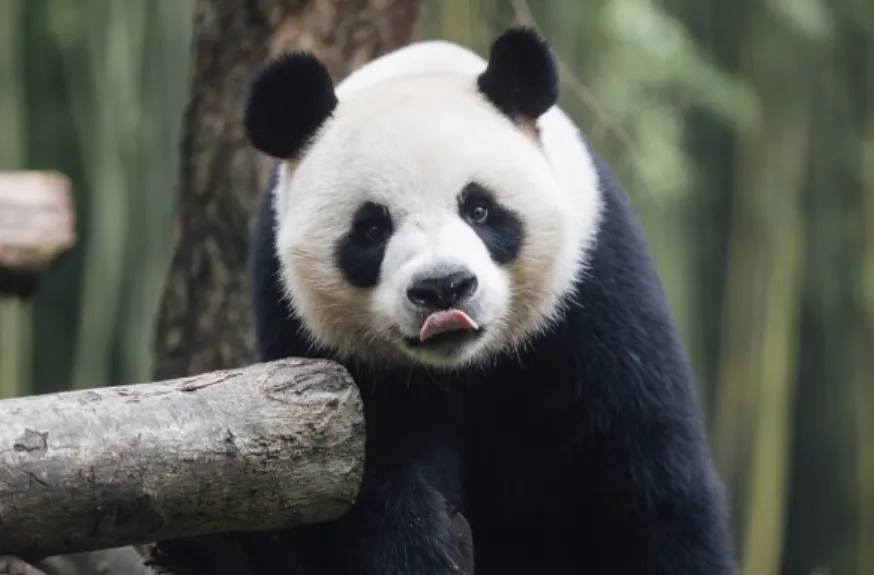
The panda life cycle is one of the most interesting stories in the animal world because a panda begins life as one of the smallest newborn mammals relative to its mother’s body size. Slowly grows into a strong, bamboo-eating bear. The giant panda, scientifically known as Ailuropoda melanoleuca, lives mainly in the mountain forests of southwest China, especially in areas rich in bamboo. Current conservation sources still list around 1,864 giant pandas in the wild, and the species remains classified as Vulnerable, not fully safe.
A panda’s life is shaped by bamboo, cool mountain forests, careful mother care, and a slow reproductive cycle. Unlike many animals, pandas do not produce many babies in a lifetime, making every cub very important to the species’ survival.
Q: How long is the panda’s life cycle?
A: A panda usually lives around 15–20 years in the wild and about 30 years in human care, though some captive pandas have lived longer.
Q: What are the main stages of a panda’s life cycle?
A: The main stages are newborn cub, infant, young cub, juvenile, sub-adult, adult, and old age.
Q: What does a panda eat during its life cycle?
A: A panda mainly eats bamboo, which can make up about 90–99% of its diet, depending on the source and season.
Quick Life Cycle Table
| Life Stage | Approximate Age | Main Features | Survival Needs |
| Newborn Cub | Birth to 2 months | Pink, tiny, blind, almost hairless | Warmth, milk, mother’s protection |
| Infant Cub | 2 to 6 months | Eyes open, fur develops, and it begins moving | Nursing, den safety, body warmth |
| Young Cub | 6 to 12 months | Starts exploring and tasting the bamboo | Mother’s care, climbing practice |
| Juvenile Panda | 1 to 2 years | More independent, learns feeding habits | Bamboo access, safe forest space |
| Sub-adult Panda | 2 to 4 years | Leaves mother, builds survival skills | Territory, food, low disturbance |
| Adult Panda | 4 to 10+ years | Reproductive age begins | Bamboo forest, mating opportunity |
| Older Panda | 15+ years in the wild | Slower movement, weaker teeth | Stable habitat, enough food |
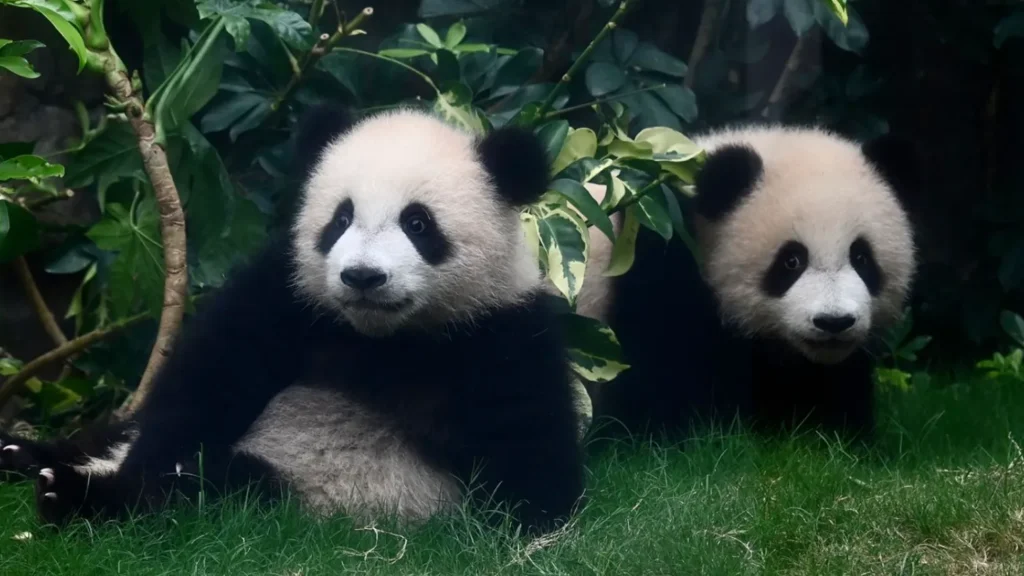
Important Things That You Need To Know
The word “panda” is often used for the giant panda, but there is another animal called the red panda. This article focuses on the giant panda, the black-and-white bear from China. It is the animal most people mean when they search for the panda’s life cycle.
The panda is a bear, but its lifestyle is very different from that of many other bears. It does not usually hunt large prey, does not hibernate like some bears, and spends most of its day eating bamboo. Its body still carries signs of its carnivore ancestry, yet its daily survival depends heavily on bamboo forests.
A key thing to understand is that the giant panda is not just a cute animal. It is an important forest species. Protecting panda habitat also protects other animals that share the same mountain forests, such as golden snub-nosed monkeys, takins, red pandas, and many birds. WWF describes the panda as an umbrella species because protecting it helps protect many other species in the same area.
Another important fact is that pandas are still at risk. Their numbers have improved through decades of conservation work, but their habitat remains fragmented by roads, farms, tourism, and infrastructure.
So when we talk about the panda life cycle, we are also talking about bamboo, mountain forests, climate, reproduction, and conservation. Without healthy forests, the life cycle cannot continue naturally.
The History of Their Scientific Naming
The scientific name of the giant panda is Ailuropoda melanoleuca. This name helps scientists identify the species clearly, regardless of the local language.
Here is a simple breakdown:
- Ailuropoda means “cat-foot” or “cat-like foot,” referring to the panda’s unusual paws and walking style.
- Melanoleuca means “black and white,” describing the panda’s famous coat pattern.
- The giant panda belongs to the bear family, Ursidae.
- For many years, scientists debated whether the giant panda was more closely related to bears or raccoons.
- Modern classification places the giant panda firmly among bears.
The name fits the animal well. Its black ears, black eye patches, black legs, and white body make it one of the easiest mammals to recognize. The enlarged wrist bone, often called a “false thumb,” also makes the panda special because it helps the animal grip bamboo while feeding.
Scientific naming is important because common names can be confusing. The word panda may refer to the giant panda or the red panda, but Ailuropoda melanoleuca refers only to the giant panda.
Their Evolution And Their Origin
The giant panda has a long evolutionary history. Although it eats mostly bamboo today, it is descended from a carnivorous lineage. This is why its digestive system is still closer to that of a meat-eating animal than a true plant-eating herbivore. Because bamboo is low in nutrients and hard to digest, pandas must eat large amounts every day.
Fossil evidence suggests that pandas became strongly linked with bamboo millions of years ago. Britannica notes that fossilized dental remains indicate that the giant panda had adopted bamboo as a major food source at least 3 million years ago.
Over time, pandas developed body features that helped them survive in bamboo forests. Their strong jaws crush bamboo stems. Their broad molars grind plant material. Their thick coat protects them from cold, wet mountain weather. Their enlarged wrist bone works like a thumb, allowing them to hold bamboo while sitting and eating.
The origin of the modern panda is closely tied to China’s mountain forests. Today, wild giant pandas live mainly in mountain ranges in Sichuan, Shaanxi, and Gansu provinces. They once lived in lower areas, too, but farming, forest clearing, and human development pushed them into higher mountain habitats.
This evolutionary story explains why pandas are both strong and vulnerable. They are well adapted to bamboo forests, but they depend so heavily on those forests that habitat loss can quickly threaten their future.
Their main food and its collection process
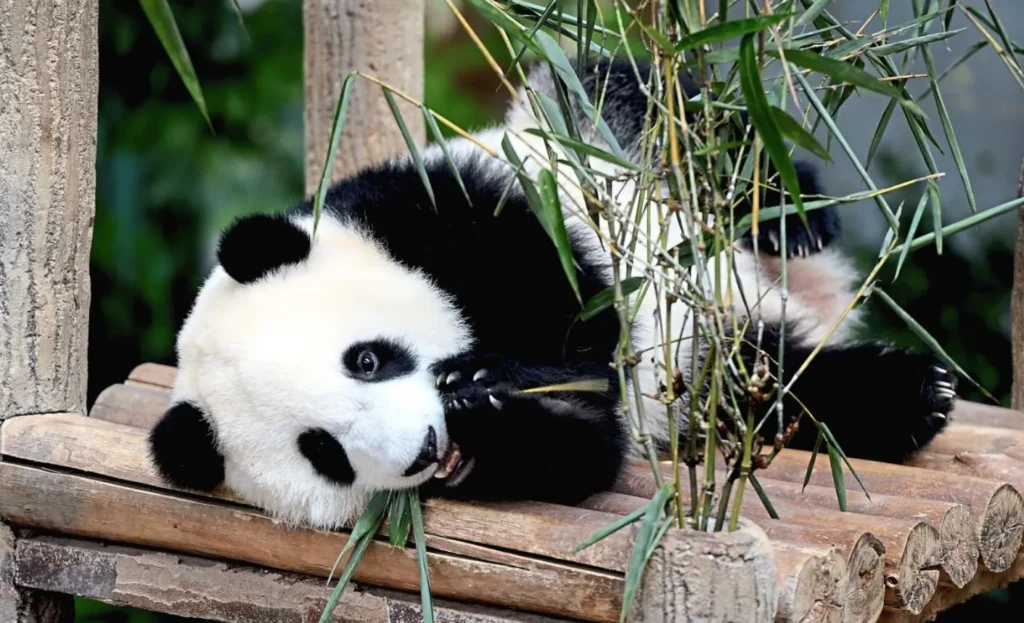
The main food of the panda is bamboo. A giant panda may eat leaves, shoots, stems, and sometimes roots. Bamboo is available throughout much of the year in the panda habitat, but it is not very energy-rich. That is why pandas spend so much time feeding.
A panda’s feeding process is slow, steady, and practical:
- Finding bamboo: Pandas move through forest patches looking for fresh bamboo. They often choose tender shoots when available.
- Sitting to eat: A panda usually sits upright, holds bamboo with its front paws, and bites through the outer layers.
- Using the false thumb: The enlarged wrist bone allows the hand to grip bamboo stems.
- Crushing with strong jaws: Pandas have powerful jaw muscles and teeth that help break hard bamboo.
- Eating for many hours: Pandas may feed for 10 to 16 hours a day, depending on food quality and season.
- Eating large amounts: WWF says pandas may eat around 26 to 84 pounds of bamboo daily, depending on which bamboo parts they consume.
- Occasional extra foods: Though bamboo dominates the diet, pandas may sometimes eat grasses, flowers, fish, eggs, or small animals.
This feeding habit affects the whole panda life cycle. Cubs must learn where to find bamboo, how to handle it, and which parts are easier to eat. A panda that cannot reach enough bamboo cannot survive for long in the wild.
Their life cycle and ability to survive in nature
Newborn stage
A newborn panda is extremely small, blind, weak, and almost hairless. It depends completely on its mother for warmth, milk, cleaning, and protection. Smithsonian notes that newborn panda cubs cannot regulate their own body temperature, so the mother keeps the cub close to her body.
Cub development stage
After several weeks, the cub grows fur, opens its eyes, and becomes stronger. At around three months, it becomes more mobile. By this time, it may begin crawling and reacting more actively to its surroundings.
Learning stage
As the cub grows, it begins to explore outside the den. It watches its mother, climbs, plays, and slowly learns how to move through forest habitat. This stage is important because young pandas must learn survival skills before they become independent.
Independent stage
Young pandas usually separate from their mothers when they are old enough to survive alone. In the wild, pandas are mostly solitary animals. Each panda needs enough space, food, and safe forest cover.
Adult survival
Adult pandas survive by conserving energy, eating bamboo for long hours, climbing when needed, and using scent marks to communicate. Dense bamboo forests help them hide, feed, and avoid unnecessary conflict.
Their Reproductive Process and raising their children
The reproductive process of the giant panda is slow and delicate. This is one reason panda conservation is so important.
- Sexual maturity: Giant pandas usually reach breeding maturity between 4 and 10 years of age.
- Breeding season: Mating usually takes place in spring.
- Short fertile window: Female pandas are fertile for only a short time each year, making successful mating difficult.
- Pregnancy length: After mating, birth usually happens about 3 to 5 months later.
- Cub number: A mother may give birth to one or two cubs, but in the wild, only one usually survives.
- Mother’s role: The mother provides nearly all care. Male pandas do not help raise cubs. Smithsonian notes that fathers and cubs may never meet in the wild.
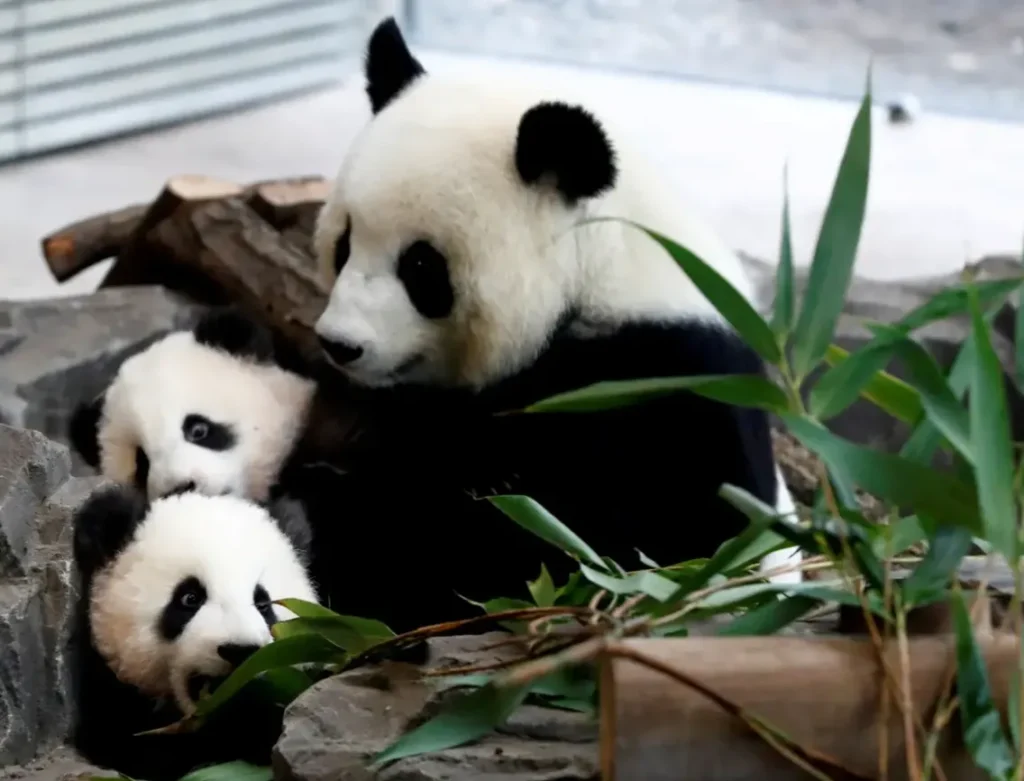
- Early care: The mother keeps the cub warm, nurses it, cleans it, and stimulates it to urinate and defecate during the first weeks.
- Den protection: A mother may spend long periods focused on the cub rather than feeding. Wild panda mothers have been observed going up to a month without eating or drinking after birth.
- Independence: Cubs gradually become more independent as they grow stronger and learn to feed themselves.
The mother-cub bond is the most important part of early panda survival. Without careful maternal care, a newborn panda has almost no chance of surviving.
The importance of them in this Ecosystem
Pandas protect forests by being an umbrella species.
The panda is often called an umbrella species. This means that when people protect panda habitat, they also protect many other species living in the same forest. WWF explains that panda habitat supports animals such as golden monkeys, takins, crested ibis, and other wildlife.
Pandas help forest health.
Pandas help keep mountain forests healthy in indirect ways. WWF UK notes that giant pandas can help spread seeds through their droppings, supporting plant growth in their habitat.
Panda habitat supports people, too.
Panda forests are not only important for animals. They help regulate water flow, reduce soil erosion, and maintain water quality. WWF UK states that panda habitat lies in mountain catchment areas connected to the Yangtze and Yellow rivers, where forests help protect water systems used by large human populations.
Pandas support conservation awareness.
The giant panda is one of the world’s best-known conservation symbols. Its popularity helps raise public interest in forest protection, wildlife research, and long-term habitat restoration.
Protecting pandas means protecting forests, water, biodiversity, and local communities.
What to do to protect them in nature and save the system for the future
Protecting the panda life cycle means protecting every stage: cub birth, bamboo feeding, adult breeding, and old forest survival. The following steps can help protect pandas and their Ecosystem:
- Protect bamboo forests: Pandas cannot survive without healthy bamboo-rich mountain forests.
- Connect broken habitats: Wildlife corridors help pandas move between forest patches to find food and mates.
- Control harmful development: Roads, railways, tourism pressure, and construction should be planned carefully in panda areas.
- Support protected reserves: Strong nature reserves give pandas safer spaces for feeding and breeding.
- Reduce forest clearing: Farming expansion and logging near panda habitat should be controlled.
- Work with local communities: Conservation works better when local people receive benefits from forest protection.
- Support scientific research: Tracking panda movement, genetics, breeding, and bamboo growth helps improve conservation plans.
- Protect water systems: Healthy panda forests also protect rivers, soil, and mountain watersheds.
- Promote responsible tourism: Panda tourism should never disturb breeding areas, dens, or feeding zones.
- Fight climate risk: Bamboo forests may shift as climate patterns change, so long-term planning is needed.
The future of the giant panda depends on protecting nature as a connected system, not just saving one animal.
Frequently Asked Questions (FAQs)
Q1: What is the panda’s life cycle?
A: The panda life cycle includes newborn cub, infant, young cub, juvenile, sub-adult, adult, and older adult stages. Each stage depends on bamboo forests and, in early life, strong mother care.
Q2: How small is a newborn panda?
A: A newborn panda is tiny compared with its mother. WWF describes it as about the size of a stick of butter and around 1/900th the size of its mother.
Q3: When do panda cubs open their eyes?
A: Panda cubs usually open their eyes at about 1.5 to 2 months of age.
Q4: When does a panda cub become mobile?
A: A cub becomes more mobile at around three months of age, though it still depends heavily on its mother.
Q5: What is the main food of a panda?
A: The main food of a panda is bamboo. Leaves, stems, shoots, and roots are all eaten, depending on season and availability.
Q6: Do pandas eat meat?
A: Pandas mostly eat bamboo, but they may occasionally eat small animals, fish, eggs, or other plant foods. Their diet is still overwhelmingly bamboo-based.
Q7: How long do pandas live?
A: Wild pandas are estimated to live around 15–20 years, while pandas in human care may live around 30 years.
Q8: Why are pandas important to the Ecosystem?
A: Pandas help draw protection to mountain forests that support many species. Their habitat also helps protect water systems, reduce erosion, and support local communities.
Conclusion
The panda life cycle is a slow, fragile, and fascinating journey from a tiny, helpless cub to a strong, bamboo-eating adult. Every stage depends on the mother, the forest, and a steady supply of bamboo. The giant panda may look gentle and simple, but its survival depends on mountain ecosystems, clean water, biodiversity, and careful conservation.
Today, pandas are a conservation success story, but they are not completely safe. Their habitat is still fragmented, and their reproductive rate is naturally low. That means long-term protection is still needed.
To save pandas for the future, people must protect bamboo forests, connect habitats, support local communities, and reduce harmful pressure on wild areas. When pandas survive, many other species do too. That is why protecting the panda is really about protecting an entire living system.
Also Read: octopus life cycle
About the Author