The sunflower life cycle is one of the most fascinating natural processes in the plant kingdom. From a small seed buried in the soil to a tall, radiant flower following the sun, sunflowers symbolize growth, resilience, and vitality. These bright yellow blooms are not only beautiful but also incredibly useful, providing sunflower seeds, oil, and ecological benefits.
Understanding the sunflower life cycle helps gardeners, students, and nature lovers appreciate how these plants grow, survive, and reproduce in different environments. Whether you’re planting sunflowers in your backyard or studying plant biology, this guide provides a complete, easy-to-follow explanation.
Quick Answers (Most Common Questions)
1. How long does the sunflower life cycle take?
Typically, it takes 70 to 100 days from seed to full bloom, depending on the variety.
2. What are the stages of a sunflower’s life cycle?
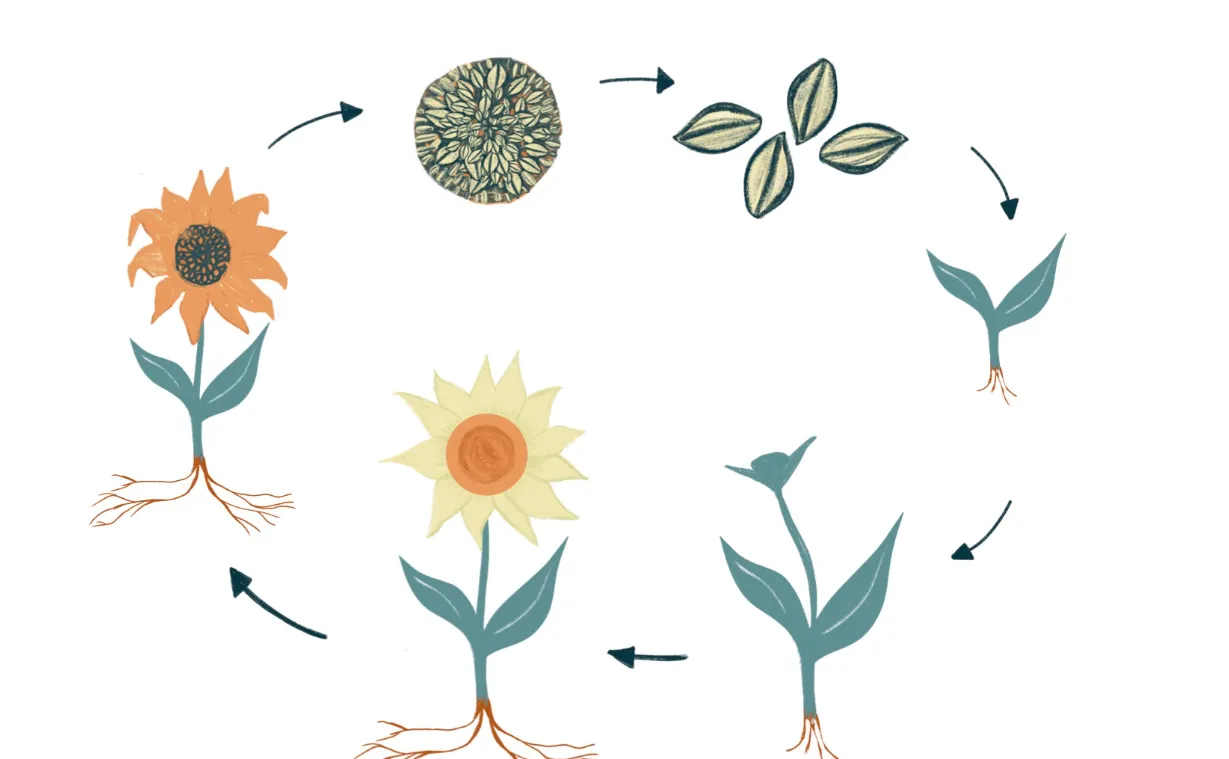
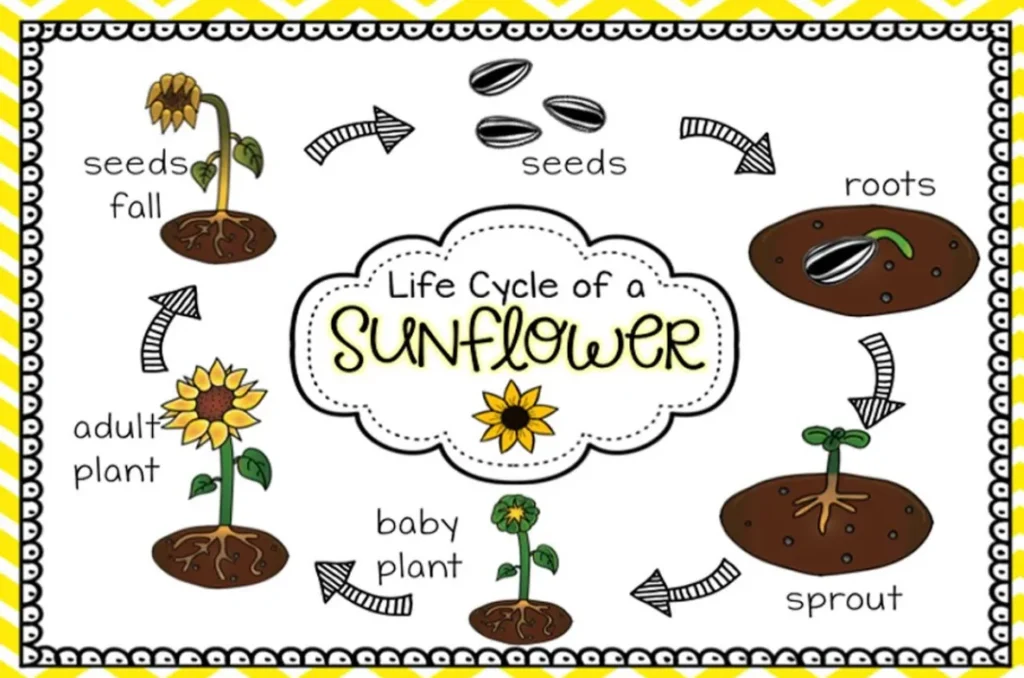
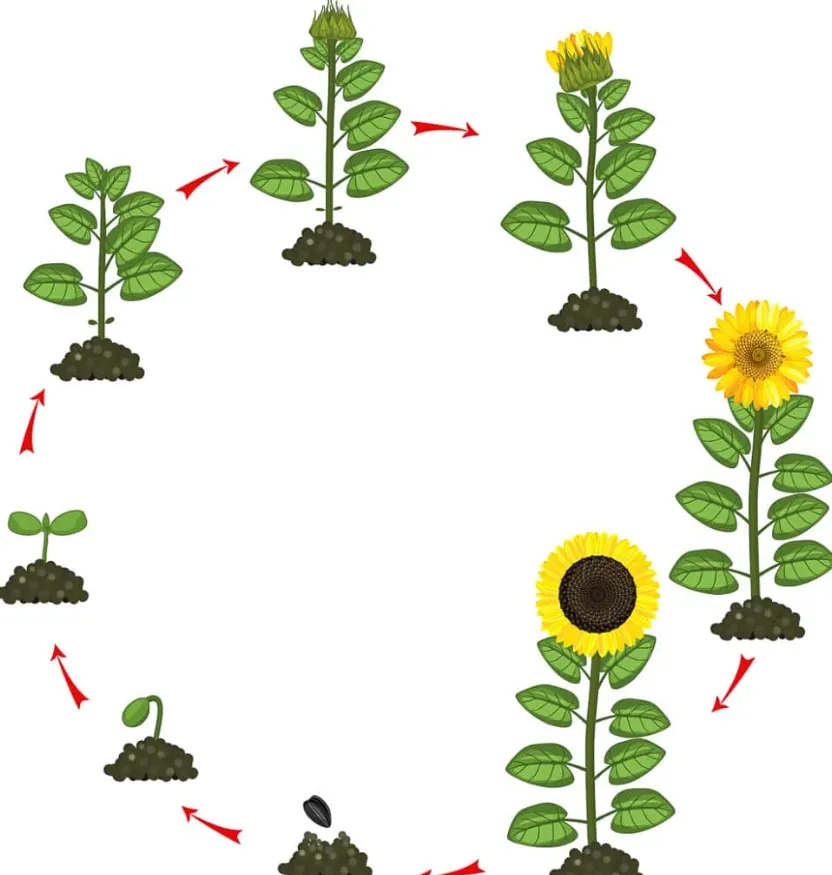
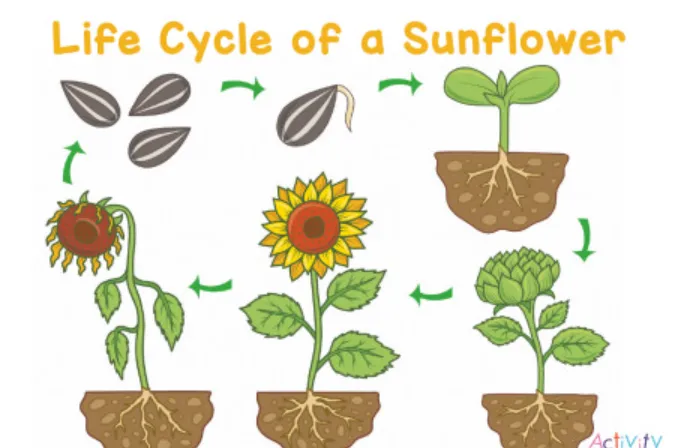
Seed → Germination → Seedling → Budding → Flowering → Seed Production.
3. Do sunflowers follow the sun?
Yes, young sunflowers show heliotropism, meaning they track the sun across the sky.
Quick Life Cycle Table
| Stage | Description | Duration |
| Seed | Dormant stage in soil | 1–2 weeks |
| Germination | Seed sprouts roots and shoots | 5–10 days |
| Seedling | Leaves begin to form | 2–3 weeks |
| Budding | Flower bud develops | 3–4 weeks |
| Flowering | Bright yellow bloom appears | 2–3 weeks |
| Seed Production | Seeds mature inside the flower head | 2–4 weeks |
The History Of Their Scientific Naming
The sunflower’s scientific name is Helianthus annuus, derived from Greek and Latin origins. Its name reflects both its physical appearance and biological characteristics.
- “Helianthus” comes from the Greek:
- Helios = Sun
- Anthos = Flower
- “Annuus” means annual, indicating the plant completes its life cycle in one year.
Sunflowers were first classified scientifically in the 18th century by botanists studying North American flora. These plants were originally cultivated by Native Americans for food, oil, and medicinal purposes long before European discovery.
Over time, various sunflower species were identified, including wild and hybrid varieties. Today, classification helps scientists understand variations among sunflowers, such as dwarf and giant varieties, as well as ornamental types like the teddy bear sunflower.
Their Evolution And Their Origin
Sunflowers originated in North America over 4,500 years ago, making them one of the oldest cultivated crops. Archaeological evidence shows that Native American tribes domesticated sunflowers for food, dye, and oil production.
Initially, wild sunflowers were small and branched. Through selective breeding, early farmers developed larger flower heads and higher seed yields. This transformation made sunflowers a valuable agricultural crop.
When European explorers brought sunflowers to Europe in the 16th century, they quickly gained popularity. Russia later became a major center for sunflower cultivation, especially for producing sunflower oil, which became widely used in cooking.
From an evolutionary standpoint:
- Sunflowers are adapted to a wide range of climates, from dry plains to fertile farmland.
- Their deep root systems allow them to access underground water.
- Their ability to track sunlight increases photosynthesis efficiency.
Today, sunflowers are grown worldwide, not only for their beauty but also for their economic and ecological importance.
Important Things That You Need To Know
Sunflowers are more than just beautiful flowers. Understanding their related uses and features can help you see why they are so important in daily life.
🌻 Sunflower and Its Uses (LSI Focus Section)
The sunflower is widely known for its seeds and oil, but it offers much more.
1. Sunflower Seeds
Rich in vitamins E and B, sunflower seeds are a popular snack and a source of healthy fats. They are also used in bird feed and baking.
2. Sunflower Oil
Extracted from seeds, sunflower oil is commonly used for cooking due to its light flavor and high smoke point. It is also used in cosmetics and skincare.
3. Sunflower Lecithin
This natural emulsifier is used in food processing and supplements. It supports brain health and digestion.
4. Teddy Bear Sunflower
A unique ornamental variety with fluffy, double blooms. It is perfect for gardens and decorative purposes.
5. Smackin Sunflower Seeds
A modern-flavored snack option is gaining popularity, underscoring sunflower seeds’ continued evolution in consumer markets.
Sunflowers play a major role in agriculture, nutrition, and even industry. Their versatility makes them one of the most valuable plants globally.
Their Main Food and Its Collection Process
Sunflowers produce their own food through photosynthesis, a process that converts sunlight into energy.
How Sunflowers Get Their Food
- Sunlight Absorption
- Leaves capture sunlight using chlorophyll.
- Carbon Dioxide Intake
- Taken from the air through tiny pores in leaves.
- Water Uptake
- Roots absorb water and minerals from the soil.
- Photosynthesis Process
- Sunlight + Water + CO₂ → Glucose (food) + Oxygen
Nutrient Collection Process
- Roots grow deep into the soil to access nutrients.
- Soil minerals, such as nitrogen, phosphorus, and potassium, support plant growth.
- Sunflowers can even help clean contaminated soil through a process called phytoremediation.
Storage of Food
- Energy is stored in seeds as oil.
- This stored energy helps new plants grow during germination.
Their Life Cycle and Ability to Survive in Nature
🌱 1. Seed Stage
The sunflower life cycle begins with a seed planted in warm soil. The seed contains stored nutrients for initial growth.
🌿 2. Germination Stage
Within a week, the seed absorbs water and sprouts roots and shoots. This stage is crucial for survival.
🌾 3. Seedling Stage
Small leaves emerge, and the plant starts photosynthesis. It becomes stronger and more independent.
🌻 4. Budding Stage
A flower bud forms at the top. The plant grows taller and prepares to bloom.
🌼 5. Flowering Stage
The iconic yellow flower opens. It attracts pollinators, such as bees and butterflies.
🌰 6. Seed Production Stage
After pollination, seeds develop inside the flower head, completing the cycle.
Survival Abilities
- Deep roots help survive drought.
- Thick stems provide support against wind.
- Sun-tracking improves energy efficiency.
Their Reproductive Process and Raising Their Children
Sunflowers reproduce through pollination and seed formation.
Reproductive Process
- Pollination
- Bees and insects transfer pollen between flowers.
- Fertilization
- Pollen reaches the ovule, and the ovule forms a seed.
- Seed Development
- Seeds grow inside the flower head.
Raising Their “Children”
- Seeds fall to the ground or are dispersed by animals.
- Each seed contains everything needed to grow a new plant.
- Under the right conditions, the cycle begins again.
Key Points
- Sunflowers rely heavily on pollinators.
- Each flower head can produce hundreds to thousands of seeds.
- A hard outer shell protects seeds.
Importance of Them in this Ecosystem
🌍 1. Supporting Pollinators
Sunflowers attract bees, butterflies, and birds, helping maintain biodiversity.
🌱 2. Soil Improvement
Their roots improve soil structure and reduce erosion.
🌿 3. Food Source
They provide food for humans, birds, and wildlife.
🌞 4. Carbon Absorption
Sunflowers help reduce carbon dioxide in the atmosphere.
🌾 5. Agricultural Value
Used in crop rotation to improve soil health and productivity.
What to Do to Protect Them in Nature and Save the System for the Future
- Plant sunflowers in gardens and open spaces
- Avoid using harmful pesticides
- Support organic farming practices
- Protect pollinators like bees
- Use eco-friendly fertilizers
- Conserve soil and water resources
- Encourage biodiversity in farming systems
- Educate others about sunflower benefits
Frequently Asked Questions (FAQs)
1. How many stages are in the sunflower life cycle?
There are six main stages from seed to seed production.
2. How long do sunflowers live?
Most sunflowers complete their life cycle in one growing season.
3. Do sunflowers grow every year?
Most are annual, but some species are perennial.
4. Why do sunflowers face the sun?
To maximize sunlight absorption for growth.
5. What do sunflowers need to grow?
Sunlight, water, nutrients, and well-drained soil.
6. Can sunflowers grow in pots?
Yes, especially dwarf varieties.
7. How many seeds does one sunflower produce?
Up to 1,000 or more seeds per flower head.
8. Are sunflowers useful for the environment?
Yes, they support pollinators and improve soil health.
Conclusion
The sunflower life cycle is a perfect example of nature’s beauty and efficiency. From a tiny seed to a towering plant with a golden bloom, every stage plays a vital role in growth and survival. Sunflowers not only provide sunflower seeds, oil, and nutritional benefits but also support ecosystems by attracting pollinators and improving soil quality.
Understanding their life cycle helps us appreciate how interconnected nature truly is. By protecting sunflowers and promoting sustainable practices, we can ensure these vibrant plants continue to thrive for future generations.
Whether you’re a gardener, student, or nature enthusiast, sunflowers offer endless inspiration and value.
Also Read: cockroach life cycle
About the Author