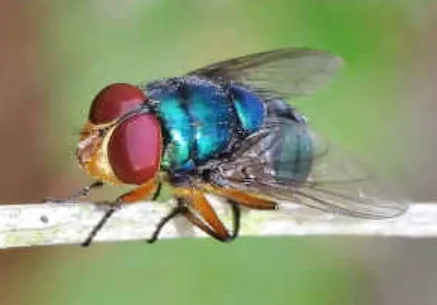
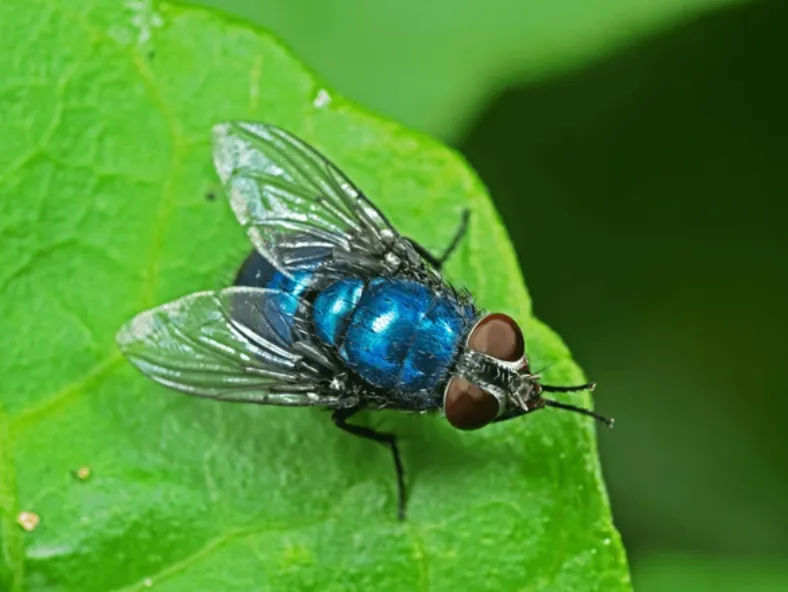
The blowfly life cycle is one of the fastest and most important natural recycling processes in the insect world. A blowfly belongs to the family Calliphoridae, a group of metallic-looking flies often seen around carrion, garbage, animal waste, wounds, and other decaying organic materials. They are commonly called bluebottles, greenbottles, or carrion flies because many species have shiny blue, green, or black bodies.
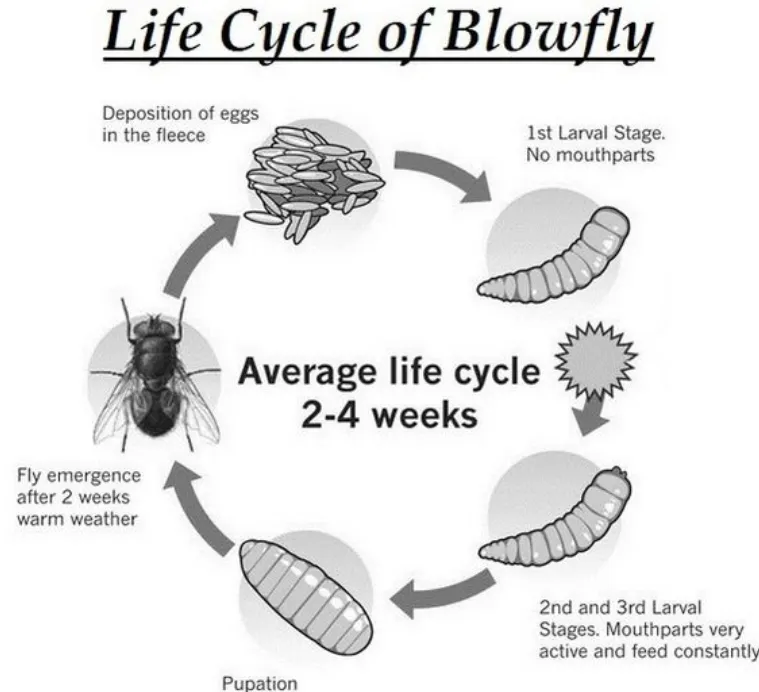
Blowflies may look unpleasant to humans, but they play a powerful role in nature. Their larvae, known as maggots, help break down dead animals and return nutrients to the soil. This makes them important in ecosystem cleaning, nutrient recycling, and even forensic science, where investigators use blowfly eggs and larvae to estimate how long a body has been decomposing. Blowflies usually pass through four main stages: egg, larva, pupa, and adult. Their development speed depends strongly on temperature, food quality, humidity, and species. Scientific sources describe blowflies as rapid colonizers of carrion and key decomposers in terrestrial ecosystems.
Q: What is a blowfly?
A: A blowfly is a fly from the family Calliphoridae, often metallic blue, green, or black, and commonly associated with dead animals, rotting organic matter, garbage, or wounds.
Q: How long does the blowfly’s life cycle take?
A: The full blowfly life cycle often takes around 3 to 4 weeks, but it can be faster or slower depending on temperature, species, and available food.
Q: Why are blowflies important?
A: Blowflies are important because their larvae break down dead tissue, help recycle nutrients, support food webs, and provide useful evidence in forensic investigations.
Quick Life Cycle Table
| Stage | What Happens | Common Duration | Key Details |
| Egg | Females lay eggs on carrion, waste, wounds, or moist decomposing material | It takes as little as 8 hours to hatch in warm conditions | Eggs are small, pale, and often laid in clusters |
| Larva | Maggots feed actively and grow through several molts | Around several days to 1 week | This is the main feeding stage |
| Pupa | Mature larvae leave food and transform into a hardened case | Around 7–12 days in many species | Often occurs in soil, leaf litter, or dry protected places |
| Adult | Adult flies emerge, mate, feed, and lay eggs | Adults may live for weeks | The cycle repeats when females find suitable breeding material |
The exact timing is not fixed. Blowfly development changes with temperature, humidity, food source, and species. In forensic science, this predictable temperature-based growth pattern is one reason blowflies are useful for estimating time since colonization.
Important Things That You Need To Know
To understand the blowfly life cycle, it is important to know a few related terms that people often search for. These terms also help explain how blowflies live, reproduce, and interact with humans and nature.
Blowfly eggs are usually laid on moist, protein-rich material such as dead animals, garbage, dung, or wounds. In warm weather, eggs can hatch very quickly. Some species lay eggs in loose clusters, and group egg-laying by several females can create thousands of eggs on a single carcass.
Blowfly larvae are the maggot stage. This is the most active feeding stage, and it is also the stage most people notice during decomposition or infestation. The larvae use mouth hooks and digestive enzymes to quickly break down tissue.
A blowfly infestation happens when blowflies repeatedly breed in a place where food is available. This may occur near dead animals, open garbage, rotting food, dirty bins, animal waste, or untreated wounds. In livestock, some species can cause myiasis, where larvae infest living tissue.
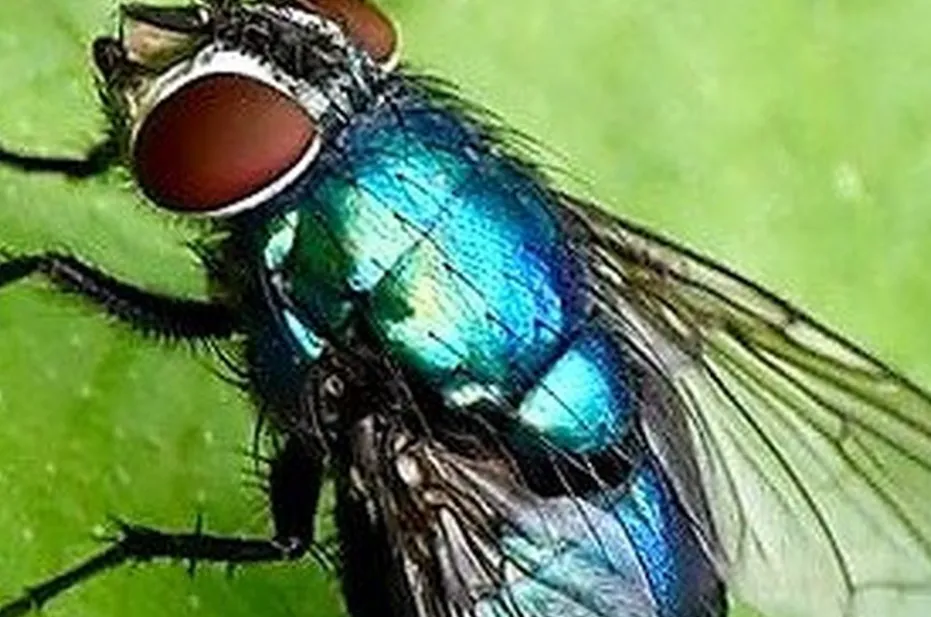
The question of what a blowfly is is often confused with that of ordinary houseflies. A blowfly vs housefly comparison is simple: blowflies are usually larger, shinier, and metallic-looking, while houseflies are dull gray with dark stripes on the thorax. Houseflies belong to Muscidae, while blowflies belong to Calliphoridae.
The History of Their Scientific Naming
The scientific family name of blowflies is Calliphoridae. This name is connected to the genus Calliphora, and it reflects the often beautiful metallic body color of many blowfly species. The word is commonly explained from Greek roots: kallos, meaning beauty, and phoros, meaning bearer. So, Calliphoridae can be understood as a family of “beauty-bearing” flies, referring to their shiny blue, green, black, or bronze appearance.
The common name blowfly has a different origin. It comes from older descriptions of meat becoming “flyblown.” When flies laid eggs on meat, the resulting maggots caused putrefaction and gas formation, making the meat appear swollen or “blown.” This is why the same insect family is linked with carrion, dead animals, spoiled meat, and decomposition.
Taxonomically, blowflies are classified as Animalia, Arthropoda, Insecta, Diptera, and Calliphoridae. The order Diptera means “two wings,” which separates true flies from many other winged insects. Britannica lists blowflies under the family Calliphoridae and describes them as a nearly worldwide group of important decomposers.
Their Evolution And Their Origin
The evolutionary success of blowflies comes from their ability to use short-lived but nutrient-rich resources. Dead animals, wounds, dung, and rotting organic matter do not last long in nature. Blowflies evolved to find these resources quickly, lay eggs rapidly, and complete development before the food disappears.
Most blowflies are part of the larger fly group Calyptratae, within the order Diptera. Their ancestors developed specialized feeding, flight, and sensory abilities that helped them locate decaying matter. Adult blowflies can detect odors from decomposing tissue and respond quickly to fresh carrion. This rapid detection gives them an advantage over insects that arrive later in the decomposition process.
Their larvae also evolved strong survival features. Blowfly larvae do not chew like caterpillars. Instead, they use mouth hooks and digestive enzymes to break down soft tissue. This allows them to feed efficiently in dense, wet, microbe-rich environments. NC State Extension explains that maggots use both mechanical and chemical digestion to feed quickly on carrion.
Evolution also shaped the ecological variety of blowflies. Some species are mainly scavengers, some can infest wounds, and some are medically useful when raised under sterile laboratory conditions for wound cleaning. Britannica notes that some blowfly maggots are used in maggot debridement therapy, where sterile larvae remove dead tissue from wounds.
Today, blowflies are found across many regions of the world. Their broad distribution demonstrates how well they adapted to forests, grasslands, farms, cities, slaughterhouses, landfills, and human settlements. Their origin is not tied to one single place; instead, their modern diversity reflects long evolutionary adaptation to decomposition-based habitats.
Their main food and its collection process
Blowflies feed differently depending on their life stage. The adult blowfly and blowfly larvae do not always eat the same food.
Adult blowflies commonly feed on liquid or semi-liquid materials. They may visit nectar, plant fluids, dung, carrion fluids, garbage liquids, and rotting organic matter. Some adults also feed on protein-rich fluids that help females develop eggs.
The larvae are the strongest feeders in the life cycle. They mainly consume moist, decaying animal tissue. This may include carcasses, meat scraps, dead birds, dead rodents, fish remains, livestock wounds, and other soft organic material. Texas A&M describes blowfly larvae as feeding on wet, living, or dead flesh, while NC State notes that maggots are especially attracted to soft tissue, such as muscles and organs.
Their food collection process follows a clear pattern:
- Odor detection: Adult females detect gases and odors released by decomposition.
- Site inspection: They inspect the material for moisture, texture, and safety.
- Egg laying: Females lay eggs in cracks, wounds, body openings, or soft, protected areas.
- Larval feeding: After hatching, larvae begin feeding in groups.
- Rapid growth: Maggots molt and increase body size quickly.
- Migration: Mature larvae leave the food source to find a dry pupation site.
This feeding process may seem unpleasant, but it is extremely important. Without insects such as blowflies, dead animals and organic waste would remain longer in the environment, slowing nutrient recycling.
Their life cycle and ability to survive in nature
Egg Stage
The blowfly life cycle begins when an adult female finds a suitable breeding site. This is often carrion, rotting food, animal waste, or an open wound. Eggs are usually small, pale, and clustered. Some blowfly eggs are around 1 mm long, and females may lay dozens or hundreds at a time, depending on the species.
Larval Stage
After hatching, the larvae begin feeding immediately. This is the maggot stage and the most important growth period. Larvae pass through several instars, or growth stages, before becoming mature. During this stage, they survive by staying within moist food, avoiding dryness, and feeding in groups.
Pupal Stage
When larvae are fully grown, they usually leave the food source. They may crawl into soil, leaf litter, under rocks, or other protected places. There, the outer skin hardens into a puparium, and the insect undergoes metamorphosis within. UF/IFAS describes pupation as occurring in topsoil or protected ground material, with the pupal stage often lasting 7–12 days, depending on temperature.
Adult Stage
The adult emerges from the puparium, expands its wings, hardens its body, and begins searching for food and mates. Adult blowflies survive by being strong fliers, fast breeders, and excellent odor detectors. Their ability to use temporary resources helps them survive in forests, farms, cities, and wild habitats.
Their Reproductive Process and raising their children
Blowflies do not raise their young like mammals or birds. Instead, they use a reproductive strategy based on fast egg production, careful breeding-site selection, and larval self-feeding.
The female’s most important parental role is choosing the correct place to lay eggs. A good site must be moist, nutrient-rich, and safe enough for larvae to feed after hatching. Carrion, wounds, dung, and rotting waste provide the protein and moisture needed for larval development.
Their reproductive process includes:
- Mating: Adult males and females mate after reaching sexual maturity.
- Protein feeding: Female blowflies often need protein-rich food to support egg development.
- Oviposition: The female lays eggs on suitable decomposing material.
- Egg clustering: Eggs are often clustered together, helping many larvae hatch in the same feeding area.
- Self-feeding larvae: Once eggs hatch, larvae feed independently.
- No direct parental care: Adults do not guard, clean, or feed their young after egg laying.
In some species, egg masses may contain 50 to 200 eggs, and when several females lay eggs on the same carcass, the total number can become very large.
This strategy works because blowfly food sources are temporary. A dead animal may only remain useful for a short time. By producing many eggs and developing quickly, blowflies increase the chance that at least some offspring will survive.
The importance of them in this Ecosystem
Natural Decomposers
Blowflies are among nature’s fastest decomposers. Their larvae help break down dead animals and decaying tissue. This speeds up the return of nutrients to the soil and supports the wider food chain. Britannica describes blowflies as important decomposers that help with nutrient cycling in terrestrial ecosystems.
Support for Food Webs
Both adult blowflies and larvae become food for birds, reptiles, amphibians, spiders, beetles, and other insects. This means that blowflies convert dead organic matter into living biomass that other animals can eat.
Forensic Importance
Blowflies are highly valuable in forensic entomology. Because they often arrive early on carrion and develop in predictable stages, scientists can study their eggs, larvae, or pupae to estimate the time since colonization. This can help investigators understand the decomposition timeline.
Medical and Veterinary Importance
Some blowfly species can cause myiasis, especially in livestock or animals with open wounds. However, sterile larvae of certain species can also be used medically to clean dead tissue from wounds. This shows that blowflies can be both harmful and beneficial depending on the situation.
Urban Waste Breakdown
In cities, blowflies help break down organic waste, although unmanaged populations can create health risks. NC State Extension notes that blowflies can feed on feces and rotting food and may mechanically transfer harmful bacteria after contacting dirty materials.
What to do to protect them in nature and save the system for the future
Blowflies may not be popular insects, but they are part of a balanced natural system. Protecting them does not mean encouraging unhealthy infestations around homes. It means protecting natural decomposition processes while managing hygiene in human spaces.
- Protect natural habitats: Forests, grasslands, wetlands, and wild areas allow natural decomposers to work without disturbing people.
- Avoid unnecessary pesticide use: Broad pesticide spraying can kill many useful insects, including decomposers and pollinators.
- Manage waste responsibly: Keep household garbage covered, but allow natural decomposition to happen safely in wild ecosystems.
- Respect carrion ecology: Dead animals in wild areas support insects, birds, mammals, microbes, and soil organisms.
- Improve livestock care: Clean wounds, shear animals when needed, and maintain hygiene to reduce harmful blowfly infestation without destroying wild populations.
- Support scientific research: Blowflies are important in forensic science, medical research, veterinary studies, and ecological monitoring.
- Separate home control from nature protection: It is reasonable to prevent blowfly infestation in homes, kitchens, farms, and hospitals, but wild blowflies should not be treated as useless pests.
- Reduce pollution: Healthy soil and clean ecosystems support balanced insect populations and prevent unnatural pest explosions.
- Teach ecological value: People often fear maggots, but blowfly larvae are essential recyclers in nature.
- Use targeted control methods: When control is needed, remove breeding sources first rather than relying solely on chemicals.
The goal is balance. Blowflies should be controlled around food, wounds, and living spaces, but protected as part of the natural recycling system.
Frequently Asked Questions (FAQs)
Q1: What is a blowfly?
A: A blowfly is a true fly from the family Calliphoridae. It is often metallic blue, green, or black and is commonly found around carrion, waste, dung, wounds, and decaying organic matter.
Q2: What are blowfly eggs?
A: Blowfly eggs are small, pale eggs laid by adult females on moist decomposing material. In warm conditions, some eggs can hatch in as little as several hours.
Q3: What do blowfly larvae eat?
A: Blowfly larvae usually eat moist decaying tissue, carrion, dung, rotting food, and sometimes infected living tissue. They are the main feeding stage of the blowfly life cycle.
Q4: How long does the blowfly life cycle take?
A: The full life cycle often takes around 3 to 4 weeks, but temperature, humidity, species, and food source can make it shorter or longer.
Q5: What causes a blowfly infestation?
A: A blowfly infestation usually happens when there is a breeding source such as dead animals, open garbage, rotting meat, dirty bins, animal feces, or untreated wounds.
Q6: What is the difference between a blowfly and a housefly?
A: In a blowfly vs housefly comparison, blowflies are usually shinier, metallic, and often larger. Houseflies are usually dull gray with dark thoracic stripes and belong to the family Muscidae.
Q7: Are blowflies dangerous?
A: Blowflies can be risky when they contact food, wounds, or dirty waste because they may mechanically transfer bacteria. Some species can also cause myiasis in animals or humans.
Q8: Why are blowflies useful in forensic science?
A: Blowflies often arrive early on carrion. Since their eggs, larvae, and pupae develop in predictable stages, forensic experts can use them to estimate decomposition timelines.
Conclusion
The blowfly life cycle is a powerful example of how nature turns death and waste into new biological energy. From blowfly eggs to feeding blowfly larvae, then pupae and adults, each stage has a clear role in survival and ecological balance. Although blowflies can create problems in homes, farms, hospitals, and livestock wounds, they are also essential decomposers, nutrient recyclers, forensic indicators, and even medical tools in controlled conditions.
Understanding what a blowfly is, how it reproduces, what it eats, and how a blowfly infestation begins helps people manage them wisely. The goal is not to remove blowflies from nature, but to prevent unhealthy contact with human food, wounds, and waste. In natural ecosystems, blowflies are not just pests. They are fast-working recyclers that help keep the environment clean, active, and balanced.
Also Read: a toad’s life cycle
About the Author