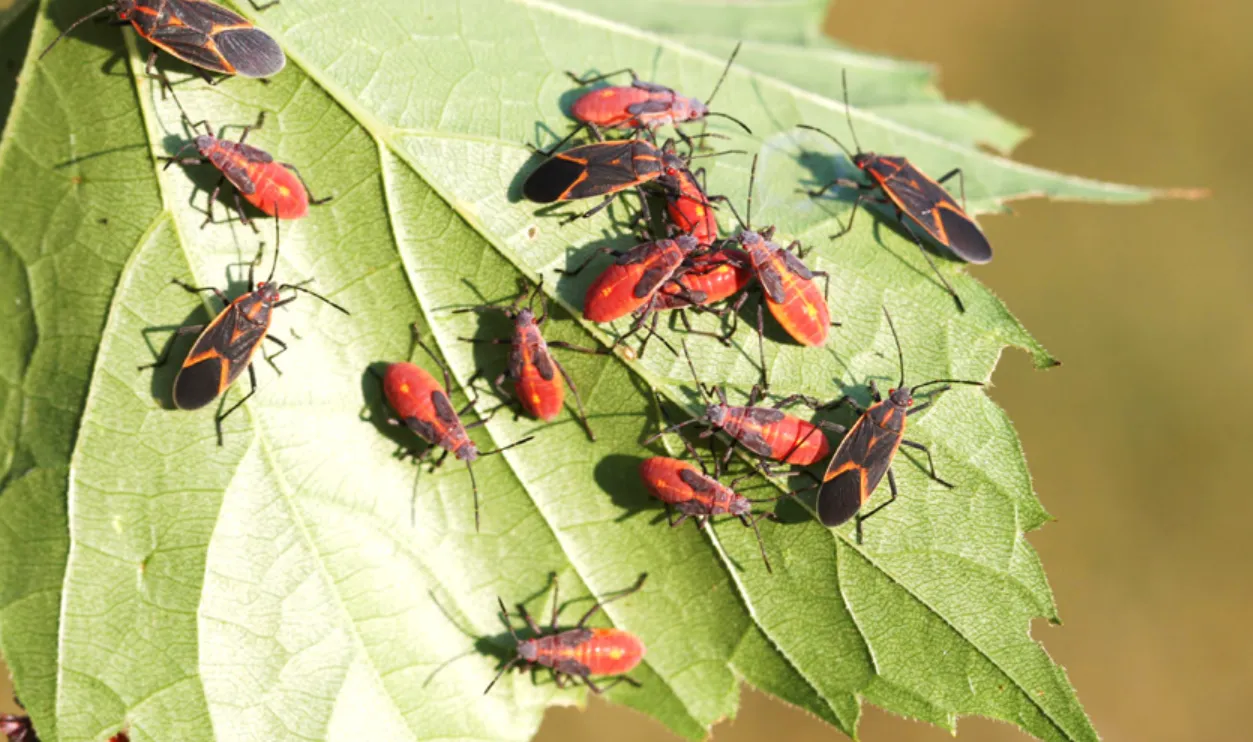
The boxelder bug life cycle is a simple but fascinating process that explains why these black-and-red insects suddenly appear in large numbers around homes, trees, walls, windows, and sunny outdoor surfaces. The insect most people call the boxelder bug is commonly known as the eastern boxelder bug, scientifically named Boisea trivittata. It belongs to the order Hemiptera, the group of insects known as true bugs, and the family Rhopalidae.
Boxelder bugs are usually not dangerous pests. They are more of a seasonal nuisance because adults often gather on buildings in late summer and fall before looking for protected winter shelter. They do not reproduce indoors, and they generally do not damage homes, food, or furniture. However, large indoor gatherings can be annoying and may stain walls or curtains with droppings.
Their life cycle includes egg, nymph, and adult stages. Unlike butterflies or beetles, they do not go through a pupal stage. Instead, baby boxelder bugs hatch as small red nymphs and slowly grow into adults through several molts.
Q: What is the boxelder bug life cycle?
A: The life cycle has three main stages: eggs, nymphs, and adults. Eggs hatch in about 10 to 14 days, nymphs molt several times, and adults overwinter in protected places.
Q: Are boxelder bugs harmful to humans?
A: Boxelder bugs are not considered harmful. They do not bite humans or pets under normal conditions, and they do not reproduce indoors.
Q: Why do boxelder bugs come into homes?
A: Adult boxelder bugs enter cracks, gaps, attics, walls, and window areas in the fall because they are searching for warm, protected overwintering sites.
Quick Life Cycle Table
| Life Stage | What Happens | Time/Season | Key Identification |
| Egg | Females lay red eggs on bark cracks, leaves, seed clusters, or host trees | Spring to summer | Small, red, oval, or elongated eggs |
| Baby boxelder bug / Nymph | Nymphs hatch and feed on soft seeds, leaves, and plant sap | Summer | Bright red at first, then red-black as they grow |
| Growing Nymph | Nymphs molt several times before adulthood | Summer | Wing pads develop gradually |
| Adult Boxelder Bug | Adults mate, feed, and may produce another generation | Mid-summer to fall | Black or dark brown body with red-orange markings |
| Overwintering Adult | Adults hide in buildings, bark, cracks, or protected places | Fall to winter | Often seen indoors near windows or sunny walls |
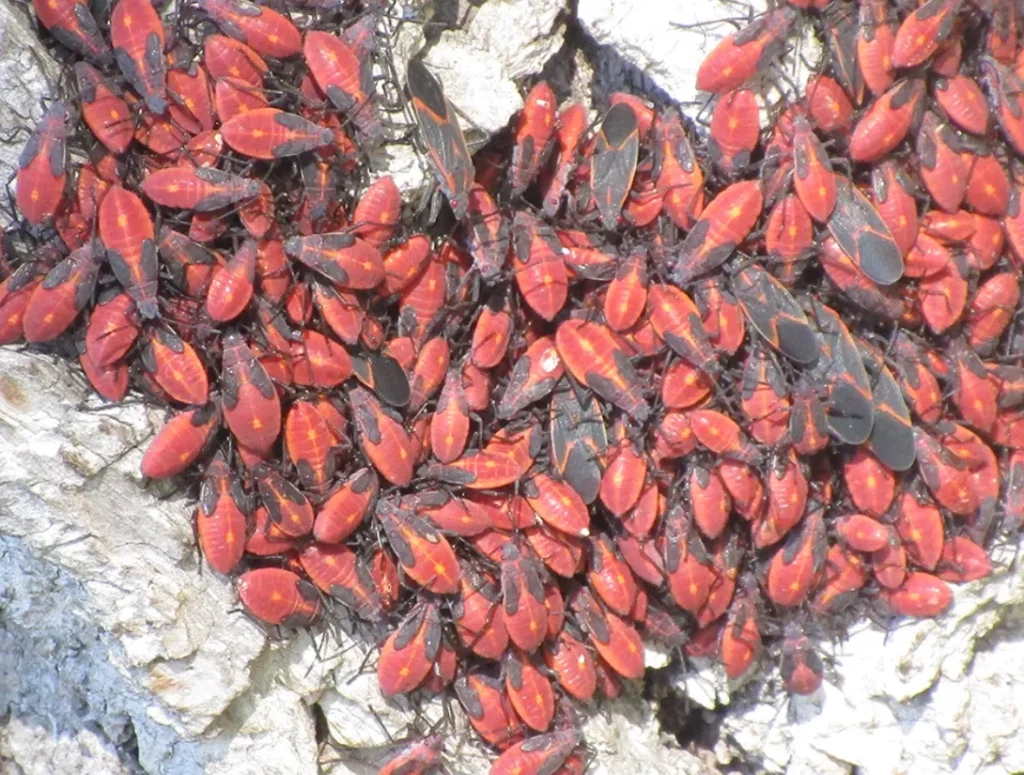
Boxelder bugs develop through incomplete metamorphosis, meaning young nymphs resemble small versions of adults but do not have fully developed wings. Nymphs molt five times before becoming adults.
The History of Their Scientific Naming
The scientific name of the eastern boxelder bug is Boisea trivittata. This name is important because it separates the insect from similar red-and-black bugs such as milkweed bugs, scentless plant bugs, and other seed bugs.
The species authority is Say, 1825, meaning the insect was formally described by the American naturalist Thomas Say in 1825. GBIF records the accepted name as Boisea trivittata (Say, 1825) and places it under kingdom Animalia, phylum Arthropoda, class Insecta, order Hemiptera, family Rhopalidae, and genus Boisea.
Important naming points:
- Boisea is the genus name.
- trivittata refers to the species name.
- The insect is also commonly called the boxelder bug, maple bug, and eastern boxelder bug.
- Older or related names include historical synonyms such as Lygaeus trivittatus.
- The name “boxelder bug” comes from its close association with boxelder trees, especially female seed-bearing trees.
This naming history matters because accurate identification helps people avoid confusing boxelder bugs with harmful insects. In reality, Boisea trivittata is mostly a nuisance insect, not a dangerous household or agricultural pest.
Their Evolution And Their Origin
The boxelder bug belongs to the order Hemiptera, a large insect group known as true bugs. True bugs have piercing-sucking mouthparts that allow them to draw fluids from plants, seeds, or other food sources. Boxelder bugs use these mouthparts mainly to feed on seeds and soft plant tissues.
The origin of the eastern boxelder bug is closely connected with North American trees, especially boxelder trees and other maples. The insect is strongly associated with Acer negundo, commonly known as the boxelder tree. Female boxelder trees produce seed clusters, and these seeds provide an important food source for both nymphs and adults.
From an evolutionary perspective, boxelder bugs are adapted to seasonal climates. Their adults survive winter by hiding in sheltered locations. This overwintering behavior helps them avoid freezing temperatures and restart reproduction when spring returns.
Their color pattern also has survival value. Adult boxelder bugs have dark bodies with red or orange lines, while young nymphs are bright red. These strong colors may signal to predators that they are unpleasant. Boxelder bugs also release an unpleasant odor when crushed or disturbed, which can discourage some predators.
The spread of boxelder bugs into urban and suburban areas happened because people planted many host trees near houses, parks, streets, and public landscapes. Boxelder, maple, and ash trees are common around human settlements, providing these insects with easy access to food and shelter.
So, the modern success of boxelder bugs is not accidental. Their survival depends on three strong adaptations: feeding on common host trees, reproducing quickly during warm seasons, and overwintering as adults in protected places.
Their main food and its collection process
The main food of the boxelder bug is plant fluid from boxelder, maple, and sometimes ash trees. Their preferred food source is the developing seeds of female boxelder trees. This is why boxelder bugs are often more common around female trees than male trees.
They feed using a piercing-sucking beak. Instead of chewing leaves like caterpillars, they insert their mouthparts into seeds, leaves, fruits, or soft plant tissues and suck out liquid nutrients.
Main food sources include:
- Boxelder tree seeds, especially from female trees.
- Maple seeds and soft maple tissues.
- Ash trees, when suitable food is available.
- New foliage sap from host trees.
- Occasionally, stone fruits, apples, grapes, strawberries, grasses, and ripe fruits are found in some regions.
Their food collection process is slow and plant-based. A baby boxelder bug or nymph usually stays near the host trees where eggs were laid. It feeds in groups on seeds, fallen seed clusters, leaves, or soft plant parts.
Adults are more mobile. They can fly from tree to tree and may travel long distances when searching for food or overwintering shelter. In the fall, feeding becomes less important as adults begin searching for protected places to survive winter.
Important Things That You Need To Know
Before using any boxelder bug spray or control method, it is important to understand what these insects actually do. Many people panic when they see hundreds of bugs on walls or windows, but boxelder bugs are usually not dangerous. Their biggest problem is seasonal invasion, not aggressive behavior.
A boxelder bug bite is not a common concern. University extension notes that boxelder bugs do not bite humans or pets and do not damage food or household items. The real issues indoors are staining, odor when crushed, and large numbers around windows or in warm rooms.
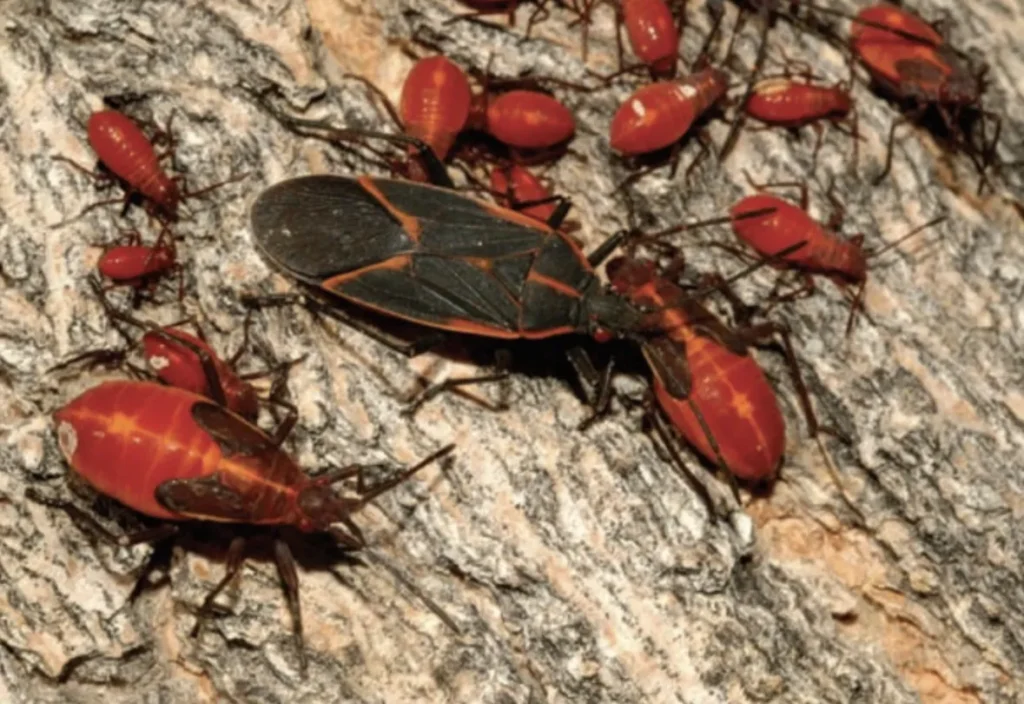
A baby boxelder bug is called a nymph. It is bright red when newly hatched and becomes darker as it grows. These nymphs are commonly seen around host trees during summer.
The eastern boxelder bug is mostly linked with female seed-bearing boxelder trees. However, it can also use maple and ash trees as food sources. This is why removing one tree does not always solve the problem. Adults may fly several blocks or even farther when searching for shelter.
For smart boxelder bug control, prevention is better than indoor spraying. Seal cracks, repair screens, clean entry points, and manage outdoor gathering areas before fall. When needed, exterior treatment is most useful in late summer or early fall, when bugs first gather outside buildings.
Their life cycle and ability to survive in nature
Egg Stage
The boxelder bug life cycle begins when overwintered adults become active in spring. After feeding for a short period, adults mate, and females lay red eggs in bark cracks, on leaves, in seed clusters, or around host trees. Eggs usually hatch in about 10 to 14 days.
Nymph Stage
The newly hatched baby boxelder bug is wingless and bright red. As it feeds and grows, it becomes darker and develops wing pads. Nymphs molt several times before becoming adults. Animal Diversity Web notes that nymphs molt five times and spend an average of 50 to 78 days in the nymph stage.
Adult Stage
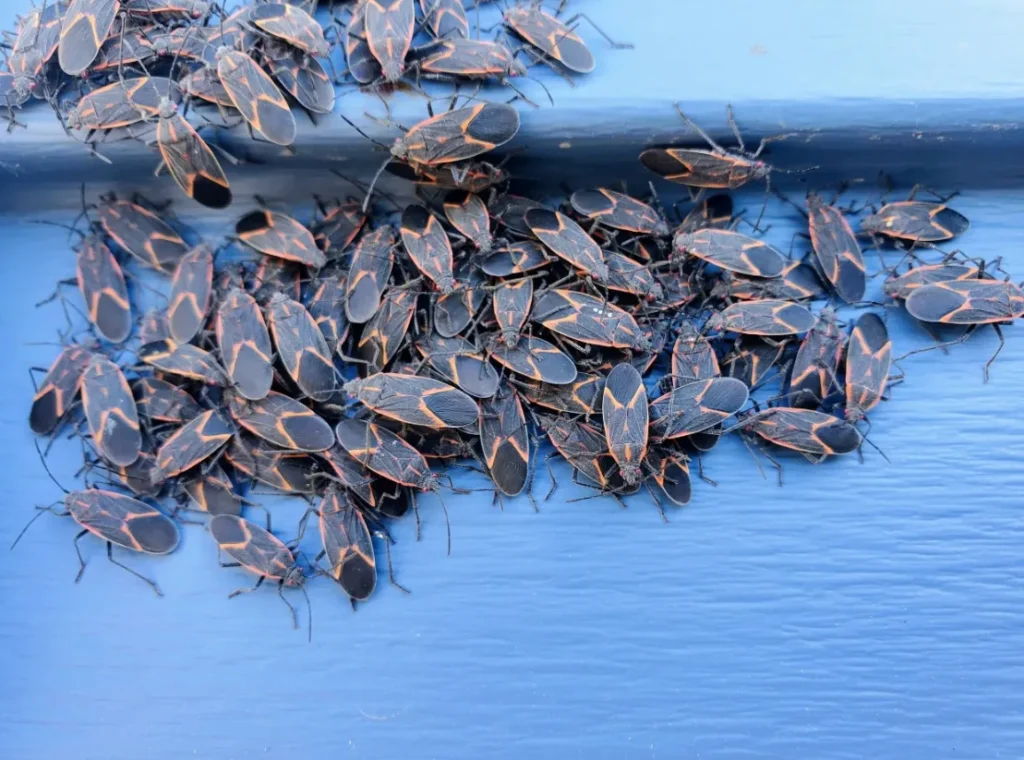
Adults are about half an inch long, usually black or brownish-black with red or orange markings. They may produce one or two generations per year, depending on climate, food availability, and season length.
Winter Survival
The strongest survival ability of boxelder bugs is overwintering. Adults hide in bark, leaf litter, cracks, wall voids, attics, and other protected places. During warm winter days, indoor bugs may become active near windows, but they do not reproduce indoors.
Their Reproductive Process and raising their children
The reproductive process of boxelder bugs begins after adults survive winter. When temperatures rise in spring, overwintered adults leave protected shelters and move toward host plants. They feed first, then begin mating.
Important reproductive steps:
- Spring emergence: Adults emerge from overwintering sites as temperatures warm.
- Feeding before mating: Adults feed on plant material and seeds before reproduction begins.
- Mating: Males and females mate near host trees or feeding areas.
- Egg laying: Females lay red eggs in bark crevices, on leaves, on seed clusters, or near boxelder trees.
- Egg hatch: Eggs hatch in around 10 to 14 days.
- Nymph growth: Nymphs feed through summer and molt repeatedly until they become adults.
Boxelder bugs do not raise their young the way birds or mammals do. There is no feeding, guarding, or teaching by parents. Instead, females choose suitable egg-laying sites near food sources. This gives nymphs immediate access to seeds, leaves, and soft plant tissues after hatching.
In warm areas or long seasons, the first generation may mature quickly enough to produce another generation before fall. In colder regions, there may be only one main generation per year. BugGuide describes the species as uni- or bivoltine, meaning it may have one or two generations annually depending on conditions.
The importance of them in this Ecosystem
Part of the Food Web
The boxelder bug is part of the natural food web. Although many predators avoid them because of their odor and taste, some spiders, insects, and other small predators may still interact with them. Their presence adds to the biodiversity of tree-based habitats.
Seed and Plant Fluid Feeder
Boxelder bugs feed mostly on seeds and plant fluids. They are not major pollinators and are not usually considered important plant protectors. However, by feeding on seeds and plant tissues, they participate in the natural energy flow between trees and insects.
Indicator of Host Trees
Large populations often indicate nearby female boxelder trees, maples, or suitable overwintering sites. Their seasonal movement can show how insects use urban landscapes, sunny walls, cracks, tree bark, and human structures for survival.
Low-Damage Native Insect
In most cases, boxelder bugs do not cause serious injury to healthy ornamental trees. This makes them different from destructive pests that kill plants or spread disease. Their nuisance status is mainly associated with home invasions during the fall.
Urban Ecology Role
Boxelder bugs show how insects adapt to human environments. They use planted trees for food and for building shelters. Understanding their behavior helps homeowners choose safer, preventive management rather than unnecessary pesticide use.
What to do to protect them in nature and save the system for the future
Boxelder bugs can be annoying around homes, but they do not need to be destroyed everywhere. A balanced approach protects nature while keeping houses comfortable.
- Avoid unnecessary pesticide use: Do not spray every boxelder bug outdoors. Use control only when large numbers are causing a real problem.
- Keep native trees when possible: Boxelder, maple, and ash trees support many insects and wildlife. Removing trees only to reduce bugs is often not the best solution.
- Use prevention first: Seal cracks, repair window screens, close gaps around doors, and block entry points before fall.
- Vacuum indoor bugs: If bugs enter the home, remove them with a vacuum or broom instead of crushing them.
- Do not crush them indoors: Crushed boxelder bugs may release odor and stain surfaces.
- Protect outdoor habitat: Leaf litter, tree bark, and natural shelters support many small organisms, not only boxelder bugs.
- Use targeted exterior treatment only when needed: If infestations are recurring and severe, late summer or early fall treatments are more effective than random indoor spraying.
- Educate people: Many homeowners overreact because they think boxelder bugs are dangerous. Clear knowledge reduces unnecessary killing.
- Support ecological balance: A healthy yard with diverse plants, birds, spiders, and beneficial insects can naturally limit pest outbreaks.
The goal is not to invite boxelder bugs indoors. The goal is to manage them wisely without damaging the wider Ecosystem.
Frequently Asked Questions (FAQs)
Q1: What is the full life cycle of the boxelder bug?
A: The full boxelder bug life cycle includes egg, nymph, and adult stages. Eggs hatch in about 10 to 14 days, nymphs molt several times, and adults overwinter in protected places.
Q2: What does a baby boxelder bug look like?
A: A baby boxelder bug is called a nymph. It is usually bright red when newly hatched, becoming darker with black markings as it grows.
Q3: Do boxelder bugs bite humans?
A: Boxelder bugs do not normally bite humans or pets. They are mostly nuisance insects, not dangerous pests.
Q4: What is the best method for controlling boxelder bugs?
A: The best boxelder bug control method is prevention. Seal cracks, repair screens, block entry points, and vacuum for indoor bugs.
Q5: Should I use boxelder bug spray indoors?
A: Indoor insecticide is usually not recommended once they appear inside because they do not live long indoors and do not reproduce there. Vacuuming is usually better.
Q6: Where do boxelder bugs lay eggs?
A: Females lay eggs in bark crevices, on leaves, on host trees, and near seed clusters.
Q7: Why are boxelder bugs attracted to my house?
A: They are attracted to warm, sunny exterior walls, especially south- and west-facing surfaces, before entering cracks for winter shelter.
Q8: Is the eastern boxelder bug harmful to trees?
A: The eastern boxelder bug rarely causes serious damage to healthy trees. It mostly feeds on seeds and plant fluids and is usually considered a nuisance pest.
Conclusion
The boxelder bug life cycle is a seasonal process built around host trees, warm weather, reproduction, and winter survival. These insects begin as red eggs, hatch into bright red nymphs, molt several times, and become black-and-red adults. Their strongest survival strategy is overwintering in protected places, which is why they often appear inside homes during fall and winter.
Although the boxelder bug can be annoying, it is not usually dangerous. It does not reproduce indoors, does not damage food, and rarely causes serious plant injury. The smartest approach is prevention-based boxelder bug control: seal entry points, repair screens, vacuum indoor bugs, and avoid unnecessary spraying.
By understanding the eastern boxelder bug, its food, reproduction, and ecological role, homeowners can manage it wisely without harming the natural balance around trees, gardens, and urban landscapes.
Also Read: tomato caterpillar life cycle
About the Author