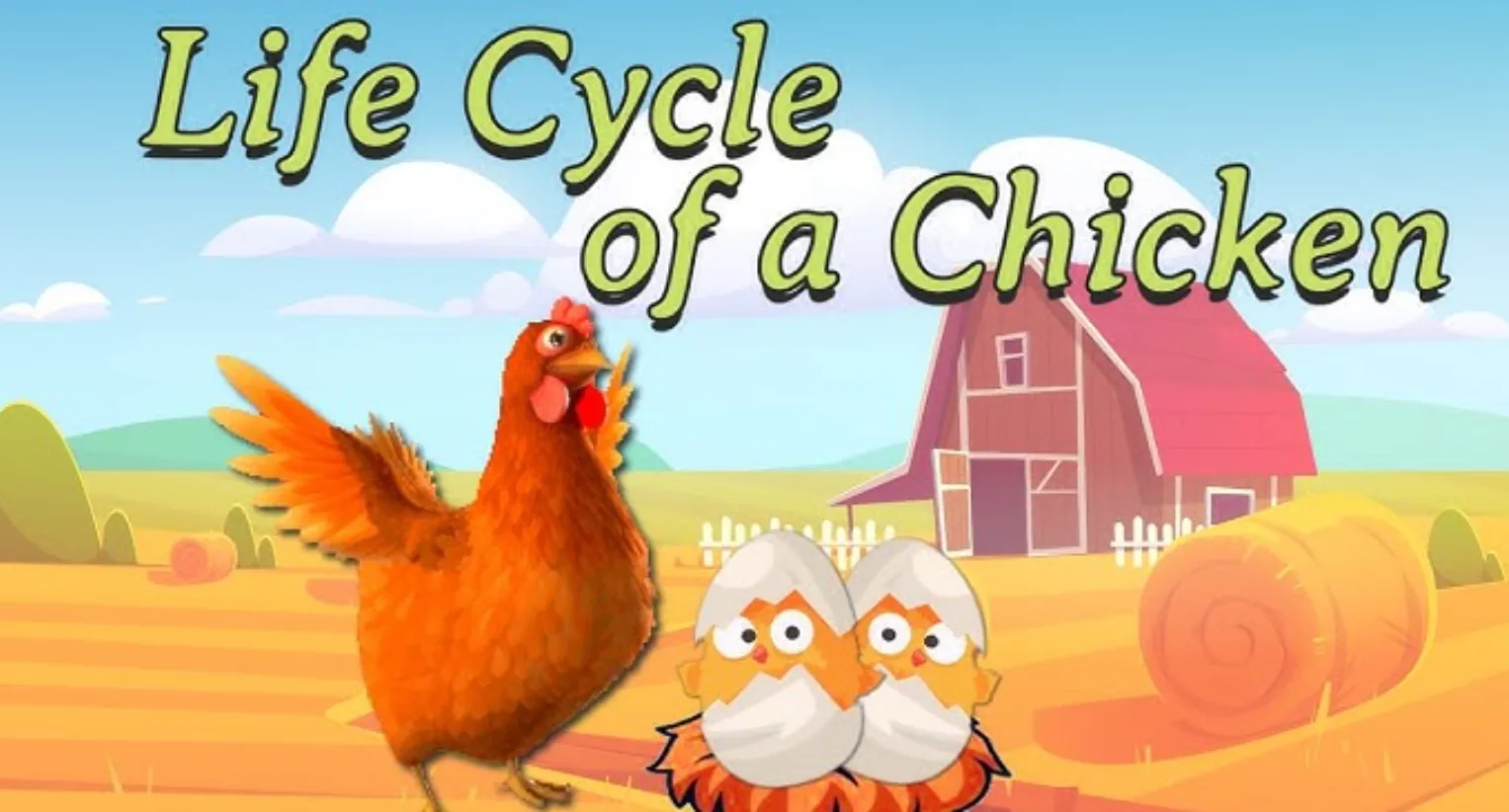
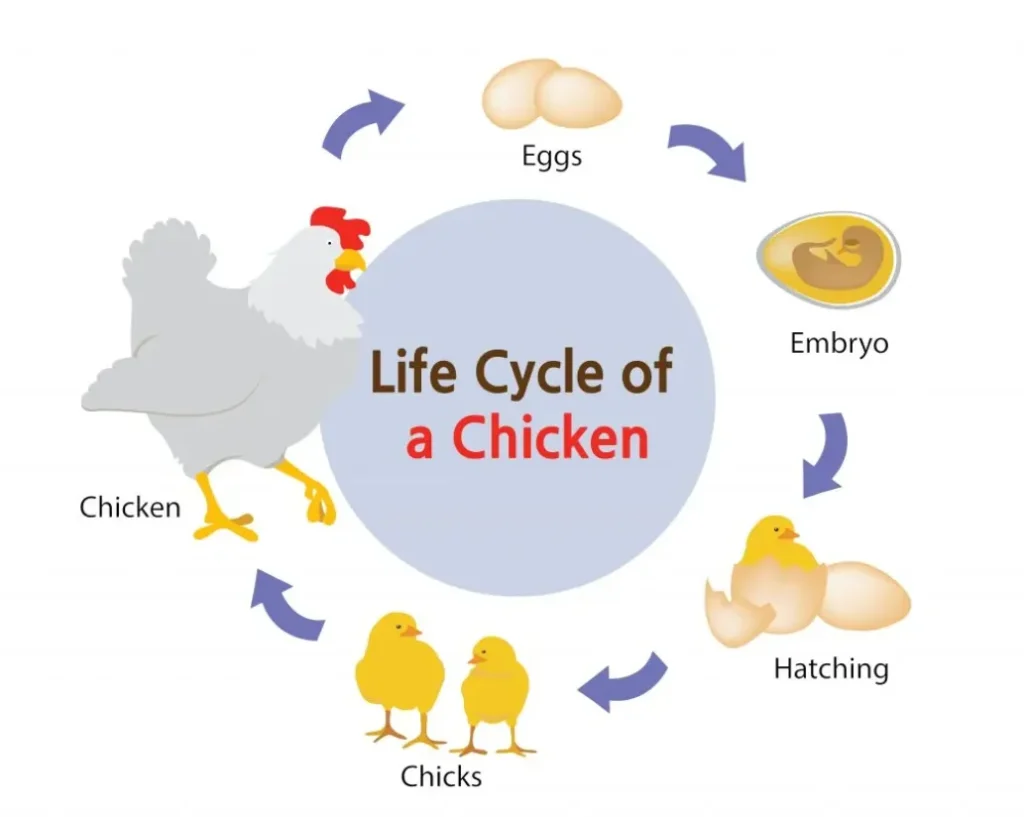
The chicken’s life cycle is the complete journey from a fertilized egg to a chick, then to a growing juvenile bird, and finally to a mature hen or rooster. Chickens are domesticated birds scientifically classified as Gallus gallus domesticus, and they are mainly descended from the red junglefowl, a wild bird native to South and Southeast Asia. Modern chickens are among the most common domesticated animals in the world and are raised for eggs, meat, pest control, companionship, and small-farm sustainability.
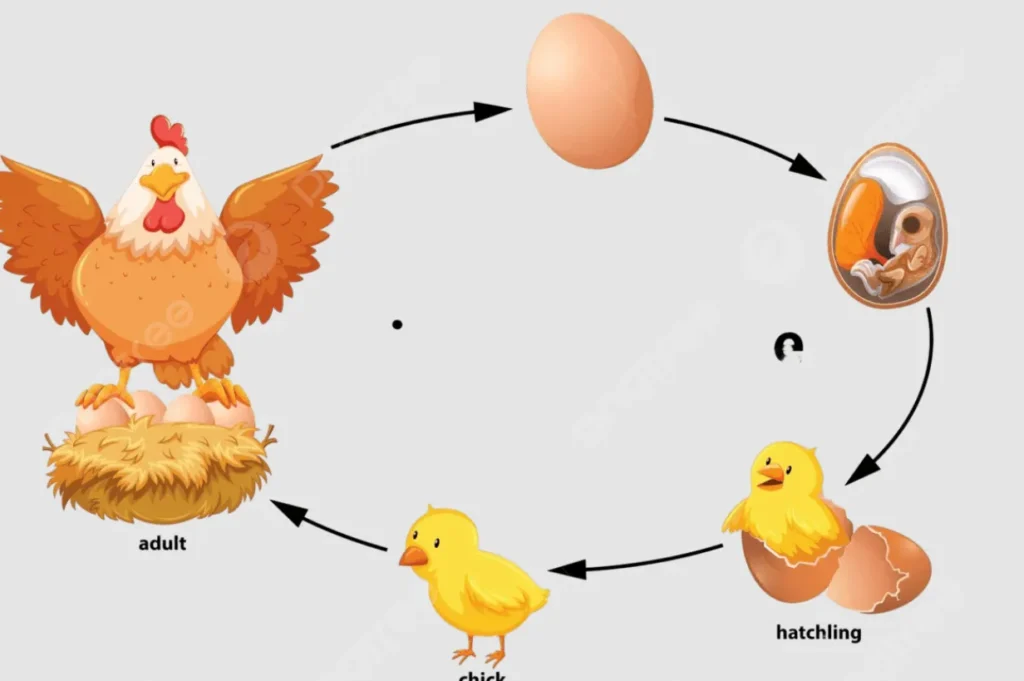
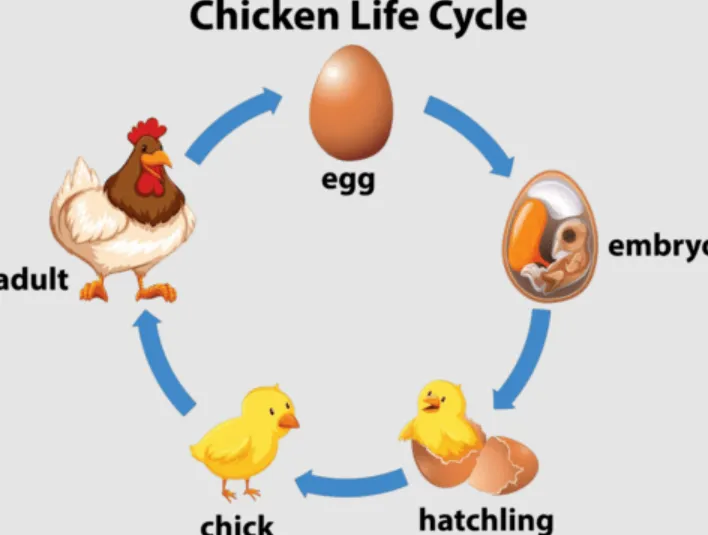
A typical chicken begins life inside an egg. When the egg is fertilized and properly incubated, the embryo develops for about 21 days before hatching. After hatching, the baby chicken, called a chick, grows quickly, develops feathers, learns to eat and scratch, and gradually becomes a juvenile bird. Female juveniles are called pullets, while young males are called cockerels.
The chicken life cycle is important because it helps farmers, backyard keepers, students, and animal lovers understand how chickens grow, reproduce, feed, behave, and survive. From the first crack in the eggshell to the adult bird joining a flock, every stage has a special role in the health and future of chickens.
Quick Answers: Most Common Questions
Q: How long is the chicken’s life cycle from egg to chick?
A: A fertilized chicken egg usually takes about 21 days to hatch when it is kept under the right warmth, humidity, and turning conditions.
Q: What are the main stages of the chicken’s life cycle?
A: The main stages are egg, chick, juvenile chicken, and adult chicken.
Q: What is a baby chicken called?
A: A baby chicken is called a chick. A young female is called a pullet, and a young male is called a cockerel.
Quick Life Cycle Table
| Stage | Age Range | What Happens | Key Care or Survival Need |
| Egg | Day 0–21 | The embryo grows inside the shell | Warmth, humidity, turning, protection |
| Chick | Hatch–6 weeks | Learns to eat, drink, walk, and follow warmth | Heat, starter feed, clean water, safety |
| Juvenile | 6–18 weeks | Feathers develop, the body grows, and social behavior forms | Balanced feed, space, and disease prevention |
| Adult Chicken | 18+ weeks | A hen may lay eggs; a rooster becomes fertile | Nesting area, healthy diet, flock management |
The History of Their Scientific Naming, Evolution, and Origin
Scientific Naming of Chickens
The domestic chicken is commonly known as Gallus gallus domesticus. The word Gallus refers to the junglefowl group, while domesticus highlights its domesticated form. Chickens belong to the family Phasianidae, which also includes pheasants and related birds.
Evolution from Red Junglefowl
Modern chickens mainly evolved from the red junglefowl, especially populations from South and Southeast Asia. Genetic and archaeological studies suggest that domestication happened thousands of years ago, most likely around 7,000–10,000 years ago, although details vary across studies.
Origin and Human Domestication
Early humans likely kept junglefowl for multiple reasons, including food, feathers, cultural use, and later egg and meat production. Over time, selective breeding created different chicken breeds for specific purposes such as egg laying, meat production, ornamental beauty, and hardiness.
Global Spread of Chickens
Because chickens are small, adaptable, and useful, they spread rapidly across human settlements. Today, chickens are found almost everywhere humans live, from rural farms to urban backyard coops.
Their Reproductive Process, Giving Birth, And Rising Their Children
Chickens Do Not Give Live Birth
Chickens do not give birth like mammals. Instead, female chickens, called hens, reproduce by laying eggs. If a hen mates with a fertile rooster, the egg may become fertilized. If the egg is not fertilized, it can still be laid but will not develop into a chick.
Mating and Fertilization
A rooster mates with a hen through a brief reproductive process called the cloacal kiss. After mating, sperm can remain viable inside the hen’s reproductive tract for several days or longer, allowing multiple eggs to become fertilized.
Egg Formation and Laying
A hen’s body forms an egg step by step. The yolk develops first, then the egg white, membranes, and shell are added. After the egg is fully formed, the hen lays it, usually in a nest or sheltered place.
Incubation and Hatching
If the egg is fertilized and incubated, the embryo develops inside the shell. Natural incubation happens when a broody hen sits on the eggs, keeping them warm and turning them regularly. Artificial incubation uses an incubator to control temperature and humidity. The chick usually hatches after about 21 days.
Raising the Chicks
A mother hen protects her chicks, teaches them to peck food, keeps them warm, and warns them about danger. In farm or backyard systems, humans often provide brooder heat, chick starter feed, clean water, and protection from predators.
Stages of a Chicken’s Life Cycle
1. Egg Stage
The egg stage is the beginning of the chicken’s life cycle. A fertilized egg contains a developing embryo, nutrients from the yolk, protective membranes, and a hard shell. During incubation, the embryo grows organs, blood vessels, bones, a beak, feathers, and muscles.
The egg must remain warm and stable. In natural conditions, the hen sits on the eggs and turns them. In artificial systems, an incubator performs this role. Around day 21, the chick uses its small egg tooth to break the shell and hatch.
2. Chick Stage
After hatching, the young bird is called a chick. Chicks are soft, weak, and dependent on warmth. They can walk and peck soon after hatching, but they still need protection.
During this stage, chicks learn to eat, drink, follow the hen, respond to warning calls, and explore their surroundings. They also begin replacing soft down with real feathers.
3. Juvenile Stage
The juvenile stage begins when chicks become stronger and more feathered. Female juveniles are called pullets, while males are called cockerels. This is the stage when chickens develop stronger legs, clearer feather patterns, and more social behavior.
They also begin forming a flock structure known as the pecking order. Good nutrition is very important at this stage because the bird is building bones, muscles, feathers, and immunity.
4. Adult Chicken Stage
The adult stage begins when the chicken becomes sexually mature. Hens may start laying eggs around 18–24 weeks, depending on breed, diet, daylight, and health. Roosters become capable of mating and often show stronger territorial behavior.
Adult chickens still need a balanced diet, clean water, safe shelter, a dust-bathing area, and protection from predators.
Important Things That You Need To Know
When learning about chickens, it is useful to understand more than just the basic life cycle. Chickens are social, intelligent, active birds that live best when they can move, scratch, dust-bathe, forage, and interact with a flock.
The phrase “chickens’ life cycle” usually refers to four main growth stages: egg, chick, juvenile, and adult chicken. However, each stage has smaller changes. For example, chicks grow quickly in the first few weeks, juveniles develop their adult feathers, and hens later enter their egg-laying phase.
A healthy flock normally includes hens, and sometimes roosters, depending on the purpose of keeping chickens. Hens can lay eggs without roosters, but those eggs will not hatch unless fertilized. Roosters are needed only when breeding chicks is the goal.
Another important point is that baby chickens, or chicks, need more care than adult chickens. They require warmth, clean water, safe bedding, and proper starter feed. Cold stress, dirty water, overcrowding, and poor ventilation can quickly affect chick health.
People also search for information on backyard farming, egg production, natural pest control, and sustainable living, often using the term “chickens.” Whether chickens are kept on a farm, in a backyard, or studied in school, their life cycle shows how birds grow, reproduce, and contribute to human food systems and local ecosystems.
Their main diet, food sources, and collection process are explained
Natural Diet of Chickens
Chickens are omnivores, meaning they eat both plant-based and animal-based foods. In natural or free-range conditions, chickens search for seeds, grains, grasses, insects, worms, larvae, small snails, and kitchen-safe plant scraps.
Their diet changes depending on age. Chicks need high-protein starter feed, while adult hens need more calcium for eggshell production.
Common Food Sources
Healthy chicken diets may include:
- Grains such as corn, wheat, oats, and barley
- Seeds and small plant materials
- Insects, worms, and larvae
- Leafy greens and safe vegetables
- Commercial chicken feed balanced for age and purpose
- Calcium sources, such as oyster shell, for laying hens
- Grit, which helps chickens grind food in the gizzard
How Chickens Collect Food
Chickens collect food by scratching, pecking, and foraging. They use their feet to move soil, leaves, and bedding, then peck at any edible items. This natural behavior helps them find hidden insects and seeds.
In managed systems, humans provide feed in trays, feeders, or scattered areas. Clean water should always be available, as chickens need it for digestion, temperature regulation, and egg production.
Foods to Avoid
Chickens should not be given spoiled food, moldy grain, excessive salt, chocolate, alcohol, or toxic plants. A poor diet can reduce growth, weaken immunity, and lower egg quality.
How Long Does A Chicken Live
The lifespan of a chicken depends on breed, genetics, living conditions, purpose, predator risk, disease control, and nutrition. There is no single lifespan for all chickens because a backyard hen, a wild red junglefowl, a commercial broiler, and a heritage breed chicken may live very different lives.
- Average backyard chicken lifespan: Many backyard chickens live around 5–10 years when they receive good care, safe housing, balanced feed, and protection from predators.
- Well-kept domestic chickens: Some domestic chickens can live longer, sometimes reaching 10–15 years, especially heritage breeds or pet chickens kept in safe environments.
- Commercial laying hens: Commercial hens are often not kept for their full biological lifespan. Their productive egg-laying period is usually much shorter than their possible natural lifespan.
- Commercial broiler chickens: Broilers are bred for rapid meat production, so they are usually raised for a short production period rather than a full natural life.
- Wild relatives: The red junglefowl and feral chicken populations face predators, disease, weather, and competition for food. Their average survival in the wild is often shorter than that of protected domestic chickens, although wild birds may still live several years when conditions are favorable.
- Breed matters: Some heritage breeds are hardy and long-lived, while highly specialized production breeds may have shorter health spans.
- Predator protection matters: Chickens are vulnerable to dogs, foxes, raccoons, snakes, hawks, and other predators. A secure coop can greatly increase survival.
- Health care matters: Vaccination, parasite control, clean bedding, fresh water, and good ventilation help prevent disease.
- Nutrition matters: Poor nutrition can shorten lifespan by causing weak bones, poor feathers, low immunity, and reproductive problems.
- Stress affects lifespan: Overcrowding, heat stress, poor shelter, bullying, and dirty living areas can reduce the quality and length of a chicken’s life.
In simple terms, a chicken may live only a short time in commercial production, several years in a backyard flock, and even longer as a well-protected pet.
Chickens’ Life Cycle Lifespan in the Wild vs. in Captivity
Lifespan in the Wild
Domestic chickens are not truly wild animals in the same way as native wild bird species. However, their ancestor, the red junglefowl, lives in forests, scrublands, and rural landscapes. Feral chickens also exist in some areas where domestic birds have escaped and formed free-living populations.
In the wild or semi-wild environment, chickens face predators, harsh weather, parasites, disease, food shortages, and competition. Because of these risks, many birds do not reach old age. Survival depends on habitat quality, hiding places, flock strength, and access to food.
Lifespan in Captivity
In captivity, chickens usually live longer when they are well cared for. A safe coop protects them from predators. Balanced feed supports growth and egg production. Clean water reduces disease risk. Veterinary care and parasite control also improve survival.
Backyard and pet chickens can live several years longer than birds exposed to constant natural threats. However, poor captivity can also shorten life if chickens are overcrowded, poorly fed, or kept in dirty conditions.
Main Difference
The biggest difference is risk control. Wild or feral chickens must survive predators and unstable food sources, while protected chickens depend on human care. Good captivity can extend life, but poor management can do the opposite.
Importance of Chickens’ Life Cycle in this Ecosystem
Nutrient Cycling
Chickens help recycle nutrients by eating food scraps, insects, seeds, and plant materials. Their manure adds nitrogen and organic matter to the soil when properly composted. This can improve the fertility of garden and farm soils.
Natural Pest Control
Chickens eat insects, larvae, ticks, beetles, grasshoppers, and other small invertebrates. In small farms or backyard systems, this behavior can help reduce pest pressure naturally.
Food Web Connection
In natural or semi-natural environments, chickens and junglefowl are part of the food web. They eat plants and insects, while predators may feed on eggs, chicks, or adult birds.
Seed Movement and Soil Disturbance
When chickens scratch the ground, they loosen soil and move small seeds. This behavior can support some natural processes, although too many chickens in one area can damage vegetation.
Human Food Systems
Chickens are important in global food systems because they provide eggs and meat. They are easier to raise than many larger livestock animals and can fit into small-scale farming systems.
Educational Value
The chicken’s life cycle is often used in schools and farms to teach reproduction, embryology, animal care, food production, and sustainability.
What to do to protect them in nature and save the system for the future
1. Protect Natural Junglefowl Habitats
- Conserve forests, scrublands, and mixed rural habitats where wild relatives like red junglefowl live.
- Avoid unnecessary habitat destruction and support native vegetation.
- Healthy habitats protect both wild birds and other species in the ecosystem.
2. Keep Backyard Chickens Responsibly
- Provide secure housing, clean water, balanced feed, shade, and enough space.
- Do not release domestic chickens into the wild.
- Released chickens may suffer, spread disease, or disturb local ecosystems.
3. Prevent Disease Spread
- Keep coops clean and dry.
- Isolate sick birds quickly.
- Use proper vaccination and biosecurity where needed.
- Avoid mixing unknown birds with healthy flocks without quarantine.
4. Reduce Predator Conflict Humanely
- Use strong fencing, covered runs, and nighttime coops.
- Avoid harmful trapping or poisoning methods that can damage wildlife.
- Protect chickens without harming the wider ecosystem.
5. Support Sustainable Poultry Practices
- Choose ethical breeding, responsible feeding, and low-waste management.
- Compost manure safely before using it in gardens.
- Support farms that treat chickens humanely and manage waste responsibly.
Fun & Interesting Facts About Chickens’ Life Cycle
- Chicks can communicate before hatching. They may make tiny sounds inside the egg near hatch time.
- A chicken egg usually hatches in about 21 days when incubation conditions are right.
- Chickens are social birds. They live in flocks and form a social hierarchy, or pecking order.
- Hens can lay eggs without a rooster. However, those eggs will not become chicks unless fertilized.
- Roosters often protect the flock. They may warn hens and chicks when they notice danger.
- Chickens take dust baths. This helps them clean feathers and reduce parasites.
- Chickens are omnivores. They eat grains, seeds, insects, worms, greens, and balanced feed.
- Different breeds grow differently. Some breeds are best for eggs, some for meat, and some for ornamental beauty.
- Chicks grow fast. Within weeks, they begin replacing soft down with feathers.
- The red junglefowl is the main ancestor of domestic chickens.
Frequently Asked Questions (FAQs)
Q: What is the chicken’s life cycle?
A: The chicken’s life cycle is the growth process from egg to chick, then to juvenile chicken, and finally to adult hen or rooster.
Q: How long does it take for a chicken egg to hatch?
A: A fertilized chicken egg usually hatches after about 21 days of proper incubation.
Q: What is the difference between a hen and a rooster?
A: A hen is an adult female chicken that can lay eggs. A rooster is an adult male chicken that can fertilize eggs and often protects the flock.
Q: What do chickens eat during their life cycle?
A: Chickens eat grains, seeds, insects, worms, greens, and commercial feed. Chicks need protein-rich starter feed, while laying hens need calcium for strong eggshells.
Q: How long do chickens live?
A: Many backyard chickens live around 5–10 years, while well-cared-for chickens may live longer. Lifespan depends on breed, care, disease prevention, and predator protection.
Conclusion
The chicken’s life cycle is a fascinating journey that begins with a fertilized egg and continues through the chick, juvenile, and adult stages. Each stage has a clear purpose: the egg protects early development, the chick learns survival basics, the juvenile builds strength, and the adult chicken reproduces and contributes to the flock.
Understanding chickens helps people care for them better, whether on farms, in backyards, or in educational settings. Their diet, reproduction, lifespan, and social behavior all show how adaptable and valuable these birds are. Chickens also support ecosystems by controlling pests, recycling nutrients, and producing food.
By protecting their health, managing flocks responsibly, and respecting their natural behaviors, humans can support both chicken welfare and a more sustainable future. A healthy chicken life cycle means stronger birds, better eggs, safer farms, and a more balanced relationship between people, animals, and nature.
Also Read: bunny rabbit life cycle
About the Author