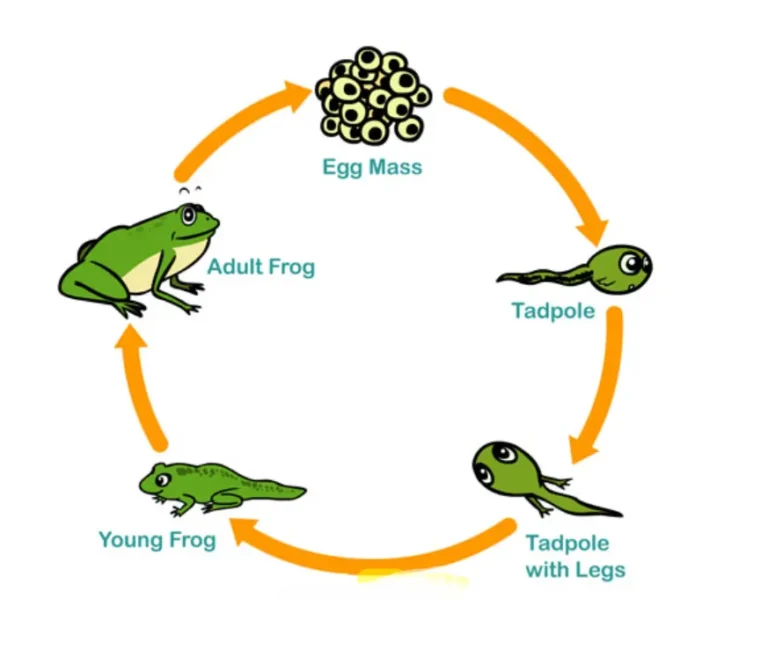
The life cycle of a frog is one of the clearest examples of metamorphosis in nature. A frog begins life as a soft, jelly-covered egg in water, hatches into a swimming tadpole, grows legs as a froglet, and finally becomes an adult frog capable of living on land and returning to water for reproduction. Frogs belong to the amphibian order Anura, a name meaning “without tail,” because adult frogs usually lose the tail they had during the tadpole stage.
This life cycle is important because frogs connect aquatic and terrestrial ecosystems. Tadpoles often feed on algae and organic matter in ponds, while adult frogs eat insects, worms, spiders, and other small animals. Their thin, moist skin also makes them sensitive to pollution, temperature change, and habitat damage, so frogs are often considered natural indicators of environmental health. Amphibian decline is now a global concern, with habitat loss, disease, pollution, and climate change affecting many frog populations.
Q: What are the main stages in the life cycle of a frog?
A: The main stages are egg, tadpole, froglet, and adult frog.
Q: How long does it take for a frog egg to become an adult frog?
A: It depends on species, water temperature, food, and habitat. Many common frogs complete visible metamorphosis within weeks to a few months, but some species take longer.
Q: Why do frogs need water to reproduce?
A: Most frogs lay soft, jelly-like eggs without a hard shell, so the eggs need moist or aquatic conditions to prevent drying out.
Quick Life Cycle Table
| Stage | Simple Meaning | Main Features | Habitat |
| Egg | Beginning of life | Jelly-like eggs, often in clusters called frogspawn | Water, wet leaves, foam nests, or moist places |
| Tadpole | Aquatic larva | Tail, gills at first, no legs early on | Ponds, streams, wetlands, temporary pools |
| Froglet | Young Frog | Legs appear, lungs develop, tail shrinks | Water edge, damp soil, vegetation |
| Adult Frog | Mature Frog | No tail, strong legs, lungs, reproductive ability | Wetlands, forests, grasslands, gardens, streams |
Important Things That You Need To Know
When people search for the life cycle of a frog, they often also search for related terms such as Frog, poison dart frog, frog drawing, pacman frog, frog butt, and crazy Frog. These terms are connected to frogs in different ways, but not all of them describe the same biological topic.
A frog is the general name for tailless amphibians in the order Anura. Frogs vary widely in size, colour, habitat, and behaviour. Some live mostly in water, others in trees, and others spend much of their lives hidden in moist soil.
A poison dart frog is a brightly coloured tropical frog known for toxic skin chemicals. These frogs are famous because some Indigenous communities historically used toxins from certain species on blow darts. Their life cycle still follows the egg, tadpole, froglet, and adult stages, but parental care can be more advanced than in many common pond frogs.
A pacman frog is a popular pet frog known for its round body, large mouth, and ambush hunting behaviour. In captivity, its life cycle and care needs depend heavily on humidity, temperature, safe substrate, and proper diet.
The phrase frog butt is usually an informal search term. Biologically, it may relate to the Frog’s adult tailless body shape, its cloaca, or the way the tail is absorbed during metamorphosis.
A frog drawing is often used in education to teach children the stages of metamorphosis. Meanwhile, Crazy Frog is a pop-culture animated character, not a real frog species. So, while the term is frog-related, it should not be confused with real frog biology.
The History of Their Scientific Naming, Evolution, and Origin
Scientific Naming of Frogs
Frogs are classified under the order Anura, from Greek roots meaning “without tail.” This name reflects one of the most visible adult frog features: after metamorphosis, the tadpole’s tail is absorbed, leaving the adult frog tailless.
Evolutionary Background
Frogs are amphibians, meaning they are linked to both water and land. Their ancestors evolved from early vertebrates that gradually developed the ability to move between aquatic and terrestrial habitats. This dual lifestyle is still visible today because most frogs begin life in water and later move onto land.
Origin of the Frog Life Cycle
The frog life cycle developed as a survival strategy. Tadpoles and adult frogs often use different food sources, which reduces competition between young and mature individuals. Tadpoles may graze on algae, while adult frogs usually become carnivorous insect hunters. This separation helps frogs survive in ecosystems where food and space are limited.
Why Metamorphosis Matters
Metamorphosis allows frogs to transform their body systems. Lungs replace gills, tails shrink, legs grow, and the digestive system changes for a new diet. This makes frogs highly adaptable but also vulnerable, as each stage requires suitable environmental conditions.
Their Reproductive Process, Giving Birth And Rising Their Children
Mating and Calling Behaviour
Most male frogs attract females by producing species-specific calls. These calls help females identify suitable mates of the same species. In many frogs, louder or more frequent calls may signal strength, territory quality, or reproductive fitness. Male frogs often use vocal sacs that inflate and amplify sound.
Egg Laying Instead of Giving Birth
Most frogs do not “give birth” like mammals. Instead, the female lays eggs, and the male usually fertilises them externally. The eggs are often laid in water as jelly-like clusters called frogspawn. Some species lay hundreds or even thousands of eggs because predators eat many of them.
Different Nesting Strategies
Not all frogs lay eggs in open pond water. Some species lay eggs on leaves above water, in foam nests, inside tree holes, or in moist soil. When tadpoles hatch, they may drop into water or develop in small water-filled spaces.
Parental Care in Frogs
Many frogs provide little direct care after laying eggs, but some species show remarkable parenting. Certain poison dart frogs carry tadpoles on their backs to small pools of water. Some species guard eggs, keep them moist, or choose hidden breeding sites to reduce predation.
Raising Young Through Habitat Selection
Even when adult frogs do not feed their young, they support survival by choosing safe breeding sites. Clean water, shade, low pollution, and fewer predators can improve egg and tadpole survival. This is why wetland protection is directly connected to successful frog reproduction.
Stages of the Life Cycle of a Frog
Stage 1: Egg
The first stage in the life cycle of a frog is the egg. Frog eggs are usually soft, round, and surrounded by a jelly-like coating. This jelly protects the developing embryo from minor physical damage and helps keep the egg moist.
Many frogs lay eggs in clusters called frogspawn, especially in ponds and slow-moving water. Inside each egg, a tiny embryo develops. Over time, the embryo becomes longer and begins to form the basic body shape of a tadpole.
Egg survival depends on water quality, temperature, oxygen, and predator pressure. Fish, insects, birds, and even other amphibians may eat frog eggs. Pollution, drought, and sudden temperature changes can also reduce hatching success.
Stage 2: Tadpole
After hatching, the young Frog becomes a tadpole. Tadpoles look more like small fish than adult frogs. They have a tail for swimming and usually begin life with gills for breathing in water.
At first, tadpoles may feed on remaining yolk from the egg. Later, many species graze on algae, plant material, and tiny organic particles. This stage is important for pond ecosystems because tadpoles help control algae growth and recycle nutrients.
During this stage, the tadpole grows quickly if food and oxygen are available. Its internal organs begin to change, and the body prepares for life outside water.
Stage 3: Froglet
The froglet stage is the transition between the tadpole and the adult frog. Hind legs usually appear first, followed by front legs. The lungs become more important, the mouth changes shape, and the digestive system shifts toward a carnivorous adult diet.
The tail becomes smaller because the body absorbs it as an energy source. This is the stage people often notice in frog drawings and life cycle diagrams because the froglet looks like a tiny frog with a short tail.
Froglets are vulnerable because they are small, soft-bodied, and still adjusting to land. They need damp areas, hiding places, and protection from predators.
Stage 4: Adult Frog
The final stage is the adult frog. Adult frogs usually have strong back legs, no tail, bulging eyes, moist skin, and a sticky tongue for catching prey. They breathe using lungs and skin, so they must remain moist.
Adult frogs return to suitable breeding sites when conditions are right. Once they reproduce, the cycle begins again. This repeated cycle supports frog populations and keeps wetland ecosystems active and balanced.
Their Main Diet, Food Sources, And Collection Process Explained
Tadpole Diet
Tadpoles usually begin by feeding on egg yolk remains. After that, many tadpoles eat algae, soft plant material, bacteria-rich films, and decaying organic matter. This makes them important cleaners in ponds and wetlands.
Some tadpoles are more omnivorous and may eat tiny aquatic organisms or dead animal matter. Their feeding style depends on species, water conditions, and available food.
Adult Frog Diet
Adult frogs are mostly carnivorous. They eat insects, spiders, worms, slugs, snails, flies, mosquitoes, moths, beetles, and other small animals. Larger frogs may eat small fish, smaller frogs, baby mice, or small reptiles.
A pacman frog, for example, is known as an ambush predator. It waits quietly and strikes when prey comes close. Many frogs follow this same energy-saving hunting method.
How Frogs Collect Food
Frogs usually hunt through a “sit-and-wait” or short-jump strategy. Their large eyes detect movement, and their sticky tongue helps grab prey quickly. Frogs do not chew like humans; they often swallow prey whole.
One fascinating fact is that many frogs use their eyes to help swallow. When swallowing, the eyes can move downward, helping push food toward the throat.
Why Diet Changes During the Life Cycle
The diet shift from algae-eating tadpole to insect-eating adult reduces food competition. Young frogs use aquatic food sources, while adults feed on land-based or flying prey. This makes the frog life cycle efficient and ecologically valuable.
How long does the life cycle of a Frog Live
The lifespan of a frog depends on species, habitat, predators, climate, disease, and whether it lives in the wild or captivity. There is no single lifespan for all frogs because the frog group includes thousands of species with different body sizes, survival strategies, and environments.
- Small wild frogs often live shorter lives. Many small frogs may live only a few years in nature because they face predators, drying ponds, disease, and food shortages.
- Medium-sized frogs can live longer. Common pond and tree frogs may live for several years when habitat conditions are stable.
- Large frogs often have longer potential lifespans. Bigger species may live longer because they are less vulnerable to some predators after reaching adult size.
- Captive frogs may live longer than wild frogs. In safe captivity, frogs can avoid predators, drought, and some diseases. However, captivity only improves lifespan when humidity, diet, temperature, hygiene, and enclosure design are correct.
- Poison dart frogs can live for many years in proper care. Their lifespan varies by species, but responsible captive care can support longer survival than many wild conditions.
- Pacman frogs are popular captive frogs. With proper care, they may live several years, but poor feeding, a dry substrate, dirty water, and incorrect temperatures can shorten their lifespan.
- The egg and tadpole stages are the riskiest. Many frogs lay large numbers of eggs because only a small percentage of their eggs reach adulthood.
- Froglets are also highly vulnerable. They are small, easy to dry out, and attractive to birds, snakes, fish, and larger frogs.
- Disease can reduce lifespan. Chytrid fungus and other amphibian diseases have contributed to major population declines in different regions.
- Human activity affects survival. Wetland drainage, pesticide use, road traffic, water pollution, and climate change can reduce frog survival at every stage.
In simple words, a frog’s natural lifespan may range from a short few years to much longer, depending on the species. But the full life cycle of a frog is successful only when eggs hatch, tadpoles grow, froglets survive, and adults reproduce again.
Life Cycle of a Frog Lifespan in the Wild vs. in Captivity
Lifespan in the Wild
In the wild, frogs live under natural pressure. They must find food, escape predators, survive dry seasons, avoid polluted water, and reproduce successfully. Eggs and tadpoles are particularly vulnerable to predation by fish, birds, and aquatic insects, as well as to drought and poor water quality.
Wild frogs also face increasing environmental threats. Habitat loss and degradation are among the greatest threats to amphibians, especially when wetlands are drained or forests are cleared.
Lifespan in Captivity
In captivity, frogs may live longer because they are protected from predators and extreme weather. Pet frogs, such as pacman frogs and captive-bred poison dart frogs, can do well when owners provide the correct humidity, temperature, clean water, safe food, and hiding places.
However, captivity is not automatically safer. Frogs can die early if kept in dry tanks, handled too often, fed improper food, exposed to chemicals, or kept in dirty enclosures.
Main Difference
The main difference is control. In the wild, frogs depend on the quality of their ecosystems. In captivity, they depend on the quality of human care. A healthy wild wetland and a well-maintained enclosure can both support a strong frog life cycle.
Importance of the Life Cycle of a Frog In This Ecosystem
Natural Pest Control
Adult frogs eat many insects, including mosquitoes, flies, moths, beetles, and agricultural pests. This makes frogs valuable for natural pest balance in gardens, farms, forests, and wetlands.
Food for Other Animals
Frogs are also prey. Eggs, tadpoles, froglets, and adult frogs feed fish, birds, snakes, turtles, mammals, and larger amphibians. Because frogs sit in the middle of the food web, their decline can affect many other animals.
Water Quality and Nutrient Cycling
Tadpoles help aquatic systems by grazing on algae and consuming organic matter. This supports nutrient cycling and can help keep pond ecosystems balanced. When tadpoles disappear, algae and other ecological processes may change.
Environmental Indicator Species
Frogs have permeable skin and often depend on both land and water. This makes them sensitive to pollution, pesticides, disease, and climate stress. When frog populations decline, it may signal that an ecosystem is becoming unhealthy.
Biodiversity Value
Frogs are part of global biodiversity. Their calls, colours, behaviours, and life cycles add richness to wetlands, forests, grasslands, and tropical ecosystems. Protecting frogs means protecting the wider system they support.
What To Do To Protect Them In Nature And Save The System For The Future
Protect Wetlands and Breeding Sites
- Save ponds, marshes, streams, and seasonal pools.
- Avoid filling small wetlands because many frogs breed in shallow water.
- Keep natural vegetation around water bodies.
Reduce Chemical Pollution
- Limit the use of pesticides, herbicides, and chemical fertilisers near water.
- Do not dump oil, soap, paint, or household chemicals into drains.
- Use eco-friendly gardening methods where possible.
Create Frog-Friendly Gardens
- Add native plants, leaf litter, small logs, and shaded damp areas.
- Provide a shallow wildlife pond without harmful chemicals.
- Avoid introducing predatory fish into frog breeding ponds.
Prevent Disease Spread
- Do not move frogs, tadpoles, or eggs from one place to another.
- Clean boots and equipment after visiting wetlands.
- Buy only captive-bred pet frogs from responsible sources.
Support Climate and Habitat Action
- Plant native trees and protect local green spaces.
- Reduce unnecessary water use that affects wetlands.
- Support conservation groups working to protect amphibians.
These actions matter because amphibians are facing serious global pressure. Current research shows that many amphibian species are threatened, and climate change is increasingly driving declines.
Fun & Interesting Facts About the Life Cycle of a Frog
- Frogs are amphibians, which means many species live part of their life in water and part on land.
- The word Anura means without tail, matching the adult frog’s tailless body.
- Frog eggs are usually soft and jelly-like, not hard-shelled like bird eggs.
- A group of frog eggs is commonly called frogspawn.
- Tadpoles often breathe through gills early in life.
- During metamorphosis, a tadpole’s tail is absorbed into the body.
- Frogs can breathe through their skin, but the skin must stay moist.
- Many frogs have excellent night vision and are highly sensitive to movement.
- Some frogs use bright colours as warning signs to predators.
- Poison dart frogs are famous for toxic skin chemicals, but captive-bred individuals may be less toxic because diet influences toxin production.
- Pacman frogs are named for their large mouths and round bodies.
- Some frogs can jump many times their body length.
- Male frogs call to attract females and defend territory.
- Frogs swallow prey whole and may use their eyes to help push food down.
- Crazy Frog is not a real frog; it is an animated entertainment character.
- Frog life cycle diagrams and frog drawing activities are popular because they make metamorphosis easy to understand.
Frequently Asked Questions (FAQs)
Q: What is the life cycle of a frog?
A: The life cycle of a frog is the process by which a frog develops from egg to tadpole, then froglet, and finally adult frog.
Q: What are the 4 stages of a frog’s life cycle?
A: The four main stages are egg, tadpole, froglet, and adult frog.
Q: How does a tadpole become a frog?
A: A tadpole becomes a frog through metamorphosis. It grows legs, develops lungs, changes its mouth and digestive system, absorbs its tail, and becomes able to live partly on land.
Q: Do all frogs follow the same life cycle?
A: Most frogs follow the same basic pattern, but details vary. Some lay eggs in ponds, some on leaves, some in foam nests, and some show special parental care.
Q: Why is the frog life cycle important?
A: It is important because frogs support food webs, control insects, help nutrient cycling, and indicate environmental health.
Final Word
The life cycle of a frog is more than a simple school biology topic. It is a powerful example of how life adapts, changes, and connects different parts of nature. From soft eggs in water to swimming tadpoles, delicate froglets, and insect-hunting adult frogs, each stage has a clear purpose.
Understanding this cycle helps us appreciate why clean water, safe wetlands, native plants, and pollution control are so important. Frogs may look small, but their role in the ecosystem is large. They control pests, feed other animals, support aquatic balance, and warn us when the environment is under stress.
Protecting frogs means protecting ponds, forests, gardens, rivers, and the future health of biodiversity. When we save frogs, we also help save the natural systems that support human life.
Also Read: bagworm life cycle
About the Author