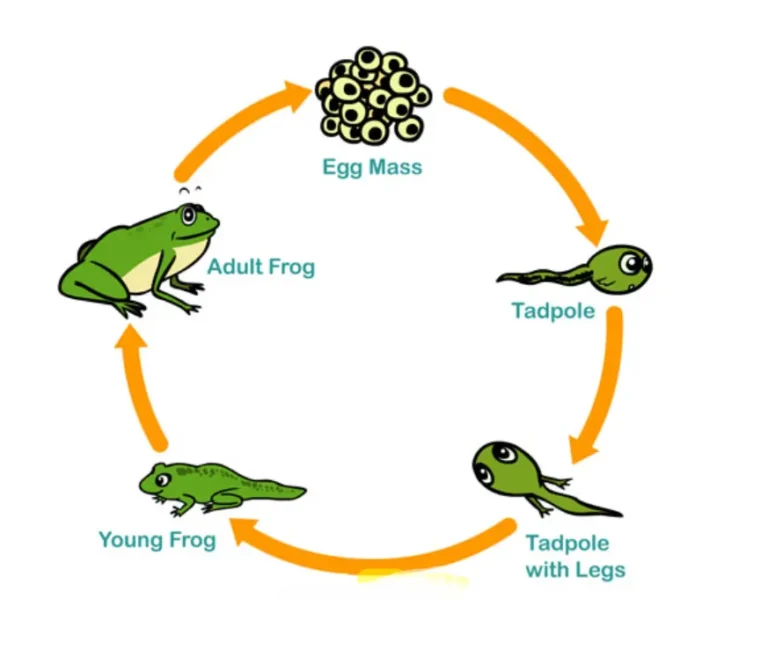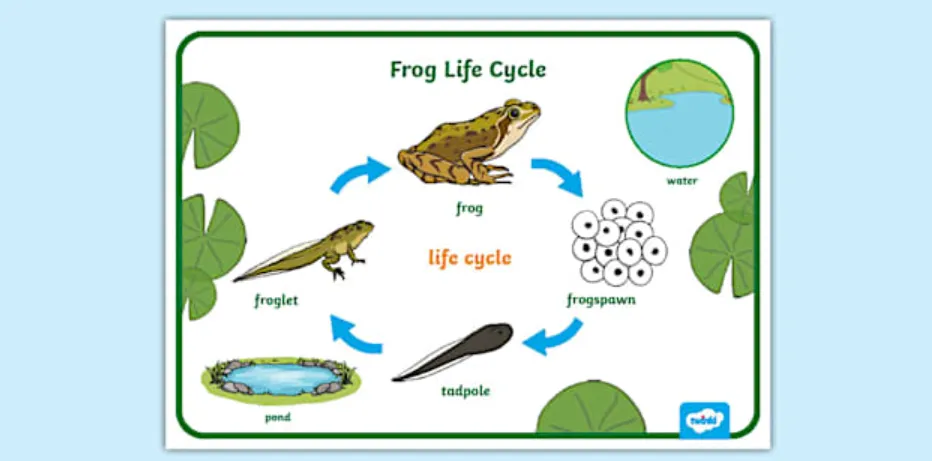
The frog life cycle is one of nature’s clearest examples of metamorphosis, in which an animal changes its body shape, breathing system, movement style, and diet as it grows. A frog begins life as a soft jelly-covered egg, hatches into an aquatic tadpole, develops legs and lungs as a froglet, and finally becomes an adult frog capable of living in water, on land, or in both habitats, depending on the species. Frogs belong to the amphibian order Anura, a name linked with the idea of being “without tail,” because adult frogs normally lose the tadpole tail during development.
Frogs are found in many parts of the world, from tropical rainforests to wetlands, ponds, rice fields, grasslands, and tree canopies. Their life cycle is closely linked to freshwater, as most frog eggs and tadpoles need moist or aquatic environments to survive. However, not all frogs follow the same pattern. A tree frog, a poison dart frog, a Pacman frog, and a common pond frog may differ in egg care, tadpole habitat, feeding behavior, and adult lifespan.
Q: What are the main stages of the frog life cycle?
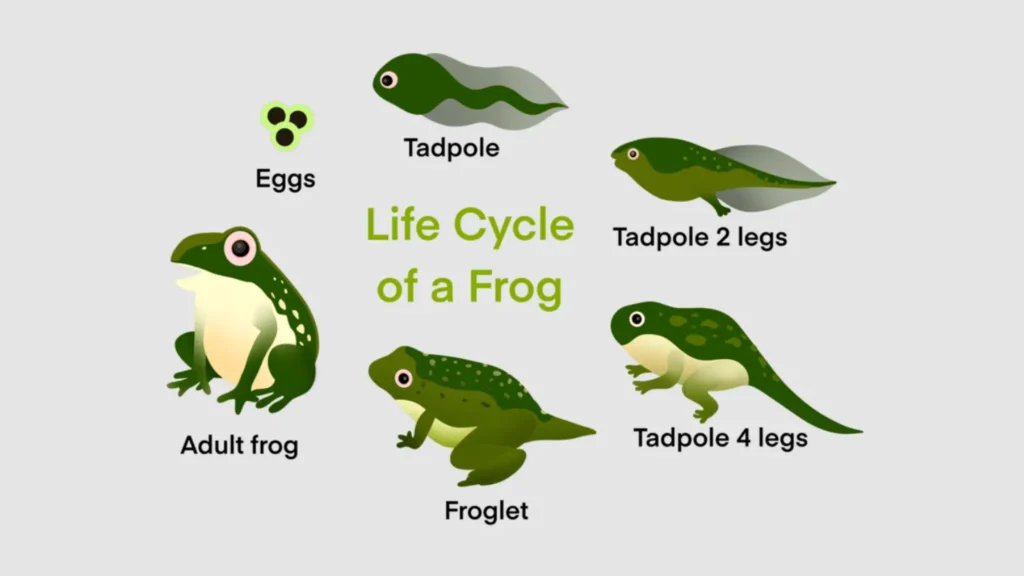
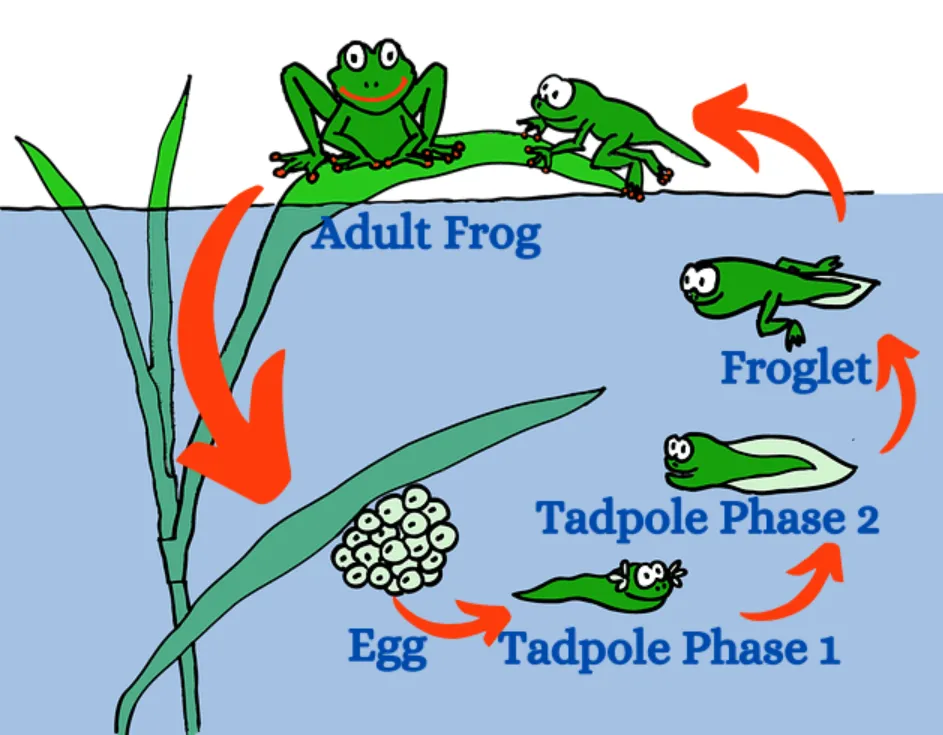
A: The main stages are egg, tadpole, froglet, and adult frog.
Q: How long does it take a frog to become an adult?
A: It depends on species, temperature, food, and habitat. Some frogs complete metamorphosis in a few weeks, while others take several months.
Q: Why is the frog life cycle important?
A: It shows how frogs connect aquatic and land ecosystems, control insects, support food chains, and act as indicators of environmental health.
Quick Life Cycle Table
| Stage | Main Habitat | Key Features | Food Source | Typical Role |
| Egg | Water or a moist place | Jelly-like protective covering; the embryo develops inside | Yolk inside the egg | Beginning of life |
| Tadpole | Mostly water | Tail, gills, no legs at first | Algae, plant matter, detritus, tiny organisms | Aquatic feeding and growth |
| Froglet | Water edge or damp land | Legs form, lungs develop, tail shrinks | Small insects and soft-bodied prey | Transition stage |
| Adult Frog | Water, land, trees, burrows, or wetlands | No tail, strong legs, lungs, and a sticky tongue in many species | Insects, worms, spiders, small animals | Reproduction and ecosystem balance |
Important Things That You Need To Know
When people search for the frog life cycle, they often also search related terms such as Frog, poison dart frog, frog drawing, Pacman frog, tree frog, and Crazy Frog. These words are connected to frogs in different ways, but not all of them describe the same biological topic.
A frog is a real amphibian with a life cycle that usually includes eggs, tadpoles, froglets, and adults. A poison dart frog is a brightly colored tropical frog known for toxic skin secretions in the wild. These toxins usually come from their natural diet, especially small arthropods, and many poison frogs lose much of their toxicity when their diet changes in human care.
A Pacman frog is a popular pet frog with a round body, wide mouth, and ambush-hunting behavior. It is very different from a slim, climbing tree frog, which often has sticky toe pads and lives around vegetation. Both still belong to the broader frog group, but their habitats, feeding habits, and captive care needs differ.
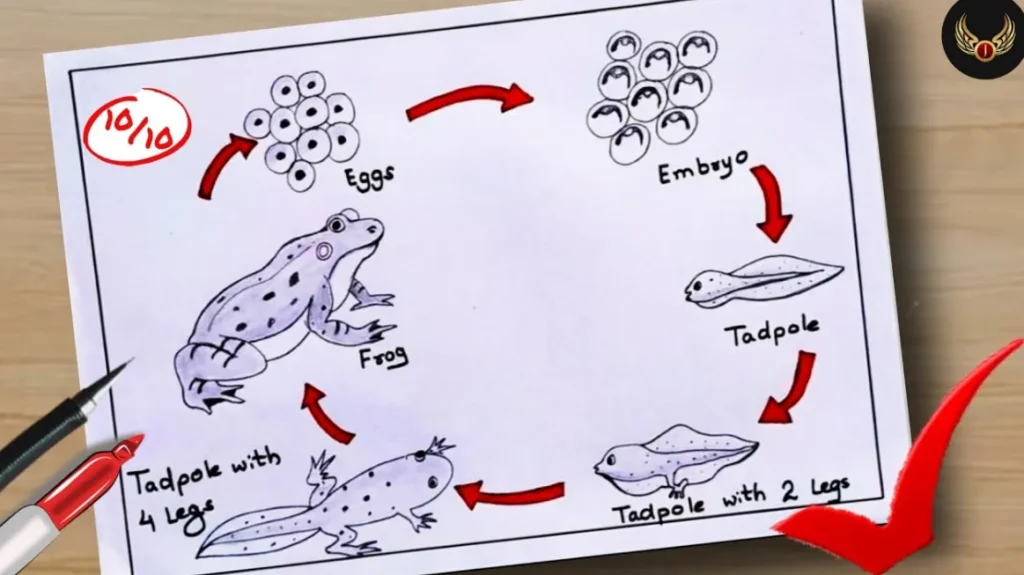
A frog drawing is usually an educational or artistic topic. Many students use frog drawings to visually learn the stages of metamorphosis. Meanwhile, Crazy Frog is not a real frog species. It is a popular entertainment character, so it should not be confused with the biology of real amphibians.
Understanding these related terms helps readers separate real frog science from pet care, art, and pop culture.
The History of Their Scientific Naming, Evolution, and Origin
Scientific Naming of Frogs
Frogs are classified in the order Anura, which means adult frogs are tailless. In scientific classification, frogs are amphibians, meaning they are cold-blooded vertebrates that commonly live in water and on land at different life stages. The common words frog and toad are not always strict scientific divisions. In general, “frogs” have smoother, moist skin and live closer to water, while “toads” have drier, bumpier skin and spend more time on land; however, there are many exceptions.
Evolutionary Origin of Frogs
Frogs have a very ancient evolutionary history. Fossil and molecular evidence suggest that frog-like ancestors existed more than 200 million years ago. Early frog relatives, such as Triadobatrachus from the Early Triassic, exhibit a mix of primitive and frog-like features. Later, fossil frogs became more specialized for jumping, with shorter bodies and the loss of the adult tail.
Why Frogs Became So Successful
Frogs succeeded because they evolved flexible survival strategies. Some species breed in ponds, some in tree holes, some on leaves, and some even show parental care. Their ability to use both aquatic and terrestrial resources made them important members of many ecosystems.
Their Reproductive Process, Giving Birth And Rising Their Children
Mating and Amplexus
Most frogs reproduce through external fertilization. During mating, the male usually climbs onto the female’s back in a position called amplexus. As the female releases eggs, the male releases sperm over them. This process commonly happens in freshwater habitats such as ponds, marshes, slow streams, and flooded areas.
Egg Laying and Frogspawn
Female frogs may lay eggs in clusters, strings, sheets, or small groups, depending on the species. Many people call these egg masses frogspawn. The jelly-like coating around the eggs helps protect them from drying out and gives some protection against minor physical damage. However, eggs are still vulnerable to fish, insects, birds, water pollution, fungal infection, and drying.
Do Frogs Give Birth?
Most frogs do not give birth like mammals. They usually lay eggs. However, the world of frogs is diverse, and some species have unusual reproductive methods. Certain frogs carry eggs on their back, guard egg clutches, transport tadpoles, or place tadpoles in small pools. Poison frogs are especially famous for parental care, where adults may move tadpoles to safe water-filled spaces.
Raising Their Children
Many common frogs provide little care after egg laying, but some species show strong parental behavior. In these frogs, one or both parents may guard eggs, keep them moist, or transport tadpoles. This increases survival in risky habitats where predators, drought, or competition are common.
Stages of the Frog Life Cycle
Stage 1: Egg
The egg stage begins after fertilization. Frog eggs are usually laid in water or very moist places. Inside each egg, the embryo develops by using nutrients from the yolk. The jelly around the egg helps retain moisture and provides the embryo with a soft, protective layer. In many common frogs, eggs hatch in about 1–3 weeks, but timing varies by species and temperature.
Stage 2: Tadpole
After hatching, the Frog becomes a tadpole. At first, tadpoles look more like tiny fish than adult frogs. They usually have a tail, gills, and a rounded body. Many tadpoles feed on algae, soft plant material, detritus, and microscopic organisms. This stage is important because the tadpole grows quickly and stores energy for metamorphosis.
Stage 3: Froglet
The froglet stage is the transition between the tadpole and the adult frog. Hind legs appear first in many species, followed by front legs. The lungs become more important, the mouth changes, and the tail gradually shrinks as its tissues are absorbed. During this stage, the Frog begins shifting from an aquatic lifestyle to a more land-based or semi-aquatic lifestyle.
Stage 4: Adult Frog
The adult frog has no long tadpole tail. It has strong legs, developed lungs, and a body adapted for jumping, swimming, climbing, burrowing, or ambush hunting, depending on the species. Adult frogs are mostly carnivorous and feed on insects, worms, spiders, and other small animals. Once mature, adults return to suitable breeding areas and resume the life cycle.
Their main diet, food sources, and collection process are explained
Frogs have different diets at different life stages. This is one of the most important changes in the frog life cycle.
Tadpole Diet
Most tadpoles feed by scraping or filtering food from the water. Their diet may include:
- Algae growing on rocks, plants, or pond surfaces
- Soft aquatic plants and plant particles
- Detritus, which means decaying organic matter
- Microorganisms suspended in water
- In some species, small animal matter or even other tadpoles
This diet supports fast growth before metamorphosis.
Adult Frog Diet
Adult frogs are mostly carnivorous. Their food sources include:
- Mosquitoes
- Flies
- Moths
- Beetles
- Crickets
- Worms
- Spiders
- Small snails
- Sometimes, smaller frogs or tiny vertebrates are found in larger species
Food Collection Process
Many frogs hunt using a sit-and-wait strategy. They remain still, watch for movement, and strike quickly. Some frogs use a sticky tongue to capture prey, while others grab food directly with their mouth. A Pacman frog, for example, is known for ambush feeding, while many tree frogs catch insects around leaves, branches, and wet vegetation.
How Long Does A Frog Live
The lifespan of a frog depends heavily on species, habitat quality, predator pressure, disease, climate, and human impact. There is no single lifespan that applies to every Frog.
- Small wild frogs may live only 2–5 years because they face many predators and environmental risks.
- Medium-sized frogs in stable habitats may live around 5–10 years in the wild.
- Some larger or well-protected species may live longer, especially where food is available and pollution is low.
- In captivity, some frogs live longer because they are protected from predators, drought, traffic, and habitat destruction.
- Poison frogs can live for more than 10 years in human care, and some species may live up to 12–20 years under good captive conditions.
- Pet frogs, such as Pacman frogs, may live several years when kept in the correct humidity, temperature, food, and veterinary care.
- Wild frog survival is often lowest during the egg and tadpole stages because fish, insects, birds, and water conditions can kill many young frogs before adulthood.
- Adult frogs still face risks from snakes, birds, mammals, fish, drought, fungal disease, pesticides, road traffic, and habitat loss.
- Climate change can affect frog lifespan by changing rainfall patterns, drying breeding ponds, and increasing temperature stress.
- The safest frog habitats are usually clean wetlands, healthy forests, pesticide-free gardens, natural ponds, and connected landscapes where frogs can move between feeding and breeding areas.
So, a simple answer is this: many frogs live for a few years in the wild. In contrast, some species can live for over a decade, especially in protected environments or under professional human care.
Frog Lifespan in the Wild vs. in Captivity
Lifespan in the Wild
In the wild, frogs live in a risky world. Eggs may be eaten before hatching. Fish, aquatic insects, birds, or larger amphibians may eat tadpoles. Froglets are small and vulnerable to drying out. Adult frogs face predators, disease, drought, pollution, and habitat destruction.
Because of these pressures, many wild frogs do not reach their maximum biological age. A frog living in a clean, stable wetland usually has a better chance than one living near polluted water or fragmented habitat.
Lifespan in Captivity
In captivity, frogs may live longer when their care is correct. They receive regular food, clean water, stable humidity, controlled temperature, and protection from predators. However, captivity is only beneficial when care is responsible. Poor enclosures, wrong diet, dirty water, stress, or incorrect temperature can shorten a frog’s life.
Main Difference
The main difference is risk control. Wild frogs live naturally but face more danger. Captive frogs may live longer, but only when their biological needs are respected. Captive frogs should never be released into the wild because they may spread disease or fail to survive.
Importance of the Frog Life Cycle in this Ecosystem
Frogs Control Insect Populations
Adult frogs eat many insects, including mosquitoes, flies, moths, and crop pests. This makes them valuable for natural pest control. Their feeding behavior benefits agriculture, gardens, wetlands, and human health by helping reduce insect pressure.
Frogs Support the Food Chain
Frogs are both predators and prey. Fish, aquatic insects, and birds eat tadpoles. Snakes, herons, mammals, larger fish, and other predators eat adult frogs. This makes frogs an important link in the energy flow between water and land ecosystems.
Tadpoles Help Aquatic Systems
Tadpoles feed on algae, plant particles, and organic matter. This helps recycle nutrients in ponds and wetlands. Their feeding can influence water clarity and the balance of microscopic life.
Frogs Are Environmental Indicators
Frogs have moist, permeable skin and live both on land and in water. Because of this, they are sensitive to pollution, drought, disease, and habitat change. A decline in frogs may signal that an ecosystem is becoming unhealthy.
Frogs Add Biodiversity Value
Frogs contribute to the sound, movement, and balance of natural habitats. Their breeding calls, colors, and behaviors make wetlands and forests richer and more biologically active.
What to do to protect them in nature and save the system for the future
Protect Wetlands and Breeding Ponds
- Save natural ponds, marshes, streams, and seasonal wetlands.
- Avoid draining small water bodies because many frogs depend on them for breeding.
- Keep vegetation around water to provide shade and shelter.
Reduce Chemical Pollution
- Use fewer pesticides, herbicides, and chemical fertilizers.
- Never pour oil, detergent, paint, or waste into ponds and drains.
- Support organic and low-chemical gardening where possible.
Create Frog-Friendly Gardens
- Add native plants, leaf litter, logs, and shallow water sources.
- Avoid perfectly “clean” gardens with no hiding places.
- Keep outdoor lights low because excessive lighting can disturb insect and frog behavior.
Prevent Disease Spread
- Do not move frogs from one pond to another.
- Do not release pet frogs into nature.
- Clean boots and equipment when moving between wetlands to reduce the risk of disease transmission.
Support Conservation and Awareness
- Teach children about the life cycle of a frog.
- Support wetland conservation projects.
- Report unusual frog die-offs to local wildlife authorities where possible.
Amphibians are under major global pressure. Recent global assessments indicate that about 2 in 5 amphibian species are threatened with extinction, underscoring the importance of habitat protection and disease control.
Fun & Interesting Facts About Frog Life Cycle
- Frogs do not maintain the same shape throughout their lives. Their bodies change dramatically during metamorphosis.
- Tadpoles usually breathe with gills, while adult frogs breathe with lungs and also exchange gases through their skin.
- Adult frogs normally lose their tails, which is why the scientific order Anura is often associated with taillessness.
- Some frogs lay thousands of eggs, but only a small number survive to adulthood.
- Poison dart frogs are famous for their bright warning colors and toxic skin chemicals in the wild.
- Tree frogs often have sticky toe pads that help them climb leaves, branches, and smooth surfaces.
- Pacman frogs are named for their large mouths and rounded bodies.
- A frog drawing is one of the easiest ways for students to understand the egg-to-adult transformation.
- Crazy Frog is not a real frog; it is a pop-culture character.
- Males mostly make frog calls to attract females and defend territory.
- Some frogs can survive dry or cold periods by hiding, slowing their body activity, or entering dormancy.
- Frogs are important because they connect water, land, insects, birds, reptiles, and mammals within a single food web.
Frequently Asked Questions (FAQs)
Q: What is the frog life cycle?
A: The frog life cycle is the growth process from egg to tadpole, then froglet, and finally adult frog. It is a classic example of metamorphosis.
Q: How many stages are in a frog’s life cycle?
A: The four main stages are egg, tadpole, froglet, and adult frog. Some diagrams include additional sub-stages, such as an embryo, a tadpole with legs, or a young frog.
Q: What do tadpoles eat?
A: Tadpoles commonly eat algae, soft plant matter, detritus, and tiny organisms in water. Some species may also eat animal matter.
Q: Are all frogs born in water?
A: Most frogs lay eggs in water or moist places, but not all species use open ponds. Some lay eggs on leaves, in foam nests, in tree holes, or in protected damp spaces.
Q: Why are frogs important to humans?
A: Frogs help control insects, support food chains, recycle nutrients, and act as warning signs of environmental pollution or ecosystem damage.
Conclusion
The frog life cycle is more than a simple change from egg to adult. It is a powerful natural process that connects water, land, food webs, and environmental health. From the soft jelly-like egg to the swimming tadpole, from the changing froglet to the fully developed adult frog, every stage has a purpose.
Frogs help control insects, feed many predators, support the balance of wetlands, and warn us when nature is under stress. Whether we study a common pond frog, a colorful poison dart frog, a climbing tree frog, or a pet Pacman frog, the lesson is the same: frogs are small animals with a big ecological role.
Protecting frogs means protecting clean water, healthy wetlands, safe forests, and balanced ecosystems. When frogs survive, nature becomes stronger for future generations.
Also Read: dogs life cycle
About the Author