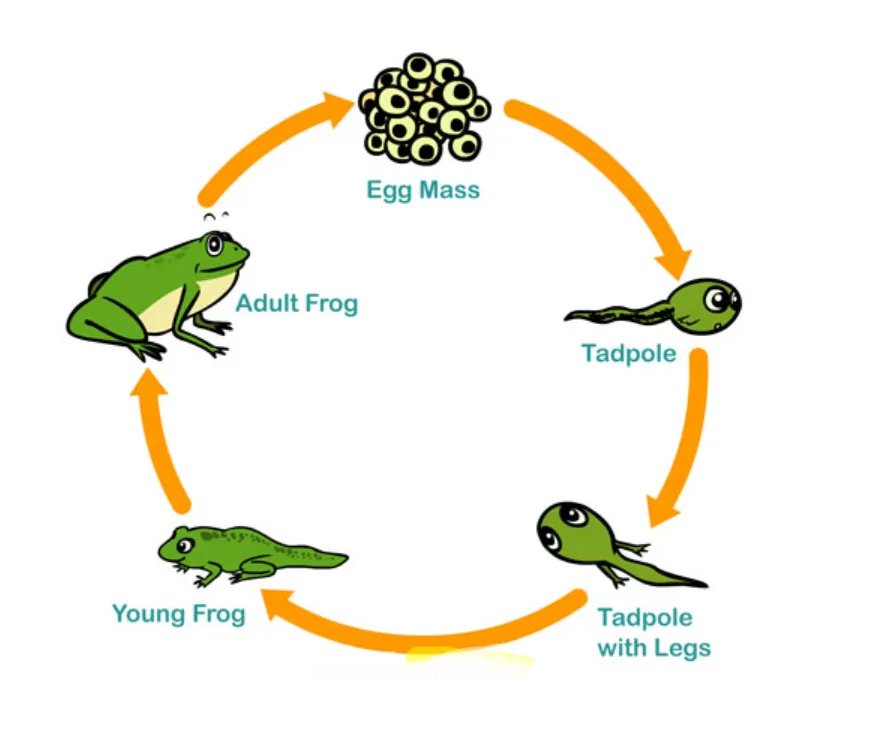
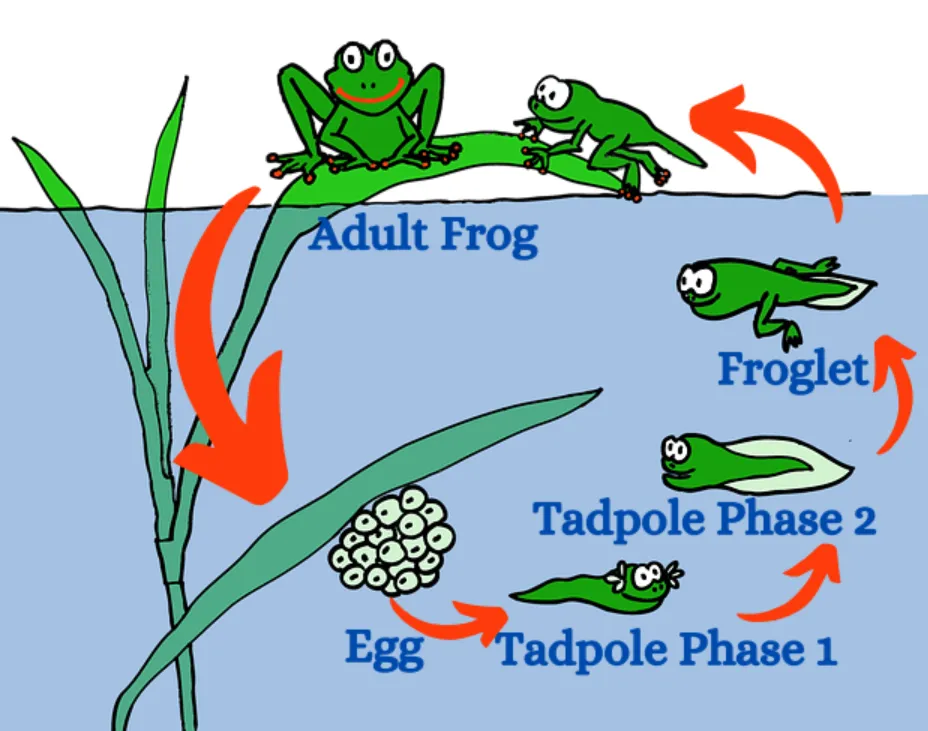
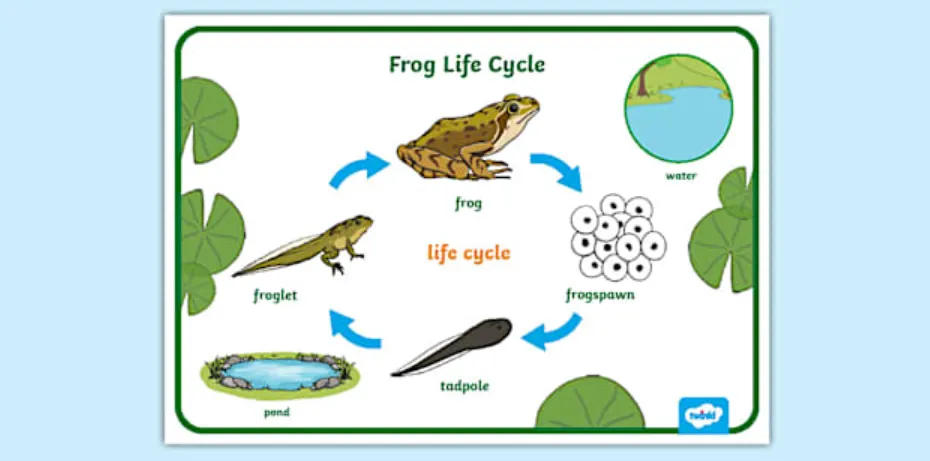
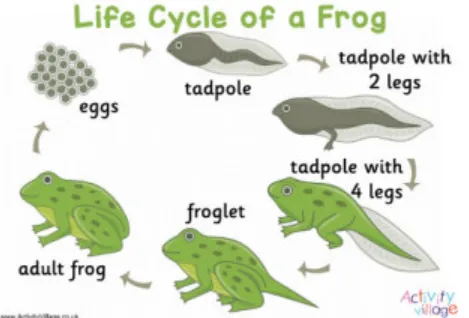
The life cycle of a frog is one of the most fascinating examples of metamorphosis in nature. A frog does not begin life looking like an adult frog. It starts as an egg, hatches into a tadpole, slowly develops legs and lungs, becomes a froglet, and finally grows into an adult frog.
Most frogs are amphibians, meaning they live part of their life in water and part on land. Their thin, moist skin helps them absorb water and exchange gases, which makes them highly connected to their environment.
Frogs are found in ponds, wetlands, forests, rice fields, rivers, and tropical rainforests. Some species, such as the poison dart frog, live in humid forests, while others survive in dry regions by hiding underground.
The frog life cycle is important because it shows how animals adapt from aquatic to terrestrial environments. Tadpoles mainly live in water and often eat algae, while adult frogs usually eat insects and other small animals.
Q: How many stages are in the life cycle of a frog?
A: The main stages are egg, tadpole, froglet, and adult frog.
Q: How long does a frog take to become an adult?
A: Many frogs complete metamorphosis within a few weeks to a few months, depending on species, temperature, and habitat.
Q: Do all frogs follow the same life cycle?
A: Most frogs follow a similar pattern, but timing and details vary widely among species.
Quick Life Cycle Table
| Stage | Where It Lives | Main Features | Food Source |
| Egg | Water or a moist place | Jelly-like eggs in clusters | Uses the yolk inside the egg |
| Tadpole | Water | Tail, gills, no legs at first | Algae, plant matter, tiny particles |
| Froglet | Water edge and land | Legs grow, tail shrinks, lungs develop | Small insects and soft food |
| Adult Frog | Land and water | Fully formed legs, lungs, and a strong jump | Insects, worms, spiders, small animals |
The History Of Their Scientific Naming, Evolution, and Origin
Scientific Naming of Frogs
Frogs belong to the class Amphibia and the order Anura. The word Anura means “without tail,” which describes adult frogs because they lose their tails during metamorphosis.
The word amphibian comes from Greek roots meaning “double life.” This fits frogs very well because they often begin life in water and later live on land.
Evolutionary Background
Frogs evolved from ancient amphibian ancestors that lived hundreds of millions of years ago. Their bodies changed over time to support jumping, swimming, breathing through skin, and surviving in wet environments.
Modern frogs are highly diverse. Some live in trees, some in ponds, some underground, and some in fast-flowing streams.
Origin and Global Spread
Frogs are found almost worldwide except in extremely cold or dry regions. Their success stems from their flexible life cycle, strong reproductive capacity, and ability to use both aquatic and terrestrial habitats.
Their Reproductive Process, Giving Birth, And Rising Their Children
Mating and Calling
Most male frogs call to attract females. These calls are often heard near ponds or wetlands during rainy seasons. Each frog species usually has a unique call.
The male call helps females identify healthy mates from the same species.
Egg Laying
Frogs do not give birth like mammals. Most female frogs lay eggs in water or moist areas. A single female may lay hundreds or even thousands of eggs, depending on the species.
The eggs are usually covered in a jelly-like substance that helps protect them from drying out.
Fertilization Process
In many frogs, fertilization happens outside the female’s body. The male releases sperm over the eggs after the female lays them.
This process is common in pond-breeding frogs.
Parental Care
Many frogs do not care for their young after laying eggs. However, some species show impressive parental care.
Some frogs guard eggs, carry tadpoles, or place young in tiny water pools inside plants. This shows that frog parenting can be simple or surprisingly complex.
Stages of the Life Cycle of a Frog
Stage 1: Egg
The frog life cycle begins with eggs. Frog eggs are often laid in clusters or strings in water. The jelly coating protects the developing embryos and keeps them moist.
Inside each egg, the young frog develops using nutrients stored in the yolk.
Stage 2: Tadpole
After hatching, the frog becomes a tadpole. Tadpoles look more like tiny fish than frogs. They have tails, live in water, and breathe through gills.
At this stage, they usually feed on algae, plant material, and tiny organic matter.
Stage 3: Froglet
The tadpole slowly grows back legs and then front legs. Its lungs develop, and the tail begins to shrink.
This young frog is called a froglet. It starts moving toward land and changes its diet from plant-based foods to small insects.
Stage 4: Adult Frog
The adult frog has no tail, strong legs, lungs, and a wide mouth. It can jump, swim, hunt, and reproduce.
Adult frogs are usually carnivorous and play an important role in controlling insect populations.
Important Things That You Need To Know
The frog is often confused with frog and toad species, but they are not always the same in appearance. Frogs usually have smoother, moist skin and longer legs, while toads often have drier, bumpier skin and shorter legs. Still, all toads are scientifically part of the broader frog group.
Popular culture has also made frogs famous. Characters like Kermit the Frog and stories such as The Princess and the Frog have made frogs familiar to children and adults. However, real frogs are far more interesting than fictional ones because their bodies go through a complete transformation.
The poison dart frog is one of the most colorful groups of frogs in the world. Many species use bright colors as a warning signal to predators. These frogs are small but important in tropical forest ecosystems.
A frog drawing often shows a green frog with big eyes and long legs, but real frogs come in many colors, sizes, and body shapes. Some are brown for camouflage, some are bright blue or yellow, and some are nearly transparent.
Understanding these LSI-related ideas helps readers see frogs not just as pond animals, but as biological, cultural, and ecological symbols.
Their Main Diet, Food Sources, And Collection Process Explained
Tadpole Diet
Young tadpoles usually eat algae, soft plant material, and tiny organic particles in water. Their mouths are adapted for scraping and feeding in aquatic environments.
Some tadpoles may also eat small dead organisms or microorganisms.
Adult Frog Diet
Adult frogs are mainly carnivorous. They eat insects, worms, spiders, flies, mosquitoes, small snails, and sometimes smaller frogs.
Large frog species may eat small fish, crustaceans, or other small animals.
How Frogs Collect Food
Frogs usually hunt by waiting quietly. When prey comes close, the frog quickly shoots out its sticky tongue and pulls the prey into its mouth.
Their large eyes help them detect movement, especially at night.
Why Their Diet Matters
Frogs help control insects naturally—this benefits gardens, farms, forests, and wetlands.
Their diet also makes them part of the food chain because they are both predators and prey.
How long does the life cycle of a Frog Live
The lifespan of a frog depends on its species, habitat, food supply, predators, climate, and human disturbance.
- Small wild frogs may live only 2 to 5 years because they face many predators and environmental risks.
- Medium-sized frogs can often live around 5 to 10 years in suitable habitats.
- Some larger or well-protected species may live 10 years or more.
- Frogs in captivity often live longer because they receive a steady supply of food, clean water, and protection from predators.
- Tadpoles have a much shorter stage, often lasting from a few weeks to a few months.
- The speed of metamorphosis depends strongly on temperature. Warmer water can speed up development, while colder conditions may slow it down.
- Poor water quality can reduce survival because frog eggs and tadpoles are very sensitive.
- Habitat loss is one of the biggest reasons many frogs do not reach adulthood.
- Predators such as birds, fish, snakes, and larger insects eat many eggs and tadpoles.
- Disease, especially fungal infections, can reduce frog populations.
A frog’s life is strongly connected to clean water and safe wetlands. When the environment is healthy, frogs have a much better chance of surviving through all life stages.
Life Cycle of a Frog Lifespan in the Wild vs. in Captivity
Lifespan in the Wild
In the wild, frogs face predators, drought, pollution, disease, and habitat destruction. As a result, many frogs die before becoming adults.
Eggs and tadpoles are especially vulnerable because fish, insects, and birds often eat them.
Lifespan in Captivity
In captivity, frogs may live longer if they are properly cared for. They need the correct temperature, humidity, clean water, safe food, and enough space.
Captive frogs are protected from predators, but poor care can still cause illness.
Why the Difference Matters
The difference between wild and captive lifespan shows how important habitat quality is. Frogs do not need luxury; they need clean water, natural shelter, safe breeding areas, and balanced ecosystems.
Importance of the Life Cycle of a Frog In This Ecosystem
Natural Pest Control
Adult frogs eat many insects, including mosquitoes, flies, and crop pests. This helps maintain natural balance without depending only on chemical control.
Food for Other Animals
Frogs are food for snakes, birds, fish, mammals, and larger amphibians. Their eggs and tadpoles also support aquatic food chains.
Environmental Indicators
Frogs are called bioindicators because their thin skin makes them sensitive to pollution and environmental change.
When frog populations decline, it may signal problems in water quality, climate, or habitat health.
Nutrient Cycling
Tadpoles help clean aquatic environments by feeding on algae and organic matter. Adult frogs move nutrients between water and land.
This makes frogs important connectors between aquatic and terrestrial ecosystems.
What To Do To Protect Them In Nature And Save The System For The Future
Protect Wetlands
- Save ponds, marshes, streams, and seasonal wetlands.
- Avoid filling or draining natural breeding areas.
- Keep water bodies connected to surrounding vegetation.
Reduce Chemical Pollution
- Use fewer pesticides and herbicides.
- Avoid dumping waste into ponds and drains.
- Support organic and nature-friendly farming.
Keep Water Clean
- Prevent plastic, oil, and chemical runoff.
- Protect natural water sources near homes and farms.
- Maintain clean drainage systems.
Protect Native Habitats
- Plant native vegetation near ponds.
- Avoid removing all leaf litter and natural cover.
- Create safe hiding places for frogs.
Prevent Harmful Collection
- Do not collect wild frogs unnecessarily.
- Avoid buying illegally captured exotic frogs.
- Teach children to observe frogs gently and release them safely.
Fun & Interesting Facts About the Life Cycle of a Frog
- Frogs begin life in water as eggs and often become land-living adults.
- Tadpoles breathe through gills, while adult frogs use lungs and skin.
- Frogs can absorb water through their skin rather than drinking as humans do.
- Some frogs can jump many times their body length.
- Males mostly make frog calls to attract females.
- Many frogs are active at night.
- The poison dart frog uses bright colors to warn predators.
- Frogs help farmers by eating insects.
- Some frogs lay eggs on leaves rather than directly in ponds.
- A frog’s eyes help push food down when it swallows.
Frequently Asked Questions (FAQs)
Q: What is the life cycle of a frog?
A: The life cycle of a frog includes egg, tadpole, froglet, and adult frog stages.
Q: How long does it take for a tadpole to become a frog?
A: It often takes a few weeks to several months, depending on species, water temperature, and food supply.
Q: What do tadpoles eat?
A: Tadpoles mainly eat algae, soft plants, and tiny organic particles in water.
Q: What do adult frogs eat?
A: Adult frogs usually eat insects, worms, spiders, flies, mosquitoes, and other small animals.
Q: Why are frogs important to the environment?
A: Frogs control insects, support food chains, help cycle nutrients, and indicate environmental health.
Final Word
The life cycle of a frog is a powerful example of nature’s transformation. From a tiny jelly-covered egg to a swimming tadpole, then a young froglet, and finally an adult frog, each stage has a clear purpose.
Frogs are not just small animals found near ponds. They are important predators, prey, environmental indicators, and natural pest controllers. Their survival depends on clean water, safe wetlands, healthy forests, and reduced pollution.
Learning about frogs helps us understand why every stage of life matters in nature. When frogs disappear, ecosystems lose balance. But when we protect wetlands and reduce the use of harmful chemicals, frogs can continue their ancient life cycles for future generations.
By protecting frogs, we also protect water, soil, insects, birds, and the natural systems that support life around us.
Also Read: frog life cycle
About the Author