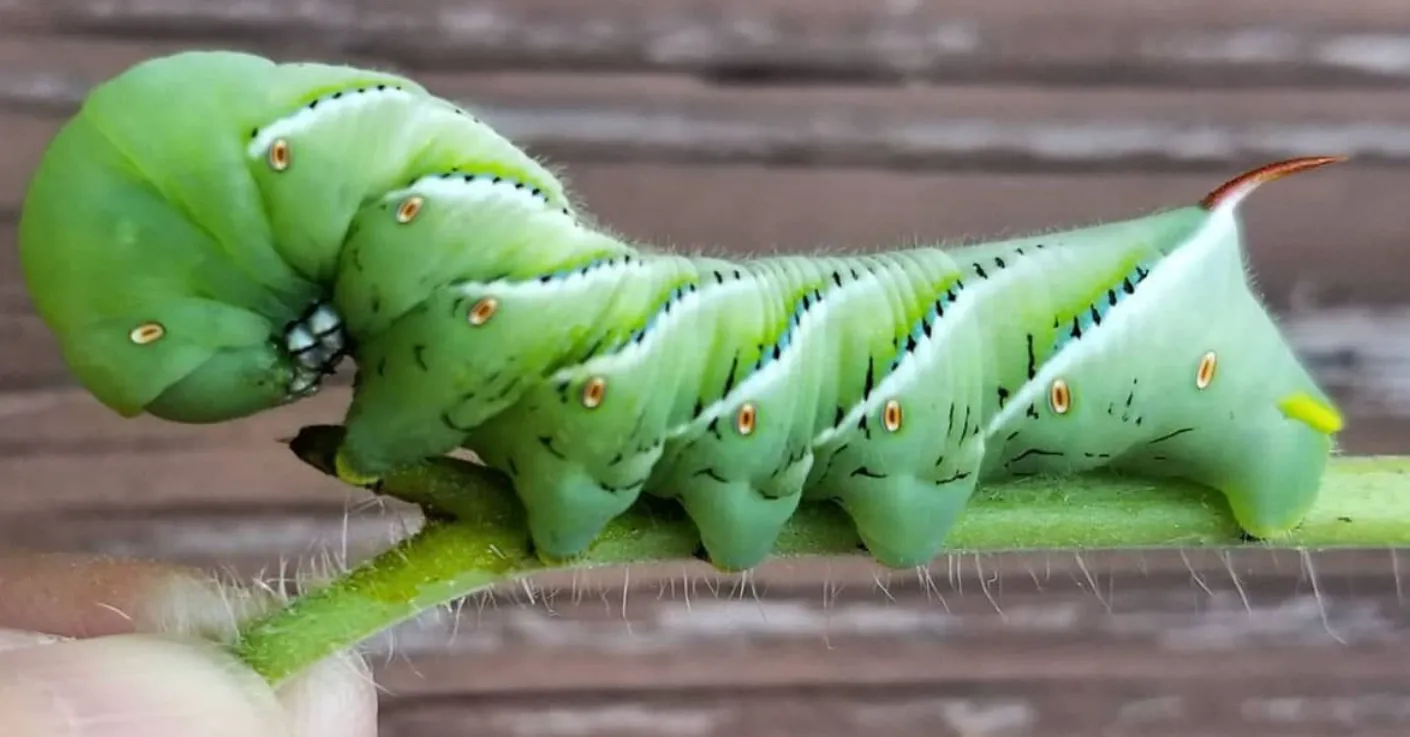
The life cycle of the tomato hornworm is one of the most interesting transformations in the garden ecosystem. The tomato hornworm is the larval stage of the five-spotted hawk moth, Manduca quinquemaculata. Many people call it a worm, but biologically it is a large green caterpillar.
This insect is best known for feeding on tomato leaves, but it also lives on other plants from the nightshade family, including potato, eggplant, pepper, tobacco, and some wild weeds. Because of its green body, it blends easily with tomato leaves, making it hard to find until plant damage becomes visible.
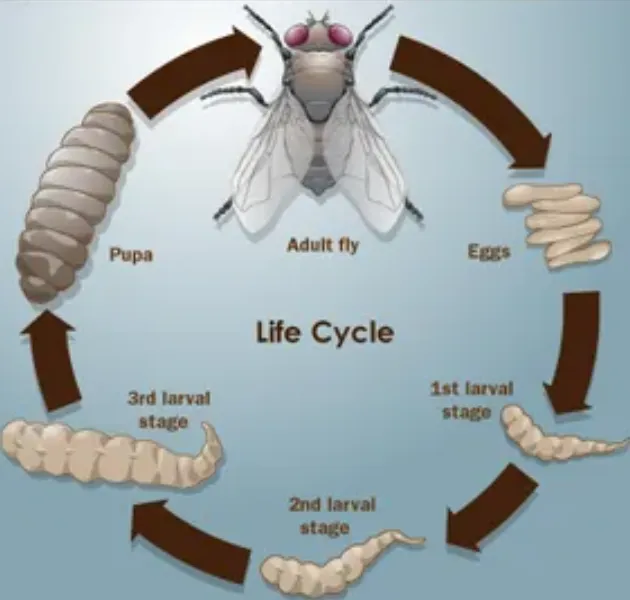
The tomato hornworm life cycle has four main stages: egg, larva, pupa, and adult moth. The larval stage causes the most noticeable damage because the caterpillar eats a large amount of foliage in a short time. However, the adult tomato hornworm moth also contributes to pollination by feeding on flower nectar.
Quick Answers
Q: What does a tomato hornworm turn into?
A: A tomato hornworm turns into a five-spotted hawk moth, also called a sphinx moth.
Q: How long does the tomato hornworm’s life cycle take?
A: In warm weather, the active egg-to-adult cycle may take about 4–8 weeks, but overwintering pupae may remain in soil until the next spring.
Q: Is a tomato hornworm a butterfly?
A: No. A tomato hornworm butterfly is a common misnomer. It becomes a moth, not a butterfly.
Quick Life Cycle Table
| Stage | What Happens | Usual Duration | Key Details |
| Egg | A female moth lays a single egg on a host leaves | About 5–7 days | Eggs are small, oval, and light green |
| Larva | The green caterpillar feeds heavily | About 3–4 weeks | This is the damaging stage of tomato plants |
| Pupa | Mature larva burrows into soil | About 2 weeks or overwinter | Brown pupa forms underground |
| Adult Moth | Moth emerges, mates, and lays eggs | Several days to weeks | Known as the five-spotted hawk moth |
The History Of Their Scientific Naming, Evolution, and Origin
Scientific Name and Classification
The tomato hornworm is scientifically known as Manduca quinquemaculata. The word Manduca means “to chew” or “to eat,” which matches the larva’s strong feeding habit. The species name quinquemaculata means “five-spotted,” referring to the markings on the adult moth’s body.
Common Name Origin
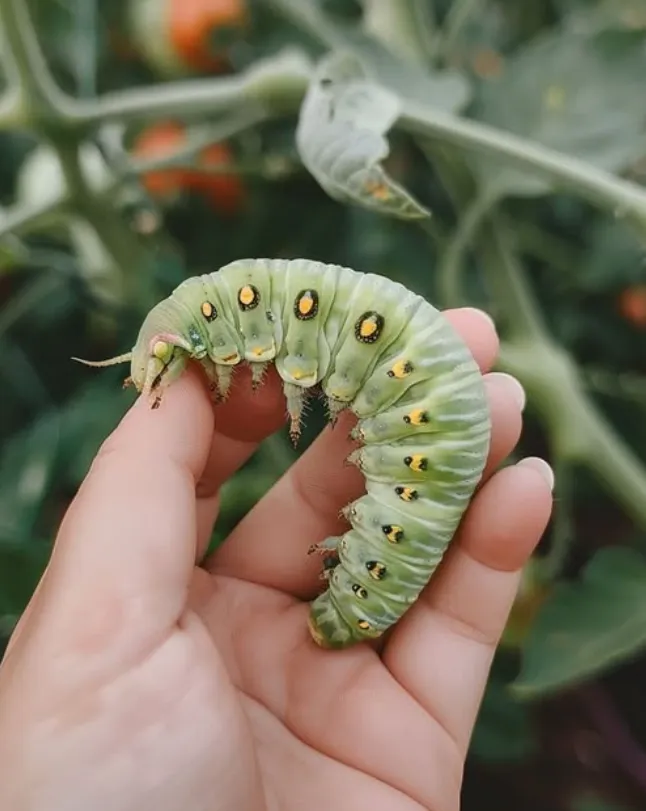
The name hornworm comes from the horn-like projection at the back of the caterpillar. This horn looks threatening, but it is not dangerous to humans. The name tomato hornworm became popular because the caterpillar is often found feeding on tomato plants.
Evolutionary Background
Tomato hornworms belong to the family Sphingidae, commonly known as hawk moths or sphinx moths. These moths are strong fliers and have long mouthparts for nectar-feeding. Over time, the larvae adapted to feeding on plants in the Solanaceae family, many of which contain chemical defenses.
Origin and Distribution
The tomato hornworm moth is native to North America. It is commonly seen in home gardens, farms, and wild areas where suitable host plants grow.
Their Reproductive Process, Giving Birth, And Rising Their Children
Mating Process
Adult five-spotted hawk moths usually become active in the evening and at night. Males locate females by scent signals called pheromones. After mating, the female searches for healthy host plants where her young can feed immediately after hatching.
Egg Laying
The female moth does not give live birth. Instead, she lays eggs one by one on the upper or lower surfaces of leaves. Tomato, tobacco, potato, pepper, and eggplant are common host plants.
Each egg is placed so the tiny caterpillar can begin feeding soon after hatching. This careful placement increases the young larva’s chance of survival.
No Parental Care
Unlike mammals or birds, tomato hornworms do not raise their young. After laying eggs, the adult moth leaves. The baby caterpillar must survive by feeding, hiding, growing, and avoiding predators.
Growth of the Young
After hatching, the larva begins eating leaves almost immediately. It passes through several growth phases called instars. During this time, it sheds its skin several times as its body expands.
The larva grows quickly and may reach several inches in length before dropping to the soil to pupate.
Stages of the Life Cycle of the Tomato Hornworm
Stage 1: Egg
The life cycle begins when the female tomato hornworm moth lays small, smooth, light green eggs on host plant leaves. These eggs are usually laid singly rather than in clusters.
In warm conditions, eggs hatch within about a week. The tiny larva emerges and begins feeding on the same plant where it was born.
Stage 2: Larva
The larva is the familiar green tomato hornworm. This is the most active feeding stage. It eats leaves, soft stems, and sometimes green fruit.
The larva has a strong appetite and grows rapidly. It usually passes through five larval stages. As it grows, it becomes easier to notice because of missing leaves, droppings, and stripped stems.
Stage 3: Pupa
When the larva matures, it drops from the plant and burrows into the soil. There, it forms a brown pupa.
The pupa is a resting and transformation stage. Inside, the caterpillar changes into an adult moth. In warm seasons, the moth may emerge in about two weeks. In colder seasons, the pupa may stay underground through winter.
Stage 4: Adult Moth
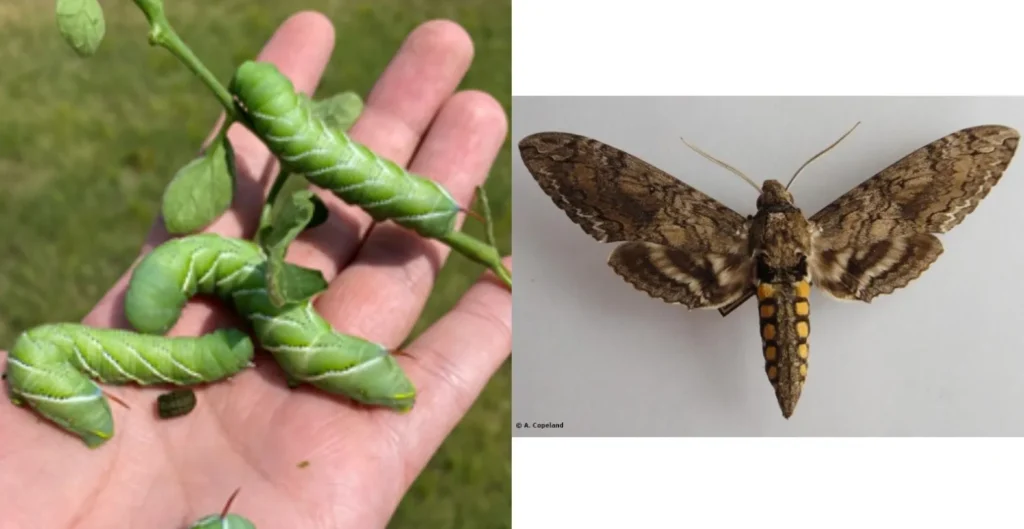
The adult is the five-spotted hawk moth. It has gray-brown wings, a thick body, and yellowish spots along the abdomen.
The adult moth drinks nectar from flowers and can hover while feeding. After mating, females lay eggs again, and the cycle continues.
Important Things That You Need To Know
The tomato hornworm is often misunderstood because its name suggests it is a worm, but it is actually a caterpillar. Its adult form is the tomato hornworm moth, more correctly known as the five-spotted hawkmoth.
The phrase “tomato hornworm butterfly” is also common online, but it is incorrect. Butterflies and moths are related, but this insect belongs to the moth group. The adult has thicker antennae, a heavier body, and mostly nocturnal feeding behavior, which are typical of moths.
The tomato hornworm life cycle is important for gardeners because the larval stage can quickly damage tomato plants. A small caterpillar may be hard to see, but a large one can remove many leaves within a short time.
Another important point is identification. Tomato hornworms have V-shaped white markings on the sides and usually a dark horn. They are often confused with tobacco hornworms, which have diagonal white stripes and a red horn.
Although many gardeners see them only as pests, these insects also have ecological value. The adult moth helps pollinate night-blooming flowers. The larvae also become food for birds, wasps, and other natural predators.
Understanding the tomato hornworm, the tomato hornworm moth, the tomato hornworm life cycle, and the mistaken term “tomato hornworm butterfly” helps readers identify the insect correctly and manage it responsibly.
Their Main Diet, Food Sources, And Collection Process Explained
Main Diet
The main diet of the tomato hornworm includes leaves from plants in the nightshade family. Tomato is the most familiar host, but it is not the only one.
Common food plants include:
- Tomato
- Tobacco
- Potato
- Eggplant
- Pepper
- Jimsonweed
- Other wild Solanaceae plants
How They Find Food
The female moth chooses host plants before laying eggs. This means the baby caterpillar usually hatches directly on its food source.
Once hatched, the larva starts eating nearby leaves. Young larvae often feed quietly and remain hidden. Larger larvae eat more aggressively and may move across the plant at night or early morning.
Feeding Pattern
Tomato hornworms usually eat leaves first. As they grow, they may also damage tender stems and green fruits.
Signs of feeding include:
- Missing leaves
- Bare stems
- Dark droppings on leaves or soil
- Chewed fruit surfaces
- Sudden plant thinning
Adult Moth Diet
The adult tomato hornworm moth does not eat tomato leaves. It feeds on flower nectar using a long feeding tube. This makes it useful for some night-blooming flowers.
How long does the life cycle of a tomato hornworm live
The lifespan of a tomato hornworm depends on temperature, food availability, season, predators, and whether the pupa enters winter dormancy.
- Egg stage: Usually lasts about 5–7 days in warm weather. Cooler weather may slow hatching.
- Larval stage: The caterpillar usually feeds and grows for about 3–4 weeks. This is the stage gardeners notice most because plant damage becomes visible.
- Pupal stage in summer: If the weather is warm and conditions are suitable, the pupa may produce an adult moth in about 2 weeks.
- Pupal stage in winter: Late-season larvae may pupate underground and remain there for several months until spring. This is called overwintering.
- Adult moth stage: Adult moths usually live long enough to mate, feed on nectar, and lay eggs. Their adult life is shorter than the full life cycle, but it is very important for reproduction.
- Total active cycle: In warm-growing seasons, one generation may complete development in about 1 to 2 months.
- Seasonal cycle: In colder regions, the full cycle may span many months because the pupa hibernates underground during winter.
- Number of generations: Some regions may have one generation per year, while warmer regions may support two generations in a growing season.
- Survival factors: Birds, parasitic wasps, weather, pesticides, and food scarcity can reduce survival.
- Garden impact: Even though one caterpillar lives only a short active life, it can eat heavily during the larval stage.
Life Cycle of Tomato Horn Worm Lifespan in the Wild vs. in Captivity
Lifespan in the Wild
In the wild, the tomato hornworm life cycle is shaped by natural conditions. Predators may eat eggs. Birds, spiders, wasps, and other insects may attack larvae.
Weather also matters. Heavy rain, extreme heat, or lack of host plants can reduce survival. Many larvae never reach the adult moth stage.
Lifespan in Captivity
In captivity, tomato hornworms may survive better if they are provided with clean food, a suitable temperature, and a safe space for pupation. Without predators, more larvae can complete the life cycle.
However, captivity still requires care. The caterpillars need fresh host leaves, good ventilation, and soil or suitable material for pupation.
Main Difference
In nature, survival is lower but ecologically balanced. In captivity, survival rates can be higher, but the environment must be carefully managed.
Importance of the Life Cycle of the Tomato Hornworm in This Ecosystem
Role as Plant Consumers
The tomato hornworm is a plant-eater. By feeding on leaves, it becomes part of the natural food web. Although this can be harmful in gardens, it is normal in wild ecosystems.
Food for Predators
Birds, reptiles, spiders, and predatory insects eat hornworms. Parasitic wasps also use them as hosts. This makes them an important food source for other species.
Pollination by Adult Moths
The adult five-spotted hawk moth feeds on nectar. While visiting flowers, it can help move pollen between plants, especially night-blooming flowers.
Soil Connection
The pupal stage happens underground. This connects the insect’s life cycle with soil health, seasonal change, and plant growth patterns.
Natural Balance
Even pest insects have ecological value. The key is not always total removal, but balanced management that protects crops while supporting biodiversity.
What To Do To Protect Them In Nature And Save The System For The Future
Protect Natural Predators
- Encourage birds, lady beetles, lacewings, and parasitic wasps.
- Avoid killing every insect in the garden.
- Let nature help control hornworm populations.
Use Handpicking First
- Check the tomato plants early in the morning or in the evening.
- Remove large hornworms by hand when needed.
- Move them away from valuable crops if you want a gentler method.
Avoid Unnecessary Pesticides
- Use chemical control only when the infestation is serious.
- Broad pesticides may kill helpful insects.
- Choose targeted, garden-safe options when needed.
Keep Some Wild Host Plants
- Wild nightshade plants can support natural insect life.
- Keep wild edges balanced and away from main crop beds.
- This helps maintain biodiversity.
Improve Soil and Garden Health
- Rotate crops each season.
- Remove old infected plant debris.
- Light soil cultivation may expose overwintering pupae to natural predators.
Fun & Interesting Facts About the Life Cycle of the Tomato Hornworm
- Tomato hornworms are not true worms. They are caterpillars.
- The adult form is a five-spotted hawk moth, not a butterfly.
- The horn on the back looks scary, but it is not a stinger.
- Large larvae can be hard to see because their green color blends with tomato leaves.
- Their droppings are often easier to notice than the caterpillar itself.
- They can grow very quickly when the conditions are ideal.
- Adult hawk moths can hover near flowers while feeding.
- They are related to tobacco hornworms, but their markings differ.
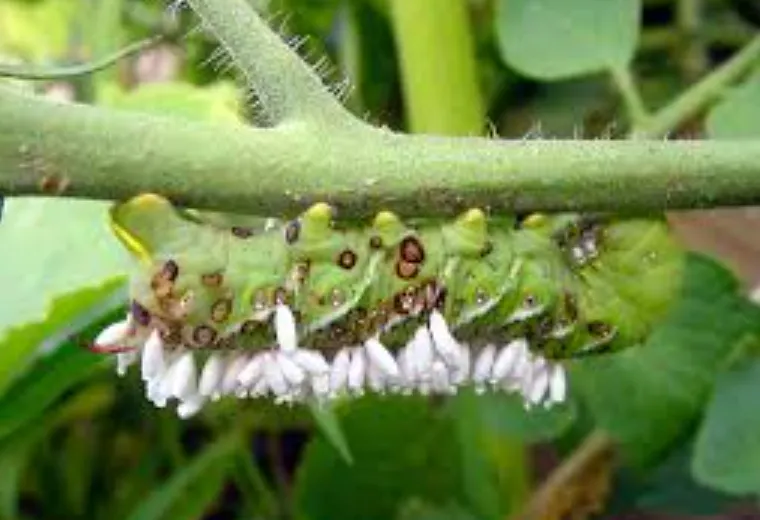
- Parasitic wasps can naturally control hornworm numbers.
- A hornworm covered with small white cocoons should usually be left alone because beneficial wasps are developing there.
Frequently Asked Questions (FAQs)
Q: What is the life cycle of the tomato hornworm?
A: The life cycle of the tomato hornworm includes four stages: egg, larva, pupa, and adult moth. The larva is the green caterpillar seen on tomato plants.
Q: What does a tomato hornworm moth look like?
A: The tomato hornworm moth is a large gray-brown hawk moth with a thick body and five yellowish spots on each side of the abdomen.
Q: Is the tomato hornworm harmful to humans?
A: No. The caterpillar is not harmful to humans. It does not sting, although it may look alarming because of the horn.
Q: Why is it called a tomato hornworm butterfly?
A: Some people use that phrase by mistake. The tomato hornworm becomes a moth, not a butterfly.
Q: How can I find tomato hornworms on plants?
A: Look for missing leaves, bare stems, and dark droppings. Check under leaves and along stems during early morning or evening.
Final Word
The life cycle of the tomato hornworm is a powerful example of complete metamorphosis in nature. From a tiny egg to a hungry green caterpillar, then into an underground pupa, and finally a strong flying moth, each stage has a clear purpose.
For gardeners, the larval stage can be frustrating because it can quickly damage tomato plants. But from an ecological perspective, the tomato hornworm is also food for predators, and the adult moth supports flower pollination.
The best approach is balanced management. Learn to identify the insect, protect useful predators, remove damaging larvae when needed, and avoid unnecessary chemical use. When we understand the full tomato hornworm life cycle, we can protect our gardens while respecting the natural systems around us.
Also Read: life cycle of the shark
About the Author