The life cycle of the shark is one of the most fascinating topics in marine biology because sharks do not all grow, reproduce, or survive in the same way. A shark is a cartilaginous fish, meaning its skeleton is made mostly of cartilage rather than hard bone. Sharks belong to the class Chondrichthyes, which also includes rays and skates.
Sharks have lived in the oceans for hundreds of millions of years, long before many modern animals appeared. Today, there are 500+ shark species, ranging from the tiny dwarf lantern shark to the massive whale shark, the largest fish in the world. Their life cycle usually includes four broad stages: embryo, pup, juvenile, and adult.
Unlike many fish that release thousands or millions of eggs, many sharks produce only a small number of well-developed young. This slow reproductive strategy makes sharks powerful survivors in stable ecosystems, but also makes them vulnerable to overfishing and habitat damage. Many species grow slowly, mature late, and reproduce infrequently.
Q: What are baby sharks called?
A: A baby shark is called a pup.
Q: Do all sharks lay eggs?
A: No. Some sharks lay eggs, while others give birth to live young. Shark reproduction differs by species.
Q: How many stages are in the shark life cycle?
A: The shark life cycle is commonly explained in four stages: embryo, pup, juvenile, and adult.
Quick Life Cycle Table
| Life Stage | What Happens | Key Features |
| Embryo | A shark develops inside an egg case or inside the mother’s body | Protected early growth |
| Pup | Baby shark is born or hatches | Independent from birth |
| Juvenile | Young shark grows and learns to hunt | High-risk survival stage |
| Adult | A mature shark reproduces and controls its territory or feeding range | Important predator or filter feeder |
Important Things That You Need To Know
The shark life cycle can vary across different shark species, so the details are not always the same. A whale shark, for example, is a huge filter-feeding shark that eats plankton and small fish, while a tiger shark is a powerful predator with a very broad diet. A hammerhead shark has a wide head shape that helps with vision, movement, and detecting prey.
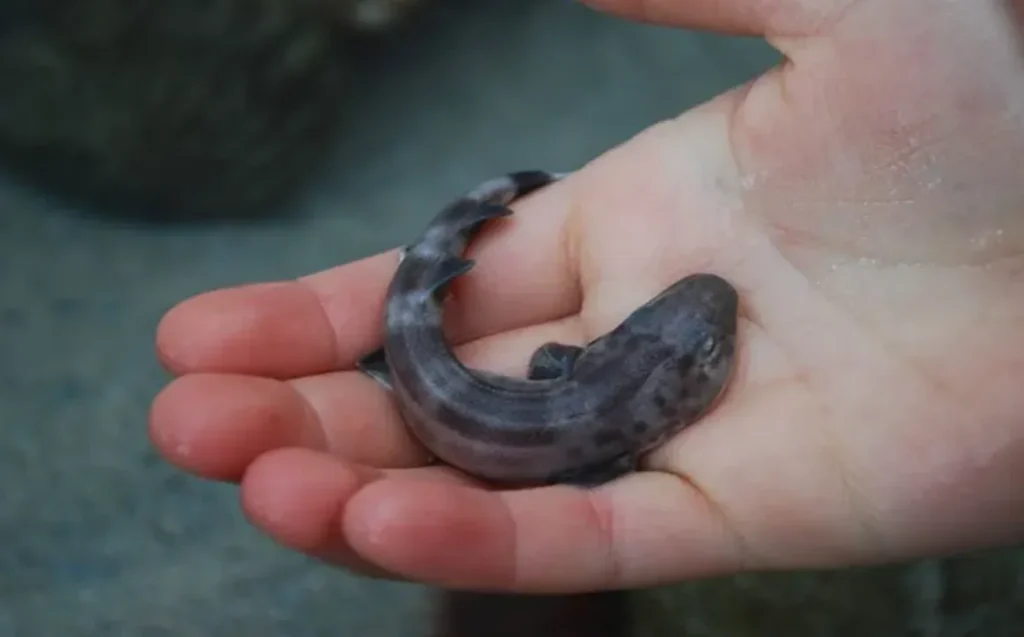
The phrase “baby shark” is often used in songs and children’s media, but in real marine biology, a baby shark is called a pup. Shark pups are not helpless like many newborn mammals. Most are born ready to swim, hide, and hunt small prey.
People also search for terms like Shark Tale, which is an animated movie, but real sharks are very different from cartoon characters. They are complex ocean animals with strong senses, slow reproduction, and important ecological roles.
Some sharks are top predators, while others are gentle filter feeders. The whale shark is harmless to humans and feeds mainly by filtering tiny organisms from the water. In contrast, species such as the tiger shark and some hammerhead shark species actively hunt fish, rays, squid, and other marine animals.
Understanding shark life cycles helps explain why conservation matters. Because many sharks mature late and produce few young, their populations recover slowly when overfished. This is one major reason why sustainable fishing, habitat protection, and responsible tourism are important for shark survival.
The History of Their Scientific Naming, Evolution, and Origin
Scientific Naming of Sharks
Sharks are classified under the class Chondrichthyes, which refers to fish with cartilaginous skeletons. Within this group, sharks belong to several orders and families. Their scientific names vary by species. For example, the great white shark is Carcharodon carcharias, while the whale shark is Rhincodon typus.
Scientific naming helps researchers identify species clearly across countries and languages. Common names vary by region, but scientific names are more stable.
Evolutionary Background
Sharks are among the oldest surviving vertebrate groups in the ocean. Fossil evidence shows that shark-like animals existed hundreds of millions of years ago. Their body design has changed over time, but many features remain highly successful: streamlined bodies, replaceable teeth, strong senses, and efficient swimming.
Origin and Adaptation
Modern sharks evolved into many forms because they adapted to different marine habitats. Some live in shallow reefs, some in the open ocean, some near the seafloor, and some in deep water. This long evolutionary history explains why sharks can be predators, scavengers, and filter feeders in different ecosystems.
Their Reproductive Process, Giving Birth, and Raising Their Children
Mating and Fertilization
Sharks reproduce through internal fertilization. Male sharks have special organs called claspers, which transfer sperm to the female. This makes shark reproduction different from that of many bony fish, which release eggs and sperm into open water.
Egg-Laying Sharks
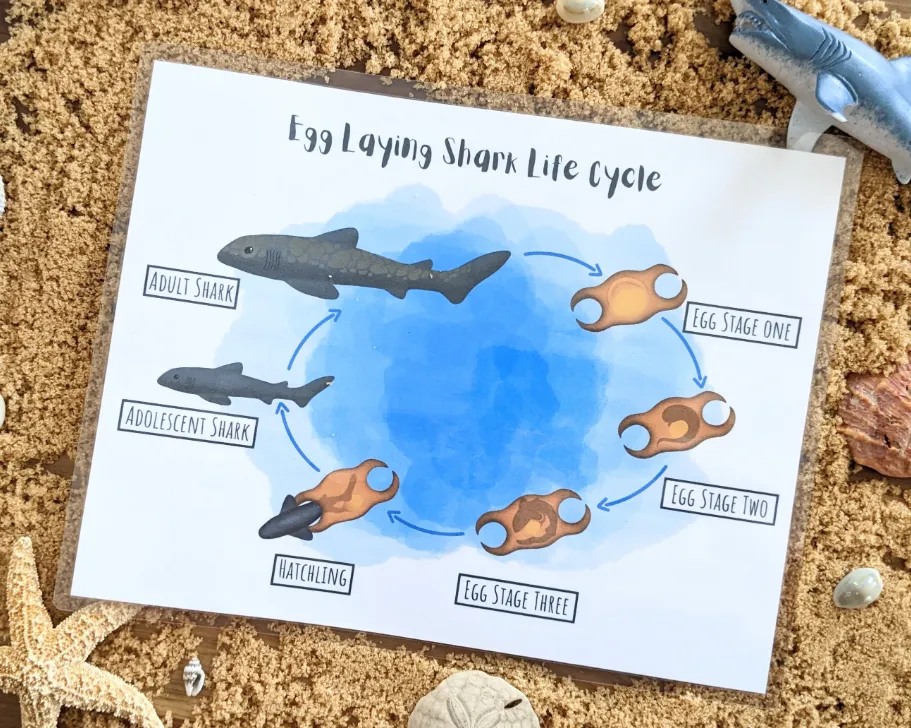
Some sharks are oviparous, meaning they lay eggs. These eggs are often protected inside tough egg cases, sometimes called “mermaid’s purses.” The embryo grows inside the case and receives nutrition from the yolk. After development, the young shark hatches as a small but independent pup.
Live-Bearing Sharks
Many sharks give birth to live young. Some are viviparous, where embryos develop inside the mother and may receive nutrition through a placenta-like connection. Others are ovoviviparous, in which eggs hatch within the mother’s body, and the pups are born alive. NOAA also notes rare cases of asexual reproduction in sharks.
Do Sharks Raise Their Young?
Most sharks do not care for their young after birth. Once pups are born or hatched, they usually survive on their own. This is why many shark pups are born in safer nursery areas such as shallow coastal waters, mangroves, or protected bays.
Stages of the Life Cycle of the Shark
Stage 1: Embryo
The first stage of the shark’s life cycle is the embryo stage. Depending on the species, the embryo may develop inside an egg case outside the mother’s body or inside the mother’s body.
During this stage, the young shark develops its body shape, fins, gills, teeth, and basic hunting ability. In egg-laying sharks, the embryo depends on yolk for nutrition. In live-bearing species, the embryo may receive nutrients from yolk, unfertilized eggs, or a placenta-like connection.
Stage 2: Pup
After birth or hatching, the young shark is called a pup. Shark pups are usually independent immediately. They must swim, avoid predators, and find food without parental care.
This is one of the most dangerous stages because pups are small and vulnerable. Many species use nursery habitats where young sharks can hide and grow before entering deeper or more open waters.
Stage 3: Juvenile
The juvenile stage is the growing stage. Juvenile sharks become stronger swimmers and begin feeding on larger prey. Their diet may change as they grow.
For example, juvenile white sharks mainly eat fish, smaller sharks, rays, and squid, while larger adults may feed more on marine mammals and large prey.
Stage 4: Adult
The final stage is the adult stage. Adult sharks can reproduce and contribute to the next generation. Many species take years to reach maturity, and some larger sharks mature very slowly.
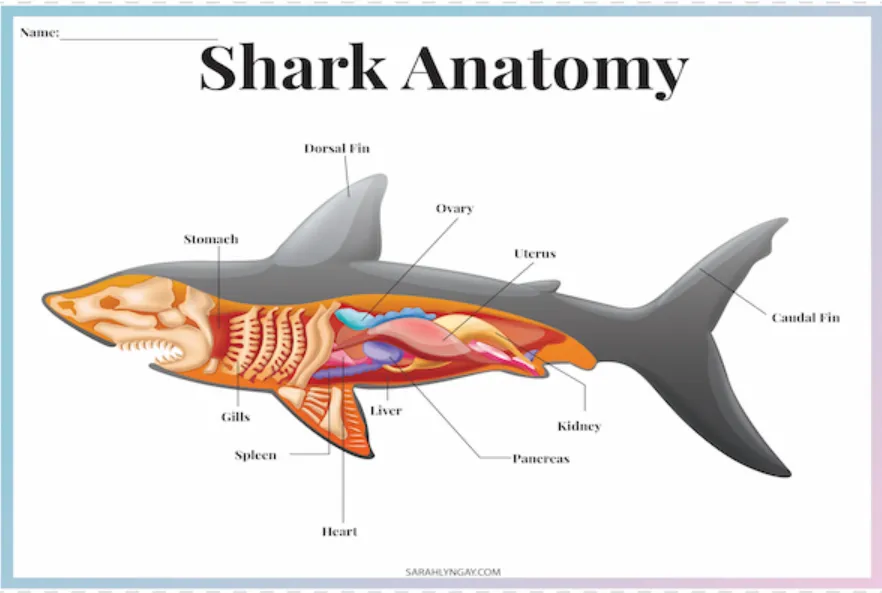
Adult sharks play important roles as predators, scavengers, or filter feeders. They help balance ocean food webs and support healthier marine ecosystems.
Their main diet, food sources, and collection process are explained
Shark diets vary greatly by species, size, habitat, and life stage. Not every shark is a dangerous hunter. Some sharks are active predators, while others feed gently by filtering tiny organisms from seawater.
Main Food Sources
- Small fish: Many sharks eat schooling fish such as sardines, herring, and mackerel.
- Squid and octopus: These are common foods for open-ocean and deep-water sharks.
- Crustaceans: Smaller sharks may eat crabs, shrimp, and lobsters.
- Rays and smaller sharks: Larger predatory sharks may hunt rays and other sharks.
- Marine mammals: Some large sharks, such as adult white sharks, may feed on seals and sea lions.
- Plankton: The whale shark and basking shark filter plankton, fish eggs, and small organisms.
How Sharks Collect Food
Predatory sharks use sharp senses to find prey. They can detect movement, smell, vibration, and electrical signals from animals. Their hunting style depends on the species. Some chase fast prey, some ambush from below, and some search slowly along the seafloor.
Filter-feeding sharks collect food differently. A whale shark swims with its mouth open and filters tiny organisms from the water. This makes it one of the ocean’s largest but gentlest feeders.
How Long Does A Shark Live
The lifespan of a shark depends heavily on the species. Some sharks live only a few decades, while others can live for centuries. In general, larger and slower-growing sharks often live longer than smaller, fast-growing species.
- Small shark species may live around 15 to 30 years, depending on their environment and survival pressure.
- Medium-sized sharks often live several decades if they avoid fishing pressure, habitat loss, disease, and predation.
- Large predatory sharks may live much longer. For example, white sharks can live for many decades, and scientists continue to study their growth and reproductive patterns.
- The Greenland shark is one of the longest-living vertebrates known. Research widely reports that it may live for centuries, with some estimates exceeding 400 years.
- Sharks usually grow slowly compared with many other fish. This slow growth means they often take a long time to reach reproductive maturity.
- Many sharks do not reproduce every year. Some have long pregnancies, small litters, and long gaps between reproductive cycles.
- A shark’s lifespan can be shortened by overfishing, accidental bycatch, pollution, climate change, and destruction of nursery habitats.
- Sharks in protected marine areas may have better survival chances when fishing pressure is reduced, and food webs remain balanced.
- Captivity does not always increase shark lifespan. Some species do poorly in aquariums because they require large swimming areas, specific water conditions, and natural feeding behavior.
- Long lifespan is both a strength and a weakness. It helps some sharks survive for many years, but slow reproduction makes population recovery difficult when numbers decline.
Shark Lifespan in the Wild vs. in Captivity
Lifespan in the Wild
In the wild, sharks live according to natural conditions, including food availability, water temperature, habitat quality, migration routes, and predator-prey dynamics. A healthy wild shark can follow its natural hunting, mating, and movement patterns.
However, wild sharks face serious human-made threats. Fishing, bycatch, fin trade, pollution, boat strikes, and climate-related habitat changes can reduce survival. Overfishing is one of the biggest threats to sharks and rays worldwide.
Lifespan in Captivity
Some smaller shark species can survive in large public aquariums if conditions are carefully managed. However, many large sharks do not adapt well to captivity. They may need huge spaces, specific diets, and continuous movement.
Captivity can protect sharks from fishing, but it cannot fully replace natural ocean life. For many species, the best way to protect their lifespan is to conserve their wild habitats.
Main Difference
Wild sharks have natural freedom but face environmental and fishing risks. Captive sharks may receive care and food, but they may lose natural movement, hunting behavior, and breeding conditions.
Importance of Sharks in this Ecosystem
Sharks Help Balance Marine Food Webs
Many sharks are top or mid-level predators. They help control populations of fish, rays, and other marine animals. This keeps food webs from becoming unbalanced.
When shark populations decline, prey species may increase too much or change their behavior. This can affect coral reefs, seagrass beds, and fish communities.
Sharks Remove Weak and Sick Animals
Predatory sharks often target injured, weak, or sick animals. This natural selection helps maintain healthier prey populations. In this way, sharks support the overall strength of marine ecosystems.
Sharks Support Biodiversity
Different shark species inhabit different habitats, including reefs, the open ocean, coastal bays, mangroves, and the deep sea. Their movements connect ecosystems and help maintain natural marine diversity.
Sharks Support Ocean-Based Economies
Live sharks can support responsible ecotourism, diving, education, and research. In many places, shark tourism creates long-term economic value without killing sharks.
Sharks Indicate Ocean Health
Because sharks are sensitive to changes in food webs, pollution, and fishing pressure, their population status can indicate the condition of marine ecosystems.
What to do to protect them in nature and save the system for the future
Reduce Overfishing
- Support science-based fishing limits.
- Avoid products made from shark fins or unsustainable shark meat.
- Encourage fisheries to follow catch rules and reporting systems.
Protect Shark Nursery Areas
- Protect mangroves, seagrass beds, coral reefs, and shallow coastal habitats.
- Reduce coastal pollution that damages young shark habitats.
- Limit destructive development in important breeding zones.
Reduce Bycatch
- Use improved fishing gear that reduces accidental shark capture.
- Release sharks safely when caught unintentionally.
- Train fishers in safe handling methods.
Support Marine Protected Areas
- Create and enforce protected zones where sharks can feed, mate, and grow safely.
- Protect migration routes and key feeding areas.
- Monitor illegal fishing inside protected waters.
Improve Public Awareness
- Teach people that sharks are not monsters.
- Promote real science instead of fear-based stories.
- Support conservation groups, responsible tourism, and ocean-friendly choices.
Fun & Interesting Facts About Sharks
- Sharks do not have bones. Their skeletons are made mainly of cartilage.
- A baby shark is called a pup, and most pups are independent from birth.
- The whale shark is the largest fish in the world, but it feeds mostly on tiny organisms.
- Some shark species lay eggs, while others give birth to live young.
- Sharks can replace teeth throughout their lives.
- The hammerhead shark has a unique head shape that helps improve sensory detection and vision.
- The tiger shark is sometimes called a generalist predator because it eats many types of prey.
- Not all sharks are large. Some species are small enough to fit in a human hand.
- Some sharks migrate thousands of kilometers to find food, warmer water, or breeding areas.
- Sharks have special sense organs that detect weak electrical signals from prey.
- Many sharks grow and reproduce slowly, making them vulnerable to population decline.
- Sharks have existed far longer than humans and even longer than dinosaurs.
Frequently Asked Questions (FAQs)
Q: What is the life cycle of the shark?
A: The life cycle of the shark usually includes four stages: embryo, pup, juvenile, and adult. The exact timing and development process vary by species.
Q: What is a baby shark called?
A: A baby shark is called a pup. Shark pups are usually independent from birth or hatching.
Q: Do sharks lay eggs or give birth?
A: Sharks can do both. Some species lay eggs, while others give birth to live young. Shark reproduction includes oviparity, ovoviviparity, and viviparity.
Q: How long does a shark live?
A: Shark lifespan varies by species. Some live around 20 to 30 years, while long-lived species such as the Greenland shark may live for centuries.
Q: Why are sharks important to the ocean?
A: Sharks help balance marine food webs, remove weak or sick animals, support biodiversity, and indicate ocean health.
Conclusion
The life cycle of the shark shows how powerful, complex, and vulnerable these ocean animals truly are. From the protected embryo stage to the independent pup, growing juvenile, and reproductive adult, sharks follow a life path shaped by survival, adaptation, and ecological balance.
Although sharks have survived for hundreds of millions of years, many species now face serious threats from overfishing, bycatch, habitat loss, pollution, and climate change. Their slow growth and low reproductive rate make recovery difficult when populations decline.
Protecting sharks is not only about saving one animal group. It is about protecting the ocean’s balance. Healthy shark populations support stronger food webs, cleaner ecosystems, and more stable marine biodiversity. Understanding sharks through science rather than fear is the first step toward protecting them for future generations.
Also Read: elephant life cycle
About the Author