The tomato hornworm life cycle is a fascinating yet often frustrating process for gardeners. These large green caterpillars, commonly found on tomato plants, are known for their rapid growth and ability to cause significant damage in a short time. Understanding their life cycle can help you manage infestations effectively while appreciating their role in nature.
Tomato hornworms are the larval stage of the hawk moth (also called the tomato hornworm moth). Their transformation from tiny eggs to large caterpillars and finally into moths is a classic example of complete metamorphosis. Despite their destructive feeding habits, they are also important pollinators in their adult stage.
Quick Answers (Most Common Questions)
1. What are the stages of the tomato hornworm life cycle?
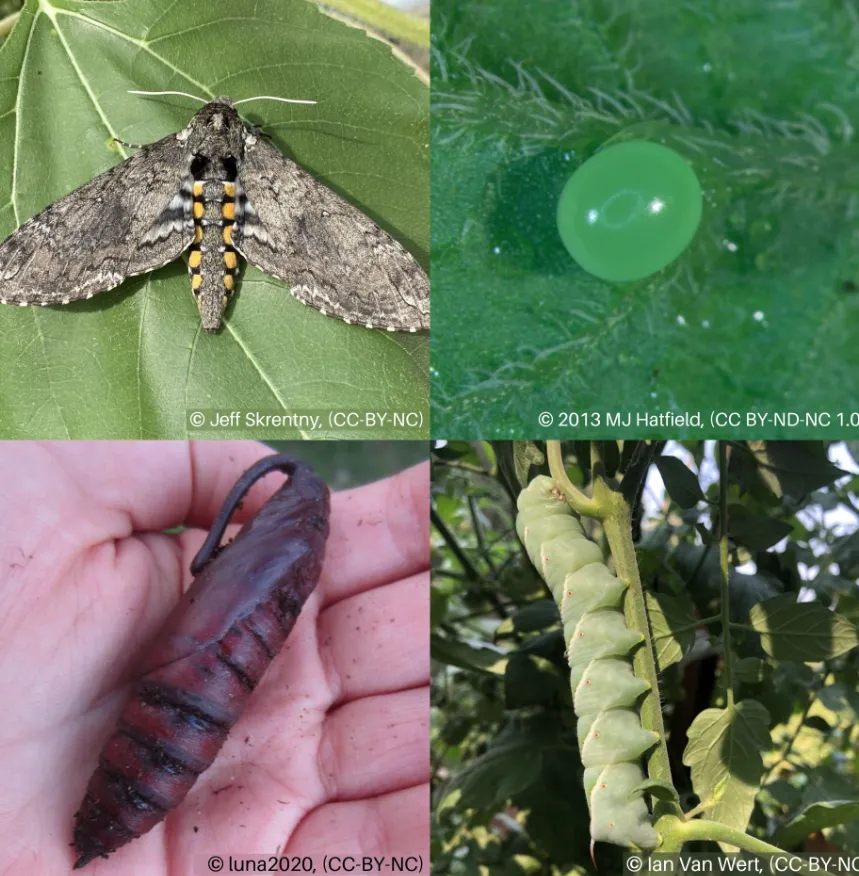
Egg → Larva (caterpillar) → Pupa → Adult moth.
2. Should I kill tomato hornworms?
It depends. If they are damaging crops, removal is recommended, but they also play a role in the ecosystem.
3. How long does the life cycle take?
Typically, 30–50 days depending on temperature and environmental conditions.
Quick Life Cycle Table
| Stage | Duration | Description |
| Egg | 3–5 days | Tiny green eggs lay under leaves |
| Larva (Caterpillar) | 2–4 weeks | Rapid growth, heavy feeding stage |
| Pupa | 2–3 weeks (or overwinter) | Buried in soil, inactive stage |
| Adult Moth | 1–2 weeks | The pollinating moth reproduces |
The History Of Their Scientific Naming
The tomato hornworm is scientifically known as Manduca quinquemaculata. Its classification has an interesting historical background rooted in entomology.
- The genus Manduca belongs to the Sphingidae family, commonly known as hawk moths or sphinx moths.
- The species name quinquemaculata means “five-spotted,” referring to the markings found on the adult moth.
- Early scientists categorized this insect based on its larval features, especially its horn-like tail, which gave rise to the name “hornworm.”
- Over time, taxonomists refined its classification using both morphological traits and genetic studies.
- It is closely related to the tobacco hornworm (Manduca sexta), which is often confused due to its similar appearance.
This scientific naming helps researchers and farmers accurately identify and study the species for pest management and ecological understanding.
Their Evolution And Their Origin
The tomato hornworm belongs to the Sphingidae family, a group of moths known for their strong flight and pollination abilities. These insects are believed to have originated in the Americas, where their primary host plants, such as tomatoes, tobacco, and other nightshade species, naturally grow.
Over millions of years, tomato hornworms developed specialized adaptations:
They evolved green coloration to blend seamlessly with leaves, providing camouflage from predators. Their horn-like structure, although harmless, serves as a defense mechanism to deter potential threats.
Their life cycle reflects a highly efficient evolutionary strategy. The larval stage focuses entirely on feeding and growth, allowing the caterpillar to accumulate enough energy for metamorphosis. Meanwhile, the adult moth stage is designed for reproduction and pollination.
Tomato hornworms co-evolved with plants from the Solanaceae family, forming a unique ecological relationship. While they feed on these plants, they also contribute to biodiversity by supporting predator species like birds and parasitic wasps.
Their evolutionary success lies in their ability to adapt to environmental changes, reproduce quickly, and maintain a balance between destruction and ecological contribution.
Their Main Food and Its Collection Process
Tomato hornworms are herbivorous insects with a strong preference for plants in the nightshade family.
Main Food Sources
- Tomato plants
- Tobacco plants
- Eggplants
- Peppers
- Potato leaves
Feeding Behavior and Process
- They use strong mandibles to chew leaves efficiently.
- Feeding usually begins at night, making them harder to detect.
- They consume large amounts of foliage, sometimes stripping entire plants.
- Their green bodies help them remain hidden while feeding.
- They leave behind dark droppings (frass), which is a key sign of infestation.
The caterpillar stage is entirely focused on feeding. During this time, they grow rapidly, reaching up to 4 inches in length.
Despite their destructive nature, their feeding process is part of a natural cycle. Plants can sometimes recover from moderate damage, especially when infestations are controlled early.
Important Things That You Need To Know
Understanding the broader context of tomato hornworms can help gardeners manage them effectively while respecting nature.
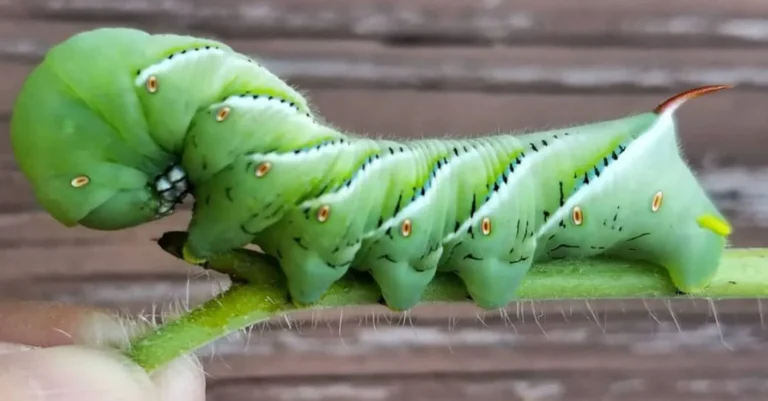
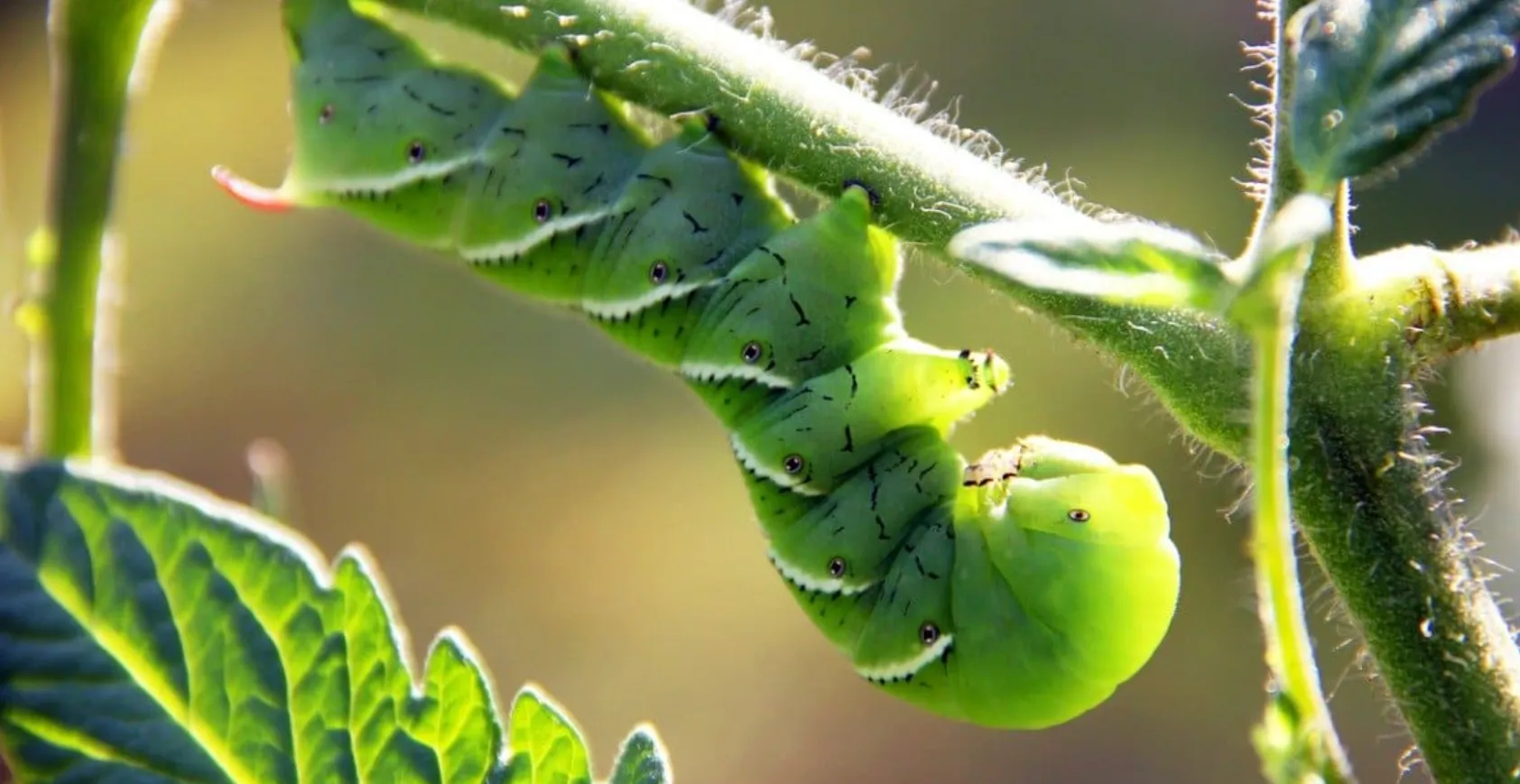
The tomato hornworm caterpillar is often confused with similar species, but it can be identified by its white diagonal stripes and prominent horn. The adult form, known as the tomato hornworm moth, is a large gray moth that resembles a hummingbird during flight.
Many gardeners ask, ” Should I kill tomato hornworm populations? The answer depends on the level of infestation. A few caterpillars may not harm the plant significantly, but larger populations can devastate crops quickly.
Monitoring for tomato hornworm eggs on the underside of leaves is crucial for early detection. Removing eggs manually can prevent future infestations.
Effective tomato hornworm control includes natural predators, handpicking, and organic pesticides like Bacillus thuringiensis (Bt).
Their Life Cycle and Ability to Survive in Nature
Egg Stage
Female moths lay small green eggs on the underside of leaves. These eggs hatch quickly, ensuring survival in warm climates.
Larval Stage
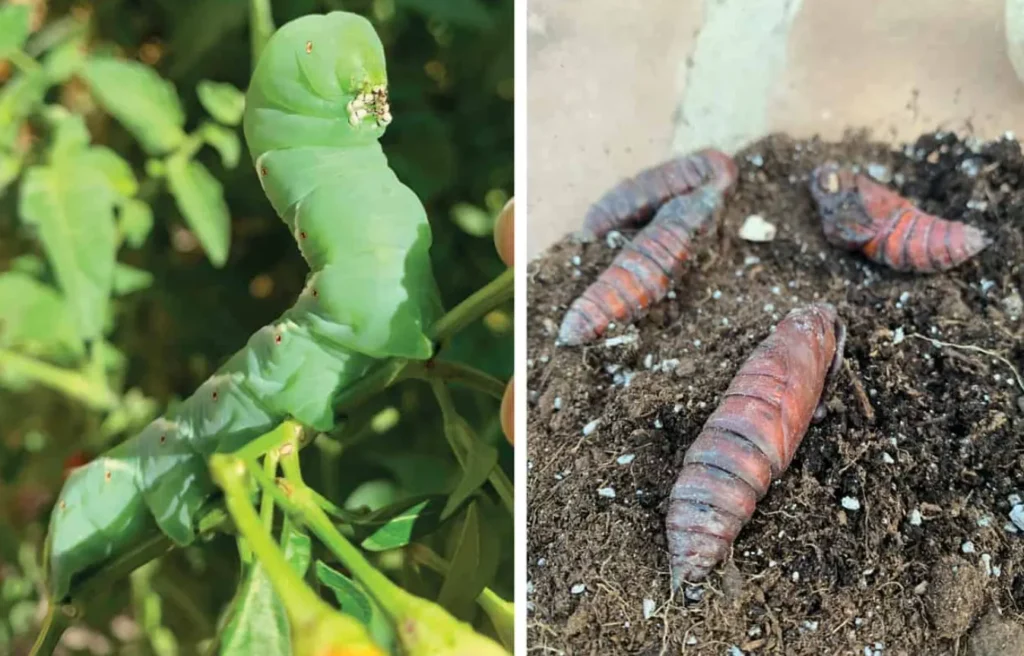
The caterpillar emerges and begins feeding immediately. This is the most active and destructive phase.
Pupal Stage
After reaching full size, the caterpillar burrows into the soil and forms a pupa. This stage marks the transition to adulthood.
Adult Stage
The moth emerges, feeds on nectar, and reproduces. It plays a key role in pollination.
Their survival depends on camouflage, rapid growth, and adaptability to environmental conditions.
Their Reproductive Process and Raising Their Children
Tomato hornworms reproduce sexually, with the adult moth playing a central role.
- Female moths lay eggs individually on host plants.
- Eggs are placed strategically to ensure food is available to larvae.
- After hatching, larvae are independent and begin feeding immediately.
- There is no parental care; survival depends on instinct and environment.
- High egg production increases the chances of survival despite predators.
The reproductive strategy ensures that even if many larvae are eaten, enough survive to continue the species.
Importance of Them in this Ecosystem
Role as a Food Source
Tomato hornworms serve as prey for birds, insects, and small animals.
Contribution to Pollination
Adult moths help pollinate flowers, especially at night.
Natural Balance
They help regulate plant growth and contribute to ecological diversity.
Support for Parasites
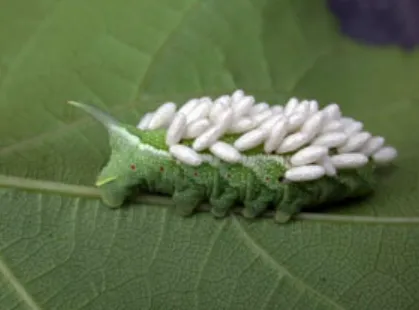
Parasitic wasps use them as hosts to maintain population balance.
Despite being pests, they are an essential part of the ecosystem.
What to Do to Protect Them in Nature and Save the System for the Future
- Avoid excessive pesticide use
- Encourage natural predators like birds
- Use organic pest control methods
- Maintain biodiversity in gardens
- Monitor plants regularly instead of mass removal
- Leave some hornworms in non-critical areas
- Promote ecological balance rather than eradication
These steps help maintain both crop health and environmental sustainability.
Frequently Asked Questions (FAQs)
1. What does a tomato hornworm turn into?
It becomes a large hawk moth.
2. How can I identify tomato hornworm eggs?
They are small, round, and green, usually under leaves.
3. Are tomato hornworms harmful to humans?
No, they are harmless and do not bite or sting.
4. How fast do tomato hornworms grow?
They grow rapidly, reaching full size in about 2–3 weeks.
5. What attracts tomato hornworms?
Tomato and other nightshade plants attract them.
6. Can tomato plants recover from hornworm damage?
Yes, if damage is controlled early.
7. What is the best natural control method?
Handpicking and using Bt bacteria.
8. Do tomato hornworms have predators?
Yes, birds and parasitic wasps commonly prey on them.
Conclusion
The tomato hornworm life cycle is a remarkable example of nature’s balance between destruction and contribution. From tiny eggs to massive caterpillars and finally to pollinating moths, each stage plays a crucial role in the ecosystem.
While they are often seen as pests due to their impact on tomato plants, their ecological importance cannot be ignored. Understanding their life cycle allows gardeners to manage them effectively without harming the environment.
By using sustainable control methods and maintaining biodiversity, it is possible to protect crops while preserving the natural balance. A well-informed approach ensures that both your garden and the ecosystem thrive together.
Also Read: carpet beetle life cycle
About the Author