Understanding the carpet beetle life cycle is one of the most important things to know if you’re dealing with fabric damage or unexplained household infestations. These tiny pests may seem harmless at first, but their larvae can cause serious damage to carpets, clothes, and upholstery.
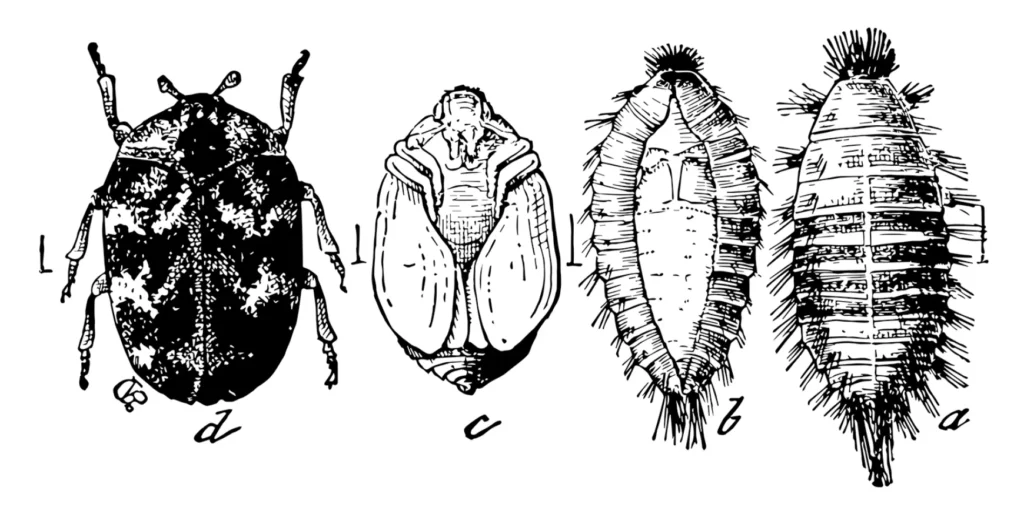
Carpet beetles go through a complete metamorphosis, which includes four stages: egg, larva, pupa, and adult. Each stage plays a critical role in their survival and spread. Knowing how they grow helps you identify and control them effectively.
Unlike many pests, adult carpet beetles mainly feed on pollen, while their larvae feed on natural fibres like wool, silk, and leather. This is why infestations often go unnoticed until damage becomes visible.
Quick Answers (Most Common Questions)
- How long is the carpet beetle life cycle?
- The life cycle usually takes 2 to 12 months, depending on temperature and food availability.
- Which stage causes the most damage?
- The carpet beetle larvae stage causes the most destruction to fabrics and materials.
- Do carpet beetles bite humans?
- No, but their hairs can cause skin irritation or carpet beetle rash.
Quick Life Cycle Table
| Stage | Duration | Description |
| Egg | 1–3 weeks | Tiny white eggs are laid in dark areas |
| Larva | 2–9 months | Hairy larvae feed on natural fibres |
| Pupa | 1–3 weeks | Transformation stage |
| Adult | 2–6 weeks | Reproduction and dispersal stage |
The History Of Their Scientific Naming
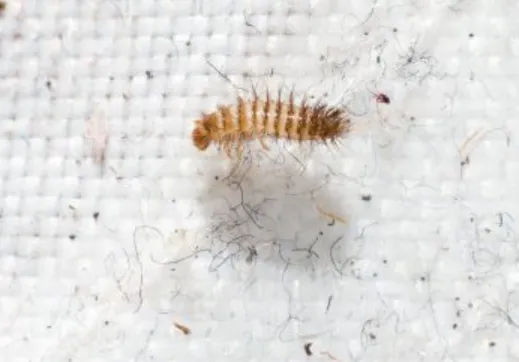
Carpet beetles belong to the family Dermestidae, a group known for feeding on organic materials.
- The name Dermestidae comes from the Greek word derma, meaning skin, reflecting their feeding habits.
- The black carpet beetle (Attagenus unicolour) is one of the most common species.
- The varied carpet beetle (Anthrenus verbasci) is easily recognised by its patterned shell.
- Early entomologists classified these beetles in the 18th century due to their destructive nature in homes and museums.
- Scientists discovered that they play a role in decomposing animal remains, making them useful in forensic science.
Over time, researchers have studied their behaviour extensively due to their impact on textiles, stored products, and even preserved specimens in museums.
Their Evolution And Their Origin
Carpet beetles have existed for millions of years and evolved as natural recyclers in ecosystems.
Originally, these beetles lived outdoors, feeding on animal remains, feathers, and plant materials. Their ability to digest keratin and other tough proteins made them highly adaptable. Over time, they migrated into human environments, where similar food sources—like wool, carpets, and clothing—were abundant.
Their evolution is closely tied to their survival skills:
- Adaptability: They can thrive in both warm and cold environments.
- Diet flexibility: They consume a wide range of materials, from pollen to animal fibres.
- Stealth behaviour: Their small size helps them remain unnoticed.
The shift from outdoor habitats to indoor living happened as humans began storing natural fibre products. Homes became ideal environments, offering warmth, shelter, and food.
Today, species like the black carpet beetle and the varied carpet beetle are found worldwide. Their evolutionary success lies in their ability to survive in hidden places such as carpets, closets, and air ducts.
Their Main Food and Its Collection Process
Carpet beetles have different diets depending on their life stage.
Food Sources
- Natural fibres (wool, silk, fur)
- Dead insects
- Animal hair and feathers
- Stored grains and seeds
- Pollen (for adult beetles)
Food Collection Process
- Larvae actively search for dark, undisturbed areas.
- They feed slowly but continuously, causing gradual damage.
- Adult beetles fly outdoors to collect pollen.
- Eggs are laid near food sources to ensure larval survival.
Key Feeding Behaviour
- Larvae prefer protein-rich materials.
- They avoid synthetic fabrics unless blended with natural fibres.
- Feeding often occurs in hidden areas, such as under furniture.
This feeding pattern is what makes infestations difficult to detect until significant damage occurs.
Important Things That You Need To Know
Understanding related LSI keywords helps you fully grasp the carpet beetle problem.
Carpet Beetle, Carpet Beetle Larvae, Carpet Beetle Bites, Black Carpet Beetle, Varied Carpet Beetle
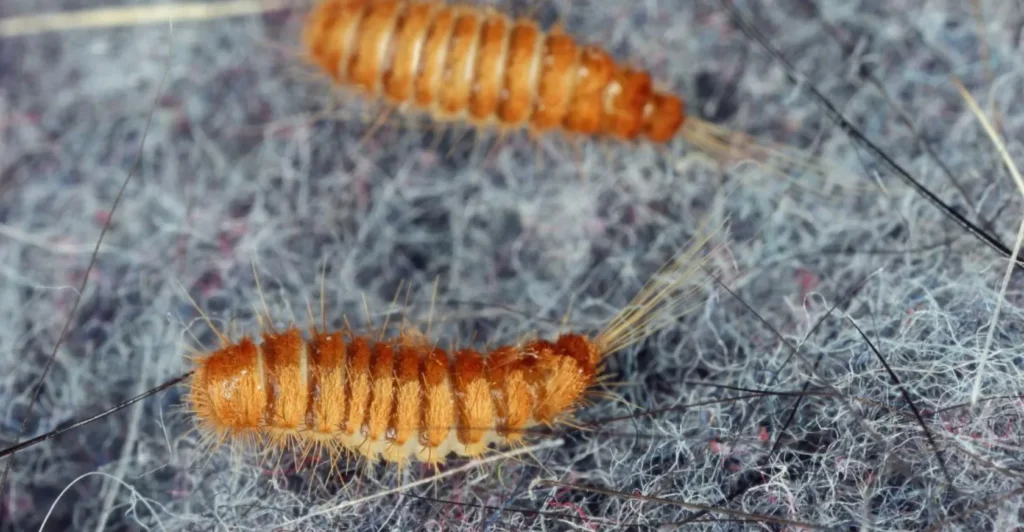
The term carpet beetle refers to a group of small insects that can infest homes. The most destructive stage is the carpet beetle larvae, which feed on fabrics and organic materials.
Many people confuse irritation caused by larval hairs with carpet beetle bites, but these insects do not actually bite. Instead, their tiny hairs can cause allergic reactions, leading to a rash.
The black carpet beetle is known for its solid dark colour and is one of the most damaging species. Meanwhile, the varied carpet beetle has a colourful pattern and is often found near windows.
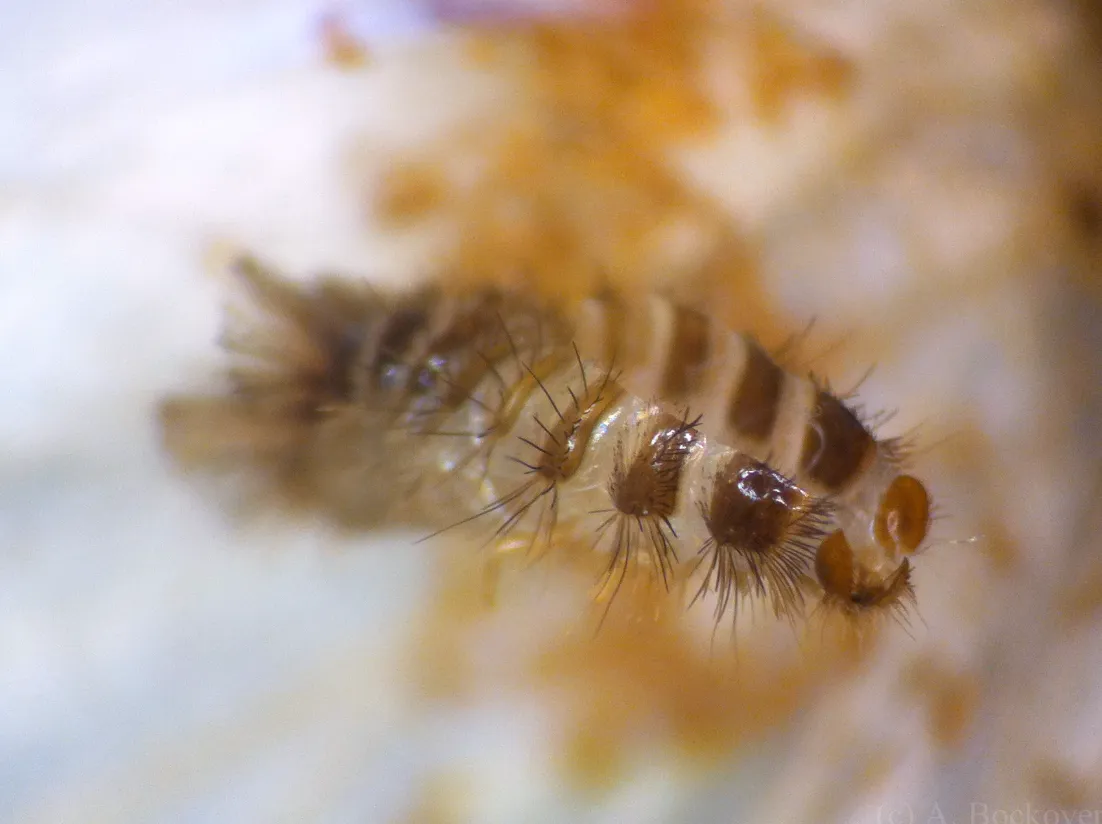
Larvae, also known as carpet beetle larvae, are covered in bristles and move slowly. They tend to hide in dark corners, closets, and under furniture.
These beetles are often mistaken for other pests, making identification important for proper control.
Understanding these variations helps homeowners identify infestations early and take appropriate action.
Their Life Cycle and Ability to Survive in Nature
Egg Stage
Female beetles lay eggs in hidden areas near food sources.
Larval Stage
This is the longest and most destructive stage. Larvae feed continuously and moult multiple times.
Pupal Stage
The larva transforms into an adult within a protective casing.
Adult Stage
Adults emerge, mate, and lay eggs, continuing the cycle.
Carpet beetles survive due to:
- High reproductive rate
- Ability to live in dark environments
- Resistance to harsh conditions
Their survival strategy allows them to thrive both indoors and outdoors.
Their Reproductive Process and Raising Their Children
Carpet beetles reproduce quickly under favourable conditions.
Reproductive Process
- Females lay 30–100 eggs at a time.
- Eggs are placed near food sources.
- Eggs hatch within 1–3 weeks.
Raising Their Young
- Larvae are independent immediately after hatching.
- No parental care is provided.
- Survival depends on food availability and the environment.
Growth Factors
- Warm temperatures accelerate development.
- High humidity supports egg survival.
- Abundant food ensures rapid larval growth.
This efficient reproduction system makes infestations spread quickly if not controlled.
Importance of Them in this Ecosystem
Natural Decomposers
Carpet beetles help break down dead animals and organic waste.
Nutrient Recycling
They return nutrients to the soil, supporting plant growth.
Food Source
They serve as prey for birds and other insects.
Although they are pests indoors, they play a valuable role in maintaining ecological balance.
What to Do to Protect Them in Nature and Save the System for the Future
- Avoid unnecessary pesticide use outdoors
- Preserve natural habitats
- Maintain ecological balance
- Support biodiversity
- Keep outdoor environments clean without disrupting insect life
While controlling them indoors is important, their role in nature should not be ignored.
Frequently Asked Questions (FAQs)
- What attracts carpet beetles?
- Natural fibres, food crumbs, and dark areas attract them.
- How do I identify carpet beetle larvae?
- They are small, hairy, and brownish in colour.
- Are carpet beetles harmful to humans?
- They don’t bite but can cause skin irritation.
- How fast do they reproduce?
- They can reproduce quickly within a few weeks.
- Where do carpet beetles hide?
- In carpets, closets, furniture, and air ducts.
- Can carpet beetles fly?
- Yes, adult beetles can fly.
- What kills carpet beetles?
- Cleaning, vacuuming, and insecticides help control them.
- Do they live year-round?
- Yes, especially indoors where conditions are stable.
Conclusion
The carpet beetle life cycle is a fascinating yet concerning process that highlights how small insects can have a significant impact on our homes. From eggs to larvae and finally adults, each stage plays a vital role in their survival and spread.
Understanding their life cycle helps in early detection and effective control. The larval stage, in particular, is the most destructive, feeding on natural fibres and causing hidden damage.
Despite being household pests, carpet beetles contribute positively to ecosystems by recycling organic matter. Balancing control measures indoors while preserving their ecological role outdoors is essential.
Also Read: a life cycle of a fly
About the Author