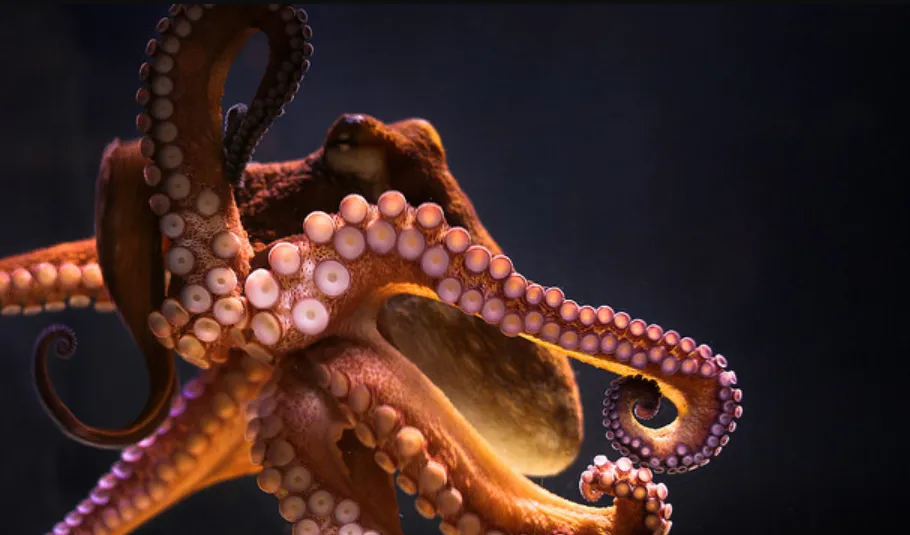
The common Octopus, scientifically known as Octopus vulgaris, is one of the most fascinating marine animals in the world. It is famous for its soft body, eight flexible arms, powerful suckers, sharp intelligence, color-changing skin, and mysterious underwater lifestyle.
Understanding the life cycle of the common Octopus helps us learn how this short-lived but highly skilled animal grows, hunts, reproduces, and survives in the ocean. The common Octopus’s lifespan is usually short compared with many other marine animals. Many individuals live around 12 to 24 months, depending on water temperature, food availability, predation, and habitat condition.
During its brief life, the Octopus passes through several important stages: egg, embryo, paralarva, juvenile, adult, and, finally, reproductive adult. The life cycle of the common Octopus shows how quickly it develops and how strongly it depends on clean, balanced marine habitats.
Q: What is the life cycle of the common Octopus?
A: The life cycle includes egg development, hatching into planktonic paralarvae, settling as juveniles, growing into adults, mating, egg-laying, brooding, and death after reproduction.
Q: How long does a common octopus live?
A: The common Octopus’s lifespan is commonly around 1–2 years, although exact survival depends on the environment, temperature, food, and predators.
Q: Where does the common Octopus live underwater?
A: The common Octopus’s underwater habitat includes rocky, sandy, and muddy sea bottoms, coastal waters, intertidal areas, and continental shelf zones.
Quick Life Cycle Table
| Life Cycle Stage | Main Features | Habitat | Key Survival Challenge |
| Egg Stage | The female lays many small eggs and guards them carefully | Den, cave, or protected crevice | Oxygen flow, predators, water quality |
| Embryo Stage | Baby octopus develops inside the egg | Attached egg strings | Temperature and oxygen balance |
| Paralarval Stage | Hatchlings drift in plankton and feed on tiny prey | Open water column | High predation and feeding difficulty |
| Juvenile Stage | Young Octopus settles on the seabed | Rocky, sandy, or muddy bottom | Finding shelter and food |
| Adult Stage | Active hunter with strong camouflage and intelligence | Coastal benthic habitat | Predators, fishing pressure, competition |
| Reproductive Stage | Mating, egg-laying, brooding, and death after reproduction | Protected den | Energy loss and post-spawning death |
The History of Their Scientific Naming
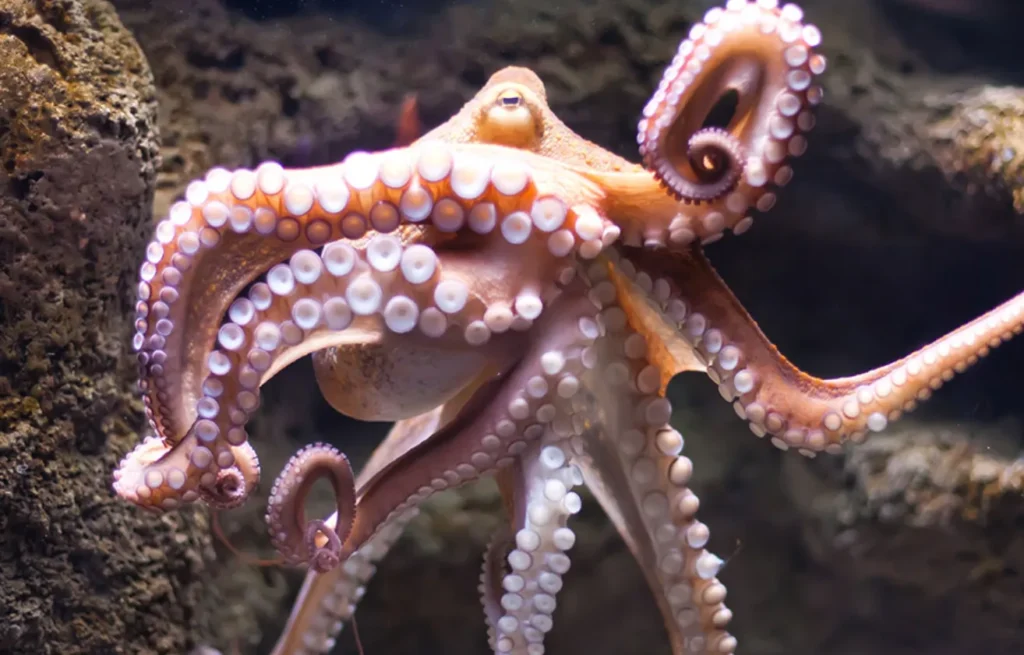
The common Octopus is scientifically named Octopus vulgaris. The genus name Octopus comes from Greek roots meaning “eight-footed,” referring to its eight flexible arms. The species name vulgaris comes from Latin, meaning “common” or “ordinary,” because this species has been widely observed and studied across many coastal regions.
Important naming points:
- Scientific name: Octopus vulgaris
- Common name: Common Octopus
- Group: Cephalopod
- Family: Octopodidae
- Body type: Soft-bodied marine mollusk
- Key feature: Eight arms with strong suckers
The name is important because it separates the common Octopus from other octopus species that may look similar but differ in habitat, size, behavior, and genetic identity. Modern taxonomy also indicates that some animals previously grouped under Octopus vulgaris may belong to a broader species complex.
This is why accurate scientific naming is important in marine biology, fisheries, biodiversity research, and conservation planning.
Their Evolution And Their Origin
The common Octopus belongs to the ancient and highly successful group called cephalopods, which also includes squid, cuttlefish, and nautiluses. Cephalopods evolved from early molluscan ancestors, but modern octopuses have a very different body plan from that of shelled mollusks.
Unlike clams and snails, most octopuses lost the heavy external shell. This evolutionary change helped them become flexible, fast, and able to squeeze into narrow underwater spaces. Their soft bodies allow them to hide in cracks, dens, rocks, shells, and even small holes on the seabed.
This flexibility gave the common Octopus underwater a major survival advantage. It can escape predators, ambush prey, and use shelters that many other animals cannot enter. Over time, octopuses also developed advanced camouflage, strong arms, sensitive suckers, and a large nervous system for an invertebrate.
The common Octopus is also known for its intelligence. It can solve problems, remember locations, recognize shelter, open shells, and respond quickly to changes in its environment. Its brain, arms, eyes, and skin work together in a highly coordinated way.
Its origin is closely linked to shallow marine environments. The species is commonly found in rocky, sandy, and muddy bottoms from coastal areas to continental shelf zones. Because it grows fast, matures early, and reproduces once before dying, the common Octopus follows a fast life-history strategy.
This makes it adaptable, but also vulnerable when habitats are damaged or when fishing pressure becomes too high.
Important Things That You Need To Know
To understand the life cycle of the common Octopus, it is important to connect its biology with its habitat, behavior, and survival strategy. The common Octopus is not just an eight-armed sea animal; it is a fast-growing predator with a short but intense life.
The phrase “life cycle of the common octopus” refers to the complete journey from egg to adult reproduction. In simple terms, the life cycle of the common Octopus is: the female lays eggs, guards them, the eggs hatch into tiny drifting paralarvae, the young settle on the seabed, grow quickly, mate, reproduce, and then die.
The common Octopus’s lifespan is usually short, often around 12 to 24 months. This means every stage happens quickly. Growth, hunting, hiding, learning, mating, and egg protection all occur within a limited time.
Another key point is the common Octopus’s underwater lifestyle. It is mainly a bottom-dwelling animal. Adults live close to the seabed, use dens for shelter, and come out mostly to hunt. Their flexible arms, camouflage, and problem-solving ability help them survive in complex marine environments.
The common Octopus is also sensitive to environmental changes. Temperature, oxygen level, prey availability, pollution, and fishing pressure can influence its growth and survival. This is why studying the life cycle of the common Octopus is important for marine science, fisheries, and ecosystem protection.
Their main food and its collection process
The common Octopus is an active carnivorous predator. It mainly eats marine animals that live on or near the seabed. Its diet includes crabs, shrimps, lobsters, gastropods, bivalves, small fish, and other small marine organisms.
Its food collection process is highly intelligent and well-adapted to underwater life.
- Searching: The Octopus leaves its den, often during dusk or night, to search for prey.
- Camouflage: It changes color and skin texture to blend with rocks, sand, shells, or algae.
- Arm exploration: It uses its eight arms and sensitive suckers to touch, taste, and detect hidden prey.
- Ambush: It quickly covers prey with its arms and web-like skin.
- Shell opening: For clams and snails, it may use its strong beak, drilling behavior, or venomous saliva.
- Returning to the den: It often carries food back to its den, leaving shells and remains outside.
This feeding process helps control populations of crabs, mollusks, and other small animals. It also supports rapid growth during its short life cycle.
Because the common Octopus’s lifespan is short, feeding success is extremely important. A young octopus must grow fast enough to avoid predators, reach maturity, and reproduce before its life ends.
Their life cycle and ability to survive in nature
Egg and Embryo Stage
The life cycle begins when the female common Octopus lays thousands of eggs inside a protected den. These eggs are attached in clusters or strings. The female guards them carefully, cleans them, and moves water over them to provide oxygen.
During this stage, the developing embryo depends on stable water temperature, oxygen, and protection from predators. In poor conditions, many embryos may not survive.
Paralarval Stage
After hatching, tiny octopuses enter the paralarval stage. They drift in the water column as part of plankton. This is one of the most dangerous stages in the life cycle of the common Octopus.
At this stage, they face strong predation, changing water conditions, and difficulty finding suitable food. Only a small number survive long enough to settle on the seabed.
Juvenile and Adult Stage
After the planktonic period, young octopuses settle on the seabed and begin a bottom-living life. They hide in small shelters, hunt tiny prey, and grow rapidly.
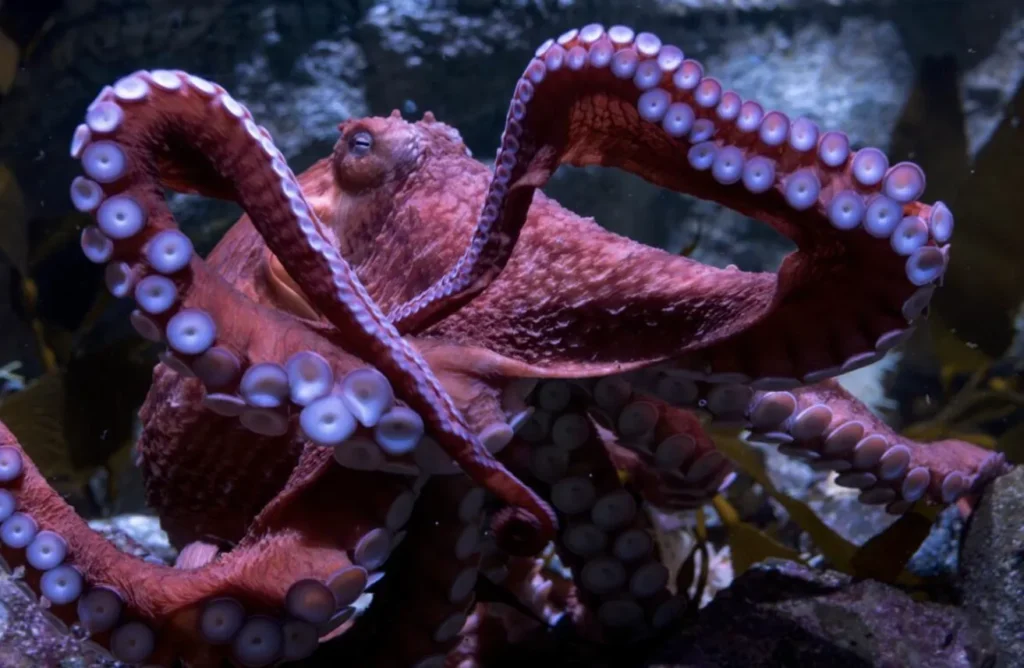
As adults, they survive through camouflage, intelligence, flexible movement, jet propulsion, ink release, and den use. Their ability to change color and texture makes them extremely successful in rocky and mixed-bottom habitats.
Their Reproductive Process and raising their children
The reproductive process of the common Octopus is one of the most dramatic parts of its life cycle. This animal is usually semelparous, meaning it reproduces once and then dies.
Key points of reproduction:
- Mating: The male uses a specialized arm, the hectocotylus, to transfer sperm to the female.
- Fertilization: The female stores sperm and later fertilizes the eggs.
- Egg-laying: She lays many small eggs in a safe den or hidden place.
- Brooding: The female constantly guards the eggs.
- Cleaning: She removes dirt and protects eggs from fungi, parasites, and predators.
- Water circulation: She blows water over the eggs to provide oxygen.
- No feeding: In many cases, the female eats little or nothing while brooding.
- Death after brooding: After the eggs hatch, the female usually dies.
The common Octopus does not raise its children in the way mammals or birds do. The mother protects the eggs, but once the young hatch, they must survive on their own.
Predators eat most paralarvae or fail to find enough suitable food. This high-risk strategy is balanced by producing many eggs. Only a small number need to survive to maintain the population.
The importance of them in this Ecosystem
Predator Role in Marine Food Webs
The common Octopus is an important middle-level predator in marine ecosystems. It feeds on crabs, shrimp, snails, clams, small fish, and other invertebrates.
Hunting these animals helps maintain balance in seabed communities. Without predators such as the common Octopus, some prey populations could increase to the point of disrupting local food webs.
Prey for Larger Marine Animals
The common Octopus is also food for many larger animals. Fish, sharks, dolphins, seals, seabirds, and larger cephalopods may prey on octopuses.
This makes it an important energy link between smaller bottom-dwelling animals and larger ocean predators.
Indicator of Marine Habitat Health
Because the common Octopus underwater depends on suitable shelter, clean water, prey availability, and stable temperature, its presence can reflect the condition of coastal habitats.
Sudden increases or decreases in octopus populations may show changes in water temperature, prey populations, pollution, or fishing pressure.
Economic and Fisheries Importance
The common Octopus is also valuable to fisheries. It is harvested in many coastal regions and is an important seafood species in several markets.
However, economic value must be balanced with sustainability. Overharvesting can reduce breeding adults and affect future populations.
What to do to protect them in nature and save the system for the future
Protecting the common Octopus means protecting coastal ecosystems, responsible fisheries, and underwater habitats. Although the species is not usually considered highly endangered worldwide, local populations can still be affected by overfishing, pollution, and habitat damage.
- Support sustainable fishing rules: Use size limits, seasonal closures, and catch monitoring to protect breeding adults.
- Protect nursery habitats: rocky areas, seagrass beds, sandy bottoms, and coastal shelters should be protected, as juveniles need safe places to settle.
- Reduce plastic pollution: Plastic waste can damage seabed habitats and harm marine animals.
- Avoid destructive fishing methods: Bottom damage can destroy dens and reduce the availability of shelter.
- Monitor climate impacts: Temperature strongly affects larval survival and settlement timing, so climate-related changes should be studied carefully.
- Protect female brooders: Egg-guarding females are essential for future generations and should not be targeted.
- Improve public awareness: Fishers, consumers, students, and coastal communities should understand the ecological value of the common Octopus.
- Promote responsible seafood choices: Consumers can support fisheries managed according to science.
- Encourage marine protected areas: Protected zones allow octopus populations and prey species to recover.
- Support research: More studies are needed on population trends, reproduction, larval survival, and climate effects.
Frequently Asked Questions (FAQs)
Q1: What is the life cycle of the common Octopus?
A: The life cycle of the common Octopus includes egg, embryo, paralarva, juvenile, adult, and reproductive adult stages. After mating and egg-laying, the female guards the eggs, the young hatch into planktonic paralarvae, settle on the seabed, grow quickly, reproduce, and die.
Q2: What is the life cycle of the common Octopus?
A: The life cycle of the common octopus summary is simple: eggs hatch into tiny drifting paralarvae, the young settle as juveniles, grow into adults, mate, produce eggs, and complete their life after reproduction.
Q3: How long is the common Octopus’s lifespan?
A: The common Octopus’s lifespan is generally around 12 to 24 months, though temperature, food, predators, and fishing pressure can affect survival.
Q4: Where does the common Octopus live underwater?
A: The common Octopus’s underwater habitat includes rocky, sandy, and muddy bottoms, coastal waters, intertidal zones, subtidal areas, and continental shelf habitats.
Q5: What does the common Octopus eat?
A: It eats crabs, shrimp, bivalves, snails, small fish, and other marine animals. It uses camouflage, flexible arms, suckers, venomous saliva, and a strong beak to capture prey.
Q6: Does the common Octopus take care of its babies?
A: The mother guards and cleans the eggs until they hatch, but after hatching, the young survive alone. The female usually dies after brooding.
Q7: Why is the paralarval stage important?
A: The paralarval stage is important because it determines how many young octopuses survive. Temperature, food availability, predators, and water quality strongly influence this stage.
Q8: Is the common Octopus endangered?
A: The common Octopus is not usually considered globally endangered, but local populations can face threats from overfishing, habitat damage, pollution, and environmental change.
Conclusion
The life cycle of the common Octopus is short, fast, and biologically remarkable. From tiny eggs guarded by a dedicated mother to drifting paralarvae, hidden juveniles, skilled adult hunters, and final reproduction, every stage plays a vital role in marine ecosystems.
The common Octopus grows quickly, learns rapidly, hunts intelligently, and survives through camouflage, flexibility, and problem-solving behavior. Although the common Octopus’s lifespan is usually only about 1 to 2 years, its ecological importance is much greater than its short life suggests.
It controls prey populations, supports larger predators, contributes to fisheries, and reflects the health of coastal habitats. Protecting the common octopus underwater environment means protecting rocky bottoms, sandy seabeds, clean coastal waters, and balanced food webs.
With sustainable fishing, pollution control, habitat protection, and continued research, this intelligent marine animal can remain a strong part of ocean life for the future.
Also Read: life cycle of an angiosperm plant
About the Author