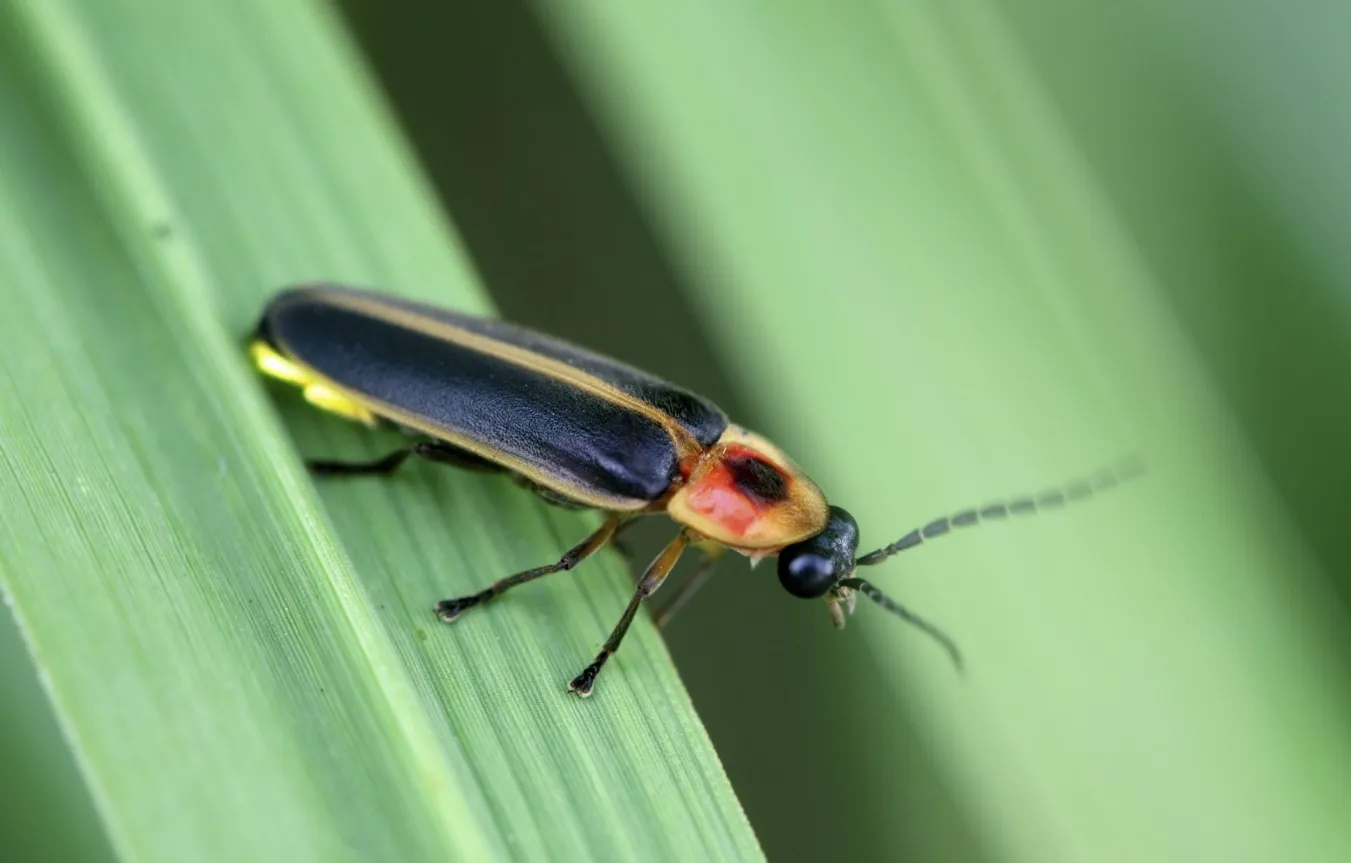
The life cycle of the lightning bug is one of the most fascinating stories in the insect world. A tiny glowing beetle begins life as an egg, grows into a hidden larva, changes inside a pupa, and finally becomes the glowing adult we see on warm summer nights.
Although people often call them lightning bugs or fireflies, they are not true bugs or flies. They are beetles from the family Lampyridae. Around the world, scientists have identified more than 2,600 valid firefly species, each with its own flashing patterns, preferences, and survival styles.
The most surprising fact is that lightning bugs spend most of their lives out of sight. The glowing adult stage is short, often lasting only a few weeks. The larval stage, however, can last many months or even years. During this hidden stage, larvae live in damp soil, leaf litter, grass roots, and wet woodland edges.
The lightning bug life cycle shows how deeply these insects depend on darkness, moisture, clean soil, and healthy natural spaces.
Q: What are the four stages of the lightning bug life cycle?
A: The four stages are egg, larva, pupa, and adult.
Q: Is a lightning bug the same as a firefly?
A: Yes. Lightning bug and firefly are two common names for the same glowing beetle family.
Q: Why do lightning bugs glow?
A: They glow through bioluminescence. Adult lightning bugs usually use this glow to find mates, while larvae may use it as a warning signal to predators.
Quick Life Cycle Table
| Life cycle stage | What happens | Usual location | Main purpose |
| Egg | Females lay tiny eggs, and some eggs may glow faintly | Moist soil, moss, leaf litter, grass bases | Safe development before hatching |
| Larva | Young lightning bug hunts soft prey such as snails, slugs, worms, and small insects. | Damp soil, gardens, forest floor, wet grass | Feeding, growing, and surviving |
| Pupa | Larva rests and changes into adult form | Soil chamber or a protected, damp place | Complete body transformation |
| Adult | Winged adult glows, mates, and lays eggs | Grass, shrubs, wetlands, woodland edges | Reproduction and spreading the next generation |
A lightning bug does not grow like a small version of the adult. It undergoes complete metamorphosis, meaning each stage looks and behaves differently.
The full life cycle can take a few months, one year, two years, or even longer, depending on the species, climate, food supply, and habitat quality.
The History of Their Scientific Naming
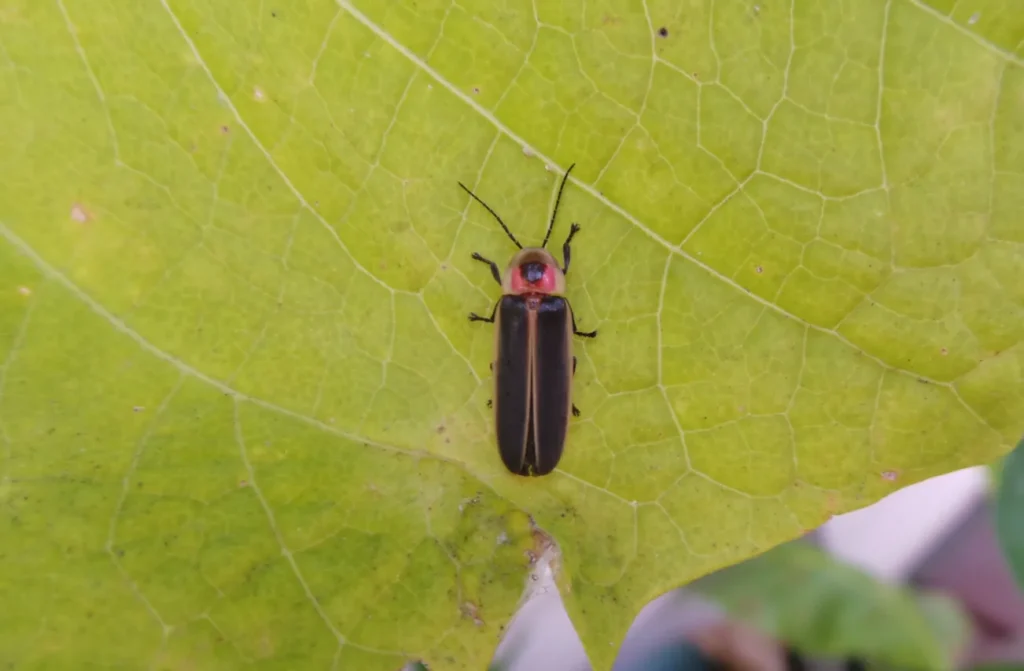
The scientific family name of lightning bugs is Lampyridae. This family includes fireflies, lightning bugs, and many glowworm-like beetles. They belong to the insect order Coleoptera, which means they are beetles.
This scientific naming is important because common names can be confusing. In some regions, people say lightning bug. In other places, people say firefly. Both names are correct, but neither one tells the full scientific story.
Important points:
- Lampyridae is the scientific family name
- Scientists use this name to refer to the firefly family.
- They are beetles, not flies.
- The word firefly can be misleading because these insects are not true flies.
- Lightning bug is a common regional name.
- Many people in the United States use the name lightning bug, especially in some southern and midwestern areas.
- Firefly is another common name
- The word firefly is also widely used and means the same insect group.
- Scientific names avoid confusion.
- Because there are thousands of species, scientific naming helps researchers identify each species clearly.
The name history is strongly connected to light. The glowing ability of these beetles made them special to people long before modern science gave them formal names.
Their Evolution And Their Origin
The origin of lightning bugs dates back to the history of beetles. They are part of an ancient group of insects that developed special chemical light inside their bodies. This light is called bioluminescence.
Many scientists believe that early firefly glow may not have started as a mating signal. At first, the glow may have worked as a warning to predators. Larvae and some adults contain defensive chemicals that can make them unpleasant or unsafe to eat. A glow-in-the-dark could tell predators, “Do not eat me.”
Over time, this glowing ability became more advanced. In many firefly species, adults started using flashes to communicate with mates. Each species developed its own flash pattern, timing, rhythm, and color shade. This helped males and females find the right partner.
Fossil evidence also shows that fireflies are among the oldest insects. Ancient firefly relatives preserved in amber suggest that light-producing organs existed millions of years ago. This means the glow of lightning bugs is not a recent feature. It is a deep part of their evolutionary story.
Different fireflies evolved in different habitats. Some live in forests. Some live near wetlands. Some prefer grasslands, gardens, marshes, or stream edges. Some species flash while flying. Others glow from low plants or the ground. A few are active during the day and rely more on smell than light.
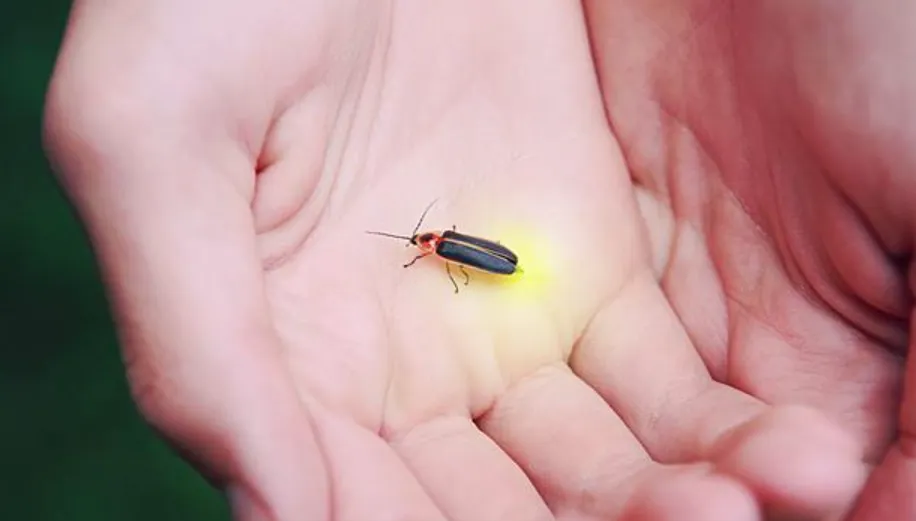
The glow comes from a reaction involving luciferin, luciferase, oxygen, and energy inside the insect. This reaction creates a cool light, meaning very little energy is wasted as heat.
This long evolution made lightning bugs more than beautiful summer insects. Their light is a survival tool, a warning signal, a mating language, and one of the most famous natural lights on Earth.
Their main food and its collection process
The food of lightning bugs changes with their life stage. The larval stage is the most active feeding stage. Adult fireflies may eat little, feed on nectar or pollen, or, in some species, hunt other insects.
Main food sources:
- Snails and slugs
- Lightning bug larvae often hunt soft animals such as snails and slugs. These prey are usually found in moist soil, gardens, and leaf litter.
- Worms
- Larvae may feed on worms in damp soil. Worms provide the protein and energy larvae need for growth.
- Small insects and invertebrates
- Some larvae eat tiny insects, insect eggs, and other small, soft-bodied animals.
- Nectar and pollen
- Some adult lightning bugs may feed on nectar or pollen, especially if their species lives longer as adults.
- Little or no adult feeding
- Some adult lightning bugs feed little. Their main goal is to mate and lay eggs before their short adult life ends.
The food collection process is quiet and hidden. Larvae crawl through damp soil, moss, leaf litter, grass roots, and wet ground. They use smell and touch to find prey.
When a larva finds a snail, slug, or worm, it attacks with its mouthparts. Some larvae inject chemicals that help paralyze and digest the prey. This makes the food easier to consume.
This feeding stage is very important. Larvae must collect enough energy to survive, pupate, and become adults. If soil becomes dry, polluted, or damaged by pesticides, larvae lose both shelter and food.
Important Things That You Need To Know
Many people search for lightning bug, lightning bug vs firefly, firefly vs lightning bug, lightning bug tattoo, and princess and the frog lightning bug because this insect has both scientific and cultural meaning.
The first thing to know is simple. Lightning bug vs firefly is not a biological difference. These are two common names for the same glowing beetle family, Lampyridae.
The phrase “firefly vs. lightning bug” mostly concerns language, memory, and location. Someone who grew up catching glowing insects in a jar may call them lightning bugs. Another person may call the same insect fireflies. Both names are correct.
The phrase “lightning bug tattoo” is often associated with meaning and symbolism. A lightning bug tattoo can represent hope, childhood, guidance, small beauty, memory, summer nights, and light in darkness. It is not a scientific term, but it shows how strongly people connect with this insect.
The lightning bug from Princess and the Frog is also popular because of Ray, the lovable Cajun firefly character from Disney’s movie. Ray helped make the firefly image even more emotional, romantic, and memorable for many viewers.
The search term lightning bug golf course usually refers to a place or business name, not the actual insect life cycle. Still, it shows how the glowing insect has become a symbol in local names, art, stories, tattoos, and popular culture.
So, whether someone says “lightning bug” or “firefly,” or searches for “Princess and the Frog” lightning bug, they are often connecting science with memory, beauty, and emotion.
Their life cycle and ability to survive in nature
Egg stage
The egg stage begins after mating. A female lightning bug usually lays eggs in moist soil, moss, leaf litter, grass bases, or other protected places near the ground.
Moisture is very important because eggs can dry out easily. Some firefly eggs may even glow faintly. This tiny glow is an early sign of the light-producing system, which becomes more noticeable as we age.
The egg stage may last a few weeks, depending on the species and environmental conditions.
Larval stage
The larval stage is the longest and most important survival stage. Lightning bug larvae often look like small armored worms or tiny, crawling beetle young.
They live mostly hidden in damp soil, under leaves, around wet grass, near streams, or in forest floor litter. During this time, they hunt soft prey such as snails, slugs, worms, and small insects.
This stage may last months or even years. It is the stage during which the insect feeds most and stores energy for future development.
Larvae survive by staying hidden, glowing as a warning sign, and living in moist, protected areas.
Pupa stage
The pupa stage is the stage of transformation. After the larva has grown enough, it creates a protected space in soil or another damp, hidden place.
Inside this resting stage, the body changes. Wings, adult legs, light organs, antennae, and reproductive parts develop. The insect is not very active during this period, but a major change is happening inside.
Adult stage
The adult stage is the stage most people notice. Adult lightning bugs may fly, glow, mate, and lay eggs.
This stage is often short. Some adults live only a few weeks. Their main goal is reproduction.
Adult lightning bugs survive by using darkness, timing, flash patterns, and suitable habitat. Warm nights, low wind, moisture, and low artificial light help them communicate better.
Their Reproductive Process and raising their children
Lightning bugs do not raise their young like birds or mammals. They do not feed their babies after hatching. Still, their reproductive process is careful and important for the next generation.
Key points:
- Flash signals help them find mates
- In many species, males fly and flash a special pattern. Females often wait on grass, leaves, or low plants and answer with their own glow or flash.
- Each species has its own signal.
- Flash timing, rhythm, and color help females recognize males from the same species.
- Darkness is necessary
- Artificial light can confuse the flashing conversation. Bright yard lights, streetlights, and building lights may make it harder for males and females to find each other.
- Mating happens after signal matching.
- When the male and female recognize each other, the male approaches, and mating occurs.
- Females choose safe egg-laying places.
- After mating, females lay eggs in moist soil, leaf litter, moss, or grass roots.
- The young survive alone.
- Once the eggs hatch, the larvae must find food and shelter on their own.
- Good habitat works like indirect parenting.
- The female does not directly care for the young, but her choice of egg-laying site can determine whether the larvae survive.
So, lightning bugs do not raise children in a family style. Their best protection is choosing the right habitat before the young even hatch.
The importance of them in this Ecosystem
They help control soft-bodied prey.
Lightning bug larvae eat snails, slugs, worms, and other small invertebrates. This helps balance small animal populations in soil, gardens, wetlands, and woodland areas.
They are not a full pest control solution, but they are part of a healthy, natural system.
They support the food web.
Lightning bugs are connected to many other animals. Spiders, frogs, birds, and other insects may interact with them. Some predators avoid them because of their defensive chemicals, but they still play a role in the wider food web.
They show habitat health.
A place with many lightning bugs often has good moisture, natural plant cover, healthy soil, and enough darkness. Their presence can be a sign that the local environment still has important natural features.
They improve soil level biodiversity.
Because larvae live close to the ground, they are part of the soil and leaf litter community. They help connect underground life with above-ground life.
They connect people with nature.
Few insects make people stop and watch like lightning bugs. Their glow reminds people of summer nights, childhood, gardens, wetlands, and quiet natural beauty.
This emotional connection matters. People are more likely to protect nature when they feel connected to it.
They have scientific value.
The light-producing reaction in fireflies has helped scientists study bioluminescence. Firefly luciferase has also been useful in biological research.
This means lightning bugs are important not only in nature but also in science.
What to do to protect them in nature and save the system for the future
Lightning bugs face many threats. These include habitat loss, pesticide use, artificial light, climate change, water pollution, and the removal of natural ground cover.
You can help protect them with simple actions:
• Turn off unnecessary outdoor lights at night
Artificial light can disturb mating signals and make it harder for adults to find partners.
• Use soft, warm lights when needed
If outdoor lights are necessary, use low-brightness bulbs and point them downward.
• Avoid pesticides and chemical lawn treatments
Larvae live in soil and leaf litter, so chemicals can harm them directly or reduce their food.
• Keep some leaf litter in your yard
Leaf litter gives larvae shelter, moisture, and hunting space.
• Let some grass grow longer
A perfectly short lawn is not friendly to lightning bugs. A natural corner can help them survive.
• Protect damp areas
Moist soil, small wet patches, stream edges, and garden corners are important for eggs and larvae.
• Plant native plants
Native plants support insects, soil life, and natural shelter.
• Do not collect too many adults
Watching lightning bugs is fine, but heavy collecting can reduce mating success.
• Close curtains during peak firefly season
Indoor light can spill outside, affecting firefly signals.
• Support conservation and citizen science projects
Reporting firefly sightings can help researchers understand where populations are strong or declining.
Protecting lightning bugs also protects soil, water, plants, and many other small living things that share the same habitat.
Frequently Asked Questions FAQs
Q: What is the lightning bug’s life cycle?
A: The lightning bug life cycle has four stages: egg, larva, pupa, and adult.
Q: How long does the lightning bug’s life cycle take?
A: It depends on the species and climate. Some complete it in a few months, while others may take one to two years or longer.
Q: Are lightning bugs and fireflies the same?
A: Yes. Lightning bug and firefly are two common names for beetles in the family Lampyridae.
Q: Why do lightning bugs glow?
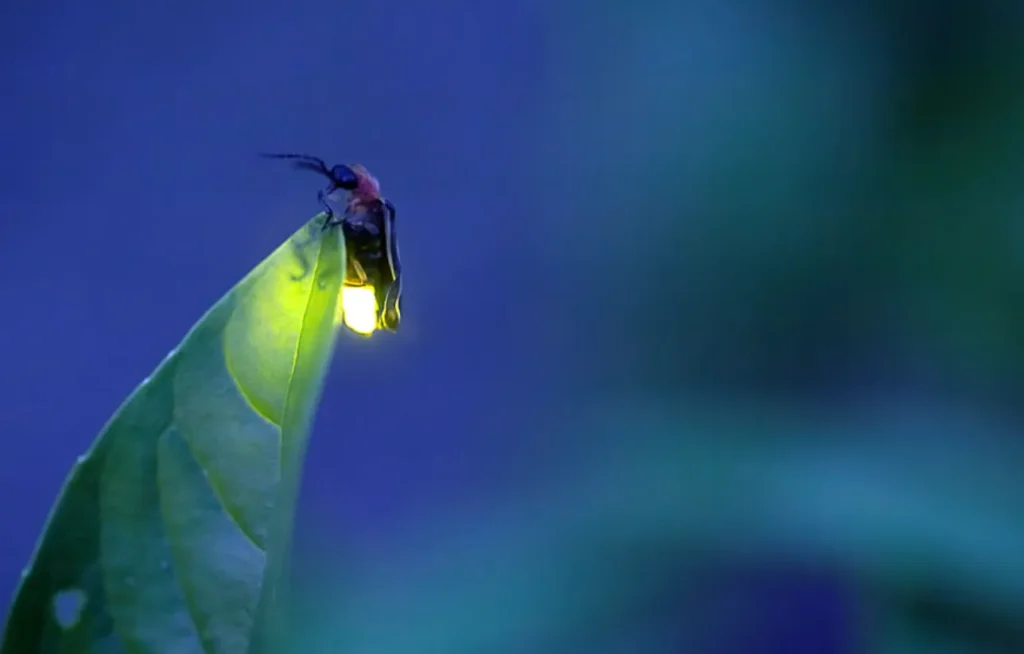
A: They glow through bioluminescence. Adults usually glow to attract mates, while larvae may glow as a warning to predators.
Q: What do lightning bug larvae eat?
A: They mostly eat soft prey such as snails, slugs, worms, and small insects.
Q: Do adult lightning bugs eat?
A: Some adults eat nectar, pollen, or small insects. Some adults eat very little because their main job is reproduction.
Q: Where do lightning bugs lay eggs?
A: Females usually lay eggs in moist soil, moss, leaf litter, grass bases, or other protected damp areas.
Q: How can I attract lightning bugs to my yard?
A: Keep your yard dark at night, avoid pesticides, leave some leaf litter, protect moist areas, plant native plants, and allow some grass to grow naturally.
Conclusion
The lightning bug life cycle is a quiet miracle that happens mostly below our feet. The glowing adult is only the final chapter. Before that, the insect lives as an egg, a hidden larva, and a transforming pupa.
Each stage depends on clean soil, moisture, darkness, and a balanced ecosystem. Without these conditions, lightning bugs struggle to survive.
A lightning bug is more than a pretty summer light. It is a beetle, a predator, a signaler, a scientific wonder, and a sign of living nature.
When we protect fireflies, we also protect leaf litter, wetlands, native plants, soil life, and the natural darkness of night.
Small changes can make a real difference. Turn off extra lights. Avoid pesticides. Let part of the garden stay wild. Keep damp corners safe.
If we protect their habitat today, future generations can still enjoy warm evenings filled with the soft glow of lightning bugs.
Also Read : life of a spider cycle
About the Author