The life cycle of the tomato hornworm is one of the most important topics for tomato growers, gardeners, students, and nature lovers because this insect undergoes dramatic changes from a tiny egg into a large green caterpillar and finally into a powerful moth. The correct common spelling is usually tomato hornworm, but many people search for it as tomato hornworm.
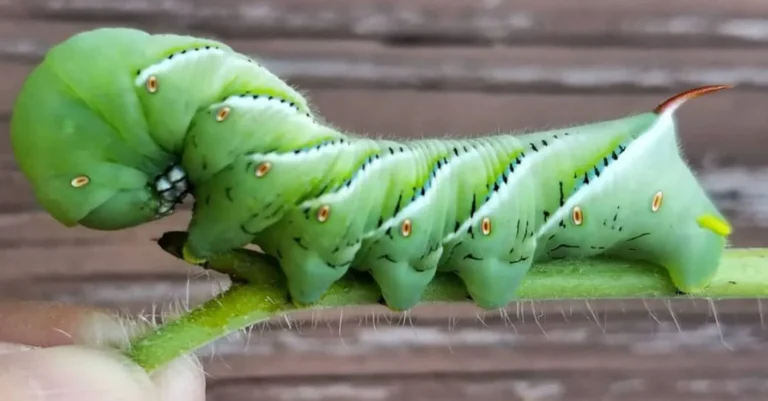
The tomato hornworm is the larval stage of Manduca quinquemaculata, commonly known as the five-spotted hawk moth. It is often confused with the tobacco hornworm, Manduca sexta, because both feed on tomato-family plants and look very similar. The tomato hornworm usually has eight V-shaped white marks on the side of its body and a dark rear horn, while the tobacco hornworm has diagonal white stripes and often a red horn.
This insect has a complete life cycle with four stages: egg, larva, pupa, and adult moth. The damaging stage is the larval stage, when the caterpillar eats tomato leaves, stems, blossoms, and sometimes green fruit. Adult moths do not damage tomato plants; they mainly feed on nectar and can help pollinate night-blooming flowers.
Q: What does a tomato hornworm turn into?
A: A tomato hornworm turns into the five-spotted hawk moth, not a butterfly.
Q: How long does the tomato hornworm life cycle take?
A: In warm weather, the egg-to-larva feeding period can move quickly, with larvae often feeding for about 3–4 weeks before entering the soil to pupate.
Q: What is the most harmful stage of the tomato hornworm?
A: The larval caterpillar stage is the most harmful because it can rapidly defoliate tomato plants and leave dark green or black droppings called frass.
Quick Life Cycle Table
| Stage | What Happens | Time/Season | Key Sign |
| Egg | Female moth lays single greenish eggs on host leaves | Late spring to summer | Tiny round eggs on leaves |
| Larva | Caterpillar feeds heavily on tomato leaves and fruit | About 3–4 weeks | Chewed leaves, bare stems, tomato hornworm poop |
| Pupa | Mature larvae burrow into the soil and transform | Summer or overwintering period | Brown pupa in soil |
| Adult Moth | Five-spotted hawk moth emerges, mates, and lays eggs | Dusk/night activity | Large gray-brown moth with spotted abdomen |
Important Things That You Need To Know
Before studying the full tomato hornworm life cycle, it is important to understand a few common search terms and misconceptions. Many people search for ‘tomato hornworm,’ but the accepted insect name is usually written as ‘tomato hornworm.’ Both terms refer to the same garden pest in common use.
A common mistake is calling the adult stage a ‘tomato hornworm butterfly‘. Scientifically, this is incorrect. The adult is a moth, specifically the five-spotted hawk moth. Hawk moths are strong flyers and may hover near flowers like hummingbirds, which is why some people also call them hummingbird moths.
Gardeners often notice tomato hornworm damage before they see the caterpillar. This happens because the green body blends perfectly with tomato stems and leaves. The first warning signs are missing leaves, chewed fruit, bare stems, and dark pellets known as tomato hornworm poop (frass). These droppings often fall onto lower leaves or soil below the feeding caterpillar.
Another useful clue is the presence of tomato hornworm eggs. Female moths lay eggs singly on tomato-family plants, and the eggs are small, round, and greenish to yellow-green. If gardeners monitor leaves early, they can reduce plant damage before large caterpillars develop.
The History Of Their Scientific Naming, Evolution, and Their Origin
Scientific Name and Classification
The tomato hornworm is scientifically known as Manduca quinquemaculata. The species belongs to the family Sphingidae, which includes sphinx, hawk, and hummingbird moths. Its adult form is called the five-spotted hawk moth because of the pale yellowish spots found along each side of the abdomen.
Why “Hornworm” Is Used
The name hornworm comes from the pointed horn-like structure at the rear end of the larva. This horn looks dangerous, but it is not a stinger. The caterpillar is not poisonous to touch, though gardeners may avoid handling it due to its size and appearance.
Evolutionary Background
Tomato hornworms are part of a highly adapted group of moths that evolved strong flight muscles, excellent night activity, and close relationships with flowering plants. Their larvae evolved to feed on Solanaceae, the nightshade plant family, which includes tomato, potato, pepper, eggplant, and tobacco.
Origin and Distribution
The tomato hornworm is native to North America and is commonly found in gardens, farms, and wild habitats where host plants grow. It thrives in warm growing seasons, especially where tomato-family crops are abundant.
Their Reproductive Process, Giving Birth And Rising Their Children
Mating of Adult Moths
The reproductive process begins after the adult five-spotted hawk moth emerges from the soil. Adult moths are usually active around dusk and at night. Males and females meet, mate, and then females search for suitable host plants.
Egg Laying on Host Plants
Female moths do not give birth to live young. Instead, they lay tomato hornworm eggs singly on host plant leaves. Eggs are commonly placed on tomato-family plants, especially tomato, pepper, potato, eggplant, and related wild nightshades. University extension sources describe the eggs as small, green to yellow-green, and pearl-like.
No Parental Care
Tomato hornworms do not raise their young as mammals or birds do. After the female lays eggs, she neither feeds nor protects the larvae. The young caterpillar must survive by itself after hatching.
Larval Survival Strategy
The newly hatched caterpillar begins feeding almost immediately. Its green body works as camouflage, helping it hide from birds, wasps, and gardeners. As it grows, it molts several times and becomes much larger.
Natural Control by Predators
Many tomato hornworms are eaten or parasitized before becoming adult moths. Braconid wasps are especially important. If a hornworm is covered with small white cocoons, it has been parasitized, and gardeners often leave it in place so beneficial wasps can continue their life cycle.
Stages of the Life Cycle of the Tomato Hornworm
Stage 1: Egg
The first stage of the life cycle of the tomato hornworm begins when the female moth lays eggs on host plants. Eggs are usually laid singly rather than in clusters. They are tiny, round, and greenish, making them difficult to see on tomato leaves.
These eggs are often found on the upper or lower leaf surface, depending on conditions and moth behavior. In warm weather, the eggs hatch within about a week, although temperature and climate can affect timing.
Stage 2: Larva or Caterpillar
The larval stage is the most visible and destructive. This is the large green caterpillar gardeners call the tomato hornworm. It feeds heavily on leaves and may also chew blossoms and fruit.
Young larvae are small and easier to control, but mature larvae can reach several inches long. They go through multiple growth stages called instars. As they grow, they shed their skin and become more aggressive eaters.
Stage 3: Pupa
When the caterpillar is fully grown, it drops from the plant and burrows into the soil. There, it becomes a brown pupa. The pupa is a resting and transformation stage, but inside it, the insect is changing into an adult moth.
In many regions, tomato hornworms overwinter as pupae in the soil. This means the adult moth may not emerge until the next warm season.
Stage 4: Adult Moth
The final stage is the adult five-spotted hawk moth. This moth is large, gray-brown, and strong-flying. It is often active at dusk and may visit flowers for nectar.
Adult moths are not the stage that damages tomato plants. Their main role is reproduction. After mating, female moths lay eggs, and the cycle begins again.
Their Main Diet, Food Sources, And Collection Process Explained
The tomato hornworm‘s diet depends on its life stage. The caterpillar eats plant material, while the adult moth feeds on nectar.
Important food sources include:
- Tomato leaves: The most common and preferred food source in home gardens.
- Tomato stems and blossoms: Larger larvae may chew tender stems and flowers.
- Green tomato fruit: Older larvae may bite into fruit, causing holes and crop loss.
- Pepper, eggplant, and potato plants: These belong to the same nightshade family.
- Wild nightshade plants: These can support hornworm populations near gardens.
The collection process is simple but effective. The caterpillar does not “collect” food for storage. Instead, it eats the plant directly. It usually begins feeding on tender leaves and may hide along stems during the day.
Gardeners often detect feeding by looking for tomato hornworm damage. Missing leaves, bare stems, and dark droppings are strong signs. The caterpillar is usually close to the damage, often underneath a leaf or along a stem.
Adult moths collect nectar using a long feeding tube called a proboscis. They may hover near flowers while feeding. In this way, they can support pollination, especially for flowers that open or release scent at night.
How Long Does A Tomato Hornworm Live
The total lifespan of a tomato hornworm depends on temperature, season, food quality, predators, and whether the pupa overwinters in the soil. In warm growing conditions, the active caterpillar stage is relatively short, but the full life cycle may extend much longer if the insect spends winter as a pupa.
- Egg stage:
- The egg stage usually lasts about 6–8 days in warm weather. The eggs are small and easy to miss because they blend with tomato leaves.
- Larval stage:
- The caterpillar stage often lasts around 3–4 weeks. During this time, the hornworm eats rapidly and grows through several instars. This is the stage when most garden damage occurs.
- Pupal stage:
- The pupal stage can be short during the growing season or much longer if the insect overwinters. In colder regions, mature larvae burrow into the soil and remain as pupae until the next season.
- Adult moth stage:
- The adult moth stage primarily serves mating, nectar feeding, and egg laying. Adult lifespan can vary, but it is generally shorter than the combined immature stages.
- Full seasonal cycle:
- In warm climates, there may be more than one generation in a year. In cooler climates, one generation may dominate, with pupae surviving the winter in the soil.
- In gardens:
- Many larvae do not survive to adulthood because birds, parasitic wasps, predators, hand-picking, and pest control methods reduce their numbers.
- In protected conditions:
- When protected from predators and supplied with fresh host plants, hornworms may complete their development more successfully.
- Main lifespan idea:
- The visible “worm” stage is only one part of the insect’s life. The complete tomato hornworm life cycle includes hidden egg and soil stages, as well as the adult moth stage.
Tomato Horn Worm Lifespan in the Wild vs. in Captivity
Lifespan in the Wild
In the wild or in outdoor gardens, the tomato hornworm faces many risks. Birds, predatory insects, spiders, parasitic wasps, weather changes, and food shortages can reduce survival. Gardeners also remove many hornworms before they complete their life cycle.
Wild hornworms may complete the larval stage in a few weeks if conditions are warm and food is abundant. After that, they enter the soil as pupae. If the season is ending, the pupa may remain underground until the next year.
Lifespan in Captivity
In captivity, the hornworm may survive more reliably because it is protected from predators and extreme weather. If given fresh tomato-family leaves and suitable conditions, it can complete the larval stage and pupate successfully.
However, captivity must be handled carefully. Poor ventilation, moldy food, overcrowding, or incorrect temperature can kill larvae. Captive hornworms also need soil or a suitable pupation medium when they mature.
Main Difference
The biggest difference is survival pressure. In nature, many hornworms never become moths. In captivity, more individuals may complete the full cycle if conditions are controlled.
Importance of Tomato Hornworm in This Ecosystem
Food for Predators
Although gardeners see the tomato hornworm as a pest, it has ecological value. It is a food source for birds, predatory insects, and other animals. Large caterpillars are rich in protein and energy, making them valuable prey.
Host for Parasitic Wasps
Tomato hornworms also support beneficial parasitoids, especially braconid wasps. These wasps lay eggs in or on the caterpillar. Their larvae develop using the hornworm as a host, then form white cocoons on its body. This is a natural biological control system.
Adult Moth as a Pollinator
The adult five-spotted hawk moth feeds on nectar. Because it visits flowers, it can help with pollination, particularly for night-blooming or evening-fragrant plants.
Part of Natural Balance
Every stage of the tomato hornworm life cycle connects to the ecosystem. Eggs feed tiny predators, larvae feed larger predators, pupae interact with soil organisms, and moths interact with flowers.
Why Balance Matters
The goal should not always be total elimination. In gardens, control may be needed to protect crops, but in natural spaces, hornworms are part of biodiversity and the food web.
What To Do To Protect Them In Nature And Save The System For The Future
Protect Natural Habitats
- Keep wild plant areas, native flowers, and mixed vegetation near gardens when possible.
- These spaces support moths, predators, and beneficial insects.
Avoid Unnecessary Chemical Sprays
- Broad-spectrum pesticides can kill beneficial insects as well as pests.
- Use targeted control only when plant damage is serious.
Leave Parasitized Hornworms
- If you see white cocoons on a hornworm, do not remove them.
- These cocoons belong to beneficial wasps that help control future hornworms.
Grow Pollinator-Friendly Flowers
- Adult hawk moths feed on nectar.
- Night-blooming and fragrant flowers can support adult moths and other pollinators.
Practice Balanced Garden Management
- Hand-pick hornworms from crop plants when needed.
- Move a few to non-crop nightshade plants only if safe and appropriate.
- Protect tomatoes without destroying the broader ecosystem.
Fun & Interesting Facts About Tomato Hornworm
- The tomato hornworm is not a worm. It is a caterpillar.
- The adult form is a moth, not a butterfly.
- The so-called tomato hornworm butterfly is actually the five-spotted hawkmoth.
- The rear horn looks scary, but it is not a stinger.
- Tomato hornworms are excellent at camouflage because their green bodies match the color of tomato plants.
- Their droppings are called frass, often called tomato hornworm poop.
- They can eat a surprising amount of foliage in a short time.
- They are often easier to find by looking for poop and missing leaves than by looking directly for the caterpillar.
- Beneficial wasps usually parasitize a hornworm covered in white cocoons.
- Adult hawk moths can hover near flowers while feeding on nectar.
- Tomato hornworms and tobacco hornworms are often misidentified because they look very similar.
- Their life cycle is an example of complete metamorphosis.
Frequently Asked Questions (FAQs)
Q: What are the four stages in the life cycle of the tomato hornworm?
A: The four stages are egg, larva, pupa, and adult moth. The larva is the green caterpillar that damages tomato plants.
Q: Is the tomato hornworm butterfly real?
A: No. The term “tomato hornworm butterfly” is a common mistake. The adult is a five-spotted hawk moth, not a butterfly.
Q: Where are tomato hornworm eggs found?
A: Tomato hornworm eggs are usually laid singly on host plant leaves, especially tomato and related plants. They are small and greenish, making them hard to see.
Q: What does tomato hornworm damage look like?
A: Tomato hornworm damage includes missing leaves, bare stems, chewed blossoms, holes in green fruit, and dark green or black droppings.
Q: What is tomato hornworm poop?
A: Tomato hornworm poop is called frass. It appears as dark pellets and often collects on the lower leaves or in the soil beneath the caterpillar.
Final Word
The life cycle of the tomato hornworm is a powerful example of nature’s transformation. This insect begins as a tiny green egg, becomes a fast-feeding caterpillar, hides underground as a pupa, and finally emerges as the five-spotted hawk moth. For gardeners, the larval stage can be frustrating because it causes severe tomato hornworm damage quickly. However, in the wider ecosystem, this insect also supports birds, beneficial wasps, soil interactions, and pollination.
The best approach is balanced management. Protect your tomato plants by checking for tomato hornworm eggs, caterpillars, and tomato hornworm poop, while also respecting the insect’s role in nature. Understanding the full tomato hornworm life cycle helps you control garden damage effectively while supporting a healthier ecosystem for the future.
Also Read: aphids life cycle
About the Author