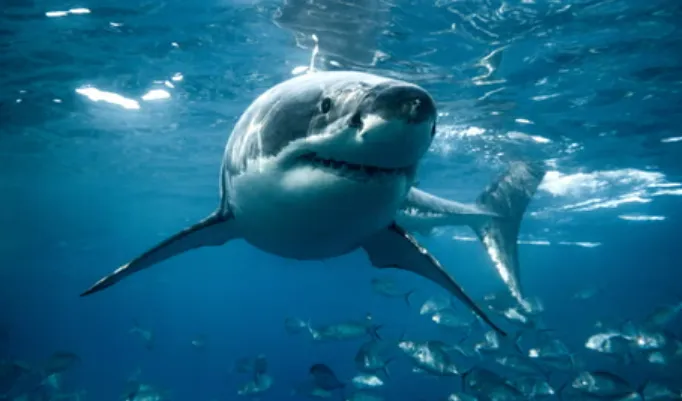
The life cycle of a great white shark is one of the most fascinating stories in the ocean. The great white shark, scientifically known as Carcharodon carcharias, is a large predatory shark found in temperate and subtropical waters worldwide. It is famous for its powerful body, sharp serrated teeth, strong swimming ability, and important role as an apex predator.
A baby great white shark is born live, already around 4 feet long, and grows slowly over many years. Adult great whites may reach around 20–21 feet in length and can live 70 years or more, although exact age estimation is still difficult. Males usually mature at about 26 years, while females mature later, around 33 years, making the species naturally slow to reproduce.
Great white sharks are not simply “dangerous animals.” They are complex marine predators that help maintain balance in ocean ecosystems by regulating prey populations and removing weak or dead organisms from the food web.
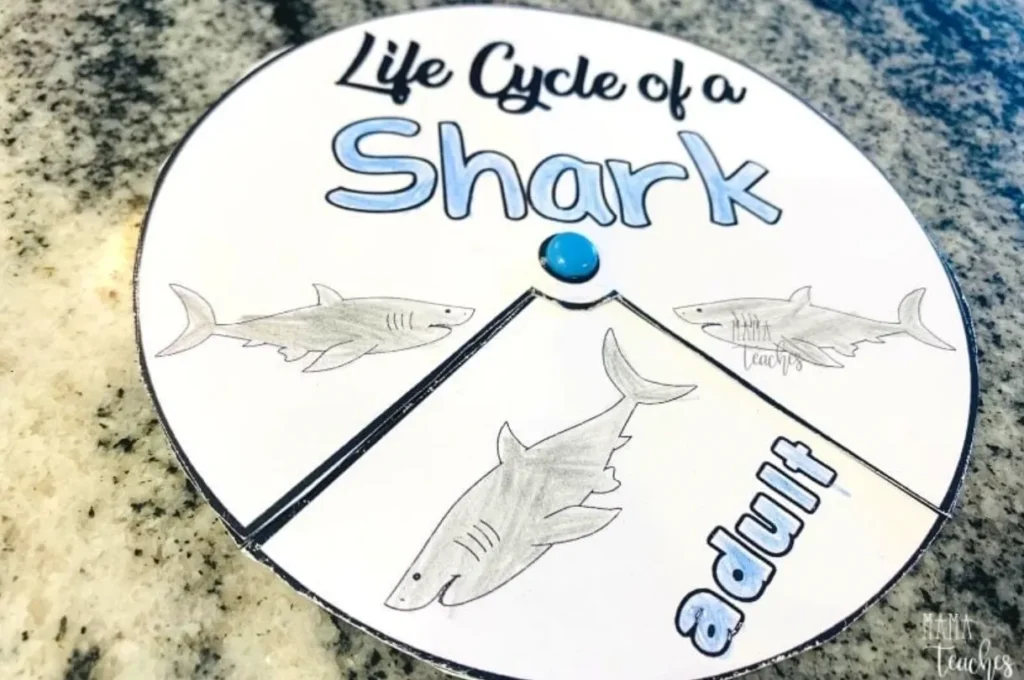
Q: What are the main stages in the life cycle of a great white shark?
A: The main stages are embryo, newborn pup, juvenile, and adult.
Q: How long can a great white shark live?
A: Modern scientific estimates show that great white sharks may live 70 years or more.
Q: Do great white sharks lay eggs?
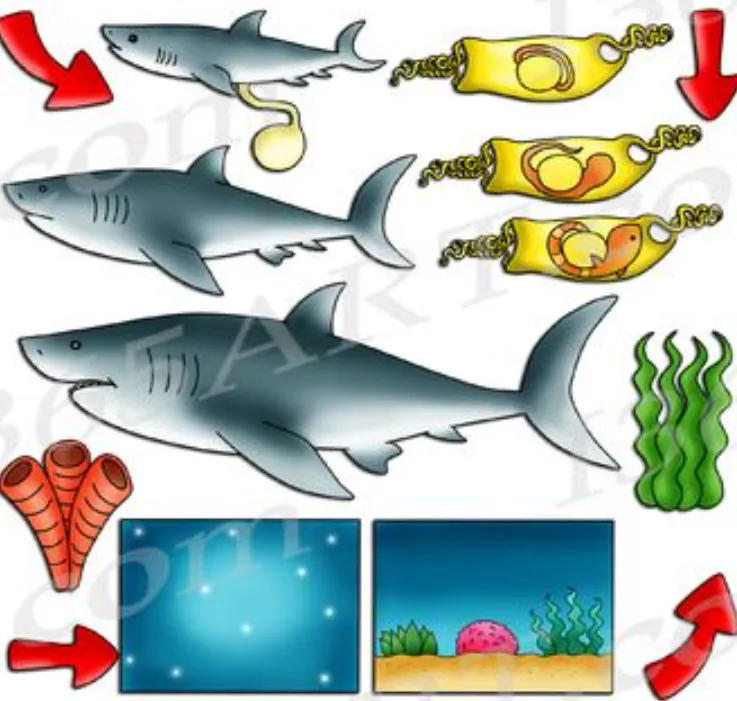
A: No. Great white sharks give birth to live young after internal development.
Quick Life Cycle Table
| Life Stage | Approximate Size / Age | Key Features |
| Embryo | Develops inside the mother | Receives nutrition before birth; not laid as an external egg |
| Newborn Pup | Around 4 feet at birth | Independent from birth; no parental care |
| Juvenile | Under about 10 feet | Feeds mainly on fish, squid, rays, and smaller sharks |
| Subadult | Growing toward maturity | Begins wider migrations and may shift diet |
| Adult | Up to about 20–21 feet | Hunts larger prey such as seals and sea lions; reproduces slowly |
| Old Adult | May live 70+ years | Important for breeding and ecosystem balance |
Important Things That You Need To Know
The great white shark is often misunderstood because popular media focuses on fear, size, and rare bite incidents. In reality, this species is more important as an ecological regulator than as a threat to people. It lives in both coastal and offshore waters and often migrates seasonally to follow prey and suitable temperatures.
When people search for the size of a great white shark, they often expect a single number. Scientific sources usually describe adults as reaching around 20–21 feet, while many individuals are smaller. Males are generally smaller than the largest females. Claims about the largest great white shark or the biggest great white shark ever recorded should be read carefully because some old records are based on estimates rather than modern measurement standards.
The phrase great white shark attack receives high search interest, but attacks are rare compared with the number of people who swim, surf, and dive each year. The International Shark Attack File investigated 105 alleged shark-human interactions in 2025, confirming 65 unprovoked bites worldwide.
The term “great white shark Block Island” has also become popular because young white sharks have been recorded in Rhode Island waters, including footage near Block Island in 2025.
Another trending name is Contender, the great white shark. Contender is a mature male white shark tagged by OCEARCH in January 2025, measuring 13.8 feet and about 1,653 pounds. His satellite tag helps scientists study migration in the Western North Atlantic.
The History of Their Scientific Naming, Evolution, and Origin
Scientific Naming of the Great White Shark
The great white shark belongs to the scientific species Carcharodon carcharias. It is classified under the class Chondrichthyes, meaning it is a cartilaginous fish. Unlike bony fish, sharks have skeletons made mainly of cartilage, which is lighter and more flexible than bone.
Its genus name, Carcharodon, is commonly understood to relate to sharp or jagged teeth, while carcharias has a long history in shark naming. This name fits the animal well because the great white shark is known for its broad, triangular, serrated teeth, which are designed for cutting prey.
Evolution and Ancient Origin
The evolutionary story of the great white shark is connected to the Lamnidae family, which includes mackerel sharks such as makos and porbeagles. Fossil evidence, especially fossil teeth, suggests that lamnid sharks became abundant and diverse during ancient geological periods.
For many years, people believed the great white shark came directly from Megalodon, the giant prehistoric shark. Modern research suggests a more complex story. Some evidence links great whites more closely to ancient mako-like sharks than to Megalodon as their direct ancestor.
Why Their Evolution Matters
Their evolution explains many of their modern strengths: fast swimming, temperature control, powerful jaws, and excellent senses. These adaptations helped great white sharks become one of the ocean’s most successful predators.
Their Reproductive Process, Giving Birth And Rising Their Children
Mating and Internal Fertilization
The reproductive process of the great white shark begins with internal fertilization. Male sharks use specialized reproductive organs called claspers to transfer sperm to the female.
Scientists still do not know every detail about great white mating because it is rarely observed in the wild. However, the species reproduces slowly, making population recovery difficult when adults are killed by fishing or bycatch.
Pregnancy and Embryo Development
Great white sharks do not lay eggs outside the body. Instead, the embryos develop inside the mother. The gestation period is estimated at 1 year, and females give birth to live pups. Smithsonian Ocean notes that great white sharks may give birth to 2 to 12 babies at a time.
The embryos are nourished inside the mother before birth. This allows the pups to be large and strong when they enter the ocean.
Giving Birth to Live Young
A newborn great white shark is already an active predator. NOAA reports that white sharks are born at about 4 feet long, which gives them a better chance of survival in coastal nursery habitats.
Raising Their Children
Great white sharks do not raise their young like mammals or birds. After birth, the pups are independent. The mother does not feed, guard, or teach them.
This means each pup’s survival depends on instinct, suitable nursery habitats, food availability, and avoidance of larger predators.
Stages of the Great White Shark Life Cycle
Stage 1: Embryo Stage
The first stage of the life cycle of a great white shark happens inside the mother’s body. The embryo develops internally rather than inside an egg case laid on the seafloor.
This stage is important because the young shark must grow large enough to survive immediately after birth. Since great white sharks produce only a small number of young, each pup represents a major reproductive investment.
Stage 2: Newborn Pup Stage
A newborn great white shark pup is around 4 feet long and fully independent. It does not receive parental care, so it must begin hunting small prey soon after birth.
Pups usually stay in safer coastal nursery areas where food is available and the water is suitable. These habitats are essential because young sharks are still vulnerable despite their size.
Stage 3: Juvenile Stage
During the juvenile stage, the shark grows slowly and learns to survive in coastal ecosystems. Juvenile great whites usually eat fish, squid, rays, and smaller sharks.
NOAA notes that juvenile white sharks primarily feed on bottomfish, schooling fish, squid, smaller sharks, and rays. Their diet changes as they grow larger.
Stage 4: Adult Stage
The adult stage begins after sexual maturity, which occurs late in life. Males mature around 26 years, while females mature around 33 years.
Adult great white sharks travel long distances, visit seal and sea lion colonies, and reproduce slowly. Because adults are crucial for breeding, losing mature sharks can seriously affect population recovery.
Their main diet, food sources, and collection process are explained
The great white shark has a flexible diet that changes with age, size, location, and season. It is not limited to one prey type.
Young sharks feed more on smaller animals, while larger adults often hunt energy-rich prey such as seals and sea lions.
Key food sources include:
- Fish: Juveniles commonly eat bony fish and schooling fish.
- Squid: Squid can be part of the diet, especially for younger sharks.
- Rays and smaller sharks: Juvenile and subadult white sharks may feed on rays and other sharks.
- Seals and sea lions: Larger adults often target marine mammals near colonies.
- Whale carcasses: Great whites may scavenge dead whales, gaining substantial energy.
Their food “collection process” is really a hunting process. Great white sharks use several advanced senses to locate prey. They can detect movement through the lateral line, smell chemicals in the water, and sense electrical fields using the Ampullae of Lorenzini. Smithsonian notes that sharks can detect electrical fields and water vibrations, helping them navigate and find prey.
They often approach prey with stealth, speed, and a powerful bite. In some places, adult great whites attack from below, especially when hunting seals near the surface.
How Long Does A Great White Shark Live
The lifespan of the great white shark is longer than many people once believed. Older estimates suggested shorter lives, but modern research shows that great whites may live 70 years or more.
Important lifespan points:
- Great white sharks are slow-growing animals.
- They do not become adults quickly. This slow growth makes them vulnerable to human-caused mortality.
- Males mature later than many fish species.
- NOAA reports that male white sharks mature at around 26 years old.
- Females mature even later.
- Females mature at around 33 years old, meaning they must survive for decades before producing pups.
- Maximum age is difficult to confirm.
- Scientists estimate ages by studying growth patterns, vertebrae, and other biological evidence. NOAA notes that age estimates range from 30 to over 70 years.
- Long life does not mean fast population growth.
- Because great whites reproduce slowly and have small litters, their populations recover slowly after decline.
- Older females are extremely valuable.
- Mature females are essential for producing the next generation. Protecting breeding-age females is one of the most important parts of conservation.
- Human threats can shorten natural lifespan.
- Bycatch, illegal killing, habitat disturbance, and prey decline can prevent sharks from reaching old age.
- Long lifespan supports ecosystem stability.
- A long-lived apex predator can influence prey behavior and help maintain balance across marine food webs.
The long life of the great white shark shows why conservation must focus on decades, not just short-term protection.
Great White Shark Lifespan in the Wild vs. in Captivity
Lifespan in the Wild
In the wild, a great white shark may live 70 years or more if it avoids major threats. Its natural lifespan depends on food availability, migration routes, disease, injury, and human impacts.
Wild great whites travel long distances, dive through different water layers, and use large hunting territories. These natural behaviors are essential for their health.
Lifespan in Captivity
Great white sharks do not survive well in captivity. Unlike some smaller shark species, they need huge open spaces, constant swimming, natural prey behavior, and complex environmental conditions.
No aquarium currently maintains adult great white sharks long-term. Their stress level, feeding challenges, and need for open-ocean movement make captivity unsuitable.
Why the Difference Matters
The difference in survival between wild and captive populations shows that great white sharks must be protected primarily through ocean conservation, not aquarium display. Protecting migration routes, nursery areas, and prey populations is far more effective than keeping them in tanks.
Importance of the Great White Shark in this Ecosystem
Apex Predator Role
The great white shark is an apex predator, meaning it sits near the top of the marine food chain. NOAA describes the white shark as an important ecological predator in the ocean.
By feeding on seals, sea lions, fish, and carcasses, it helps shape the behavior and distribution of other animals.
Keeping Prey Populations Balanced
Great whites often target vulnerable, injured, or weaker prey. This helps maintain healthier prey populations over time.
When top predators disappear, prey populations may increase unnaturally or change their behavior in ways that damage the broader ecosystem.
Supporting Natural Selection
By removing weaker animals, great whites may contribute to natural selection. This does not mean they “clean” the ocean alone, but they are part of a larger system that keeps marine populations strong.
Scavenging Role
Great whites also feed on whale carcasses. This helps recycle nutrients through the marine food web.
Their role as both hunters and scavengers makes them important for energy transfer across the ocean.
What to do to protect them in nature and save the system for the future
Reduce Bycatch
- Use safer fishing gear and release accidentally caught sharks quickly.
- Train fishing crews to handle sharks without causing unnecessary injury.
- Improve monitoring in fisheries where white sharks may be caught.
Protect Nursery Areas
- Identify and protect coastal nursery zones where pups and juveniles grow.
- Limit harmful coastal development in important shark habitats.
- Reduce pollution in shallow marine areas.
Stop Illegal Killing and Trade
- Enforce laws against illegal killing, finning, and trade.
- Support international protection measures, such as CITES, and regional shark conservation measures.
- Report illegal shark products when identified.
Protect Prey and Habitat
- Maintain healthy populations of fish, seals, and other marine animals.
- Reduce plastic pollution, chemical contamination, and ghost fishing gear.
- Protect marine protected areas and migration corridors.
Educate People with Science
- Replace fear-based messages with accurate shark education.
- Teach swimmers and surfers how to reduce risk in shark habitats.
- Support research groups that tag and track sharks responsibly.
NOAA lists major threats as bycatch, habitat impacts, and overfishing, and also notes that white sharks are protected internationally and are prohibited from retention in U.S. waters.
Fun & Interesting Facts About the Great White Shark
- Great white sharks are partly warm-blooded.
- They can keep parts of their body warmer than the surrounding water, helping them hunt in cooler seas.
- They are born large.
- A newborn pup is already about 4 feet long, which is large compared with many marine animals.
- They have excellent senses.
- They use smell, vibration detection, vision, and electroreception to find prey.
- They do not chew like humans.
- Their serrated teeth cut prey into pieces rather than grinding food.
- Their diet changes with age.
- Young sharks eat more fish and squid, while adults may hunt marine mammals.
- They migrate long distances.
- Some tagged sharks travel thousands of miles across coastal and offshore waters.
- Contender is a famous tracked shark.
- The mature male Contender great white shark was tagged in 2025 and is helping scientists understand Atlantic migration.
- They are not villains.
- Most great white shark behavior is natural hunting, migration, and survival, not aggression toward humans.
Frequently Asked Questions (FAQs)
Q: What is the life cycle of a great white shark?
A: The life cycle of a great white shark includes four major stages: embryo, newborn pup, juvenile, and adult. The shark develops inside the mother, is born live, grows slowly, and reaches maturity after many years.
Q: What is the average great white shark size?
A: A great white shark is about 4 feet long at birth and can grow to around 20–21 feet as an adult. Most individuals are smaller than the maximum size.
Q: How long does a great white shark live?
A: Great white sharks may live 70 years or more. They grow slowly and mature late, especially females, which may not reproduce until around 33 years old.
Q: Are great white shark attacks common?
A: No. Shark bites are rare at a global scale. In 2025, the International Shark Attack File confirmed 65 unprovoked shark bites worldwide across all shark species.
Q: What does a great white shark eat?
A: Juveniles eat fish, squid, rays, and smaller sharks. Adults often eat seals, sea lions, large fish, and whale carcasses. Their diet changes with age and location.
Conclusion
The life cycle of a great white shark shows how powerful yet vulnerable this species really is. From a large newborn pup to a mature ocean predator, the great white shark grows slowly, matures late, and reproduces at a low rate. These life-history traits make it highly sensitive to overfishing, bycatch, habitat loss, and fear-based killing.
Understanding the great white shark is important because it is not only a famous predator but also a key part of the marine ecosystem. Its role as an apex predator helps regulate prey populations, recycle nutrients, and maintain healthier oceans.
To protect great white sharks, people must support science-based conservation, safer fisheries, cleaner oceans, and better public education. Saving this species is not just about saving one shark. It is about protecting the future balance of the marine world.
Also Read: food moths life cycle
About the Author