The grain moth life cycle mainly refers to the development of the Angoumois grain moth, scientifically known as Sitotroga cerealella. This moth is one of the most important stored-grain insects because its larvae develop inside whole kernels of rice, wheat, maize, barley, oats, sorghum, and other cereal grains. In everyday language, people may call it grain moth, rice grain moth, or Angoumois grain moth. Entomology sources commonly identify it as a stored-product moth whose larvae damage both stored grain and, in some regions, grain still in the field.
Unlike many pantry moths that feed on broken food particles, the grain moth larva can bore into a single grain kernel and complete most of its growth hidden inside. This makes early infestation difficult to notice. By the time adults appear, the damaged grain may already contain hollow kernels, powdery residue, webbing, exit holes, and reduced seed quality.
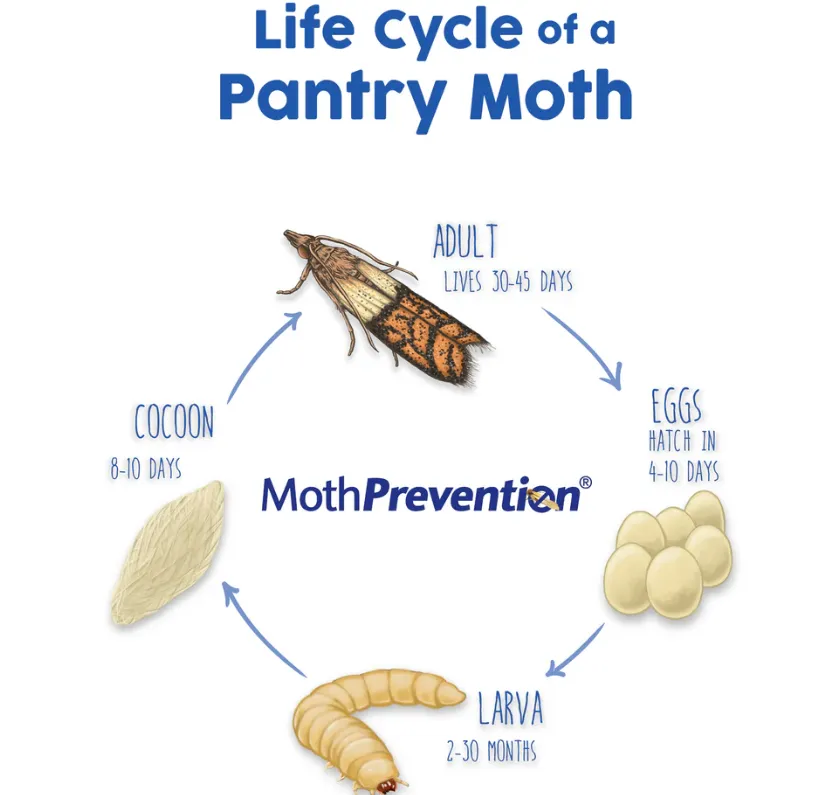
The full grain moth life cycle includes four stages: egg, larva, pupa, and adult. Under warm conditions, the cycle may be completed in about five to seven weeks, while temperature, humidity, food quality, and storage conditions can speed up or slow down development.
Quick Answers: Most Common Questions
Q: What are the four stages of the grain moth life cycle?
A: The four stages are egg, larva, pupa, and adult moth.
Q: How long does the grain moth life cycle take?
A: In warm and favorable conditions, the cycle may take around 5–7 weeks, though some sources report about 30 days at 86°F and around 40 days at 77°F.
Q: Which stage causes the most damage?
A: The larval stage causes the main damage because the caterpillar feeds inside the grain kernel and hollows it out.
Quick Life Cycle Table
| Life Stage | What Happens | Approx. Duration |
| Egg | Females lay tiny eggs on or near grain kernels. | About 3–10 days, depending on the temperature. |
| Larva | The larva bores into the grain and feeds within the kernel. | Often 2–3 weeks or longer, depending on food and climate. |
| Pupa | Mature larva prepares an exit area and changes into a pupa. | Around 1 week, depending on conditions. |
| Adult Moth | Adults emerge, mate, lay eggs, and usually do not feed. | Often 10–15 days, sometimes longer in ideal conditions. |
| Full Cycle | Egg to adult. | Commonly 5–7 weeks in favorable conditions. |
Important Things That You Need To Know
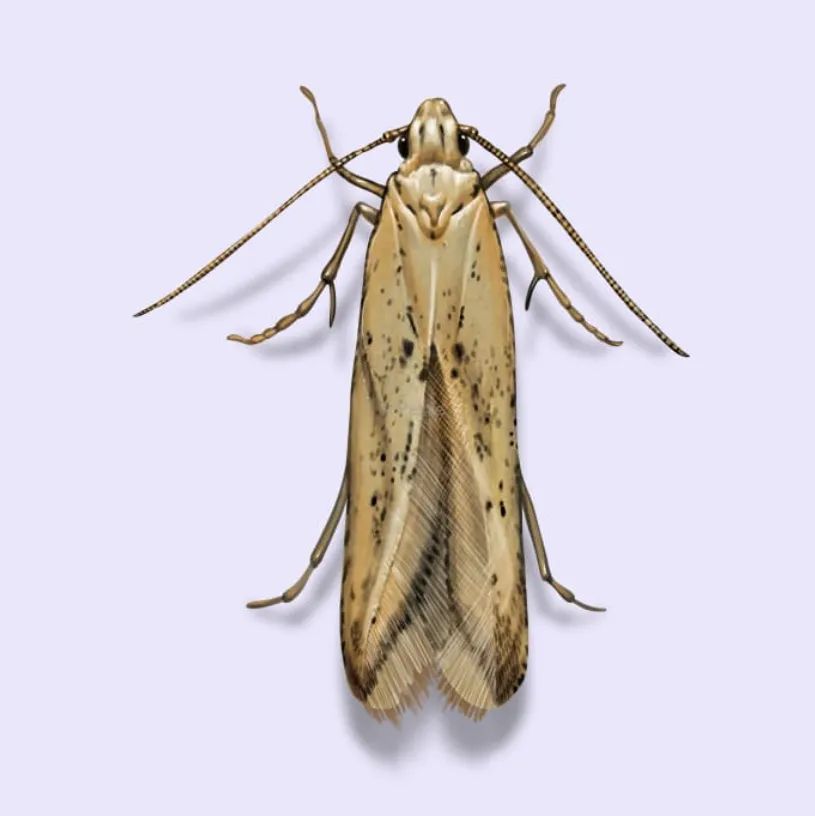
The term grain moth is often used for the Angoumois grain moth, but it can sometimes be confused with other stored-product moths such as the Indianmeal moth or Mediterranean flour moth. For SEO and reader clarity, it is important to understand that grain moth, rice grain moth, stored grain moth, grain moth larvae, and grain moth infestation are closely related search terms, but they do not always refer to the same insect.
The Angoumois grain moth is different from many common pantry moths because it prefers whole cereal grains. The larva enters a grain kernel shortly after hatching and feeds internally. This hidden feeding habit makes the pest harder to detect than insects that crawl openly across food surfaces.
Another important point is that adult grain moths are not the main feeding stage. The adult’s main role is reproduction. The female lays eggs near suitable grain, and the newly hatched larva quickly finds a kernel. This is why controlling the grain moth life cycle usually means interrupting the egg-laying stage, removing infested grain, lowering moisture, improving sanitation, and preventing adults from reproducing.
For farmers, grain handlers, food storage managers, and homeowners, the most important warning signs are small round exit holes, light webbing, hollow kernels, dusty grain, and small buff or pale-brown moths flying near stored cereals. Understanding the grain moth life cycle helps people prevent grain loss before the infestation becomes severe.
The History Of Their Scientific Naming, Evolution, and Their Origin
Scientific Naming of Grain Moth
The Angoumois grain moth is scientifically named Sitotroga cerealella. It belongs to the order Lepidoptera, the insect order that includes moths and butterflies, and the family Gelechiidae. The species was originally described by Guillaume-Antoine Olivier in 1789 and was later placed in the genus Sitotroga. CABI notes that the insect was first described under Alucita by Olivier and later reallocated to Sitotroga by Heinemann in 1870.
Origin of the Name “Angoumois”
The common name Angoumois grain moth comes from Angoumois, a historical region of France. The insect became associated with this region because early records linked it with serious grain damage there. However, its true natural origin is uncertain, and it is now widely distributed in warmer grain-producing regions worldwide.
Evolution and Adaptation
The grain moth evolved a highly specialized survival strategy: the larva lives inside grain kernels. This protects it from many predators, weather changes, and surface-level control methods. Its ability to exploit stored cereal grains helped it spread with human agriculture, trade, storage, and transport.
Their Reproductive Process, Giving Birth And Rising Their Children
Mating After Adult Emergence
Adult grain moths usually mate soon after emerging from the pupal stage. Since adults are short-lived and generally do not feed, their main biological purpose is reproduction. Males locate females, and females search for suitable grain surfaces where larvae can survive after hatching.
Egg Laying on Grain
Female Angoumois grain moths lay eggs on or near grain kernels. The University of Florida notes that females lay about 40 tiny eggs, and newly hatched caterpillars bore into kernels. Purdue Extension materials also describe females depositing eggs on grains such as barley, rye, corn, oats, and rice.
No Parental Care
Grain moths do not “raise” their young like mammals or birds. After laying eggs, the female does not guard, feed, or care for the larvae. Instead, survival depends on where the eggs are placed. If eggs are laid near healthy grain, the larvae can quickly enter kernels and feed safely.
Hidden Larval Growth
Once the egg hatches, the larva becomes independent. It tunnels into a grain kernel and feeds internally. This hidden feeding stage is the reason grain moth infestations are often discovered late. The larva uses the grain as both food and shelter until it is ready to pupate.
Stages of Grain Moth Life Cycle
Egg Stage
The egg stage begins when the female lays tiny eggs on or near the surface of the grain. These eggs are difficult to see without close inspection. Temperature strongly affects hatching speed. Warmer conditions usually shorten the incubation period, while cooler storage conditions slow development.
Eggs are commonly placed where the larva can quickly reach food. This is important because the newly hatched larva must find a grain kernel soon after emergence.
Larval Stage
The larval stage is the most destructive part of the grain moth life cycle. The larva is a small caterpillar that bores into a kernel and feeds on the grain tissue inside. Britannica describes the larvae as attacking stored and growing grains by hollowing out the kernels’ interiors.
Because the larva stays hidden inside the grain, an infestation can remain unnoticed until adults emerge or damaged kernels are examined.
Pupal Stage
When the larva is fully grown, it prepares for pupation. Before pupating, it may create or weaken an exit area so the adult moth can leave the kernel later. Research summaries describe larvae cutting a channel toward the outside before adult emergence.
During the pupal stage, the insect transforms from a feeding larva into a winged adult moth.
Adult Stage
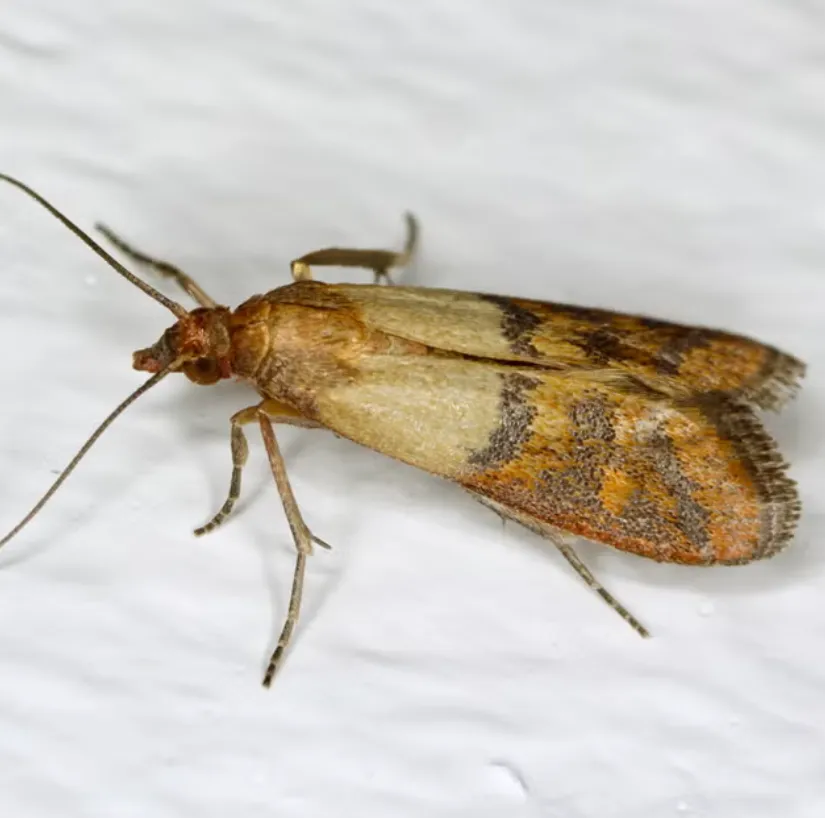
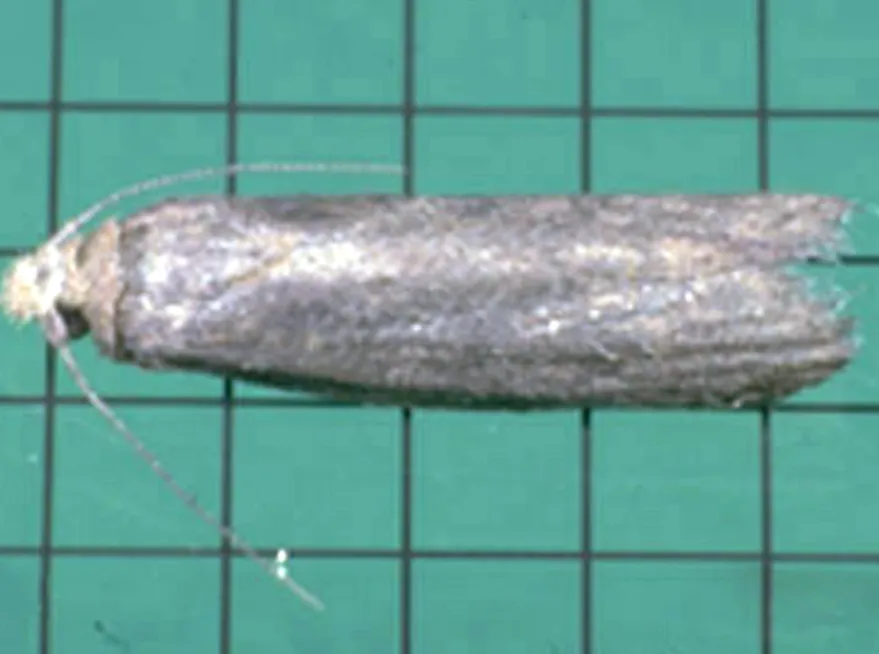
The adult grain moth is small, usually buff, yellowish-brown, or grayish. Adults are weak feeders or non-feeders; their main function is to mate and lay eggs. University of Florida notes that adults do not feed and that the full life cycle may take five to seven weeks under suitable conditions.
Their Main Diet, Food Sources, and Collection Process Explained
Main Diet of Grain Moth
The main diet of the grain moth larva is the inside of cereal grain kernels. It feeds on the nutrient-rich internal parts of the grain, including the endosperm and germ. This feeding reduces grain weight, quality, seed viability, and market value.
Common food sources include:
- Rice
- Wheat
- Maize or corn
- Barley
- Oats
- Sorghum
- Millet
- Other stored cereal grains
How Grain Moths Find Food
Adult females do not collect food for their young. Instead, they select locations where grain is already available. They lay eggs directly on or near grain kernels. Once the eggs hatch, the larvae move toward the kernels and bore into them.
Feeding Inside the Kernel
The larva’s feeding process is internal. It does not simply nibble on the surface. It enters the kernel and consumes the inside while remaining protected. This is why the grain moth is considered a serious primary pest of stored grain: it can attack whole, undamaged kernels, not only broken grain.
Signs of Feeding Damage
Common signs include:
- Small round exit holes
- Hollow or lightweight kernels
- Webbing over grain surfaces
- Powdery grain dust
- Small moths flying near stored cereals
- Reduced germination in the seed grain
How Long Does A Grain Moth Live
The lifespan of a grain moth depends on which stage you are measuring. The adult moth may live only a short time, but the complete grain moth life cycle from egg to adult may take several weeks.
- Complete life cycle: In favorable storage conditions, the cycle is often completed in about 5–7 weeks. University of Florida and Penn State both describe a roughly five-week or five-to-seven-week cycle under suitable conditions.
- Temperature effect: Development becomes faster in warm conditions. University of Kentucky information reports about 30 days at 86°F and about 40 days at 77°F.
- Cold conditions slow development: If temperatures fall below suitable levels, eggs, larvae, and pupae develop more slowly. Some larvae may remain dormant during colder periods.
- Adult lifespan: Adult moths are usually short-lived. Many adults live around 10–15 days, though the exact lifespan depends on temperature, humidity, and energy reserves.
- Food quality matters: Larvae grow better in suitable whole grains. Poor-quality, dry, damaged, or unsuitable food can delay development or reduce survival.
- Humidity matters: Grain moths develop better when temperature and humidity are favorable. Very dry storage can reduce survival, whereas warm, humid storage can support faster population growth.
- Number of generations: In ordinary seasonal conditions, the moth may produce several generations per year. University of Kentucky notes about four to five generations per year, but in heated warehouses, there may be many more.
- Hidden life stage: Most of the insect’s life is spent as an egg, larva, or pupa near or inside grain, not as a visible flying moth.
Grain Moth Lifespan in the Wild vs. in Captivity
Lifespan in the Wild
In the wild or field environment, grain moths face more natural challenges. Temperature changes, rainfall, predators, parasitoids, birds, spiders, fungi, and lack of stable food sources can reduce survival. Field infestations may occur on grain heads before harvest, especially in warm climates where the insect can reproduce before grain enters storage.
Wild conditions are less predictable. Some eggs may dry out, larvae may fail to enter suitable kernels, and adults may die before finding ideal egg-laying sites.
Lifespan in Captivity or Storage
In storage, the moth may survive better when conditions are warm and humid, and when grain is available. Stored grain provides shelter, food, and protection from the weather. This makes storage facilities, grain bins, warehouses, mills, and household grain containers ideal places for repeated generations.
In heated warehouses, development may continue for much of the year. That is why the grain moth life cycle is especially important in grain management and pest prevention.
Key Difference
The wild environment is more variable, while storage conditions can create a stable habitat. When food, warmth, and humidity are present, stored grain can support faster reproduction and longer infestation periods.
Importance of Grain Moth in this Ecosystem
Role in Food Webs
Although the grain moth is considered a pest in agriculture, it still has an ecological role. In natural and semi-natural environments, moths serve as food for birds, bats, spiders, parasitic wasps, predatory beetles, and other insect-eating animals.
Role in Decomposition
Grain moth larvae help break down seed material. In unmanaged ecosystems, insects that feed on seeds can contribute to nutrient cycling by turning plant material into insect biomass and waste that later returns nutrients to the soil.
Role in Natural Selection
Seed-feeding insects, such as the grain moth, can influence plant survival and seed quality. Plants with stronger seed coats, chemical defenses, or better timing may have improved survival against insect pressure.
Agricultural Importance
From a human perspective, the grain moth is important because it teaches farmers and storage managers the value of clean storage, dry grain, temperature control, and integrated pest management. Its impact on stored grain makes it an important insect in food security research.
Balance in Ecosystems
The goal is not always to eliminate every moth from nature. The real issue is preventing uncontrolled infestations in food storage systems while maintaining a healthy ecological balance outside human grain supplies.
What to Do to Protect Them in Nature and Save the System for the Future
Protect Natural Habitats
- Maintain field borders, hedgerows, grass strips, and natural vegetation.
- These areas support birds, bats, spiders, and beneficial insects that help naturally balance pest populations.
Reduce Unnecessary Chemical Use
- Avoid overusing broad-spectrum insecticides.
- Excessive chemical use can kill natural enemies such as parasitoid wasps and predators that help control grain moth populations.
Improve Grain Storage Without Harming Nature
- Store grain in clean, dry, sealed containers.
- Use sanitation, aeration, temperature control, and regular inspection before chemical treatment.
Support Integrated Pest Management
- Use IPM methods such as monitoring, cleaning, moisture control, biological control, and targeted treatment only when needed.
- This protects food while reducing environmental damage.
Educate Farmers and Homeowners
- Teach people how to identify grain moth eggs, larvae, adult moths, and damage signs.
- Early detection prevents large infestations and reduces the need for harsh control methods.
Fun & Interesting Facts About Grain Moth
- The grain moth larva can live hidden inside a single grain kernel for most of its immature life.
- Adult grain moths are not the main feeding stage. The larvae cause almost all the damage.
- The moth is called the Angoumois grain moth because early scientific attention linked it to grain damage in the historical French region of Angoumois.
- A grain may look normal from the outside while a larva is feeding inside it.
- Adult moths are small and delicate, but their larvae can cause serious losses in stored grain.
- The insect can attack both stored grain and sometimes grain in the field.
- Warm, humid storage can accelerate the grain moth life cycle.
- Small round holes in kernels are often signs that adult moths have already emerged.
- The grain moth is a primary stored-grain pest because it can attack whole kernels.
- Understanding the life cycle is the best way to stop infestations before they spread.
Frequently Asked Questions (FAQs)
Q: What is a grain moth?
A: A grain moth usually refers to the Angoumois grain moth, or Sitotroga cerealella, a small moth whose larvae feed inside cereal grain kernels.
Q: What is the grain moth life cycle?
A: The grain moth life cycle has four stages: egg, larva, pupa, and adult moth.
Q: How long does it take for grain moths to develop?
A: In favorable warm conditions, development may take about 5–7 weeks, but it can be faster or slower depending on temperature, humidity, and grain quality.
Q: Are grain moths harmful to humans?
A: Grain moths are not known for biting humans. Their main harm is economic and food-related, as larvae damage stored grain and reduce its quality.
Q: What foods attract grain moths?
A: They are mainly attracted to whole cereal grains such as rice, wheat, maize, barley, oats, sorghum, and millet.
Q: Which stage of the grain moth causes damage?
A: The larval stage causes the most damage because larvae bore into kernels and feed internally.
Q: How can I prevent grain moth infestation?
A: Keep grain dry, clean storage areas, seal containers, inspect grain regularly, remove infested material, and avoid storing old grain with new grain.
Conclusion
The grain moth life cycle is a perfect example of how a small insect can create a large impact on stored food systems. From a tiny egg to a hidden larva, then a pupa and finally an adult moth, each stage has a clear role in survival and reproduction. The most damaging stage is the larva, because it feeds inside whole grain kernels and often remains unnoticed until adults appear.
Understanding the life cycle helps farmers, grain handlers, food businesses, and homeowners prevent infestations more effectively. Clean storage, dry grain, sealed containers, regular inspection, and early removal of infested material are simple but powerful steps.
Although the grain moth is a serious stored-grain pest, it also has a place in nature as part of food webs and nutrient cycling. The best approach is not blind destruction, but smart management that protects food, reduces waste, and supports a healthier ecological balance.
Also Read: dogs life cycle
About the Author