Amorphophallus titanum, commonly known as the corpse flower or titan arum, is one of the most unusual plants in the world. It is famous for its giant flowering structure, rare blooming habit, and strong smell that resembles rotting flesh. This smell may seem unpleasant to humans, but it plays an important role in attracting pollinators such as carrion beetles and flies.
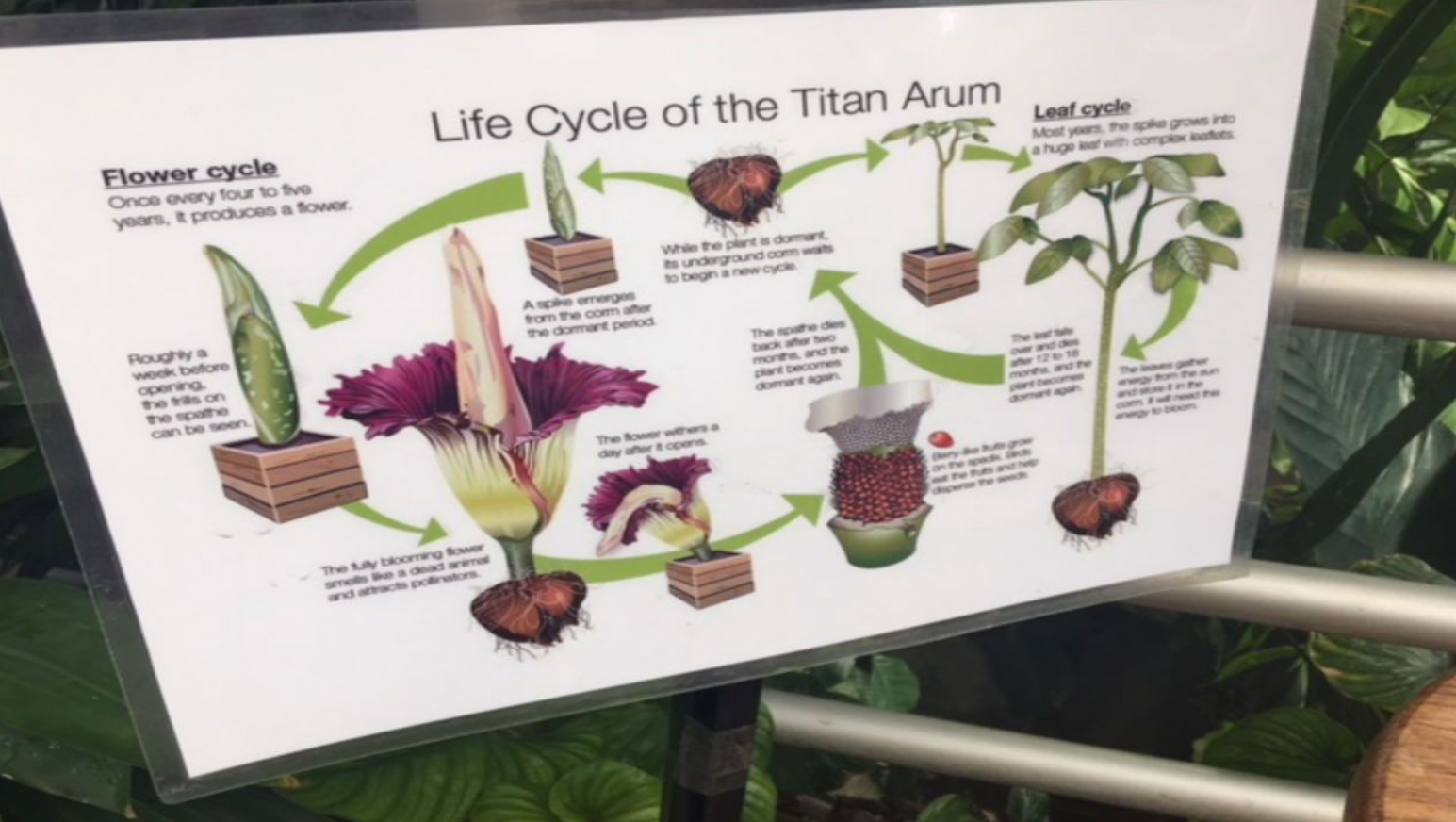
The amorphophallus titanum life cycle is very different from many common garden plants. Instead of producing leaves and flowers every year in a predictable way, it stores energy inside a huge underground corm. Some years, it produces a single tree-like leaf. After that leaf dies, the plant enters dormancy. When the corm has stored enough energy, the plant may produce its famous giant inflorescence.
This plant is native to the tropical rainforests of Sumatra, Indonesia, and it is listed as Endangered in the wild. Habitat loss, logging, and conversion of forest land into oil palm plantations are major threats to its survival. Botanic gardens now play an important role in conserving this rare species.
Q: How long does Amorphophallus titanum take to bloom?
A: It usually takes around 5 to 10 years from seed to first bloom, depending on growing conditions and how much energy the corm stores.
Q: Why is Amorphophallus titanum called the corpse flower?
A: It is called the corpse flower because its bloom produces a strong smell similar to rotting meat, which attracts flies and beetles for pollination.
Q: Does Amorphophallus titanum bloom every year?
A: No. It does not have a regular annual blooming cycle. It may bloom only after several leaves and dormancy cycles, once the corm has stored enough energy.
Quick Life Cycle Table
| Life Cycle Stage | What Happens | Approximate Time | Key Feature |
| Seed Stage | Seed germinates in warm, moist soil | Weeks to months | New plant begins |
| Young Corm Stage | Small underground corm forms | First few years | Energy storage starts |
| Leaf Stage | One large tree-like leaf grows | About 8 months | Photosynthesis makes food |
| Dormancy Stage | The leaf dies, and the plant rests underground | 3 to 6 months | Corm stores energy |
| Bloom Stage | Giant inflorescence appears | 24 to 48 hours at peak smell | Pollinators are attracted |
| Pollination Stage | Female flowers receive pollen first, then male flowers release pollen | 1 to 2 days | Helps avoid self-pollination |
| Fruit Stage | Pollinated flowers develop red-orange fruits | Several months | Seeds mature |
| Seed Dispersal Stage | Birds and animals spread seeds | After the fruit ripens | New plants may grow |
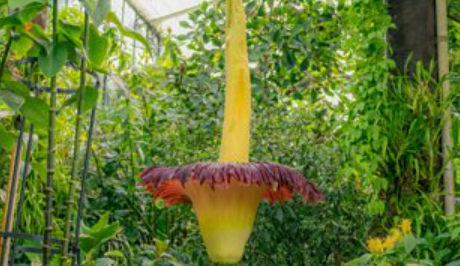
The History of Their Scientific Naming
The scientific name Amorphophallus titanum has a very interesting history. The plant was first described to Western science in 1878 by the Italian botanist Odoardo Beccari, who encountered it during his exploration of Sumatra.
The name comes from Greek-based botanical words. Amorphophallus roughly means “misshapen phallus,” referring to the plant’s unusual central spike, called the spadix. The species name titanum means “giant,” which clearly matches the plant’s huge size.
Important naming points:
- Amorphophallus is the genus name.
- Titanium is the species name.
- The plant belongs to the Araceae family, also called the aroid family.
- Its common names include titan arum, corpse flower, and in Indonesia, bunga bangkai.
- The first cultivated bloom outside Sumatra happened at Royal Botanic Gardens, Kew, in 1889.
Although people often call it the “largest flower,” this is not botanically exact. It is actually the world’s largest unbranched inflorescence, meaning it is a large structure made of many tiny flowers.
Their Evolution And Their Origin
Amorphophallus titanum originated in the tropical rainforests of Sumatra, Indonesia. Its natural habitat is warm, humid, shaded, and rich in organic matter. These conditions helped shape the plant’s unusual growth pattern over time.
The plant’s evolution is closely linked with its pollination strategy. Instead of producing a sweet smell like many flowers, the amorphophallus titanum corpse flower produces a smell similar to decaying flesh. This is not a mistake. It is a survival strategy.
In dense rainforest, pollinators may be hard to attract. By copying the smell and color of dead animals, the plant attracts carrion flies and beetles. The deep burgundy inside of the spathe looks like raw flesh, while the heated spadix helps spread the smell through the forest air. Kew explains that the spadix produces heat through thermogenesis, helping the odor travel and attract pollinators from far away.
Another evolutionary feature is its giant corm. The rainforest floor does not always provide strong sunlight because tall trees block much of the light. So, the plant grows one huge leaf to capture as much light as possible. The food made by that leaf is stored underground.
Over many cycles, this energy storage allows the plant to produce its enormous bloom. This makes the amorphophallus titanum life cycle slow, rare, and energy-demanding.
Its origin is also important for conservation. Because it is endemic to Sumatra, it naturally grows only in a limited region. If that habitat disappears, the wild population has nowhere else to go.
Their main food and its collection process
Amorphophallus titanum does not eat animals or insects. Even though it smells like a dead animal, it is not carnivorous. Its main food comes from photosynthesis, the natural process where plants use sunlight, carbon dioxide, and water to make sugar.
The plant’s food collection process works in a simple but powerful way:
- Sunlight collection:
- During the leaf stage, the plant produces a single, large, tree-like leaf. This leaf spreads wide to capture sunlight in the shaded rainforest.
- Photosynthesis:
- The leaf uses sunlight to produce sugars. These sugars are the plant’s real food.
- Water absorption:
- Roots take water from the soil. Moist rainforest soil helps the plant stay hydrated.
- Mineral absorption:
- The roots also collect minerals such as potassium, nitrogen, and phosphorus from decomposed organic matter.
- Energy storage:
- The food made by the leaf is stored inside the underground corm. This corm is like a living storage tank.
- Corm growth:
- Each healthy leaf cycle can make the corm bigger and stronger. When the corm becomes large enough, it may support a bloom.
- Bloom energy use:
- Producing the giant inflorescence requires a lot of energy. That is why the plant may need several years of leaf growth before blooming.
This food collection system explains why the plant cannot bloom every year. A bloom is expensive for the plant. If the corm does not have enough stored food, the plant will produce another leaf instead.
Important Things That You Need To Know
The most important thing to understand about Amorphophallus titanum is that it is not a normal flower in the everyday sense. The famous “flower” is actually a large inflorescence composed of many small flowers hidden near the base of the central spike.
The amorphophallus titanum corpse flower gets attention because of its smell, but the smell has a purpose. It attracts insects that normally visit dead animals. These insects help move pollen from one plant to another.
One of the key amorphophallus titanum characteristics is its single-leaf growth habit. In non-flowering years, the plant produces a single large leaf that resembles a small tree. This leaf makes food and sends energy into the underground corm.
The amorphophallus titanum life cycle includes long waiting periods. It can take years for the first bloom to appear. After blooming, the plant may resume leaf production and enter dormancy before blooming again.
The amorphophallus titanum fruit is also important. If pollination is successful, the plant produces bright red to orange fruits. These fruits contain seeds that can grow into new plants. In nature, birds such as hornbills may help spread the seeds.
Finally, this plant is endangered in the wild. Conservation is not only about protecting a strange-looking plant. It is also about protecting rainforest ecosystems, pollinators, seed dispersers, and rare genetic diversity.
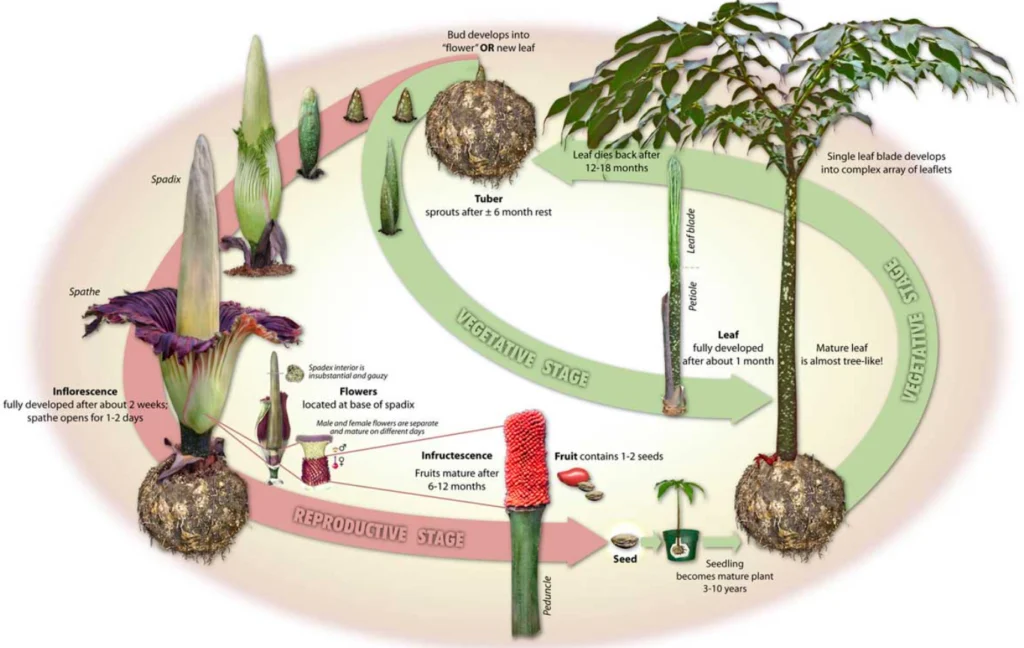
Their life cycle and ability to survive in nature
Seed Germination
The life cycle begins with a seed. In warm, moist rainforest soil, the seed germinates and produces a young plant. At this early stage, the plant is small and vulnerable.
Corm Formation
As the young plant grows, it develops an underground corm. This corm stores energy and helps the plant survive dry periods, damage, and dormancy.
Leaf Growth Stage
In most years, Amorphophallus titanum produces one giant leaf instead of a bloom. This leaf can look like a small tree. It captures sunlight and produces food through photosynthesis.
Dormancy Stage
After months of growth, the leaf dies back. The plant then rests underground. During this stage, the corm stays alive and waits for the next growth cycle.
Flowering Stage
When the corm has enough stored energy, it produces a huge inflorescence. This bloom may last only a few days, and the strongest smell often occurs during the first night.
Survival Ability
The plant survives by storing food underground, using a large leaf to gather energy, and blooming only when it has enough reserves. This slow strategy helps it survive in shaded rainforest conditions.
Their Reproductive Process and raising their children
Amorphophallus titanum reproduces through flowers, pollen, fruits, and seeds. It does not raise its young like animals, but it supports the next generation by producing seeds inside colorful fruits.
Key points of its reproductive process:
- Male and female flowers:
- Both male and female flowers are found in the same inflorescence. They are small and located near the base of the spadix.
- Female flowers open first:
- The female flowers become receptive before the male flowers release pollen. This timing helps reduce self-pollination.
- Smell attracts pollinators:
- The plant produces a corpse-like smell to attract flies and beetles.
- Heat helps the odor spread:
- The spadix warms up during bloom. This helps spread the smell across a wider area.
- Insects enter the spathe:
- Pollinators move inside the structure and may bring pollen from another plant.
- Male flowers release pollen later:
- After the female phase, the male flowers release pollen. Insects leaving the bloom may carry this pollen to another titan arum.
- Fruit development:
- If pollination is successful, female flowers develop into bright amorphophallus titanum fruit.
- Seed dispersal:
- The red-orange fruits attract animals, especially birds. When birds eat the fruit, seeds may be spread to new places.
The plant does not provide parental care after seed dispersal. Instead, it depends on rainforest conditions to help seeds germinate and survive.
The importance of them in this Ecosystem
Supports Pollinator Diversity
The corpse flower supports insects often overlooked, such as carrion flies and beetles. These insects play important roles in decomposition and nutrient cycling.
Helps Seed Dispersers
The bright amorphophallus titanum fruit can attract birds and other animals. When these animals eat the fruit, they help move seeds through the forest.
Adds Genetic Diversity
Because Amorphophallus titanum is rare and endemic, it adds special genetic value to the rainforest. Losing it would mean losing a unique evolutionary line.
Indicates Rainforest Health
Rare plants like titan arum can show the condition of their habitat. If the forest is damaged, these plants may decline quickly.
Supports Conservation Education
The plant’s strange smell and huge size attract public attention. Botanic gardens use this interest to teach people about endangered plants, rainforest loss, and biodiversity conservation.
Protects Natural Balance
Every plant has a place in its Ecosystem. Amorphophallus titanum connects soil, insects, birds, and forest structure. Protecting it also helps protect the wider rainforest system.
What to do to protect them in nature and save the system for the future
- Protect Sumatran rainforests:
- The most important step is saving the natural habitat of Amorphophallus titanum.
- Reduce deforestation:
- Logging and forest conversion must be controlled to protect wild populations.
- Support sustainable palm oil:
- Oil palm expansion is one of the major threats to rainforest habitats. Choosing certified sustainable products can reduce pressure on forests.
- Stop illegal plant collection:
- Rare plants should not be removed from the wild for private collections.
- Support the botanical garden conservation:
- Botanic gardens help preserve genetic diversity, exchange pollen, grow seedlings, and educate the public.
- Protect pollinators:
- Flies, beetles, and other insects are essential for the reproductive process of this plant.
- Educate local communities:
- Some people may destroy the plant out of fear, because of its smell, or due to a misunderstanding. Awareness can reduce unnecessary damage.
- Encourage rainforest research:
- Scientists need better data about wild populations, seed dispersal, and habitat requirements.
- Support protected areas:
- National parks and conservation zones can provide safer spaces for wild titan arum populations.
- Promote global awareness:
- The more people understand this plant, the more support conservation projects can receive.
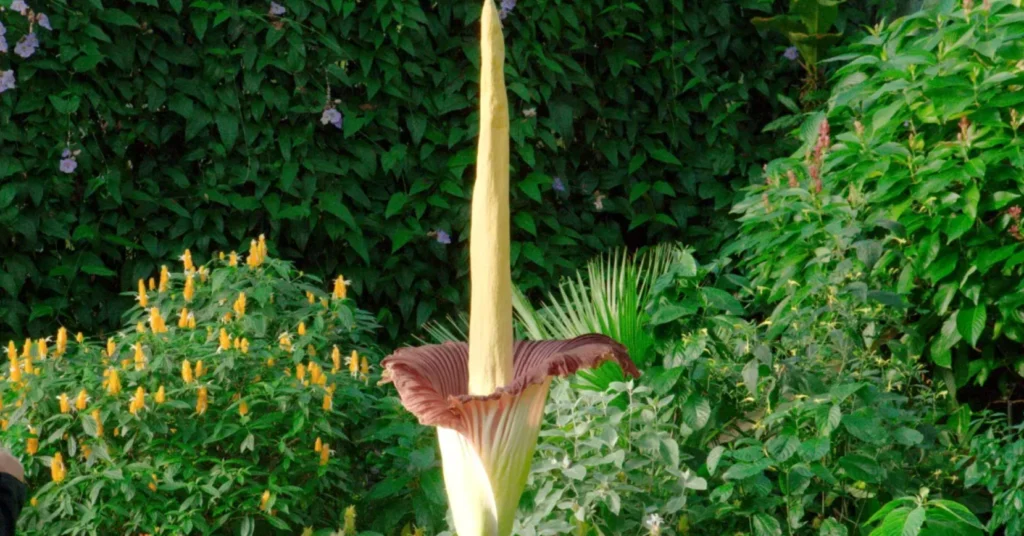
Frequently Asked Questions (FAQs)
Q1: What is Amorphophallus titanum?
A: Amorphophallus titanum is a rare tropical plant from Sumatra, Indonesia. It is famous for its giant inflorescence and strong corpse-like smell.
Q2: Why is Amorphophallus titanum called the corpse flower?
A: It is called the corpse flower because its bloom smells like rotting flesh. This smell attracts carrion insects for pollination.
Q3: Is Amorphophallus titanum the biggest flower in the world?
A: Not exactly. It has the world’s largest unbranched inflorescence, not the largest single flower.
Q4: How long does the Amorphophallus titanum bloom last?
A: The bloom usually lasts only 24 to 48 hours at peak condition, though the structure may stand for a few days.
Q5: How often does Amorphophallus titanum bloom?
A: It blooms unpredictably. Some plants may bloom after several years, while others may take more than a decade.
Q6: What are the main Amorphophallus titanum characteristics?
A: Key amorphophallus titanum characteristics include a giant corm, one tree-like leaf, a huge spadix, a burgundy spathe, a strong odor, and rare blooming.
Q7: What does Amorphophallus titanum fruit look like?
A: The amorphophallus titanum fruit is usually bright red to orange and grows in clusters after successful pollination.
Q8: Is Amorphophallus titanum endangered?
A: Yes. It is listed as Endangered in the wild due to habitat loss, logging, and conversion of rainforests.
Conclusion
The amorphophallus titanum life cycle is among the most fascinating in nature. From a small seed, it slowly develops a powerful underground corm, grows a huge tree-like leaf, enters dormancy, and may finally produce its famous giant corpse flower bloom. Its smell, heat, color, and timing all work together to attract pollinators in the rainforest.
This plant is not only strange and beautiful, but also ecologically important. It supports pollinators, helps maintain rainforest diversity, and teaches people about the value of rare plants. However, Amorphophallus titanum is now endangered in the wild because of habitat loss and human pressure.
Protecting this species means protecting the Sumatran rainforest itself. With strong conservation, responsible research, and public awareness, the future of the titan arum can still be protected for future generations.
Also Read: panda life cycle
About the Author