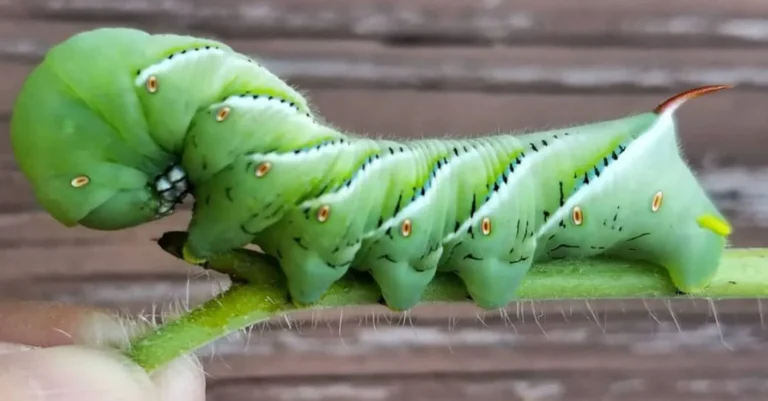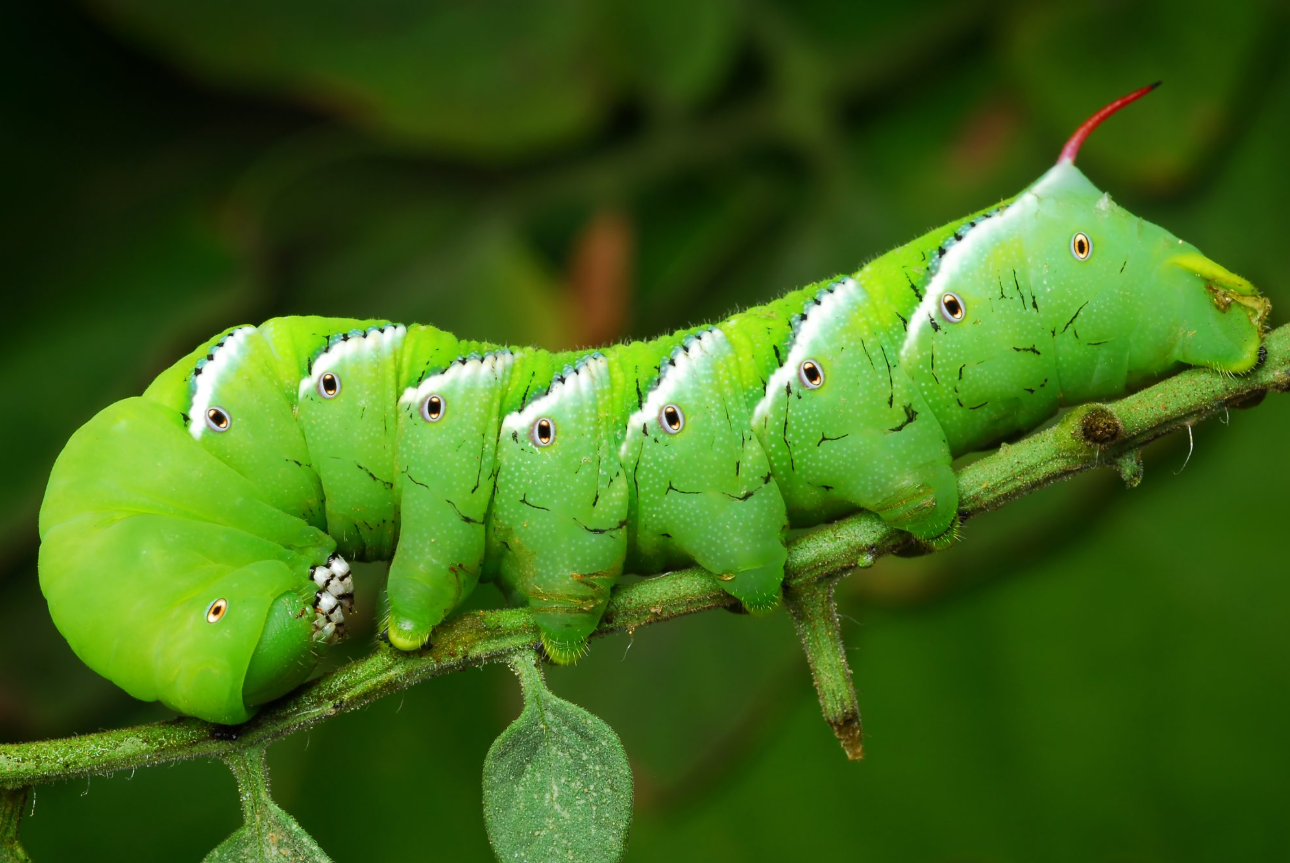
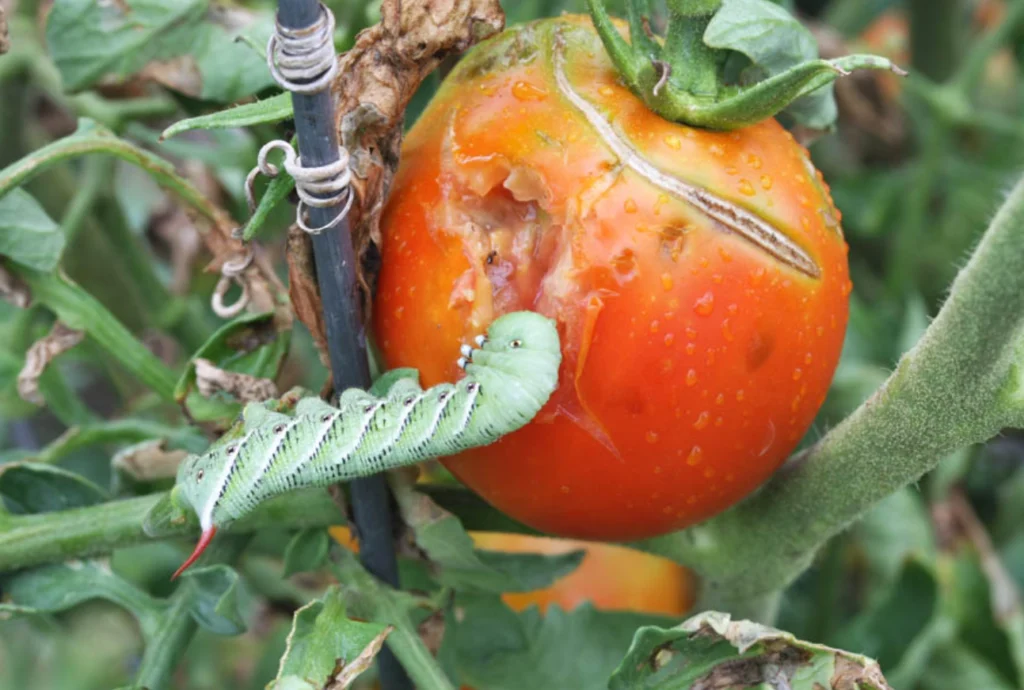
The tomato caterpillar life cycle is one of the most interesting natural processes found in vegetable gardens. Most people call it a tomato caterpillar, but in many gardens it is actually the larval stage of the tomato hornworm, scientifically known as Manduca quinquemaculata. This large green tomato caterpillar is famous for its bright green body, white V-shaped marks, and dark horn-like tail.
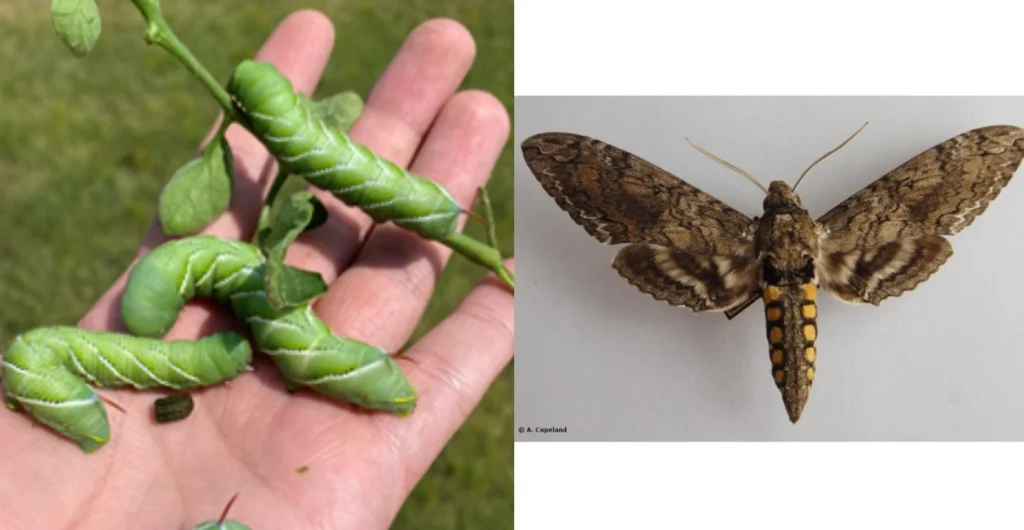
Gardeners often notice this caterpillar only after tomato leaves suddenly disappear. That is because the horned tomato caterpillar blends perfectly with tomato plants and feeds quietly on leaves, stems, flowers, and sometimes green fruits. Although it can damage crops, it is also part of a bigger natural system. Its adult form, the five-spotted hawkmoth, visits flowers at night and feeds on nectar.
Q: What is a tomato caterpillar?
A: A tomato caterpillar is usually the larva of the tomato hornworm, a large green caterpillar that feeds on tomato and other nightshade plants.
Q: What does a tomato caterpillar become?
A: It becomes a five-spotted hawkmoth, also called a sphinx moth or hawkmoth.
Q: Is the tomato caterpillar harmful?
A: It can be harmful to tomato plants because it eats leaves and fruits, but it also supports predators, parasitoid wasps, and night pollination.
Quick Life Cycle Table
| Stage | What Happens | Simple Details |
| Egg | A female moth lays eggs | Eggs are laid singly on host plant leaves, often at night. |
| Larva | Caterpillar feeds and grows | The green tomato caterpillar eats tomato leaves and grows quickly. |
| Pupa | Caterpillar goes underground | It burrows into soil and forms a dark brown pupa. |
| Adult moth | Moth emerges | The adult tomato caterpillar moth flies at night and feeds on nectar. |
| Cycle repeats | Mating and egg-laying begin again | Depending on the climate, there may be one or more generations per year. |
The History of Their Scientific Naming
The tomato caterpillar is most commonly linked with the species Manduca quinquemaculata. This name applies to the insect’s adult form and its caterpillar stage. The word Manduca is the genus name, while quinquemaculata refers to the five spots found on each side of the adult moth’s abdomen.
This is why the adult is commonly called the five-spotted hawkmoth. The caterpillar stage is called the tomato hornworm because it often feeds on tomato plants and has a horn-like projection at the rear of its body.
Its close relative, Manduca sexta, is known as the tobacco hornworm. These two species look very similar and are often confused. The tomato hornworm usually has eight white V-shaped markings and a dark bluish-black horn. The tobacco hornworm usually has seven diagonal stripes and a reddish horn.
So, when people search for tomato caterpillar life cycle, horn tomato caterpillar, or horned tomato caterpillar, they are usually talking about the larval stage of Manduca quinquemaculata.
Their Evolution And Their Origin
The tomato caterpillar belongs to the family Sphingidae, a group of strong-flying moths often called sphinx, hawk, or hummingbird moths. These moths are known for their powerful wings, fast flight, and ability to hover near flowers while feeding on nectar.
The origin of the tomato hornworm is closely connected with nightshade plants, also known as the Solanaceae family. These plants include tomato, potato, pepper, eggplant, tobacco, and many wild weeds such as jimsonweed. The caterpillar evolved to feed on these plants, even though many nightshade plants contain chemical defenses that can stop other insects.
The tomato hornworm’s green color is also an important evolutionary feature. It helps the caterpillar hide among tomato leaves. This camouflage protects it from birds, wasps, and other predators.
Another survival feature is its rapid growth. The caterpillar eats heavily for a short period, stores energy, and then moves into the soil to pupate. This underground pupal stage protects it from many surface-level threats and helps it survive seasonal changes.
The adult moth also plays an important ecological role. Its long mouthparts allow it to drink nectar from flowers, especially in the evening and at night. This makes the insect more than just a garden pest. It is also part of the natural connection between plants, insects, predators, and pollination systems.
Their main food and its collection process
The main food of the tomato caterpillar is plant material from the Solanaceae family. In home gardens, it is most often seen on tomato plants, but it may also feed on potato, pepper, eggplant, tobacco, and related weeds.
The feeding process is simple but very powerful. A female tomato caterpillar moth lays eggs on the leaves of a suitable host plant. After hatching, the tiny larva begins eating the leaf on which it hatched. As it grows, it becomes more aggressive and may move across the plant when food becomes scarce.
Main food sources include:
- Tomato leaves: The most common food in gardens.
- Young stems: Caterpillars may chew soft plant parts.
- Tomato flowers: They can damage blossoms before fruit develops.
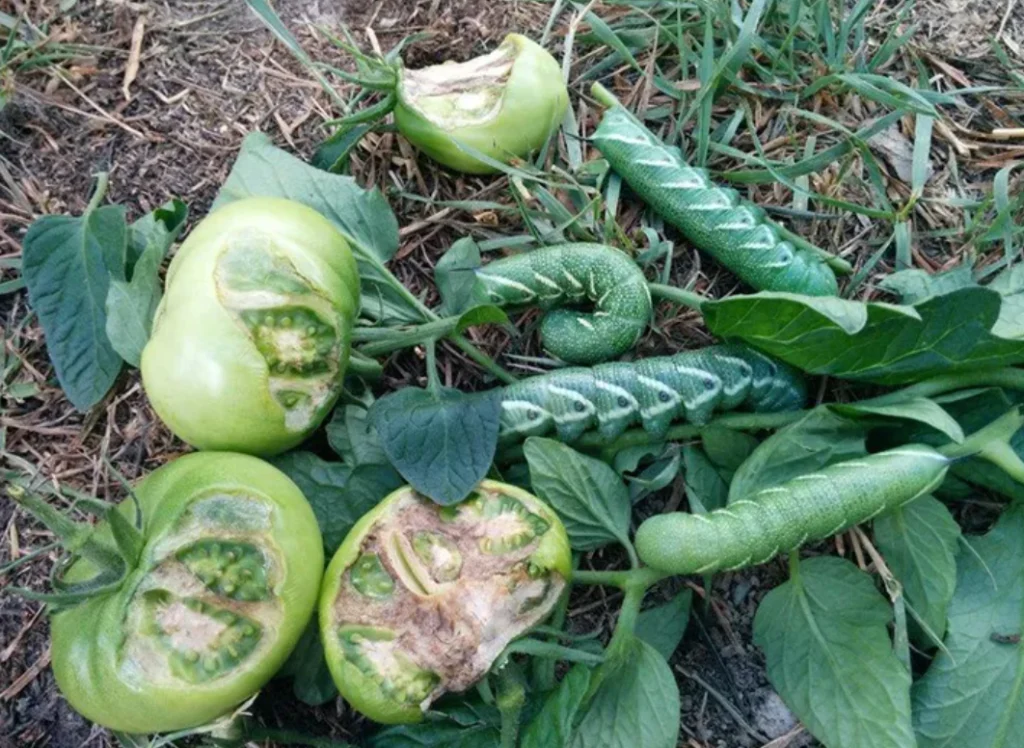
- Green tomatoes: Mature larvae may feed on young fruit.
- Other nightshade crops, such as peppers, potatoes, eggplants, and tobacco, can also be attacked.
- Wild host plants: Jimsonweed and other nightshade weeds can support their life cycle.
The green tomato caterpillar does not collect food like ants or bees. Instead, it stays on or near the host plant and feeds directly from it. Large larvae can remove many leaves in a short time. Extension sources note that a few large hornworms can seriously defoliate a tomato plant, especially if left unnoticed.
Important Things That You Need To Know
Many people use different names for the same insect. The terms tomato caterpillar, green tomato caterpillar, horned tomato caterpillar, horn tomato caterpillar, and tomato caterpillar green usually refer to the tomato hornworm stage. The adult form is commonly known as the tomato caterpillar moth, five-spotted hawkmoth, or sphinx moth.
The horn on the back of the caterpillar may look dangerous, but it is not a stinger. It is a body projection and is mainly useful for identification. The caterpillar itself does not harm people, but it can severely damage tomato plants.
The tomato caterpillar moth is active mostly at night. It lays eggs on host plants, and the newly hatched caterpillars begin feeding immediately. Because the eggs and young larvae are small, gardeners often miss them until the caterpillar becomes large.
One important distinction is between the tomato hornworm and the tobacco hornworm. A tomato hornworm usually has white V-shaped markings and a dark horn. A tobacco hornworm usually has diagonal white lines and a reddish horn. Both can feed on tomato plants, so gardeners often call both of them tomato caterpillars.
Another key point is natural control. If you see white rice-like cocoons on a caterpillar, they are usually from braconid wasps. In that case, it is better to leave the caterpillar, as wasps will help control more hornworms naturally.
Their life cycle and ability to survive in nature
Egg Stage
The life cycle begins when the adult female five-spotted hawkmoth lays small eggs on host plant leaves. These eggs are usually placed singly rather than in large groups. They are small, round, and greenish to yellow-green.
Larval Stage
After hatching, the larva becomes the familiar tomato caterpillar. This is the most visible and damaging stage. The caterpillar eats leaves, grows through several molts, and becomes larger with each stage. Its green body helps it hide among tomato leaves.
Pupal Stage
When fully grown, the caterpillar leaves the plant and burrows into the soil. There, it becomes a dark brown pupa. This stage protects it from the weather and many predators.
Adult Moth Stage
The adult moth emerges from the soil and begins the cycle again. It flies mostly at night, feeds on flower nectar, mates, and lays eggs on suitable host plants. In some regions, hornworms may produce more than one generation in a season, depending on temperature and climate.
Their survival depends on camouflage, fast feeding, underground pupation, and the ability of adult moths to fly long distances.
Their Reproductive Process and raising their children
The reproductive process of the tomato caterpillar moth begins after adult moths emerge from the soil. Male and female moths mate, usually during warm evening or night hours. After mating, the female searches for suitable host plants where her future larvae can feed.
Important points about reproduction:
- Mating happens in the adult moth stage.
- Females lay eggs on host plant leaves, often on tomato or other nightshade plants.
- Eggs are laid singly, not in large clusters.
- The mother chooses a food plant, so the young caterpillar can begin feeding after hatching.
- There is no parental care after egg-laying.
- The caterpillar raises itself by feeding, hiding, molting, and growing.
- The larva later pupates underground, where it changes into an adult moth.
Unlike birds or mammals, tomato hornworms do not raise their young. The female moth’s main role is to choose a good host plant and lay eggs in a place where the larvae have food.
This strategy works well because the newly hatched caterpillar does not need to be taught. It already knows how to feed, hide, and grow. Its survival depends on plant quality, weather, predators, parasitoids, and whether gardeners remove it from plants.
The importance of them in this Ecosystem
Food for Other Animals
The tomato caterpillar is an important food source for many animals. Birds, predatory insects, paper wasps, and other natural enemies may feed on eggs or larvae. This makes the caterpillar part of the garden food chain.
Support for Beneficial Wasps
One of the most important natural enemies of hornworms is the braconid wasp, especially Cotesia congregata. These wasps lay eggs in or on the caterpillar. Their larvae develop by feeding inside the hornworm and later form white cocoons on its body.
Adult Moths and Pollination
The adult tomato caterpillar moth feeds on nectar at night. While doing this, it may help move pollen between flowers. This makes the adult moth useful in nighttime ecosystems of flowers.
Natural Balance in Gardens
Although the caterpillar can damage tomato crops, it also helps maintain ecological balance. It connects plants, predators, parasitoids, soil life, and pollination. A healthy garden is not one without insects. It is one where harmful populations are controlled naturally before they become too large.
What to do to protect them in nature and save the system for the future
Protecting the Ecosystem does not mean allowing tomato plants to be destroyed. It means managing tomato caterpillars in a balanced way.
- Check tomato plants regularly to control caterpillars early without heavy pesticide use.
- Hand-pick large caterpillars when they are damaging crops. This is one of the easiest and safest control methods in home gardens.
- Leave parasitized hornworms if they have white cocoons on their bodies. These cocoons belong to beneficial wasps that help control future hornworms.
- Avoid unnecessary broad-spectrum pesticides because they can kill beneficial insects, bees, wasps, and natural predators.
- Grow flowering plants nearby to support beneficial insects and natural enemies.
- Use crop rotation with non-host crops to reduce pupae and future infestations.
- Remove nightshade weeds carefully if they are supporting too many hornworms near vegetable beds.
- Use BT only when needed, mainly against young caterpillars, as it works best when they are small and actively feeding.
- Protect soil health because the pupal stage happens underground, and healthy soil supports a wider natural balance.
The goal is not to remove every insect. The goal is to protect crops while keeping the garden ecosystem alive.
Frequently Asked Questions (FAQs)
Q1: What is the tomato caterpillar’s life cycle?
A: The tomato caterpillar life cycle has four stages: egg, larva, pupa, and adult moth. The larva is the green caterpillar seen on tomato plants.
Q2: What does a green tomato caterpillar turn into?
A: A green tomato caterpillar turns into a five-spotted hawkmoth, also called a sphinx moth.
Q3: Is a horned tomato caterpillar poisonous?
A: No, the horned tomato caterpillar is not poisonous to humans. The horn on its back is not a stinger.
Q4: Why is there a horn on a tomato caterpillar?
A: The horn is a natural body feature. It helps identify the caterpillar, but it does not sting or inject poison.
Q5: What does a tomato caterpillar eat?
A: It mainly eats tomato leaves, but it can also feed on stems, flowers, green fruits, potatoes, peppers, eggplants, tobacco, and other nightshade plants.
Q6: How can I identify a tomato hornworm?
A: A tomato hornworm usually has a green body, white V-shaped marks, and a dark bluish-black horn at the rear.
Q7: What is the difference between the tomato hornworm and the tobacco hornworm?
A: Tomato hornworms usually have eight V-shaped marks and a dark horn. Tobacco hornworms usually have seven diagonal stripes and a reddish horn.
Q8: Should I kill a tomato caterpillar with white cocoons on it?
A: No. White cocoons usually mean beneficial wasps have parasitized the caterpillar. Leaving it can help naturally control more hornworms.
Conclusion
The tomato caterpillar life cycle shows how one insect can be both a garden pest and an important part of nature. In its larval stage, the green tomato caterpillar can eat tomato leaves quickly and damage fruits. But in its adult stage, the tomato caterpillar moth becomes a night-flying nectar feeder that supports natural pollination.
Understanding its stages helps gardeners respond wisely. The best approach is not to panic or to use heavy chemicals. Instead, regular monitoring, hand-picking, crop rotation, support for beneficial insects, and careful use of organic controls can keep tomato plants safe while protecting the garden ecosystem.
The horned tomato caterpillar may look strange, but it has a clear role in nature. When managed properly, it teaches us an important lesson: even common garden pests are connected to a larger living system.
Also Read: tiger life cycle
About the Author