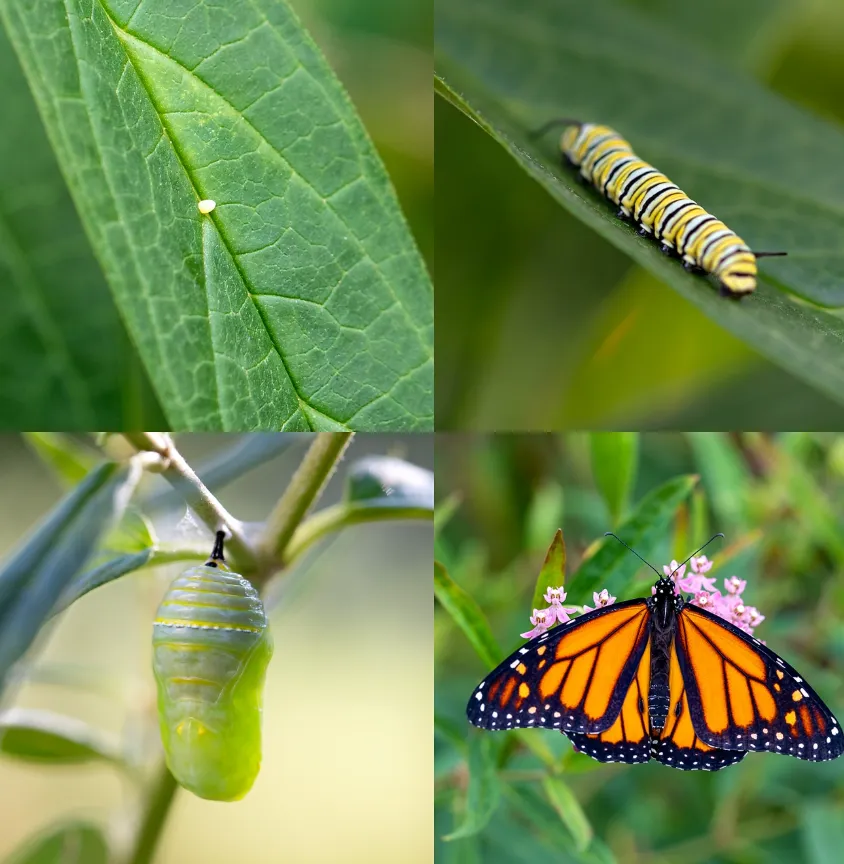
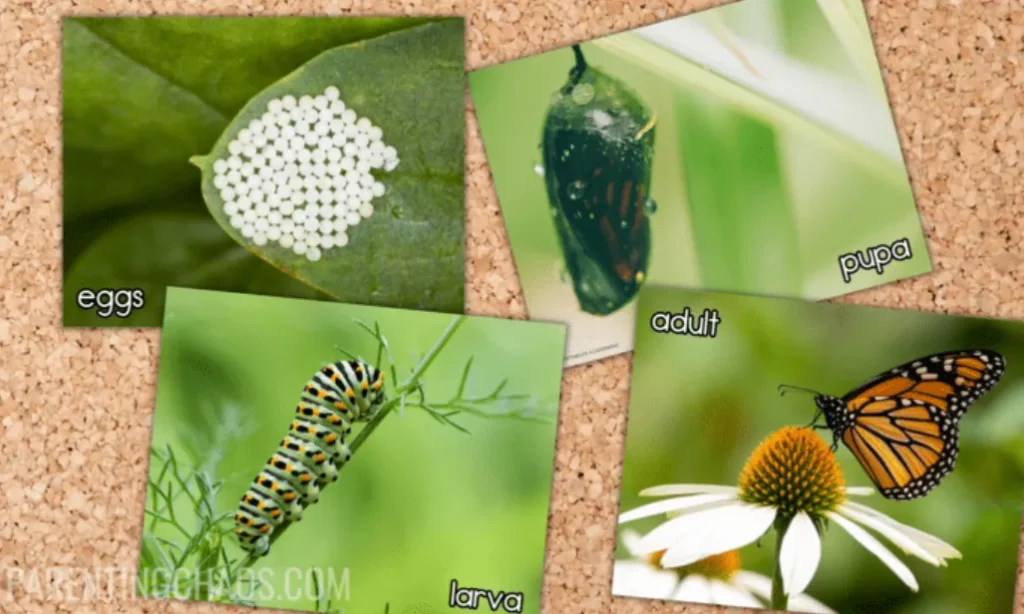
The butterfly life cycle is one of the clearest examples of change in nature. A butterfly does not begin life with wings, color, or the light flight we usually notice in gardens. It starts as a tiny egg, becomes a hungry caterpillar, rests and rebuilds inside a chrysalis, and finally appears as an adult butterfly. This complete metamorphosis includes four main stages: egg, larva, pupa, and adult.
Butterflies belong to the insect order Lepidoptera, a group known for tiny scales on their wings. These scales help create the colors and patterns people admire in species such as the monarch butterfly, swallowtails, painted ladies, and many others. Scientists have described around 17,500 butterfly species worldwide, and butterflies are found in many habitats, from forests and fields to wetlands, mountains, gardens, and even city parks.
Understanding the life cycle of a butterfly is useful for students, gardeners, nature lovers, and anyone who wants to protect pollinators. Each stage has a different job. The egg protects new life, the caterpillar eats and grows, the chrysalis rebuilds the body, and the adult butterfly reproduces and helps pollinate flowers.
Q: How many stages are in the butterfly life cycle?
A: There are four stages: egg, larva or caterpillar, pupa or chrysalis, and adult butterfly.
Q: How long does the butterfly life cycle take?
A: It depends on the species, weather, and food supply. Some butterflies complete the cycle in about a month, while others take much longer, especially if they pause development during cold or dry seasons.
Q: What happens inside a chrysalis?
A: Inside the chrysalis, the caterpillar’s body reorganizes into an adult butterfly with wings, legs, antennae, reproductive organs, and a feeding tube called a proboscis.
Quick Life Cycle Table
| Life Cycle Stage | Main Name | What Happens | Main Purpose | Survival Challenge |
| Stage 1 | Egg | A female butterfly lays eggs on or near a host plant | Protects the developing young | Eggs may be eaten, dried out, or laid on the wrong plant |
| Stage 2 | Larva | The caterpillar hatches and eats leaves | Fast growth and energy storage | Birds, wasps, spiders, weather, and lack of food |
| Stage 3 | Pupa | The caterpillar becomes a chrysalis | The body changes into an adult form | Cannot escape easily from predators |
| Stage 4 | Adult Butterfly | Butterfly emerges, dries wings, feeds, mates, and lays eggs | Reproduction and movement to new habitats | Short lifespan, storms, habitat loss, pesticides |
This table shows why the butterfly life cycle is more than a simple change in shape. Each stage has its own body form, food needs, danger, and role in nature.
The History of Their Scientific Naming
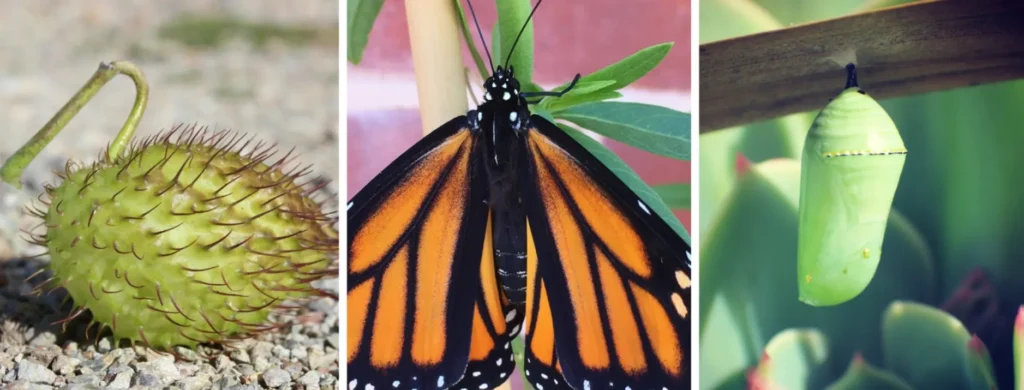
The scientific naming of butterflies is linked to the order Lepidoptera. This name comes from Greek roots meaning “scaly winged”, because butterflies and moths have tiny overlapping scales on their wings. These scales give many butterflies their color, patterns, and sometimes their shine.
Important points about butterfly naming:
- Lepidoptera includes butterflies, moths, and skippers. It is one of the largest insect orders in the world.
- The modern scientific naming system was strongly shaped by Carl Linnaeus, who helped organize living things into genera and species.
- Butterflies are often grouped within Papilionoidea, the superfamily commonly used for true butterflies.
- The word butterfly comes from older English forms, but its exact origin is not fully certain. One common idea links it to pale yellow butterflies seen during the butter-making season.
- Scientific names help avoid confusion because common names can change by country, language, or local tradition.
For example, the monarch butterfly has the scientific name Danaus plexippus. This name is used by scientists around the world, even when people in different places use different local names.
Their Evolution And Their Origin
Butterflies did not appear suddenly in nature. They are part of a long insect history connected to plants, flowers, climate, and survival. Butterflies belong to Lepidoptera, a group that also includes moths. Moths are generally considered older as a group, while butterflies appeared later in evolutionary history.
The oldest known butterfly fossils are usually linked to the Paleocene, around 56 million years ago, although molecular evidence suggests butterfly ancestors may have started earlier, possibly during the Cretaceous Period. This was a time when flowering plants were spreading widely across the Earth. As flowers became more common, many insects evolved new ways to feed, pollinate, hide, and reproduce.
One of the most important evolutionary features of butterflies is the proboscis. This is the long, coiled feeding tube adult butterflies use to drink nectar. Caterpillars, however, have chewing mouthparts and mostly eat leaves. This difference allows the early and adult stages to use different food sources, reducing competition within the same species.
Their wings also show deep evolutionary design. Butterfly wings are covered with tiny scales, and these scales can create colors through pigments or through microscopic structures that reflect light. This is why a blue butterfly may look bright blue even when the color comes partly from light reflection, not only pigment.
The butterfly life cycle itself is also an evolutionary advantage. Since the caterpillar and adult butterfly live differently, they can survive in more flexible ways. The caterpillar focuses on eating and growing. The adult focuses on flying, finding mates, moving between plants, and laying eggs.
Over millions of years, butterflies evolved close relationships with host plants. Many female butterflies lay eggs only on specific plants because their caterpillars can eat only those leaves. The monarch butterfly, for example, depends on milkweed as the food plant for its larvae. This tight link between insect and plant is one reason habitat loss can quickly harm butterfly populations.
Their main food and its collection process
Butterflies eat different foods depending on their life stage. A caterpillar and an adult butterfly do not feed in the same way. This is one of the smartest parts of the butterfly life cycle.
Main foods and collection process:
- Caterpillars mostly eat leaves.
- After hatching, the caterpillar usually begins eating the host plant where the egg was laid. Many caterpillars are picky eaters. A monarch caterpillar needs milkweed, while other species may depend on nettles, passionflower, citrus, grasses, or other plants.
- Caterpillars collect food by chewing.
- They have strong mouthparts made for biting plant tissue. Their job is to eat, grow, shed skin, and store enough energy for the next stage.
- Adult butterflies drink nectar.
- Most adult butterflies visit flowers and drink nectar using their proboscis. This tube stays curled when not in use and unrolls when the butterfly feeds.
- Some butterflies feed on more than nectar.
- Certain species sip moisture from mud, rotting fruit, tree sap, animal droppings, or mineral-rich wet soil. This behavior helps them collect salts and nutrients.
- Butterflies find food through color, smell, and taste.
- Their antennae help detect scent. Their feet can also taste surfaces, which helps females check whether a plant is suitable for egg laying.
- Flowers benefit from butterfly visits.
- While butterflies are drinking nectar, pollen may stick to their bodies and move from one flower to another. They are not the only pollinators, but they still support many wildflower communities.
Food is not just fuel for butterflies. It shapes where they live, when they reproduce, and whether their young survive.
Important Things That You Need To Know
When people search for a butterfly, they often find many related terms that do not always mean the same thing. Some are biological, some are medical, and some are product or plant names. Understanding them helps keep the topic clear.
The monarch butterfly is one of the best-known butterfly species. It is famous for its long migration and its dependence on milkweed. Recent conservation data shows both hope and concern. WWF reported that eastern migratory monarch colonies in Mexico occupied 7.24 acres during the 2025–2026 winter season, up from 4.42 acres the previous winter, but long-term threats remain.
A blue butterfly may refer to many species with blue wing coloring. Some are truly blue because of pigment, while many appear blue because of structural color created by tiny wing scales.
The phrase butterfly rash is different. It is a medical term for a rash shaped somewhat like butterfly wings across the cheeks and nose. Butterflies do not cause it.
The butterfly pea flower is a plant, not an insect. It is known for its blue flowers and is often used in tea and as a natural coloring agent. In gardens, flowering plants like this can support pollinators when grown without harmful chemicals.
The term “bugaboo butterfly” usually refers to a product name, especially the Bugaboo Butterfly stroller, rather than an actual butterfly species. Search engines may connect it to the word’ butterfly,’ but it does not belong to the natural butterfly life cycle.
When learning about the butterfly life cycle, focus mainly on real insects, their host plants, and the four stages of their growth.
Their life cycle and ability to survive in nature
Egg Stage: The Small Beginning
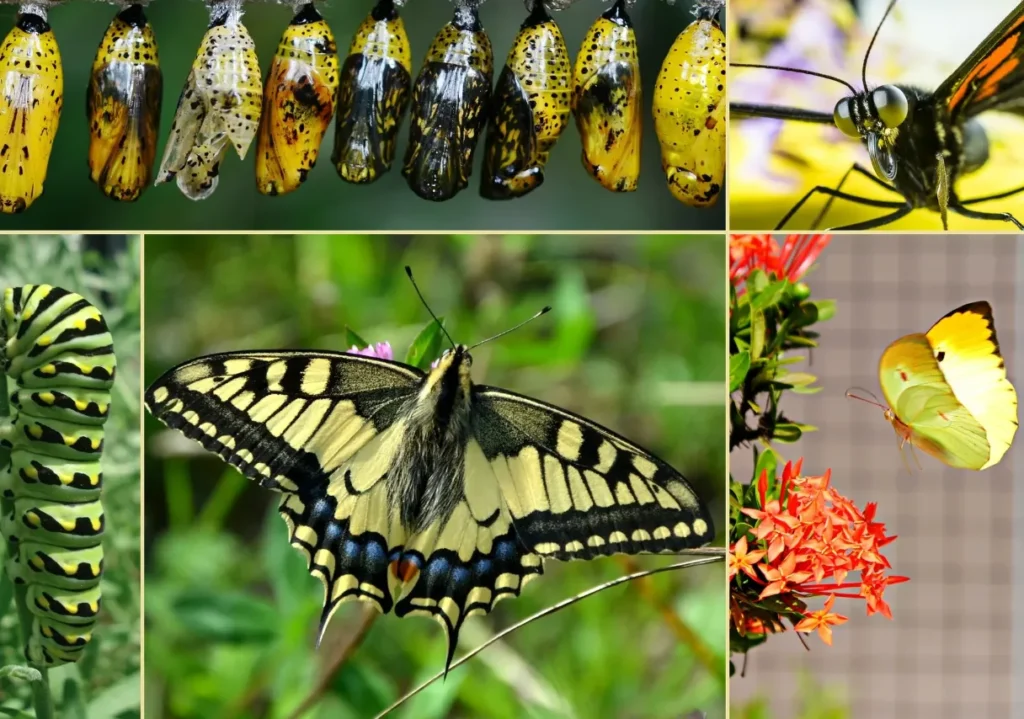
The butterfly starts as a tiny egg. Female butterflies usually lay eggs on or near the correct host plant. This choice matters because the caterpillar must find food quickly after hatching. Eggs may be round, oval, ribbed, smooth, pale, green, yellow, or white, depending on the species.
This stage is fragile. Eggs can dry out, fall off leaves, or be eaten by ants, beetles, spiders, and tiny parasitic wasps.
Larva Stage: The Hungry Caterpillar
The second stage is the larva, better known as the caterpillar. This is the main feeding stage. Caterpillars eat heavily and grow fast. As their bodies get bigger, they shed their outer skin several times. These growth periods are called instars.
Some caterpillars survive by hiding under leaves. Others use warning colors, spines, bad taste, or camouflage.
Pupa Stage: The Chrysalis
When the caterpillar has stored enough energy, it becomes a pupa inside a chrysalis. From the outside, it may look still. Inside, major changes are happening. Tissues are reorganized, and adult body parts form.
This stage is risky because the pupa cannot run away. Its safety depends on camouflage, location, and luck.
Adult Stage: Wings, Mating, and Movement
The adult butterfly emerges with its wings folded. It pumps fluid into the wings, waits for them to dry, and then begins flying. Adults search for nectar, mates, and host plants. Many adult butterflies live only a few weeks, though some species live longer by migrating or overwintering.
Their Reproductive Process and raising their children
Butterflies do not raise their young like birds or mammals. Their care happens mostly before the egg is laid. A female butterfly must choose the right plant, the right leaf, and the right place so her caterpillars have a chance to survive.
Key points about reproduction:
- Mate finding begins with sight and scent.
- Male butterflies often look for females by flying through territories or patrolling areas with flowers and host plants.
- Courtship can include wing signals and chemicals.
- Some butterflies use colors, flight patterns, and pheromones to recognize suitable mates.
- Mating transfers sperm to the female.
- After mating, the female stores sperm and uses it to fertilize eggs as she lays them.
- Egg laying is the main form of parental care.
- The female checks plants carefully. Many butterflies taste leaves with their feet to decide if the plant is suitable for larvae.
- Host plant choice is critical.
- A female monarch must lay eggs on milkweed because monarch caterpillars feed on milkweed. If eggs are laid on the wrong plant, the larvae may starve.
- Butterflies lay many eggs because survival is low.
- Many eggs and caterpillars are lost to predators, parasites, disease, or weather. Producing many eggs increases the chance that some will reach adulthood.
- Caterpillars grow independently.
- Once hatched, young caterpillars feed on their own. They do not receive food from their parents.
- The cycle repeats with the adult stage.
- When the adult butterfly emerges, it later mates, lays eggs, and begins the next generation.
This reproductive process may seem simple, but it depends on timing. If flowers bloom too early, host plants disappear, or weather changes suddenly, butterflies can struggle to complete their life cycle.
The importance of them in this Ecosystem
Butterflies Help Pollination
Butterflies move from flower to flower for nectar. During this process, pollen can stick to their legs, body, or proboscis and move between plants. They are not always as efficient as bees, but they still support pollination for many wildflowers and some garden plants.
Butterflies Are Food for Other Animals
Butterflies, caterpillars, eggs, and pupae are food for birds, spiders, frogs, lizards, ants, wasps, beetles, and small mammals. This makes them an important part of the food web. If butterfly numbers fall, animals that depend on insects can also suffer.
Caterpillars Support Bird Life
Many birds feed caterpillars to their chicks because caterpillars are soft and protein-rich. A garden with healthy caterpillar populations often supports more bird activity.
Butterflies Indicate Environmental Health
Butterflies react quickly to changes in habitat, temperature, pesticide use, and plant diversity. For this reason, scientists often view them as useful indicators of ecosystem condition. A broad U.S. study reported a 22% decline in butterfly populations from 2000 to 2020, with habitat loss, pesticide use, and climate change among the major pressures.
Butterflies Support Plant Diversity
Because many butterflies depend on specific host plants, they connect plant communities with insect life. Protecting butterflies often means protecting native plants, clean soil, and healthier landscapes.
What to do to protect them in nature and save the system for the future
Protecting butterflies does not always require a large forest or a big farm. Small actions in gardens, schools, balconies, parks, roadsides, and farms can help.
- Plant native host plants.
- Adult butterflies need nectar, but caterpillars need host plants. For monarchs, that means native milkweed in suitable regions.
- Grow nectar flowers across seasons.
- Choose flowers that bloom in spring, summer, and fall so butterflies have food for longer periods.
- Avoid harmful pesticides.
- Insecticides can kill caterpillars and adult butterflies. Herbicides can remove the host plants they need.
- Leave some wild corners.
- A perfectly clean garden may look neat, but butterflies need shelter, leaf litter, grasses, and safe resting places.
- Protect local trees, meadows, and wetlands.
- Many butterfly species depend on natural habitats, not just home gardens.
- Use native plants instead of only decorative exotics.
- Native plants usually support more local insects because they evolved together.
- Create butterfly corridors.
- Connected patches of flowers and host plants help butterflies move safely through cities and farms.
- Support chemical-free school and community gardens.
- These places can teach children about the butterfly life cycle while helping real pollinators.
- Protect monarch migration routes.
- The monarch butterfly depends on breeding areas, nectar stops, and wintering forests. Conservation across countries matters for this species. The U.S. Fish and Wildlife Service has proposed listing the monarch as threatened, showing how serious the concern has become.
- Teach others not to destroy caterpillars.
- Many people remove caterpillars without knowing they are young butterflies.
When people protect butterflies, they also protect plants, birds, soil life, and pollination systems.
Frequently Asked Questions (FAQs)
Q1: What is the butterfly life cycle?
A: The butterfly life cycle is the full growth process from egg to caterpillar, then chrysalis, and finally adult butterfly. This process is called complete metamorphosis.
Q2: What are the four stages of a butterfly?
A: The four stages are egg, larva or caterpillar, pupa or chrysalis, and adult butterfly.
Q3: What does a caterpillar eat?
A: Most caterpillars eat leaves from specific host plants. For example, monarch butterfly caterpillars eat milkweed.
Q4: What do adult butterflies eat?
A: Most adult butterflies drink flower nectar using a coiled tube called a proboscis. Some also feed on rotting fruit, tree sap, mud, or mineral-rich moisture.
Q5: Is a chrysalis the same as a cocoon?
A: Not exactly. A butterfly pupa is usually called a chrysalis. Many moths form a silk cocoon, but most butterflies do not make the same kind of silk covering.
Q6: How long does a butterfly live?
A: Many adult butterflies live only a few weeks, but the full life cycle length depends on species and climate. Some species survive longer by migrating, hibernating, or delaying development.
Q7: Why are butterflies important?
A: Butterflies help with pollination, serve as food for other animals, support bird life during the caterpillar stage, and act as signs of environmental health.
Q8: How can I attract butterflies to my garden?
A: Plant native nectar flowers, add host plants for caterpillars, avoid pesticides, keep sunny resting areas, and leave a few natural spaces for shelter.
Conclusion
The butterfly life cycle is a powerful example of nature’s ability to change, adapt, and continue. From a small egg on a leaf to a crawling caterpillar, then a quiet chrysalis, and finally a flying adult butterfly, every stage has a clear purpose. The caterpillar gathers energy. The chrysalis rebuilds the body. The adult butterfly finds food, mates, and lays eggs to start the next generation.
Butterflies are beautiful, but their value goes far beyond beauty. They support pollination, feed birds and other wildlife, and show us when habitats are healthy or under stress. Species like the monarch butterfly remind us that even strong travelers can become vulnerable when milkweed, wildflowers, and safe habitats disappear.
Protecting butterflies means protecting the living system around them. A few native plants, fewer chemicals, and more respect for wild spaces can make a real difference. Nature does not need perfection from us. It needs room to breathe.
Also Read: life of a spider cycle
About the Author