The life cycle of the malaria parasite Plasmodium is one of the most complex and important biological cycles in medical parasitology. Plasmodium is a microscopic, single-celled parasite that causes malaria, a serious disease transmitted mainly through the bite of infected female Anopheles mosquitoes.
The malarial parasite Plasmodium needs two hosts to complete its life cycle: a human host and a female Anopheles mosquito. Inside humans, it first develops in the liver cells and then multiplies inside red blood cells, causing fever, chills, anemia, weakness, and other malaria symptoms.
Inside the mosquito, the parasite completes its sexual stage and becomes ready to infect another person. This human–mosquito cycle makes Plasmodium highly successful in nature and difficult to control.
Q: What is the life cycle of the malaria parasite Plasmodium?
A: It is a two-host cycle where Plasmodium develops in humans and female Anopheles mosquitoes.
Q: Which stage of Plasmodium infects humans?
A: The sporozoite stage infects humans when an infected mosquito bites.
Q: Which stage causes malaria symptoms?
A: The blood stage, when parasites multiply inside red blood cells, causes the main symptoms.
Quick Life Cycle Table
| Stage | Host | Main Event | Importance |
| Sporozoite | Human | Enters the blood through a mosquito bite | Infective stage for humans |
| Liver stage | Human | Parasite enters liver cells | Silent multiplication stage |
| Merozoite | Human | Released from the liver into the blood | Invades red blood cells |
| Ring/Trophozoite | Human | Grows inside red blood cells | Feeds and develops |
| Schizont | Human | Produces more merozoites | Causes red blood cell rupture |
| Gametocyte | Human blood | Sexual forms appear | Infective stage for mosquito |
| Zygote/Ookinete | Mosquito | Male and female gametes fuse | Starts mosquito-stage development |
| Oocyst | Mosquito | Produces many sporozoites | Builds the next infective stage |
| Sporozoite in the salivary gland | Mosquito | Moves to the salivary gland | Ready to infect the next human |
Important Things That You Need To Know
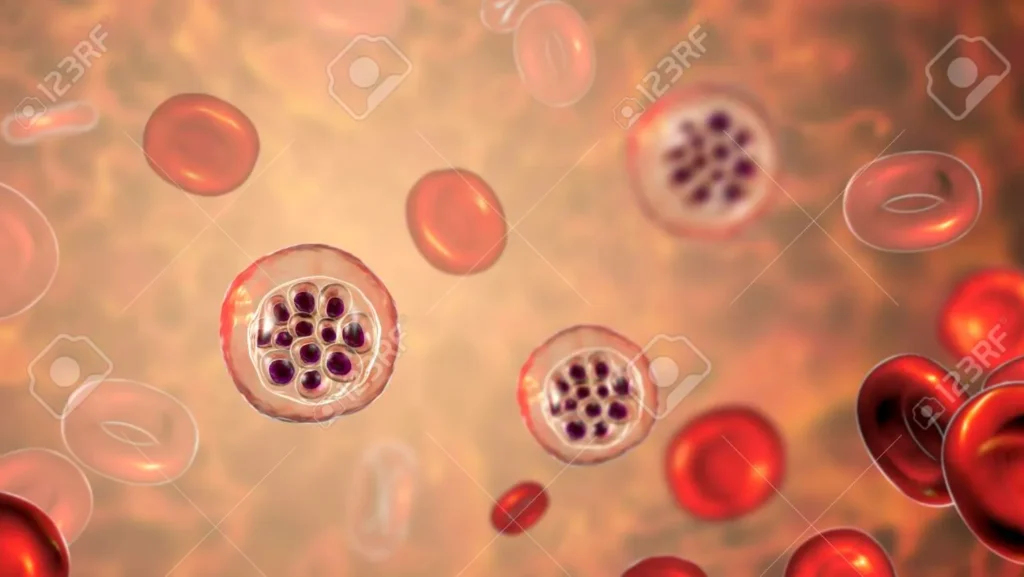
The phrase malarial parasite Plasmodium refers to a group of parasitic protozoa that infect vertebrates and blood-feeding insects. In humans, the most important species include Plasmodium falciparum, Plasmodium vivax, Plasmodium ovale, Plasmodium malariae, and Plasmodium knowlesi.
The most important LSI terms for this topic are the malarial parasite Plasmodium, the Plasmodium life cycle, the Anopheles mosquito, human red blood cells, and malaria transmission. These terms are naturally connected because the parasite cannot complete its life cycle without moving between mosquito and human hosts.
A key point is that Plasmodium is not a worm, insect, bacterium, or virus. It is a unicellular eukaryotic parasite under the phylum Apicomplexa, a group known for specialized structures that help parasites invade host cells.
Another important fact is that malaria symptoms do not usually begin immediately after a mosquito bite. The parasite first passes through the liver stage, and symptoms generally appear after blood-stage multiplication begins.
The History of Their Scientific Naming
The scientific naming history of Plasmodium is closely connected with the discovery of malaria itself.
- In 1880, French physician Charles Louis Alphonse Laveran observed parasites in the blood of patients with malaria. This discovery proved that a living parasite caused malaria.
- Italian scientists Ettore Marchiafava and Angelo Celli later introduced the genus name Plasmodium in 1885.
- The word Plasmodium is associated with “plasma-like” living matter because early researchers observed the parasite’s changing forms under the microscope.
- Different species were later named based on their structure, fever pattern, severity, and host preference.
- Important human malaria species include P. falciparum, P. vivax, P. malariae, P. ovale, and P. knowlesi.
- Ronald Ross later explained the role of mosquitoes in malaria transmission, helping scientists understand the full human–mosquito life cycle.
Their Evolution And Their Origin
The origin of Plasmodium goes deep into the evolutionary history of parasitic protists. Plasmodium belongs to Apicomplexa, a large group of single-celled parasites that includes organisms capable of invading animal cells.
These parasites are highly specialized because they carry invasion-related structures such as micronemes, rhoptries, and dense granules, which help them enter host cells.
Evolutionary studies suggest that the Plasmodium lineage is very ancient. Over time, its ancestors adapted to survive inside vertebrates and blood-feeding insects.
The evolution of Plasmodium is also linked with host switching. Different species adapted to birds, reptiles, mammals, primates, and humans. For example, Plasmodium falciparum, the deadliest human malaria parasite, is closely related to malaria parasites found in African apes.
This long evolutionary journey helped the malaria parasite Plasmodium develop a powerful survival strategy. It does not stay in one form. It changes into sporozoites, merozoites, trophozoites, schizonts, and gametocytes depending on where it is living.
This shape-changing ability allows the parasite to avoid immune defenses, move between hosts, and continue transmission through mosquito bites. In simple words, the Plasmodium life cycle is not just reproduction; it is a highly evolved survival system.
Their main food and its collection process
The main “food” source of Plasmodium depends on the stage of its life cycle. Since it is a microscopic parasite, it does not eat like an animal. Instead, it absorbs and digests nutrients from the host cells it infects.
- Inside red blood cells, the parasite uses hemoglobin as one of its major nutrient sources.
- Hemoglobin is the oxygen-carrying protein found in human red blood cells.
- During the blood stage, Plasmodium takes in red blood cell cytoplasm and digests a large amount of host hemoglobin inside a structure called the digestive vacuole.
- Hemoglobin digestion releases heme, which is toxic to the parasite.
- To survive, Plasmodium converts toxic heme into an insoluble dark pigment called hemozoin.
- This process is important because many antimalarial drugs target parasite metabolism, especially pathways connected with hemoglobin digestion and heme detoxification.
- In the liver stage, the parasite depends on nutrients from liver cells. It grows silently and multiplies before releasing merozoites into the bloodstream.
- In the mosquito stage, the parasite does not feed in the same way as it does in red blood cells. Instead, it develops through sexual stages in the mosquito midgut and later moves to the salivary glands.
So, the main food collection process of the malaria parasite Plasmodium involves invading host cells, absorbing nutrients, digesting hemoglobin, and using host resources for rapid multiplication.
Their life cycle and ability to survive in nature
Human infection begins with the sporozoite
The life cycle of the malaria parasite Plasmodium begins in humans when an infected female Anopheles mosquito injects sporozoites into the bloodstream during a bite.
These sporozoites quickly travel to the liver and enter liver cells. This is the first major stage of the malaria life cycle.
Liver stage supports silent multiplication.
Inside liver cells, the parasite grows and forms schizonts. These schizonts rupture, releasing merozoites into the bloodstream.
In P. vivax and P. ovale, some parasites can remain dormant as hypnozoites, causing relapse weeks, months, or even years later.
The blood stage causes symptoms.
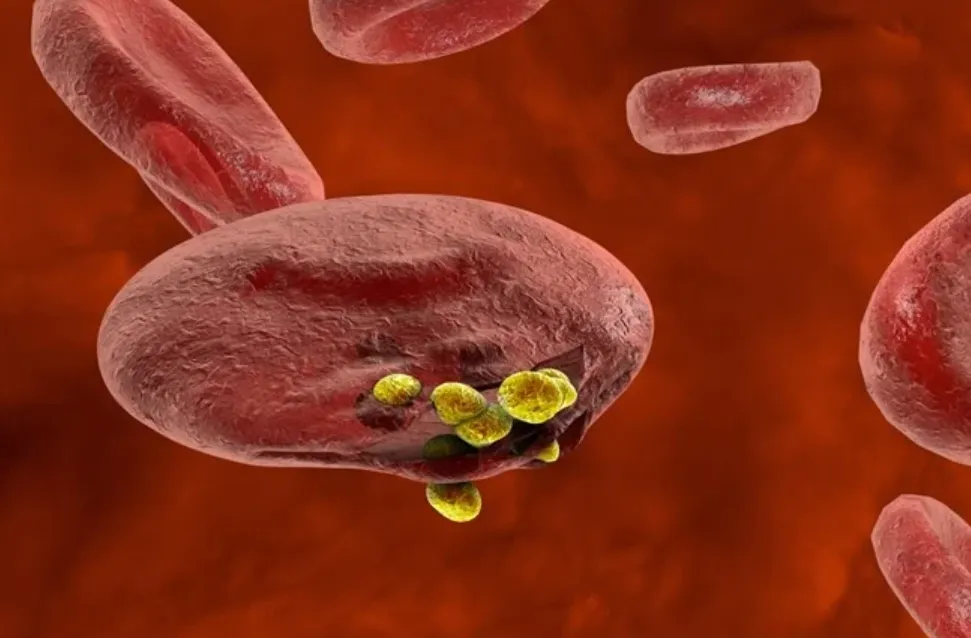
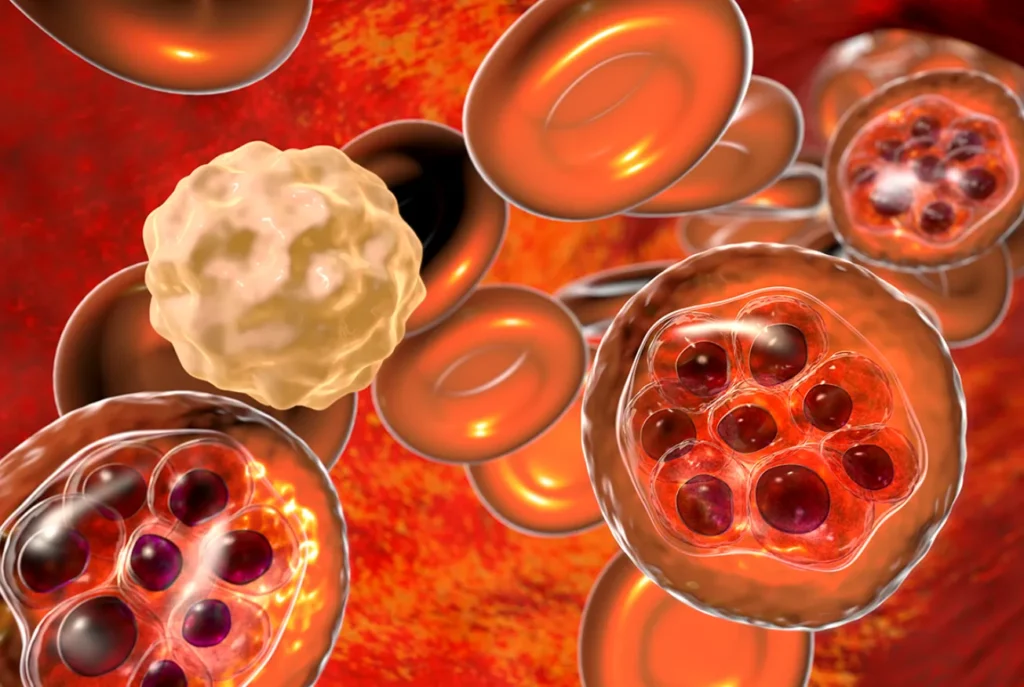
The released merozoites invade human red blood cells. They grow from ring forms into trophozoites and then into schizonts.
When infected red blood cells rupture, more merozoites are released. This repeated rupture causes fever, chills, anemia, weakness, and other malaria symptoms.
The mosquito stage keeps the cycle alive.
Some blood-stage parasites become gametocytes. When another female Anopheles mosquito bites the infected person, it takes up these gametocytes.
Inside the mosquito, they form gametes, zygotes, ookinetes, oocysts, and finally new sporozoites that move to the mosquito’s salivary glands.
Their Reproductive Process and raising their children
Plasmodium does not raise children like mammals, birds, or insects. It is a single-celled parasite, so “raising their children” means producing new parasite cells and helping them survive through different host environments.
- Asexual reproduction in humans:
- In the liver and blood, Plasmodium multiplies asexually through a process called schizogony.
- Liver-stage multiplication:
- After entering liver cells, sporozoites develop into schizonts. These schizonts release many merozoites into the blood.
- Blood-stage multiplication:
- Merozoites enter red blood cells, grow, divide, and burst the cells. This process repeats again and again.
- Sexual preparation in humans:
- Some parasites develop male and female gametocytes rather than continuing asexual multiplication.
- Sexual reproduction in mosquitoes:
- When a mosquito ingests gametocytes, the gametocytes develop into male and female gametes. These fuse to create a zygote.
- Formation of ookinete and oocyst:
- The zygote becomes an ookinete, which forms an oocyst on the mosquito gut wall.
- Production of new sporozoites:
- The oocyst produces many sporozoites. These travel to the mosquito’s salivary glands, where they become ready to infect another human.
There is no parental care. The parasite’s “offspring” survive because they are produced in large numbers and are adapted to specific body environments.
The importance of them in this Ecosystem
A natural but harmful parasite
Plasmodium is part of natural host-parasite systems, but for humans, it is dangerous. It causes malaria, one of the most serious infectious diseases in tropical and subtropical regions.
Role in host-parasite balance
In nature, parasites can influence host populations, immunity, and evolutionary pressure. Plasmodium has shaped human genetics in malaria-endemic areas, especially through natural selection related to red blood cell traits.
Connection with mosquito ecology
The parasite depends on female Anopheles mosquitoes, but not all mosquitoes transmit malaria. Only certain Anopheles species are efficient malaria vectors.
Scientific importance
The malarial parasite Plasmodium is highly important in medicine, genetics, immunology, and drug research.
Studying its life cycle helps scientists develop diagnostic tests, antimalarial drugs, vaccines, and vector control strategies.
Not a species to protect for human benefit
Unlike pollinators or decomposers, Plasmodium is not protected for ecological service. The responsible goal is not to conserve malaria parasites, but to understand them and reduce harmful transmission while protecting broader ecosystem health.
What to do to protect them in nature and save the system for the future
Because Plasmodium causes malaria, we should not protect or spread it in nature. The safer and more scientific goal is to protect the Ecosystem while reducing malaria transmission.
- Control mosquito breeding sites carefully:
- Remove stagnant water near homes, drains, containers, and construction sites where mosquitoes breed.
- Use insecticide-treated nets:
- Sleeping under treated mosquito nets helps reduce mosquito bites and malaria transmission.
- Support indoor residual spraying when needed:
- In malaria-prone areas, properly managed spraying can reduce mosquito survival.
- Avoid unnecessary chemical overuse:
- Excessive insecticide use can harm non-target insects and increase mosquito resistance.
- Protect wetlands responsibly:
- Wetlands are important ecosystems, so malaria control should focus on high-risk breeding zones rather than destroying entire habitats.
- Improve diagnosis and treatment:
- Early testing and proper treatment reduce the number of parasites available for mosquitoes to pick up from infected people.
- Support malaria research:
- Research on Plasmodium life cycle, mosquito biology, vaccines, and drug resistance is essential for future control.
- Educate communities:
- Awareness about malaria transmission, mosquito bites, fever symptoms, and treatment can save lives.
- Monitor climate and urban changes:
- Changes in climate, population movements, and urban mosquito species can affect malaria risk.
Frequently Asked Questions (FAQs)
Q1: What is the life cycle of the malaria parasite Plasmodium?
A: The life cycle of the malaria parasite Plasmodium is a two-host cycle involving humans and female Anopheles mosquitoes. It includes liver, blood, and mosquito stages.
Q2: Which mosquito spreads Plasmodium?
A: Human malaria is mainly spread by infected female Anopheles mosquitoes.
Q3: What is the infective stage of Plasmodium for humans?
A: The infective stage for humans is the sporozoite. It enters the human body during the bite of an infected mosquito.
Q4: What is the infective stage of Plasmodium for mosquitoes?
A: The infective stage for mosquitoes is the gametocyte. Mosquitoes ingest gametocytes when they feed on the blood of an infected person.
Q5: Where does Plasmodium first develop in the human body?
A: After entering the bloodstream, Plasmodium first develops in the liver cells before entering the blood stage.
Q6: Why does malaria cause fever and chills?
A: Fever and chills occur mainly when infected red blood cells rupture and release parasites and inflammatory substances into the bloodstream.
Q7: Can Plasmodium survive without mosquitoes?
A: The human malaria parasite needs both humans and mosquitoes to complete its natural life cycle. Without the mosquito stage, long-term natural transmission cannot continue.
Q8: Which Plasmodium species is most dangerous?
A: Plasmodium falciparum is generally considered the most dangerous human malaria parasite because it is strongly associated with severe disease and death.
Conclusion
The life cycle of the malaria parasite Plasmodium is a highly organized biological process that depends on two hosts: humans and female Anopheles mosquitoes. In humans, the parasite passes through the liver and blood stages, while in mosquitoes, it completes sexual development and prepares for new transmission.
Understanding the malarial parasite Plasmodium is important for students, researchers, public health workers, and medical professionals. Its ability to invade cells, digest hemoglobin, avoid immune defense, and change life stages makes it one of the most successful parasites in nature.
However, because it causes serious disease, the goal is not to protect Plasmodium, but to control malaria responsibly while protecting environmental balance. Effective prevention, early diagnosis, proper treatment, mosquito control, and scientific research remain the best path toward a safer future.
Also Read: life cycle of malaria disease
About the Author