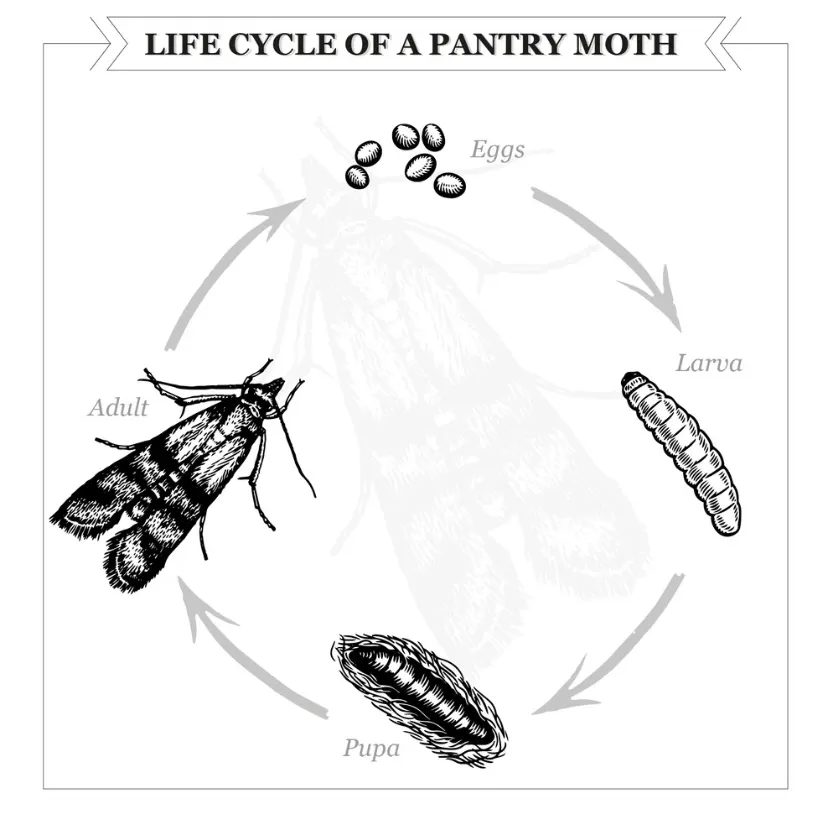
The food moth life cycle explains how pantry moths develop from tiny eggs into food-contaminating larvae, then into pupae, and finally into flying adults. In homes, the most common food moth is the Indianmeal moth, or pantry moth (Plodia interpunctella).
It is a stored-food pest found in dry goods such as cereals, flour, rice, nuts, seeds, dried fruit, chocolate, birdseed, and pet food. The real damage is caused by the larval stage, not the adult moths. Larvae feed, crawl through food, spin silk webbing, and leave waste that makes stored food unsuitable to eat. Adult females can lay hundreds of eggs on or near food sources, and larvae may even chew through thin cardboard or plastic packaging.
The full cycle depends heavily on temperature, humidity, and food quality. Under warm, favorable conditions, development can be fast, sometimes around one month; in cooler or poor conditions, it may take many months.
Q: What are food moths?
A: Food moths are moths whose larvae infest dry stored foods. The most common household pest is the Indian meal moth.
Q: What stage causes the most damage?
A: The larvae cause the damage because they eat stored food and create silk webbing.
Q: How many stages are in the food moth’s life cycle?
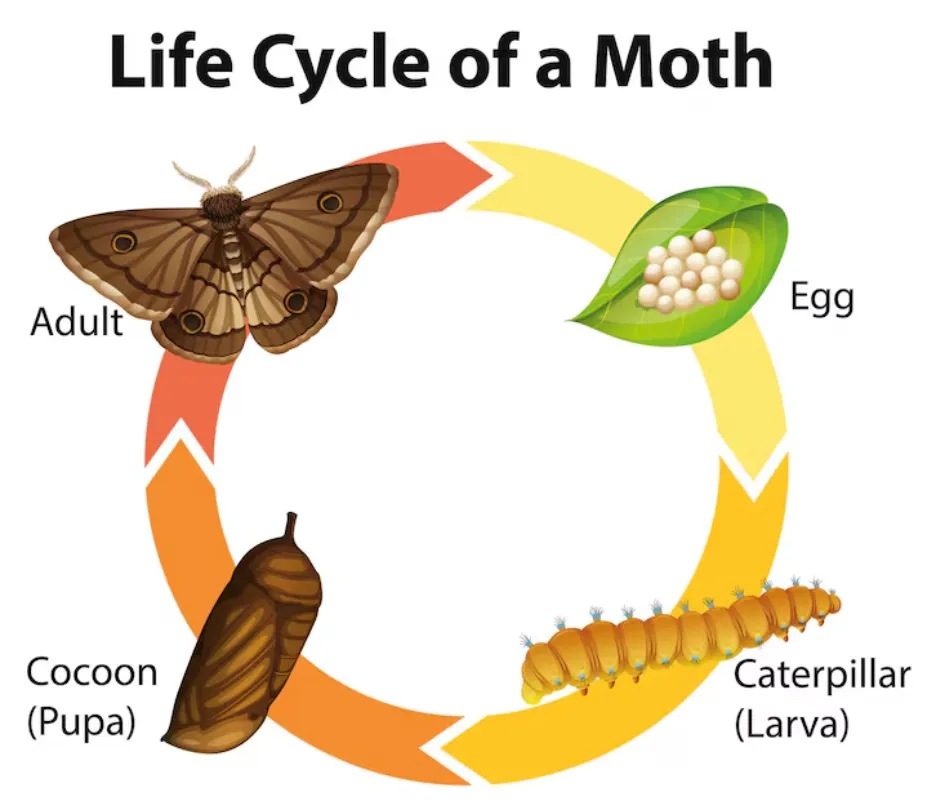
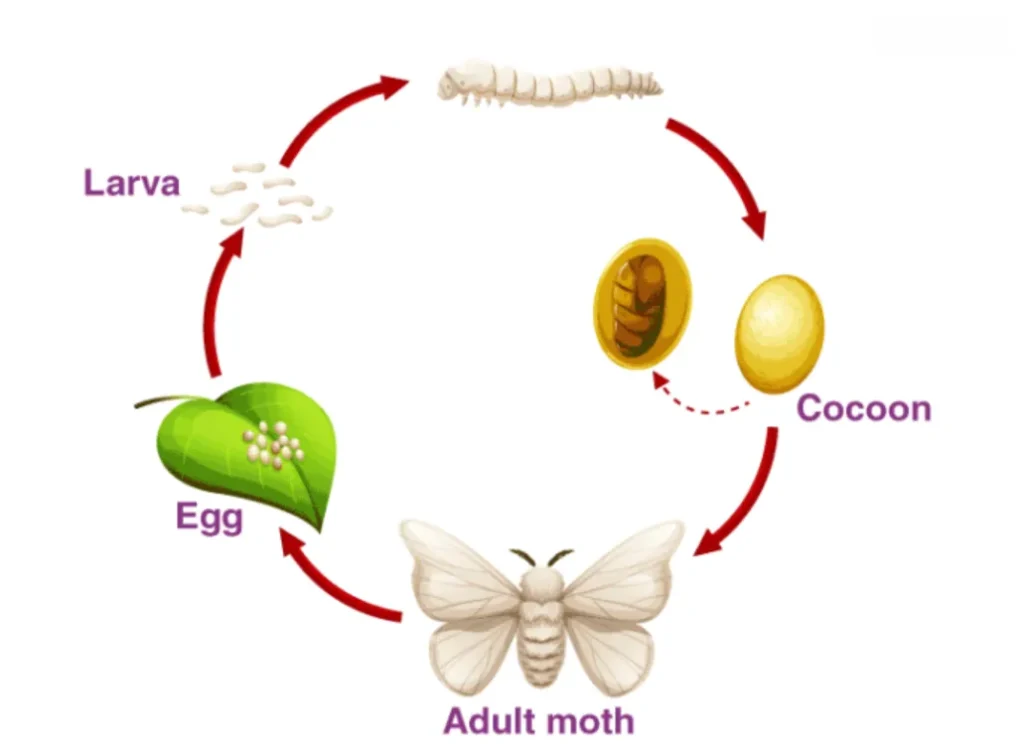
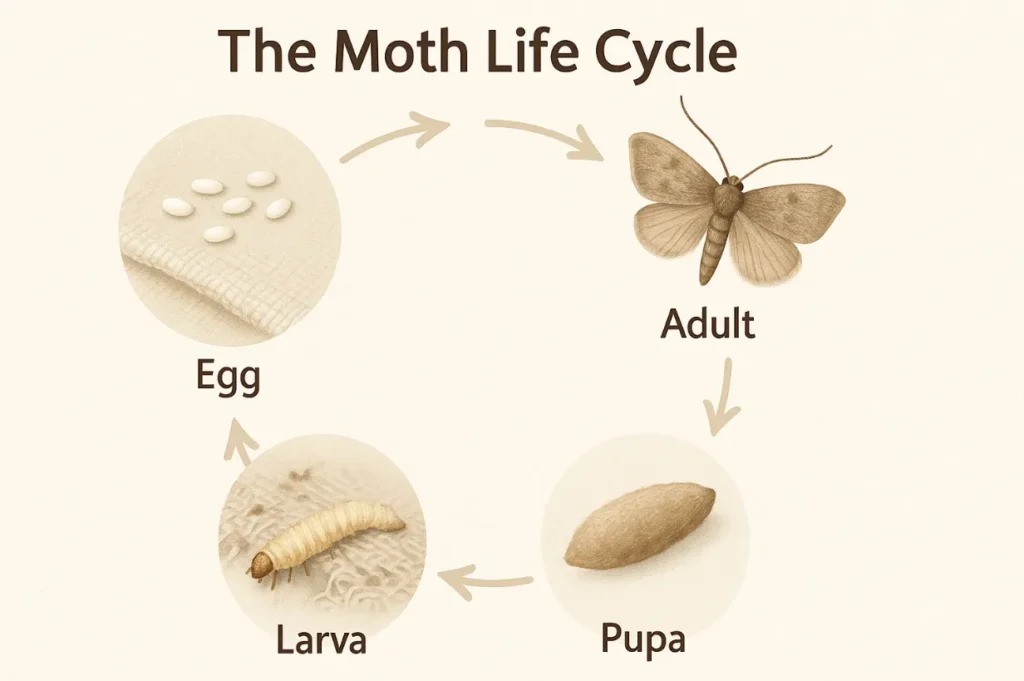
A: There are four stages: egg, larva, pupa, and adult moth.
Quick Life Cycle Table
| Life Stage | What Happens | Usual Time Range | Easy Identification |
| Egg | Females lay eggs on or near dry food | About 2–14 days to hatch | Tiny, pale, hard to see |
| Larva | Caterpillar feeds on web food, grows | Around 3–5 weeks, sometimes longer | Creamy-white worm-like body |
| Pupa | Larva forms a cocoon and transforms | Around 1–2 weeks | Hidden in cracks, corners, and packaging |
| Adult | Moth emerges, mates, and lays eggs | About 1–3 weeks | A small moth is flying near the pantry |
The table shows the common pattern, but the exact timing changes with temperature, humidity, and food availability. In favorable warm conditions, the whole cycle may finish quickly; in cooler conditions, development can slow significantly.
Important Things That You Need To Know
When people search for food moths, they are usually referring to pantry moths, Indian meal moths, stored-food moths, grain moths, or flour moths. These names are often used casually, but the most common household pest is Plodia interpunctella. It is important to understand this because different moths may look similar, yet their feeding habits can vary.
The key thing about food moths is that adult moths are mostly a warning sign. Seeing small moths flying around the kitchen usually means the real problem is already hidden inside a food package. The larvae may be feeding on cereal, flour, rice, dry pasta, nuts, birdseed, or pet food.
Another important point is that a clean kitchen can still get food moths. Infestations often begin when eggs or larvae are brought home inside already contaminated groceries. Once inside, larvae can spread from one package to another, especially when foods are kept in paper bags, cardboard boxes, or thin plastic.
For prevention, the best practices are to use airtight containers, inspect old food, clean shelves, and avoid keeping dry goods for too long. Freezing newly purchased dry food for several days can also help reduce the risk of hidden eggs or larvae.
So, the phrase “food moths’ life cycle” is not only about biology. It is also about knowing when to act. If you understand the cycle, you can break it before larvae mature into adults and start the next generation.
The History Of Their Scientific Naming, Evolution, and Their Origin
Scientific Name and Classification
The most common household food moth is the Indian meal moth, scientifically known as Plodia interpunctella. It belongs to the family Pyralidae, a group that includes several moths associated with stored foods. The species name has been used in scientific literature for many years, and older names may still appear in historical records.
Why It Is Called Indianmeal Moth
The name Indianmeal moth does not mean the insect is native to India. “Indian meal” historically referred to cornmeal or maize meal. The moth became associated with stored cornmeal and other grain products, so the common name developed from its feeding habit.
Origin and Spread
Food moths became globally important because humans store, transport, and trade grains, nuts, seeds, and dry foods. Over time, these insects adapted well to warehouses, mills, grocery stores, kitchens, and food storage areas.
Evolutionary Adaptation
Their success comes from simple but powerful adaptations: small eggs, mobile larvae, silk webbing, hidden pupation, and the ability to use many dry food sources.
Their Reproductive Process, Giving Birth And Rising Their Children
Food Moths Do Not Give Live Birth
Food moths do not give birth like mammals. Female moths reproduce by laying eggs. After mating, a female searches for a suitable food source where her larvae can survive immediately after hatching.
Egg Laying Process
A female Indianmeal moth can lay a large number of eggs, often directly on or near stored dry food. Some sources report that females lay up to 400 eggs, depending on temperature, food quality, and environmental conditions.
No Parental Care
Food moths do not raise their young. Once the eggs are laid, the adult female does not feed, guard, or guide the larvae. The survival of the young depends on where the eggs are placed.
Larvae Start Feeding Quickly
After hatching, larvae begin feeding on the nearby food source. They create silk threads and webbing as they move. This webbing can cause grains, flour, or crumbs to clump together.
Why Reproduction Is So Successful
Their reproductive strategy works because many eggs are laid in hidden places. Even if some eggs or larvae die, others survive. This is why a small pantry moth problem can become a larger infestation if the life cycle is not interrupted.
Stages of the Food Moths’ Life Cycle
1. Egg Stage
The first stage of the food moth’s life cycle begins when the adult female lays eggs on or near food. These eggs are extremely small and may be difficult to see with the naked eye. They are usually placed where larvae will have immediate access to food after hatching.
Warm temperatures help eggs hatch faster. In many cases, eggs can hatch within a few days to two weeks. This hidden egg stage is one reason people may bring contaminated food home without noticing anything unusual.
2. Larval Stage
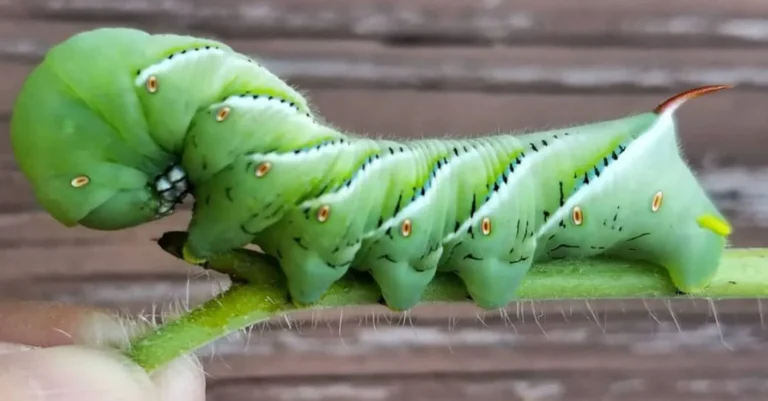
The larval stage is the most damaging. The larvae look like tiny caterpillars or worms. They feed on dry stored food and produce silk webbing. This webbing, mixed with food particles and waste, is one of the clearest signs of infestation.
Larvae may feed inside bags, boxes, jars with loose lids, or cracks around food shelves. Mature larvae often leave the food source and crawl to corners, ceilings, shelf edges, or packaging seams to pupate.
3. Pupal Stage
In the pupal stage, the larva forms a cocoon and changes into an adult moth. Pupae are often hidden, making them easy to miss during cleaning. They may be found in cupboard corners, wall-ceiling joints, shelf cracks, or folds of packaging.
This stage is important because even after throwing away contaminated food, hidden pupae can still emerge as adults later.
4. Adult Stage
The adult moth is the flying stage. Adults do not cause the main food damage, but they mate and restart the cycle. Seeing adult moths flying around the kitchen usually means eggs, larvae, or pupae are nearby.
Their Main Diet, Food Sources, and Collection Process Explained
Food moths do not hunt like predators. Their larvae survive by feeding on stored, dry, carbohydrate-rich or protein-rich food materials. The adult moths are usually less important as feeders; the larvae are the real food consumers.
Common food sources include:
- Flour, cornmeal, and cake mixes
- Rice, oats, cereals, and grains
- Dry pasta and crackers
- Nuts, seeds, and dried fruit
- Chocolate, spices, and powdered food
- Birdseed, fish food, dog food, and cat food
The larvae collect food simply by living near the food source. After hatching, they crawl into cracks, folds, or loose particles and begin feeding. They may spin silk tunnels through the food, which protects them and helps them move.
Food moth larvae prefer stored products that are quiet, dry, and undisturbed. Opened packages, old pantry items, and poorly sealed containers are high-risk places. UC IPM notes that pantry pests can attack many stored foods, including spices, cereal, and chocolate, and they commonly enter homes through infested packages.
This feeding behavior makes control difficult because larvae may not remain in a single visible location. A single contaminated package can become the starting point for a wider pantry problem.
How Long Does A Food Moth Live
The lifespan of a food moth depends on which part of the life cycle you are counting. The adult moth may live only a short time, but the total life cycle from egg to adult can last much longer.
- Total life cycle: Under favorable conditions, the full life cycle of the food moth may be completed in about 4–8 weeks. Some university extension sources report that optimal conditions can shorten development to around 28 days.
- Extended development: In cooler conditions or poor food conditions, development can slow greatly. The University of Florida notes that the life cycle of Plodia interpunctella may range from 27 to 305 days, depending on conditions.
- Egg stage: Eggs usually hatch within a few days to about two weeks. Warmer temperatures speed up hatching.
- Larval stage: Larvae often feed for several weeks. This is the longest and most destructive stage of a pantry infestation.
- Pupal stage: The pupal stage may last around one to two weeks, though this varies with temperature.
- Adult stage: Adult moths usually live long enough to mate and lay eggs. Their main biological purpose is reproduction, not feeding.
- Temperature effect: Warm kitchens, food stores, warehouses, and cupboards can speed up development. Cooler areas slow it down.
- Food quality effect: Better food sources help larvae grow faster. Poor food quality can extend the larval stage.
- Why infestations continue: Even after adult moths are killed, eggs, larvae, or pupae may remain hidden. That is why cleaning, discarding infested food, and sealing dry goods are all necessary.
In simple terms, an adult food moth may not live very long, but the hidden life cycle can continue for weeks or months if food sources remain available.
Food Moths’ Lifespan in the Wild vs. in Captivity
Lifespan in the Wild
In nature, food moths face more challenges. Temperature changes, predators, food shortages, parasites, and weather can reduce survival. Wild conditions are less stable than kitchens or warehouses. Eggs may dry out, larvae may fail to find enough food, and pupae may be eaten before adults emerge.
Lifespan in Human Food Storage
In homes, mills, warehouses, and grocery storage areas, food moths may survive better because dry food is concentrated in one place. Warm indoor temperatures and undisturbed storage shelves create ideal conditions for repeated generations.
Lifespan in Captive or Laboratory Conditions
In controlled environments, researchers can maintain Plodia interpunctella under stable conditions of temperature, humidity, and food. Under these conditions, the life cycle can be studied clearly from egg to adult.
Key Difference
The biggest difference is stability. In the wild, survival is uncertain. In stored-food environments, food moths can complete their life cycle more successfully because humans unintentionally provide shelter and food.
Importance of the Food Moths’ Life Cycle in This Ecosystem
Part of the Food Web
Although food moths are pests in kitchens, they are still part of the broader food web. Eggs, larvae, pupae, and adults can serve as food for spiders, birds, reptiles, small mammals, and predatory insects.
Natural Recycling Role
In natural environments, moth larvae help break down plant-based materials. Their feeding can contribute to the recycling of organic matter. However, inside homes and warehouses, this same feeding behavior becomes a problem because it contaminates human food.
Indicator of Storage Conditions
The food moth’s life cycle can also indicate weaknesses in storage systems. If food moths are breeding, it often means dry food has been stored too long, the packaging is weak, or cleaning is incomplete.
Scientific Value
The Indianmeal moth is widely studied in stored-product entomology. It helps researchers understand insect development, food contamination, pest control, pheromone traps, and non-chemical management methods.
Balanced View
Food moths should not be protected inside pantries, but in nature, moth biodiversity has ecological value. The goal is not to eliminate all moths from the environment; it is to prevent stored-food infestation responsibly.
What to Do to Protect Them in Nature and Save the System for the Future
Protect Natural Habitats
- Preserve natural vegetation, wild plants, and mixed habitats where moths and other insects can live without entering human food storage areas.
- Avoid destroying every moth species simply because some are household pests.
Reduce Unnecessary Chemical Use
- Use pesticides carefully and only when needed.
- Avoid spraying chemicals around food-storage areas.
- Choose cleaning, sealing, freezing, and inspection before chemical control.
Support Insect Biodiversity
- Plant native flowers and maintain small garden habitats.
- Many moth species support pollination and provide food for wildlife.
Separate Nature from Food Storage
- Keep human food sealed in airtight containers.
- This protects your pantry without harming outdoor insect ecosystems.
Educate People About Pest Balance
- Teach the difference between harmful pantry infestations and beneficial wild insects.
- Responsible control means removing pests from homes while respecting nature outside.
Fun & Interesting Facts About Food Moths
- Food moths are usually noticed only after adults start flying, but the real infestation often begins much earlier.
- The larvae are the damaging stage because they feed on dry food and create silk webbing.
- Adult pantry moths are often attracted to light, which is why they may fly near kitchen lights or windows.
- The common Indianmeal moth is not named because it comes from India. The name is connected to “Indian meal,” an old term for cornmeal.
- Larvae can move away from food before pupating, so cocoons may appear on walls, ceilings, shelf corners, or packaging seams.
- A single female can lay hundreds of eggs, making early action very important.
- Pantry moth larvae can infest pet food, birdseed, and fish food, not only human food.
- Thin plastic bags and cardboard boxes are not always strong enough to keep larvae out.
- Seeing just one adult moth may mean hidden eggs or larvae are already present.
- Understanding the food moth’s life cycle is the best way to break the infestation at the right stage.
Frequently Asked Questions (FAQs)
Q: What is the full food moth’s life cycle?
A: The full food moth’s life cycle has four stages: egg, larva, pupa, and adult. The larvae feed on stored food, while adults mainly reproduce.
Q: How long does it take for food moth eggs to hatch?
A: Eggs may hatch in a few days to about two weeks, depending on temperature. Warmer conditions usually speed up hatching.
Q: Are food moths harmful to humans?
A: Food moths are not known for biting people or spreading serious disease, but their larvae contaminate food with webbing, waste, and shed skins. Infested food should be discarded.
Q: What food attracts food moths the most?
A: They are attracted to dry stored foods such as flour, cereal, rice, oats, nuts, seeds, dried fruit, pet food, and birdseed.
Q: Why do food moths keep coming back?
A: They return when eggs, larvae, or pupae remain hidden. Adults may disappear, but immature stages can still be inside packages, cracks, or cupboard corners.
Q: Can airtight containers stop food moths?
A: Yes. Airtight glass or thick plastic containers help prevent moths from entering food and from spreading hidden larvae to other packages.
Q: What is the fastest way to break the food moth’s life cycle?
A: Find and discard infested food, vacuum shelves and cracks, clean storage areas, freeze vulnerable dry goods, and store everything in airtight containers.
Conclusion
The food moth’s life cycle is simple but highly effective. These insects pass through egg, larva, pupa, and adult stages, with the larval stage causing the most damage to stored food. A pantry moth problem usually starts quietly, often inside a package that already contains eggs or larvae. By the time adult moths are flying, the infestation may already be active in hidden food sources.
The best solution is to understand the cycle and interrupt it early. Remove contaminated food, clean shelves carefully, check corners and packaging seams, and store dry goods in strong airtight containers. At the same time, it is important to remember that moths also play a natural role in the ecosystem outdoors. The goal is responsible control: protect your food indoors while respecting insect biodiversity in nature.
Also Read: elephant life cycle
About the Author