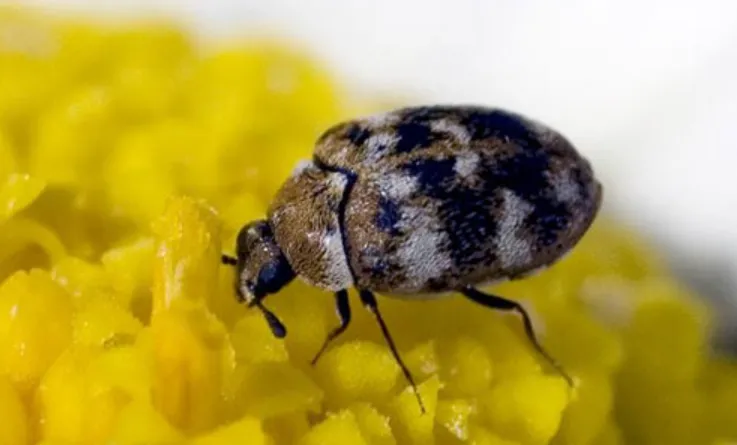
The varied carpet beetle life cycle is an important topic for homeowners, pest control professionals, and anyone interested in understanding how these small but destructive insects develop and survive. Varied carpet beetles (Anthrenus verbasci) are among the most common household pests worldwide, known for damaging fabrics, carpets, and stored products.
These beetles undergo a complete metamorphosis, meaning their life cycle consists of four distinct stages: egg, larva, pupa, and adult. Each stage plays a critical role in their survival and spread inside homes. While adult beetles are mostly harmless, it is the larvae that cause the most damage by feeding on natural fibers such as wool, silk, and leather.
Understanding their life cycle helps you identify infestations early and take effective steps to eliminate them. With the right knowledge, you can protect your home and belongings from costly damage.
Quick Answers (Most Common Questions)
1. How long is the varied carpet beetle life cycle?
The complete life cycle typically lasts between 2 months and 1 year, depending on environmental conditions such as temperature and food availability.
2. Which stage causes the most damage?
The larval stage is the most destructive, as larvae feed on fabrics, carpets, and organic materials.
3. Should I worry about varied carpet beetle bites?
Varied carpet beetles do not bite, but their larvae can cause skin irritation that may appear to be bites.
Quick Life Cycle Table
| Stage | Duration | Description |
| Egg | 1–2 weeks | Tiny white eggs are laid near food sources |
| Larva | 2–12 months | Hairy larvae that feed and cause damage |
| Pupa | 1–3 weeks | Transformation stage inside a cocoon |
| Adult | 2–6 weeks | Small beetles that reproduce and spread |
The History Of Their Scientific Naming
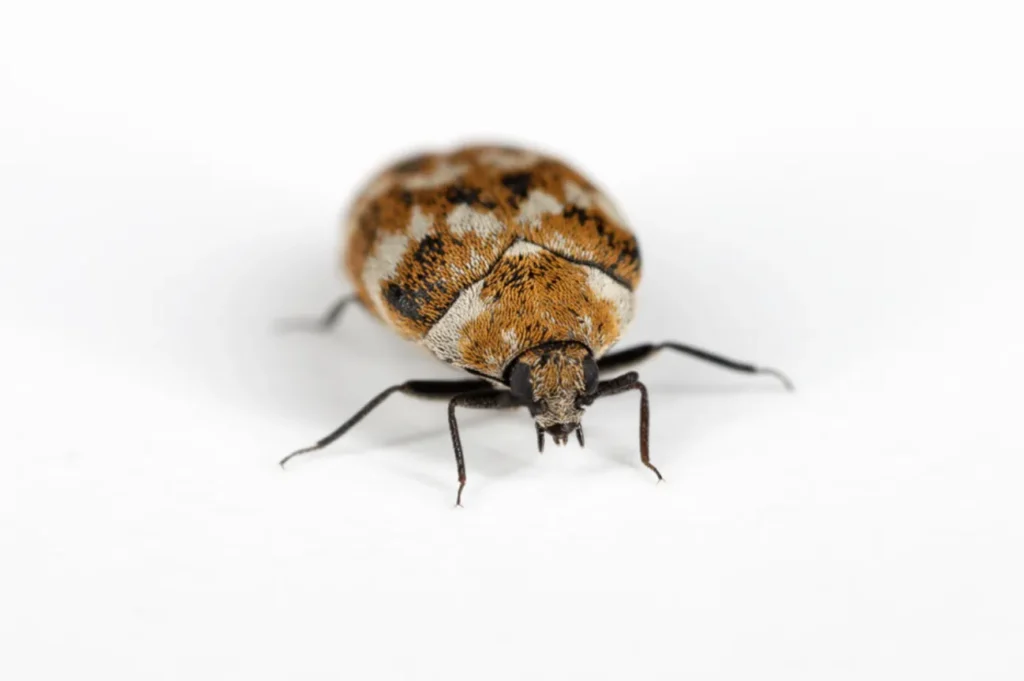
The varied carpet beetle, scientifically known as Anthrenus verbasci, has a fascinating taxonomic history rooted in early entomological studies.
- The genus Anthrenus derives from the Greek ” anthrenus, meaning “flower insect,” reflecting the adult beetle’s attraction to pollen and nectar.
- The species name verbasci refers to the mullein plant (Verbascum), which was often found in early specimens.
- This species was first formally described in the 18th century by Carl Linnaeus, the father of modern taxonomy.
- Over time, scientists classified it in the family Dermestidae, known for its ability to digest keratin and other organic fibers.
- The naming reflects both their ecological role and feeding behavior, connecting them to both natural environments and human habitats.
Today, Anthrenus verbasci is recognized globally as a key pest species due to its adaptability and resilience.
Their Evolution And Their Origin
The evolution of varied carpet beetles dates back millions of years to early beetle ancestors that specialized in feeding on organic debris. As part of the Dermestidae family, these insects evolved unique adaptations that allow them to thrive in diverse environments.
Originally, these beetles lived in natural ecosystems, feeding on animal remains, feathers, and plant materials. Their larvae developed strong digestive enzymes capable of breaking down keratin, a protein found in hair, wool, and feathers. This evolutionary advantage allowed them to exploit food sources that many other insects could not.
As human civilization expanded, varied carpet beetles adapted quickly to indoor environments. Homes provided ideal conditions, such as warmth, shelter, and abundant food sources, including carpets, clothing, and upholstery. This transition marked a significant shift in their evolutionary path, turning them into common household pests.
Their ability to undergo complete metamorphosis also contributed to their survival. Each stage of their life cycle serves a specific purpose—growth, transformation, or reproduction—ensuring their continued existence across generations.
Today, varied carpet beetles are found worldwide, demonstrating their remarkable adaptability and evolutionary success.
Their Main Food and Its Collection Process
Varied carpet beetles have a diverse diet, especially during their larval stage. Their feeding habits are a major reason why they are considered pests in homes.
Main Food Sources
- Natural fibers such as wool, silk, fur, and leather
- Animal-based materials like feathers, hair, and dead insects
- Stored food products, including grains and cereals
- Pet hair and lint accumulated in hidden corners
Food Collection Process
- Adult beetles lay eggs near food sources to ensure larvae have immediate access to nourishment.
- Larvae actively crawl through dark, undisturbed areas like closets, carpets, and furniture.
- They use strong mouthparts to chew through materials
- Their digestive system breaks down keratin and organic matter efficiently
- Larvae can survive long periods without food, increasing their chances of survival
This efficient feeding and collection strategy allows them to thrive even in low-resource environments.
Important Things That You Need To Know
Understanding key facts about the varied carpet beetle, its larvae, the lifespan, the diet, and the adult is essential for prevention and control.
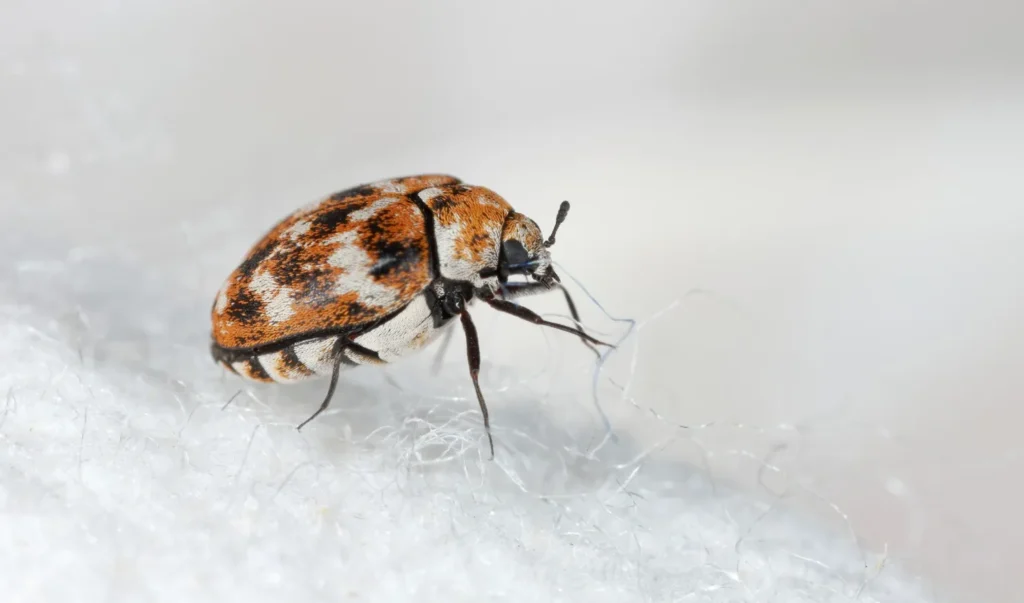
The varied carpet beetle adult is small, oval-shaped, and often seen near windows as it is attracted to light. While adults feed on pollen and nectar outdoors, they enter homes to lay eggs.
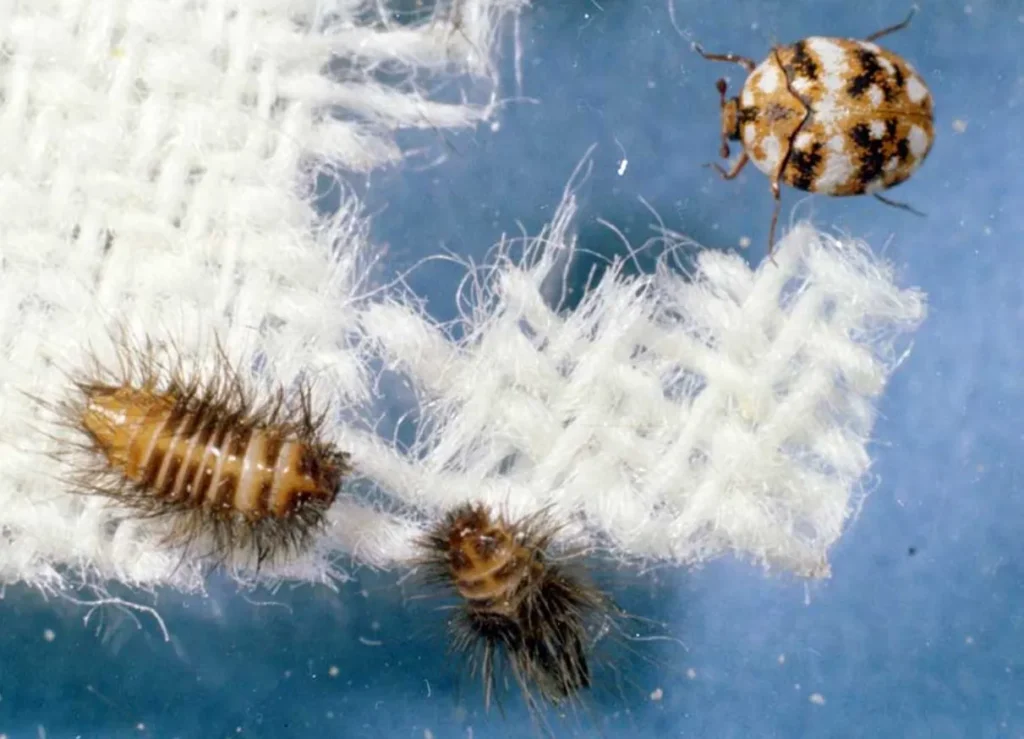
The varied carpet beetle larvae are the real problem. These tiny, hairy creatures can go unnoticed for months while causing extensive damage to fabrics and stored items. Their ability to digest keratin makes them highly destructive.
The varied diet of carpet beetles includes a wide range of organic materials, allowing them to survive in many environments. This adaptability increases their spread and persistence.
The varied carpet beetle lifespan varies depending on environmental conditions, but larvae can remain in that stage for several months, making infestations difficult to detect early.
If you’re wondering how to get rid of varied carpet beetle, the key lies in regular cleaning, vacuuming, and removing potential food sources. Prevention is always easier than dealing with a full infestation.
Their Life Cycle and Ability to Survive in Nature
Egg Stage
Female beetles lay eggs in hidden areas close to food. These eggs hatch quickly, ensuring larvae have immediate access to nourishment.
Larval Stage
Larvae are highly resilient and can survive in harsh conditions. They avoid light and stay hidden, making them difficult to detect.
Pupal Stage
During this stage, larvae transform into adults inside a protective casing. This phase is short but crucial.
Adult Stage
Adults emerge, mate, and continue the cycle. They are mobile and can spread infestations to new locations.
Their ability to adapt to both indoor and outdoor environments makes them highly successful survivors.
Their Reproductive Process and Raising Their Children
Varied carpet beetles reproduce efficiently, ensuring rapid population growth under favorable conditions.
- Female beetles lay 30–100 eggs at a time
- Eggs are placed near food sources for larval survival
- No parental care is provided after egg-laying
- Larvae grow independently, feeding continuously
- Development speed depends on temperature and food availability
- Warmer conditions accelerate reproduction
This reproductive strategy allows them to establish infestations in homes quickly.
Importance of Them in this Ecosystem
Natural Decomposers
Varied carpet beetles help break down dead organic matter, contributing to nutrient recycling.
Food Source
They serve as prey for birds, spiders, and other insects.
Ecological Balance
By consuming waste materials, they help maintain environmental cleanliness.
Although they are pests indoors, they play an important role in natural ecosystems.
What to Do to Protect Them in Nature and Save the System for the Future
- Avoid unnecessary pesticide use in natural environments
- Maintain ecological balance by preserving biodiversity
- Allow natural decomposition processes to occur
- Educate people about their ecological importance
- Use eco-friendly pest control methods indoors
- Prevent habitat destruction
Balancing pest control with environmental conservation is essential.
Frequently Asked Questions (FAQs)
1. What attracts varied carpet beetles?
They are attracted to natural fibers, food crumbs, and light.
2. Are varied carpet beetles harmful to humans?
They are not harmful but can cause skin irritation.
3. How do I identify varied carpet beetle larvae?
They are small, hairy, and brownish with a tapered body.
4. Can varied carpet beetles fly?
Yes, adult beetles can fly and often enter homes through windows.
5. How fast do they reproduce?
They can reproduce quickly under warm conditions.
6. Do they live in beds?
They may be found near bedding if food sources are present.
7. What kills varied carpet beetles?
Regular cleaning, vacuuming, and insecticides can help eliminate them.
8. Can they infest stored food?
Yes, they can contaminate grains and pantry items.
Conclusion
The varied carpet beetle life cycle reveals how a small insect can become a significant household pest if left unchecked. From eggs to larvae, pupae, and adults, each stage plays a role in their survival and spread. While the larvae are responsible for most of the damage, understanding the full cycle helps in effective prevention and control.
These beetles are not just pests—they are also part of a larger ecological system, contributing to decomposition and nutrient recycling. However, when they enter homes, they can cause costly damage to fabrics and stored goods.
By maintaining cleanliness, reducing clutter, and monitoring vulnerable areas, you can protect your home from infestations. At the same time, recognizing their ecological importance ensures a balanced approach to pest management.
With proper awareness and action, you can keep your living space safe while respecting nature’s role in the environment.
Also Read: carpet beetle life cycle
About the Author