Termites are fascinating yet often misunderstood creatures that play a significant role in nature. While they are commonly seen as pests, their life cycles and environmental impacts are remarkable. Understanding the termite life cycle can help individuals make informed decisions about treatment and control while appreciating the ecological role they play.
Here are three quick answers to common questions about termites:
- What does a termite look like? Termites are small, pale insects with straight antennae and soft bodies. They are often mistaken for ants but have broader waists and larger heads.
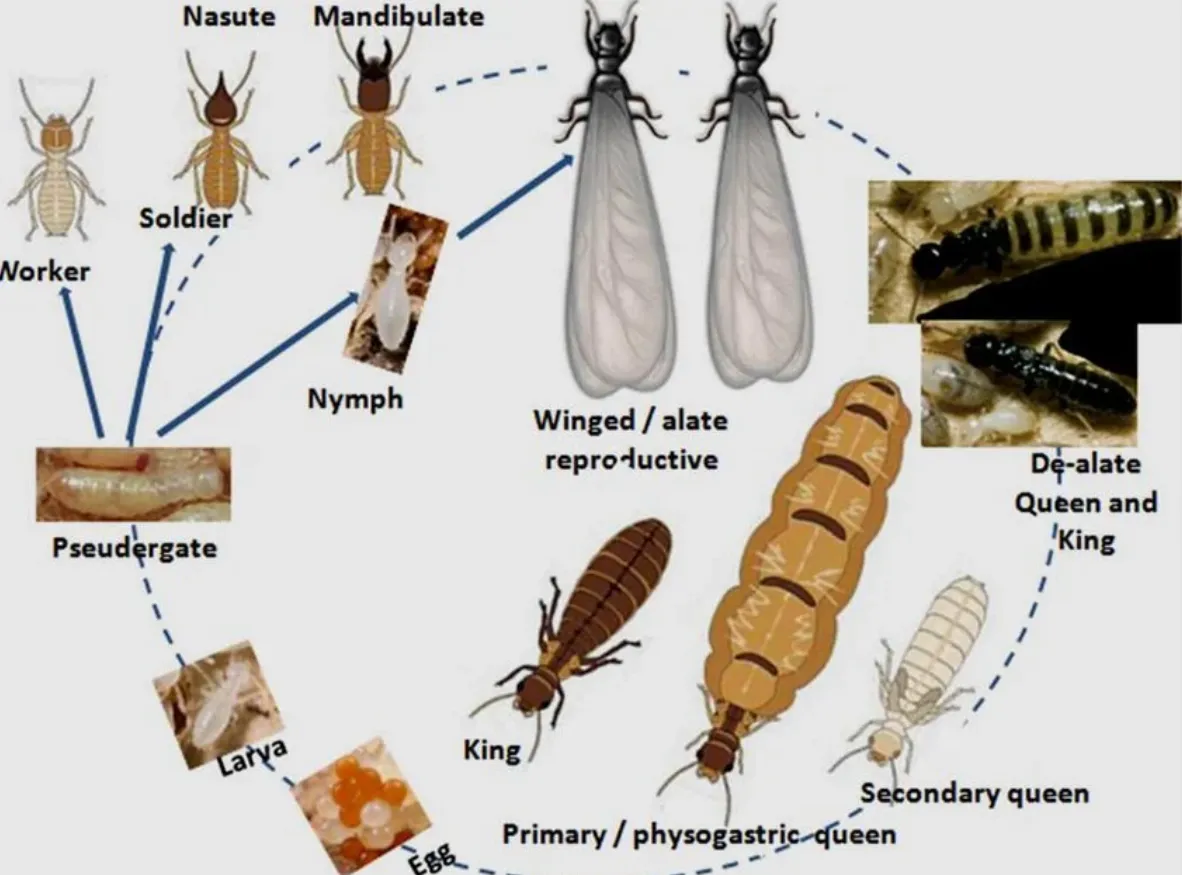
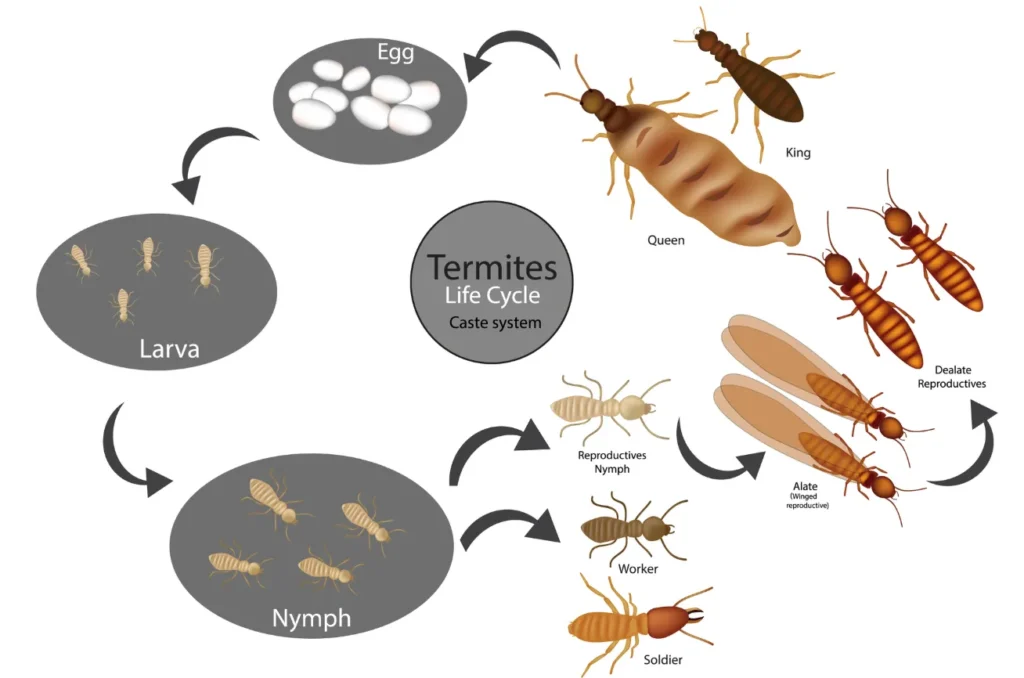
- What is the life cycle of a termite? A termite’s life cycle consists of three stages: egg, nymph, and adult. The nymphs develop into workers, soldiers, or reproductive termites, each playing a distinct role in the colony.
- How can you prevent termite infestations? Regular termite inspections, maintaining moisture-free areas, and using treatments like baiting or liquid termiticides can help prevent infestations.
Understanding the intricate life cycle of termites is essential for controlling infestations and recognizing their environmental importance.
Quick Life Cycle Table
| Stage | Duration | Description |
| Egg | 1-2 weeks | Termites start as tiny, translucent eggs laid by the queen. |
| Nymph | 2-4 months | After hatching, nymphs molt into worker, soldier, or reproductive termites. |
| Worker | Several years | Workers maintain the colony, forage for food, and care for the queen. |
| Soldier | Several years | Soldiers protect the colony from predators. |
| Reproductive | 1-2 years | Queen and king termites mature to reproduce and establish new colonies. |
The History of Their Scientific Naming
Termites belong to the order Isoptera, which was first described in 1781 by the French entomologist Pierre André Latreille. The name Isoptera comes from the Greek words isos, meaning “equal,” and pteron, meaning “wing,” referring to the symmetry of their wings. Historically, termites were once classified as a type of cockroach, but through scientific advancements, they were later categorized separately due to their unique behaviors and social structures. The term “termite” is derived from the Latin termes, meaning “woodworm,” as termites are known for consuming wood and other cellulose materials.
Their Evolution and Their Origin
Termites have evolved over millions of years, with the earliest ancestors believed to have appeared around 250 million years ago during the Triassic period. Their closest relatives are cockroaches, which is why they share traits such as body structure and reproductive methods. Unlike cockroaches, however, termites are highly social insects that live in large colonies with distinct roles for each member.
The evolution of their social behavior is particularly fascinating. Early termites were solitary creatures, but over time, they began living in colonies for mutual protection and resource sharing. This social structure has enabled them to thrive in a wide range of environments. Fossil records indicate that termites evolved from wood-eating cockroaches, with evidence suggesting that they became true termites only about 100 million years ago.
Their global spread and success are linked to the abundance of cellulose-rich materials, such as wood and plant matter. Termites now occur in diverse ecosystems, from tropical forests to temperate zones, playing an integral role in decomposing dead wood and recycling nutrients back into the soil.
Their Main Food and Its Collection Process
Termites primarily feed on cellulose, which is found in wood, leaves, and plant matter. Their feeding process involves a highly efficient digestion system that breaks down cellulose into simpler sugars. This is possible because microorganisms in their gut help them digest cellulose that would otherwise be indigestible.
Key Points on Their Food Collection:
- Wood Consumption: Termites are often called “nature’s recyclers” because they decompose dead trees and plant material, helping return nutrients to the soil.
- Symbiotic Relationship: Termites rely on a symbiotic relationship with gut microbes that enable them to digest cellulose.
- Foraging Behavior: Worker termites forage for food and bring it back to the colony, where it is shared with other members, including the queen.
This collective food-sharing behavior ensures the colony’s survival and promotes nutrient recycling in the ecosystem.
Their Life Cycle and Ability to Survive in Nature
The Life Cycle of Termites
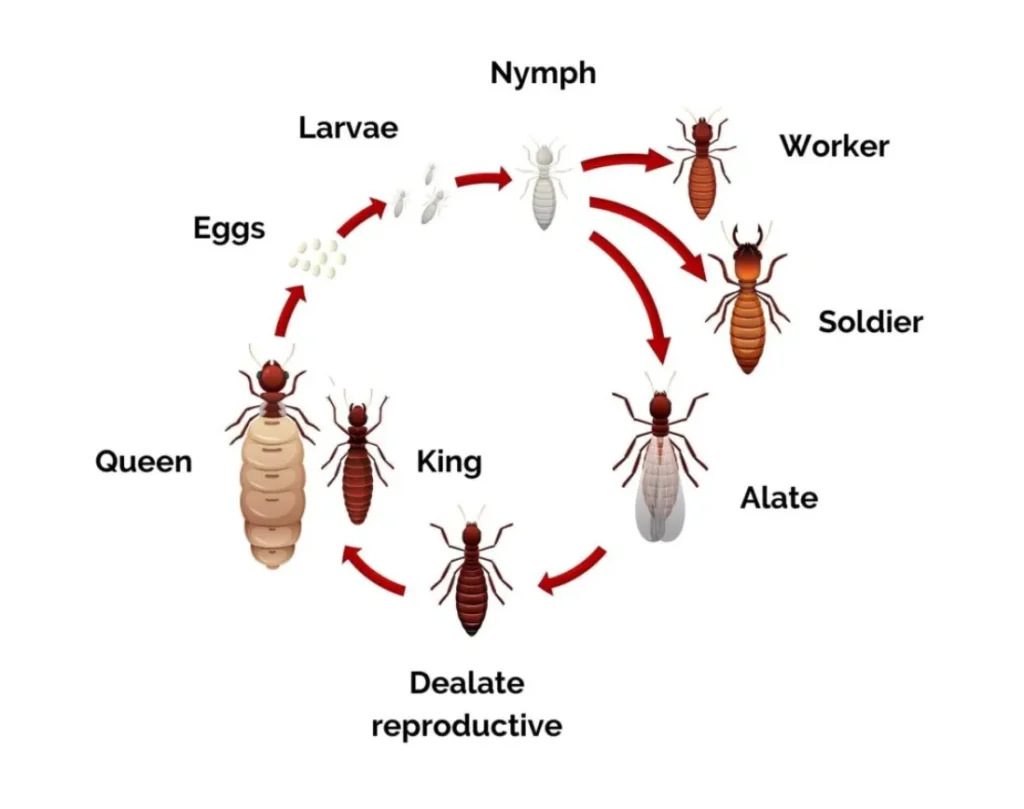
Termites undergo a life cycle with three main stages: egg, nymph, and adult. Each stage has distinct characteristics and serves a specific role in the colony’s ecosystem.
- Egg: The queen lays eggs in specialized chambers within the colony. These eggs hatch into nymphs, which are the immature forms of termites.
- Nymph: The nymphs undergo a series of molts as they mature into either workers, soldiers, or reproductive termites. This process allows the colony to maintain its structure and functions.
- Adult: Reproductive adults, including the queen and king, are responsible for creating new termites and sustaining the colony’s population.
Survival in Nature
Termites have a remarkable ability to adapt to various environments. Their ability to live in colonies and work cooperatively helps them withstand extreme conditions. Additionally, they can survive in a range of climates, from deserts to tropical forests, by adjusting their behavior to optimize food gathering and moisture retention. Termites also play a critical role in maintaining soil fertility by recycling organic matter.
Their Reproductive Process and Raising Their Children
Termites have a fascinating reproductive system that allows them to form large, organized colonies. The queen and king termites are the primary breeders, and they are responsible for the colony’s expansion. Here’s how their reproductive process works:
- Mating: During the reproductive season, the queen and king mate, and the queen begins laying eggs.
- Egg Laying: The queen can lay thousands of eggs per day, depending on the species. These eggs hatch into nymphs, which will eventually take on specialized roles within the colony.
- Care of Nymphs: Worker termites care for the young, feeding and grooming them until they mature into adult termites. Some nymphs become reproductive termites, while others take on worker or soldier roles.
Through this reproductive process, termites maintain large and efficient colonies that can last for years. Their ability to produce numerous offspring ensures that the colony can thrive and continue to grow, even in challenging environments.
Importance of Them in This Ecosystem
Ecological Role
Termites play an important role in many ecosystems, especially in nutrient cycling and the breakdown of dead plant matter. Without termites, the decomposition of wood and plant material would be significantly slower, leading to a buildup of organic matter. This can have serious consequences for soil health and plant growth.
- Decomposers: Termites break down wood and other cellulose-based materials, recycling essential nutrients into the soil.
- Soil Fertility: Their tunneling activities help aerate the soil, improving water infiltration and plant root growth.
- Food Source: Termites are also an essential food source for many predators, including birds, mammals, and reptiles.
What to Do to Protect Them in Nature and Save the System for the Future
While termites are often seen as pests in urban areas, it is important to consider their role in maintaining ecological balance. Protecting termites in nature can have a significant impact on preserving biodiversity and soil health.
- Conserve Habitats: Protect natural habitats, such as forests and grasslands, where termites thrive.
- Sustainable Practices: Implement sustainable forestry and agriculture practices that allow termites to contribute to soil fertility.
- Education: Educate communities about the benefits termites provide to ecosystems to reduce unnecessary pesticide use.
By taking these steps, we can ensure that termites continue to play their vital role in nature while minimizing their impact on human structures.
Important Things That You Need to Know About Termite Control
When dealing with termite issues, it is essential to understand that termites are more than just pests. Here are some key things to know about termite control:
- Termite Treatment: Various treatments are available, including liquid treatments and baiting systems. Choosing the right method depends on the severity of the infestation.
- Inspection: Regular termite inspections are crucial for identifying potential problems before they become widespread infestations.
- Preventive Measures: Keeping wood away from soil, sealing cracks, and using treated wood can help prevent termite infestations.
- Termite Droppings: Termite droppings, or frass, are an indication of a termite infestation. These small, pellet-like droppings should be taken seriously and addressed promptly.
- Control Near Me: If you’re looking for termite control services, make sure to search for “termite control near me” to find reliable, local pest control experts.
Frequently Asked Questions (FAQs)
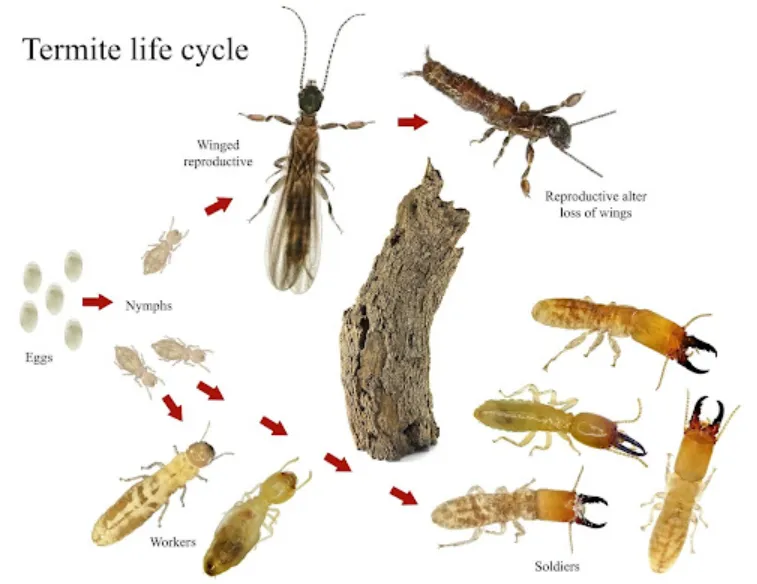
- What is the life cycle of a termite? The life cycle of a termite consists of three stages: egg, nymph, and adult. The egg hatches into a nymph, which molts to become a worker, soldier, or reproductive termite. The adult termites are responsible for reproduction, colony formation, and ensuring the colony’s survival.
- How do termites cause damage to homes? Termites feed on cellulose, primarily found in wood. They can silently eat away at the structural wood of homes, weakening foundations, beams, and furniture. This damage often goes unnoticed until it’s too late, leading to costly repairs.
- Can termites survive without a queen? No, termites rely on the queen for reproduction. The queen lays eggs that hatch into nymphs, which become workers, soldiers, or reproductive adults. Without a queen, a termite colony cannot reproduce and will eventually die off.
- How do you identify a termite infestation? Signs of a termite infestation include termite droppings (frass), hollowed-out wood, mud tubes along walls or foundations, and discarded wings from swarmers (reproductive termites). A professional termite inspection can confirm the presence of termites.
- What are the main types of termites? The main types of termites include subterranean termites, drywood termites, and dampwood termites. Subterranean termites live underground, while drywood termites live in wood. Dampwood termites are found in moist environments and feed on wood with high moisture content.
- How fast do termites reproduce? Termites reproduce quickly. A queen termite can lay thousands of eggs each day, and these eggs hatch into nymphs within a few weeks. The nymphs mature into workers or soldiers, and some develop into reproductive termites to continue the cycle.
- What are the signs of termite droppings? Termite droppings, also known as frass, look like small, hard pellets that are often dark in color. They are typically found near infested areas, such as around the base of furniture or on the floor near wood structures. The presence of frass is a strong indication of termite activity.
- How can you prevent termite damage? To prevent termite damage, seal cracks in walls and foundations, eliminate moisture issues, store firewood away from the house, and ensure that wood does not come into direct contact with soil. Regular termite inspections are also essential for early detection and control.
Conclusion
Termites are complex creatures that go far beyond their reputation as pests. Their life cycles, social structures, and roles in ecosystems make them incredibly fascinating. By understanding the importance of termites and their life cycles, we can better appreciate their ecological contributions and take appropriate measures to control them when necessary. Preserving termites in the wild will help maintain the balance of nature, supporting healthy soils and plant life for future generations.
Also Read: a life cycle of a fly
About the Author