The termite life cycle is one of the most fascinating biological processes in the insect world. Termites are social insects that live in highly organized colonies, where each individual plays a specific role. Understanding their life cycle helps homeowners, researchers, and pest control professionals manage infestations and appreciate their ecological importance.
From egg to mature adult, Termites go through several developmental stages. These stages determine whether a termite becomes a worker, a soldier, or a reproductive. Their ability to adapt and survive in different environments makes them both beneficial and destructive.
Quick Answers (Most Common Questions)
1. What are the stages of the termite life cycle?
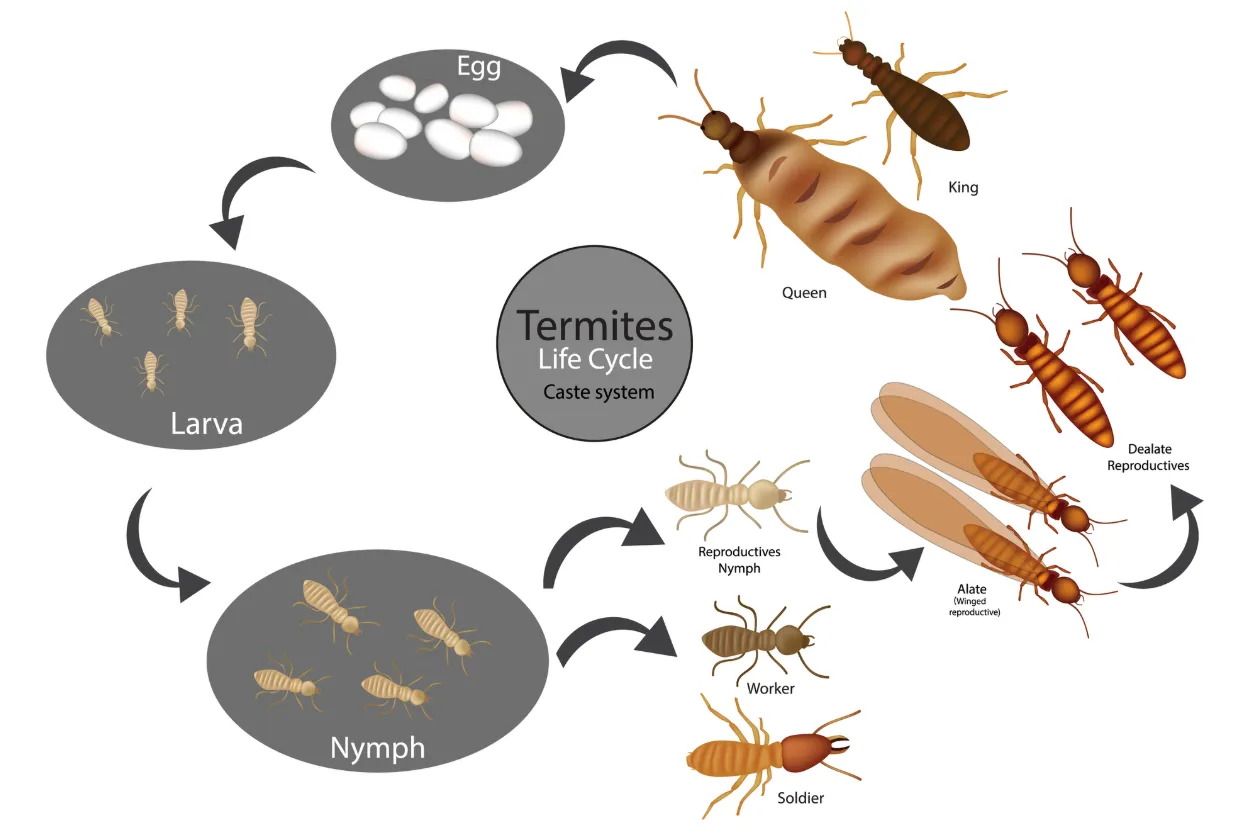
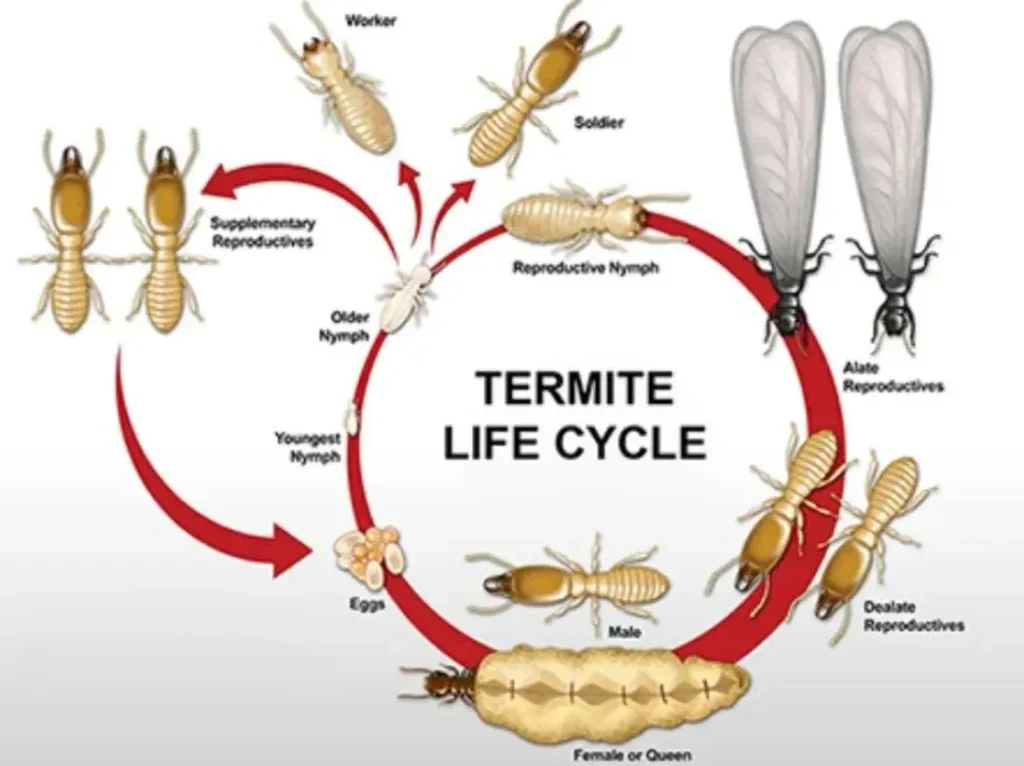
The termite life cycle includes egg → nymph → worker/soldier/reproductive adult.
2. How long do termites live?
Worker termites can live 1–2 years, while queens may live up to 20–30 years.
3. Why is understanding the termite life cycle important?
It helps in effective termite inspection, prevention, and choosing the right termite treatment method.
Quick Life Cycle Table
| Stage | Description | Duration | Role |
| Egg | Laid by the queen, tiny and white | 1–2 weeks | Beginning of the colony |
| Nymph | Immature termites | Several weeks to months | Develop into castes |
| Worker | Blind, soft-bodied | 1–2 years | Build, feed, and maintain the colony |
| Soldier | Larger heads, strong jaws | 1–2 years | Defend colony |
| Reproductive (Alates) | Winged termites | Seasonal | Start new colonies |
The History Of Their Scientific Naming
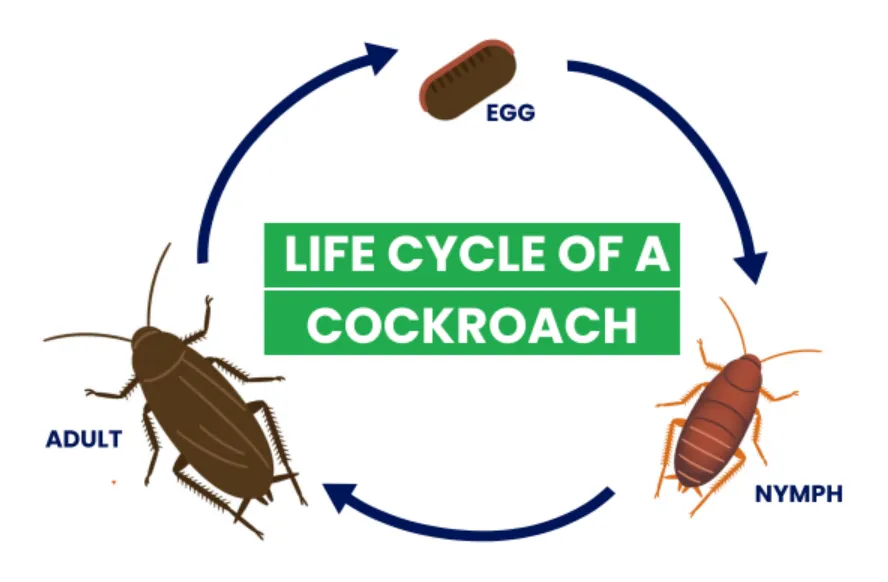
- Termites belong to the order Blattodea, the same group as cockroaches.
- Earlier, termites were classified under a separate order called Isoptera, meaning “equal wings.”
- Scientists later discovered genetic similarities between termites and cockroaches, leading to reclassification.
- The name “termite” comes from the Latin word termes, meaning “woodworm.”
- Taxonomists categorize termites into families such as Rhinotermitidae, Termitidae, and Kalotermitidae.
- Modern classification uses molecular biology and DNA sequencing to study termite evolution.
- This scientific naming helps researchers understand their behavior, ecological roles, and effective termite control strategies near me.
Their Evolution And Their Origin
Termites evolved around 150 million years ago, during the Jurassic period. Fossil evidence shows that early termites shared traits with primitive cockroaches.
Scientists believe termites originated from wood-feeding cockroach ancestors. Over time, they developed symbiotic relationships with gut microorganisms. These microbes allow termites to digest cellulose, a key component of wood.
Their evolution also led to the development of complex social structures. Unlike solitary insects, termites live in colonies with a clear division of labor. This social system increases their survival rate and efficiency.
Environmental factors, such as climate change and vegetation growth, influenced their spread across continents. Today, termites are found in tropical, subtropical, and even temperate regions.
Their ability to adapt has made them one of the most successful insect groups on Earth. However, this same adaptability makes them a serious threat to wooden structures, increasing the demand for termite treatment near me services.
Their main food and its collection process
Termites primarily feed on cellulose, which is found in wood, plants, and organic matter.
Main Food Sources
- Wood (dead trees, furniture, structures)
- Grass and leaves
- Paper and cardboard
- Soil rich in organic material
Collection Process
- Worker termites leave the nest through hidden tunnels.
- They chew wood into small particles using strong mandibles.
- The collected material is carried back to the colony.
- Inside the gut, microorganisms break down cellulose into nutrients.
- Workers share food with other termites through a process called trophallaxis.
This efficient system allows colonies to survive even in harsh conditions. However, it also causes structural damage to homes, making regular termite inspections essential.
Their life cycle and ability to survive in nature
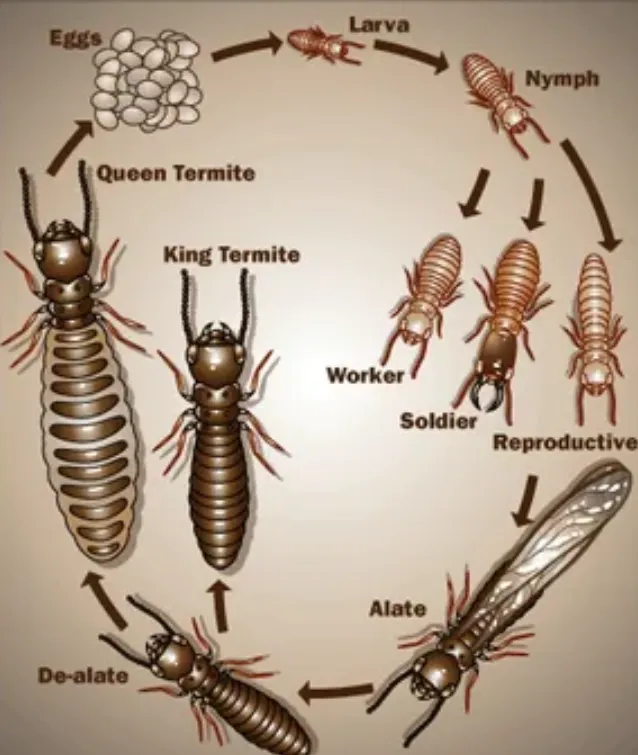
Egg Stage
The queen lays thousands of eggs daily. These eggs are protected inside the colony.
Nymph Stage
Nymphs resemble small adults and molt several times. Colony needs determine their role.
Worker Stage
Workers are responsible for feeding, building tunnels, and caring for young termites.
Soldier Stage
Soldiers defend the colony using strong jaws or chemical secretions.
Reproductive Stage
Winged termites leave the colony to form new colonies. This process is called swarming.
Termites survive due to:
- Moisture retention systems
- Underground tunnels
- Symbiotic digestion
- Strong social structure
Their adaptability makes them resilient in nature and difficult to eliminate without proper termite control near me solutions.
Important Things That You Need To Know
Termites are often misunderstood, and knowing key facts can help you identify and manage them effectively.
The most common type of termite is the subterranean termite, which lives underground and builds mud tubes to access food sources. If you’re wondering what a termite looks like, they are small, pale insects with soft bodies, often mistaken for ants but lacking a narrow waist.
One of the most noticeable signs of infestation is termite droppings, also known as frass. These tiny, pellet-like particles are usually found near wooden structures and indicate drywood termite activity.
Regular termite inspections are crucial for detecting infestations early. Professionals check for mud tubes, damaged wood, and moisture levels. If detected, immediate termite treatment is necessary to prevent further damage.
Searching for termite control near me or termite treatment near me can help you find local experts who use advanced techniques like baiting systems, chemical barriers, and eco-friendly solutions.
Understanding these key aspects ensures better protection of your home and helps maintain ecological balance.
Their Reproductive Process and raising their children
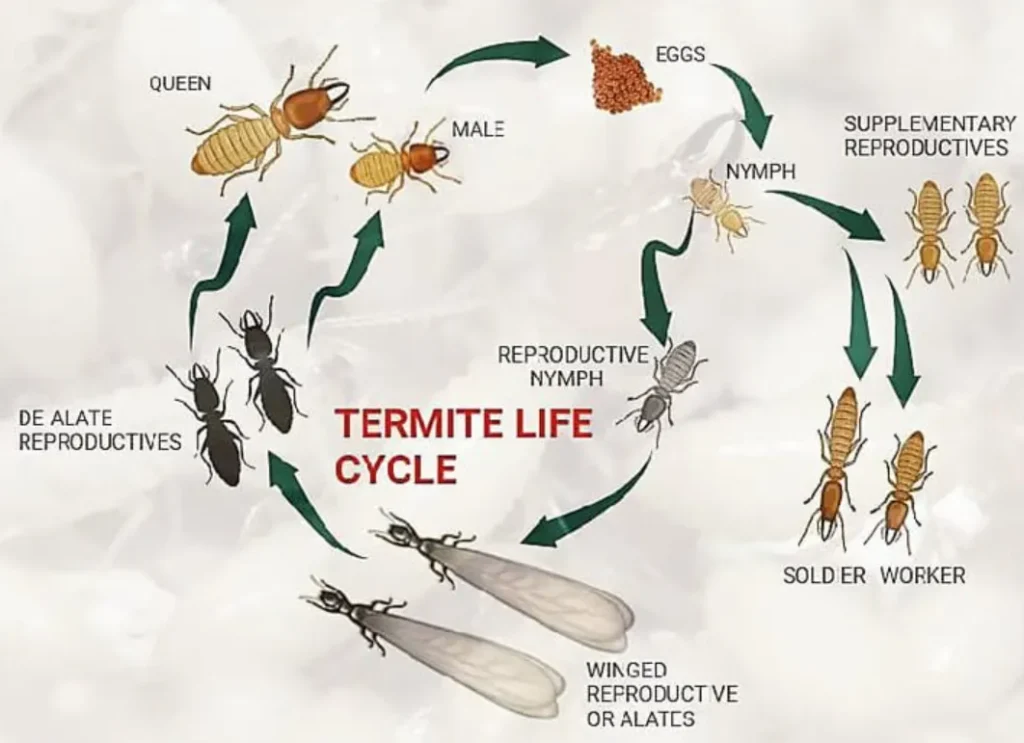
- The queen and king are responsible for reproduction.
- After mating, the queen’s abdomen expands significantly.
- She can lay thousands of eggs daily.
- Workers care for eggs and nymphs.
- Temperature and humidity are carefully maintained.
- Nymphs are fed and groomed regularly.
- Colony members communicate through pheromones.
- Reproductive termites (alates) leave to form new colonies.
This highly organized system ensures colony growth and long-term survival.
The importance of them in this Ecosystem
Decomposition of Organic Matter
Termites break down dead wood and plants, recycling nutrients into the soil.
Soil Fertility Improvement
Their tunneling aerates soil and enhances nutrient distribution.
Food Source for Other Animals
Termites are a vital food source for birds, reptiles, and mammals.
Carbon Cycle Contribution
They play a role in carbon recycling, helping maintain ecological balance. Although termites are pests in homes, they are essential for maintaining healthy ecosystems.
What to do to protect them in nature and save the system for the future
- Preserve natural habitats like forests and grasslands
- Avoid unnecessary pesticide use
- Promote eco-friendly termite treatment methods
- Encourage sustainable forestry practices
- Educate communities about termite benefits
- Support research on termite ecology
- Maintain biodiversity
- Use targeted pest control instead of blanket extermination
Frequently Asked Questions (FAQs)
1. What is the full termite life cycle?
Egg → nymph → worker/soldier/reproductive adult.
2. How fast do termites multiply?
A queen can lay thousands of eggs daily, leading to rapid colony growth.
3. What do termite droppings look like?
Small, pellet-like particles, usually brown or beige.
4. How can I identify termites in my home?
Look for mud tubes, damaged wood, and discarded wings.
5. What is the best termite treatment?
Professional treatments like baiting systems and chemical barriers.
6. How often should termite inspection be done?
At least once a year.
7. Are termites harmful to humans?
They don’t bite humans but cause structural damage.
8. Where can I find termite control near me?
Search local pest control services or consult professionals.
Conclusion
The termite life cycle is a complex, highly organized process that highlights the insects’ incredible adaptability. From eggs to fully developed colony members, termites demonstrate a unique social structure that ensures survival and efficiency.
While they are often seen as destructive pests, termites play a crucial role in maintaining ecological balance. They recycle nutrients, improve soil health, and support food chains.
Understanding their life cycle not only helps in effective pest management but also fosters appreciation for their role in nature. With proper termite inspection, timely termite treatment, and eco-conscious approaches, we can protect our homes while preserving the environment.
Also Read About: penguin life cycle