The life cycle of a ladybird is one of the most fascinating transformations in the insect world. Commonly known as ladybugs or ladybird beetles, these small, colourful insects play a vital role in maintaining ecological balance. Found in gardens, forests, and agricultural lands, ladybirds are admired not only for their beauty but also for their ability to control harmful pests naturally.
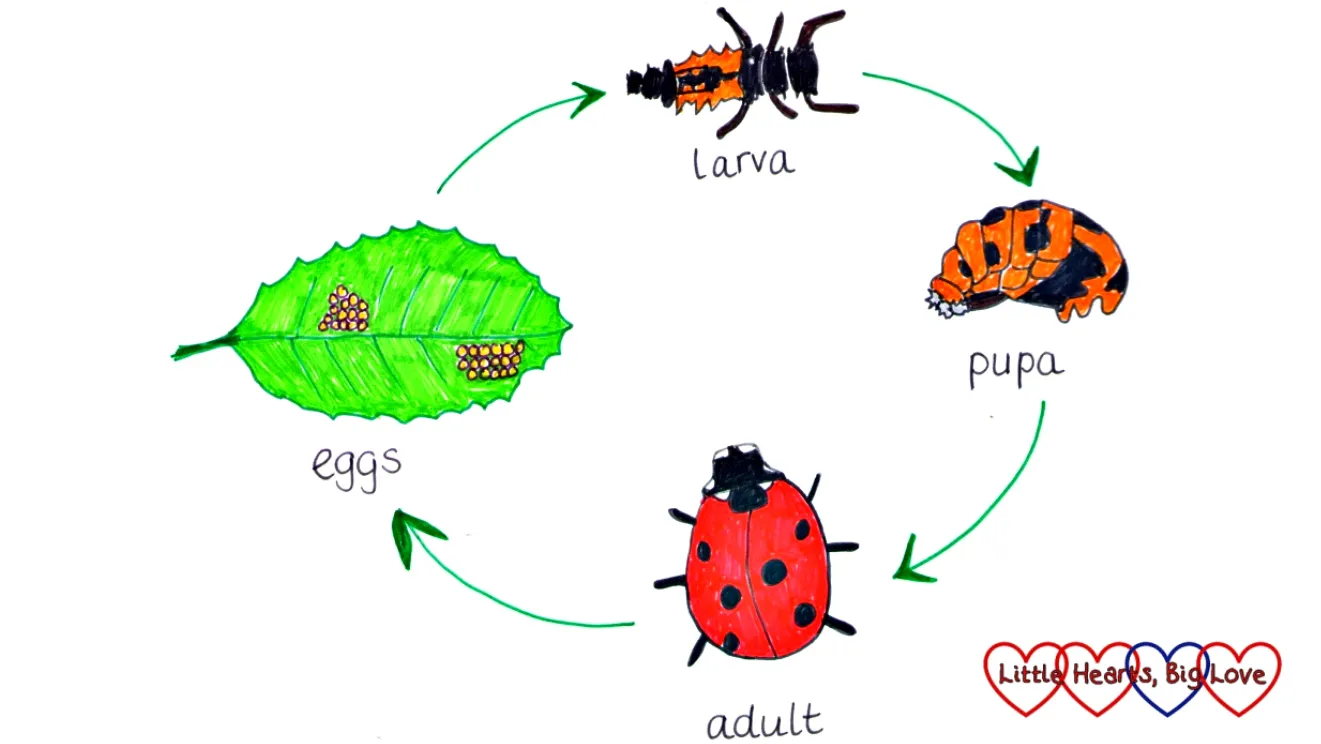
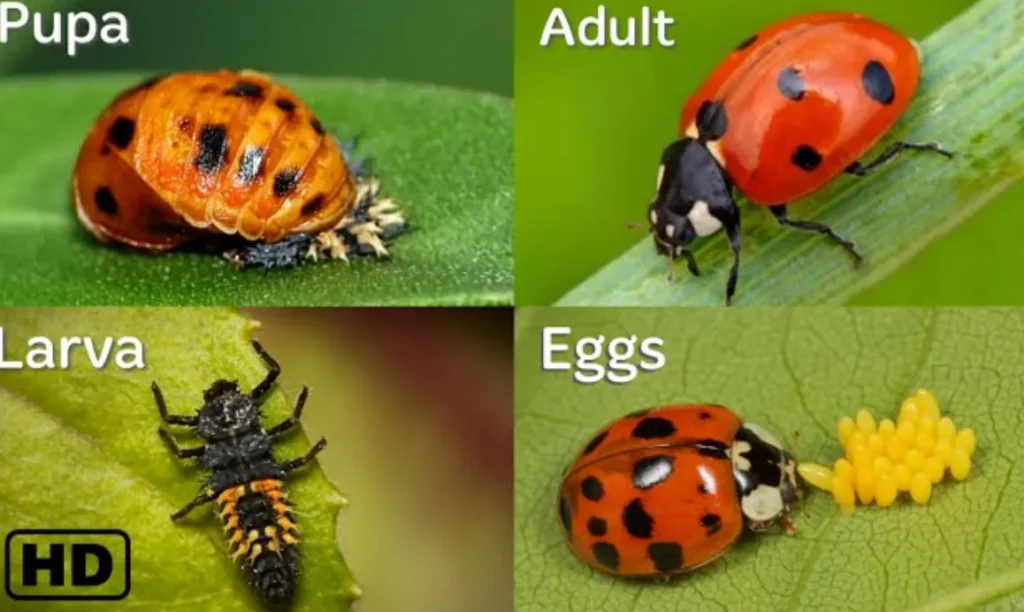
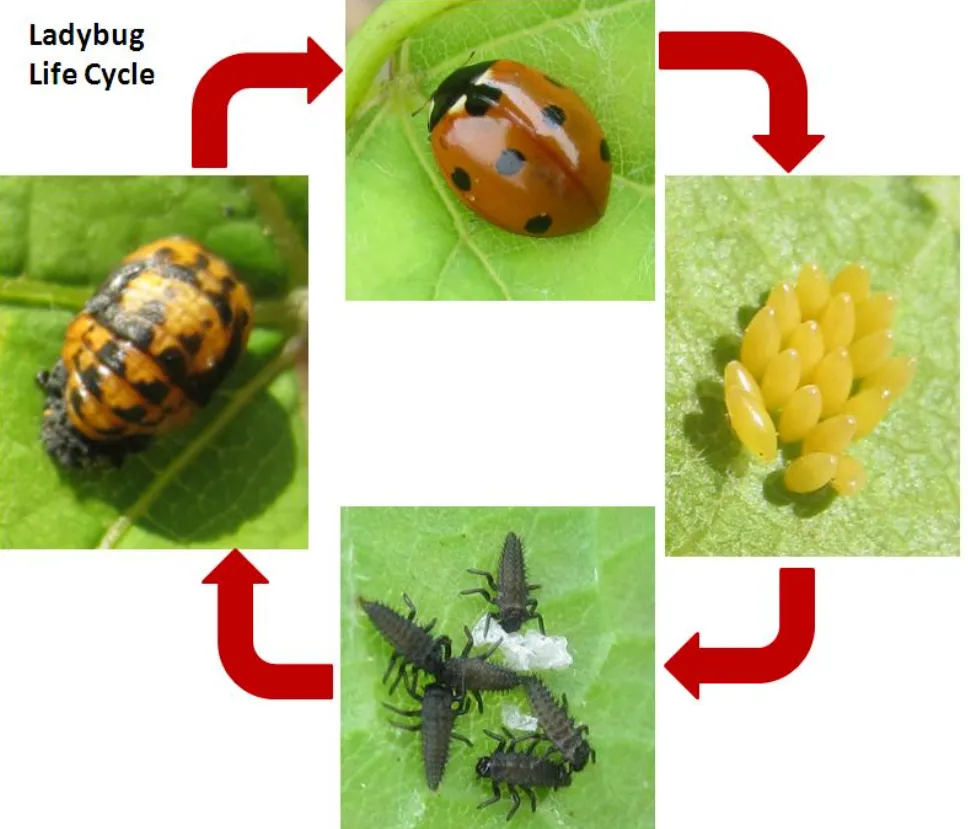
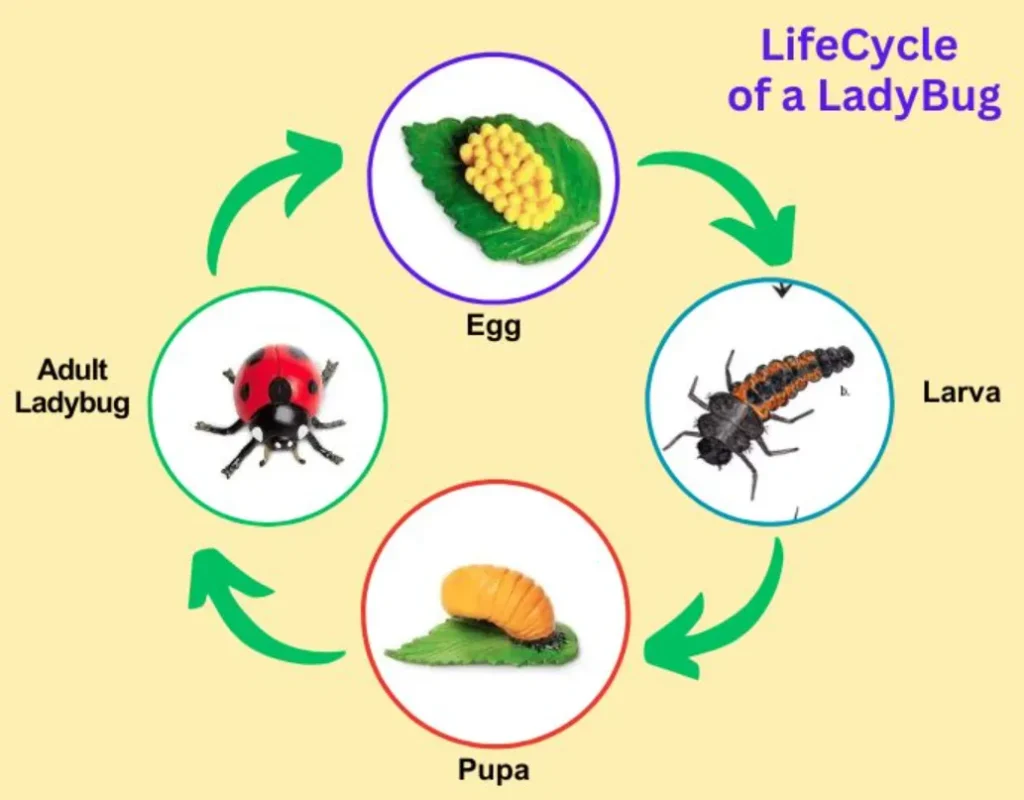
A Ladybird undergoes a complete metamorphosis consisting of four distinct stages: egg, larva, pupa, and adult. Each stage serves a unique purpose in its development and survival. Understanding this life cycle helps gardeners, farmers, and nature enthusiasts appreciate their importance and protect them effectively.
Quick Answers (Most Common Questions)
1. How long does a ladybird’s life cycle take?
The complete life cycle typically takes 4 to 8 weeks, depending on environmental conditions like temperature and food availability.
2. What do ladybird larvae eat?
Ladybird larvae primarily feed on aphids and other soft-bodied insects, making them highly beneficial for pest control.
3. Are ladybirds and ladybugs the same?
Yes, “ladybird” and “ladybug” refer to the same insect. “Ladybird” is commonly used in British English, while “ladybug” is used in American English.
Quick Life Cycle Table
| Stage | Duration | Description |
| Egg | 3–7 days | Yellow/orange eggs laid in clusters on leaves |
| Larva | 2–4 weeks | Active feeders that consume aphids and pests |
| Pupa | 5–7 days | The transformation stage where the larva becomes an adult |
| Adult | Several months | Reproductive and mobile stage with wings |
The History Of Their Scientific Naming
- The scientific name for ladybirds belongs to the family Coccinellidae, derived from Latin meaning “scarlet-colored.”
- The name “ladybird” originated in Europe and is linked to the Virgin Mary, often called “Our Lady.”
- Farmers considered them a blessing because they protected crops from pests.
- In North America, they became known as “ladybugs,” although they are actually beetles, not true bugs.
- Over 6,000 species of ladybird beetles exist worldwide, each with unique patterns and colours.
- Early naturalists classified them based on wing patterns, size, and feeding behaviour.
- Their naming evolved alongside scientific taxonomy, emphasising their ecological importance.
This naming history highlights how humans have long recognised the value of ladybirds in agriculture and nature.
Their Evolution And Their Origin
Ladybirds have a long evolutionary history that dates back millions of years. Fossil evidence suggests that these beetles evolved during the Cretaceous period, alongside flowering plants. As ecosystems became more complex, ladybirds adapted to feed on plant-eating insects like aphids.
Their evolution is closely tied to the rise of agriculture. As crops attracted pests, ladybirds naturally followed as predators. This relationship made them essential in maintaining ecological balance long before humans understood pest control.
Over time, ladybirds developed bright colours such as red, orange, and yellow. These colours serve as warning signals to predators, indicating that they may taste unpleasant or release defensive chemicals. This adaptation significantly improved their survival rate.
Different species evolved in various climates, from tropical regions to temperate zones. Some ladybirds can even survive cold winters by entering a state of dormancy known as diapause.
Today, ladybirds are found worldwide, showcasing their incredible adaptability. Their evolution highlights how small insects can play a massive role in ecosystems by controlling pest populations and supporting biodiversity.
Their main food and its collection process
Ladybirds are natural predators and play a crucial role in pest control. Their diet mainly consists of small, soft-bodied insects.
Main Food Sources:
- Aphids (primary food source)
- Scale insects
- Mealybugs
- Mites
- Whiteflies
Food Collection Process:
- Ladybirds use their strong jaws to capture and consume prey.
- They actively search for plants where aphids are abundant.
- Larvae are even more aggressive feeders than adults.
- A single ladybird can eat up to 50 aphids per day.
- They use their sense of smell to locate food sources.
Ladybirds are highly efficient hunters. Both larvae and adults contribute to reducing pest populations. This makes them extremely valuable in organic farming and gardening.
Their life cycle and ability to survive in nature
Egg Stage
Ladybirds lay eggs in clusters on leaves near food sources. This ensures that larvae have immediate access to food after hatching.
Larval Stage
The larva emerges looking nothing like an adult. It is elongated and often dark with bright spots. This stage is focused on feeding and growth.
Pupal Stage
The larva attaches itself to a surface and forms a pupa. Inside, it transforms into an adult beetle.
Adult Stage
The adult emerges with soft wings that harden over time. It begins feeding, mating, and continuing the cycle.
Ladybirds survive in nature due to their adaptability, warning colouration, and ability to produce defensive chemicals. These traits protect them from predators and harsh environments.
Important Things That You Need To Know
The world of ladybirds is often misunderstood. Here are some key insights involving important related terms.
The term ladybird beetle refers to the scientific classification of these insects. Despite being called bugs, they are actually beetles.
The distinction between ladybird and ladybug is simply a regional language difference. Both names describe the same insect.
A ladybird deed is unrelated to insects—it is a legal estate planning tool. This shows how terminology can overlap in different fields.
The ladybird spider is a completely different species, known for its striking red and black markings. It is not related to ladybirds.
Understanding these differences helps avoid confusion and improves knowledge about biodiversity and terminology.
Ladybirds themselves remain one of the most beneficial insects due to their pest-control abilities and ecological importance.
Their Reproductive Process and raising their children
Ladybirds reproduce through a well-organised process.
- Mating occurs during warm seasons when food is abundant.
- Females lay hundreds of eggs in clusters.
- Eggs are placed near aphid colonies for immediate feeding.
- Not all larvae survive; some may even eat unhatched eggs.
- Parents do not provide direct care after laying eggs.
Despite the lack of parental care, the survival strategy is effective. By laying many eggs, ladybirds ensure that at least some offspring reach adulthood.
The importance of them in this Ecosystem
Natural Pest Control
Ladybirds help control aphid populations, reducing the need for chemical pesticides.
Support Biodiversity
They maintain ecosystem balance by regulating insect populations.
Agricultural Benefits
Farmers rely on ladybirds for sustainable crop protection.
Indicator Species
Their presence indicates a healthy environment.
Ladybirds are essential for maintaining ecological harmony and promoting sustainable agriculture.
What to do to protect them in nature and save the system for the future
- Avoid using chemical pesticides in gardens
- Plant native flowers to attract ladybirds
- Provide shelter, like leaf piles or small habitats
- Maintain biodiversity in your garden
- Avoid disturbing their natural habitats
- Encourage organic farming practices
- Educate others about their importance
- Support conservation programs
Protecting ladybirds ensures a healthier ecosystem and a sustainable future.
Frequently Asked Questions (FAQs)
1. What is the life cycle of a ladybird?
It includes egg, larva, pupa, and adult stages.
2. How many eggs does a ladybird lay?
A female can lay up to 300–400 eggs.
3. How long do ladybirds live?
They typically live for about 1 year.
4. What do ladybirds eat?
They mainly eat aphids and other small insects.
5. Where do ladybirds live?
They are found worldwide in gardens, forests, and farms.
6. Are ladybirds harmful to humans?
No, they are harmless and beneficial.
7. Why are ladybirds colourful?
Their colours warn predators of the defensive chemicals they produce.
8. Do ladybirds hibernate?
Yes, they enter a dormant state during winter.
Conclusion
The life cycle of a ladybird is a remarkable journey of transformation and survival. From tiny eggs to powerful pest controllers, ladybirds play a crucial role in maintaining ecological balance. Their ability to adapt, reproduce efficiently, and control harmful insects makes them invaluable to both nature and agriculture.
Understanding their life cycle helps us appreciate their importance and encourages us to protect them. By adopting eco-friendly practices and preserving their habitats, we can ensure that these beneficial insects continue to thrive.
Ladybirds are not just beautiful insects—they are essential guardians of our environment.
Also Read About: termite life cycle