The beetle life cycle is one of the most fascinating biological processes in the insect world. Beetles belong to the order Coleoptera, the largest group of animals on Earth, with over 400,000 known species. From the massive Hercules beetle to the colourful blue beetle, these insects undergo complete metamorphosis, allowing them to adapt and survive in diverse environments.
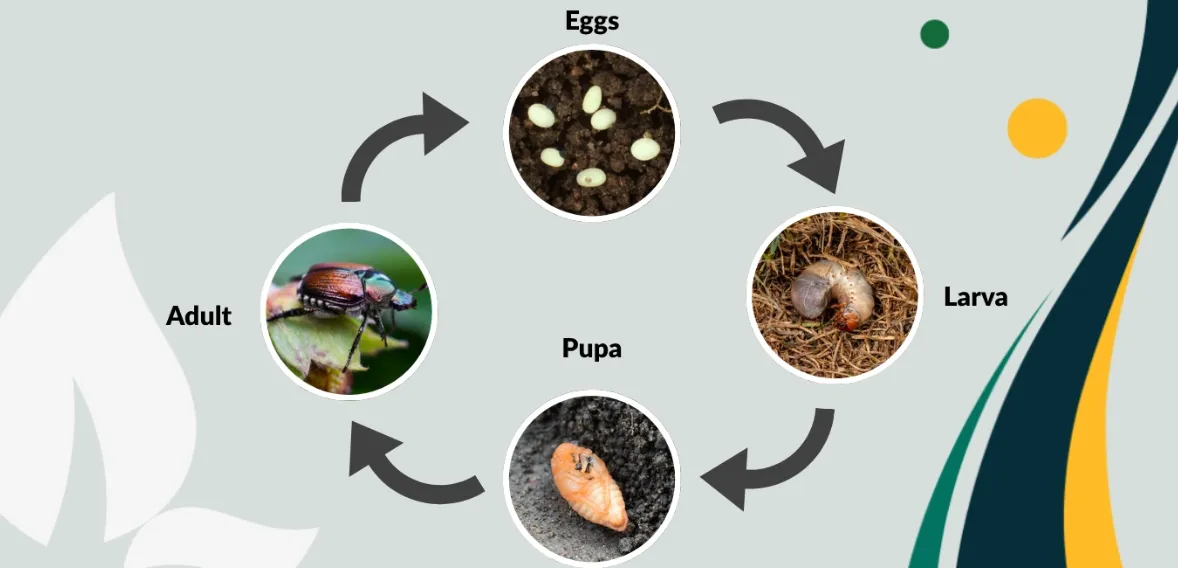
Understanding their life cycle not only helps us appreciate nature but also reveals their crucial role in ecosystems. Beetles contribute to Decomposition, Pollination, and even pest control. Their life journey consists of four main stages: egg, larva, pupa, and adult.
Quick Answers (Most Common Questions)
1. What are the stages of the beetle life cycle?
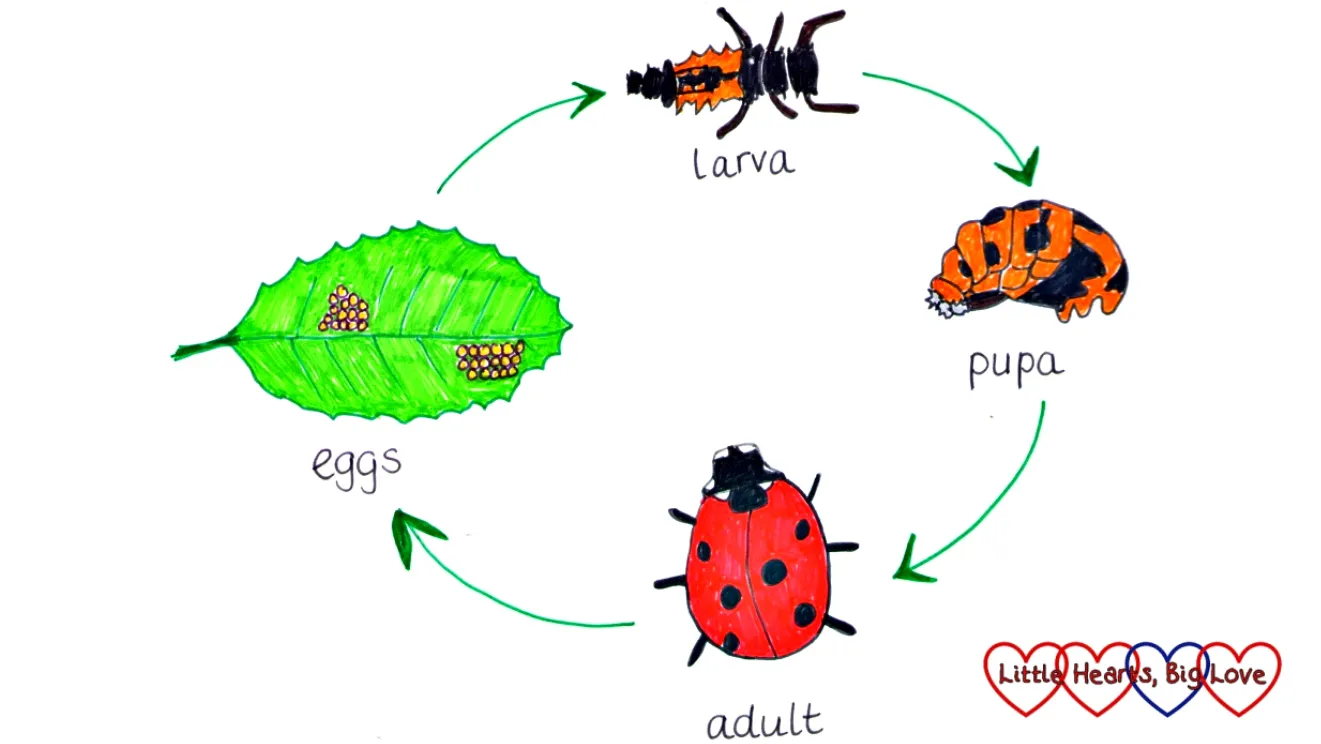
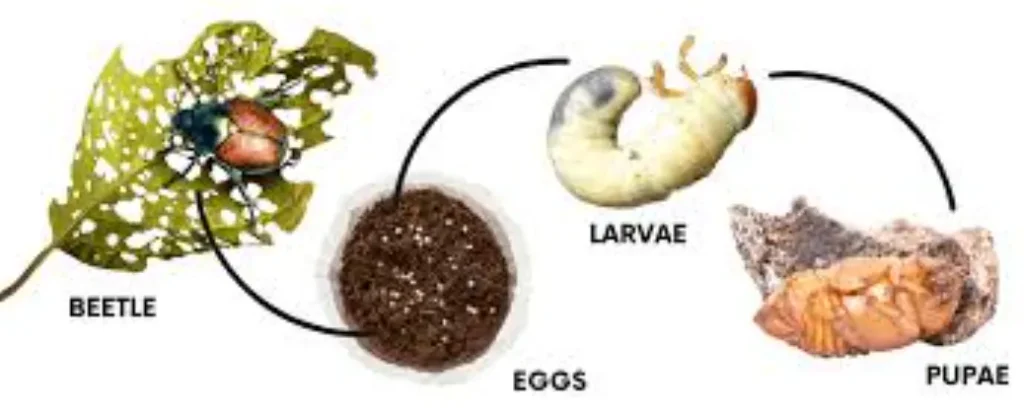
The beetle life cycle includes four stages: egg → larva → pupa → adult.
2. How long does a beetle live?
It varies by species—some live a few weeks, while others, like rhino beetles, can live several months to years.
3. Where do beetles lay their eggs?
Most beetles lay eggs in soil, wood, or decaying matter where larvae can easily find food.
Quick Life Cycle Table
| Stage | Description | Duration (Approx.) |
| Egg | Tiny, soft eggs laid in soil or organic matter | 4–14 days |
| Larva | The worm-like stage is focused on feeding and growth | Weeks to months |
| Pupa | Transformation stage inside a protective casing | 1–3 weeks |
| Adult | Fully developed beetle capable of reproduction | Weeks to years |
The History Of Their Scientific Naming
The scientific classification of beetles has evolved over centuries:
- Origin of Name:
- The term Coleoptera comes from Greek words meaning “sheath wings,” referring to their hardened forewings.
- Carl Linnaeus Contribution:
- In the 18th century, Linnaeus categorised beetles under Systema Naturae, laying the foundation for modern taxonomy.
- Diversity Recognition:
- Scientists soon realised beetles were the most diverse animal group, leading to deeper classification.
- Modern Classification:
- Today, beetles are divided into suborders like Adephaga and Polyphaga based on feeding habits and anatomy.
- DNA-Based Taxonomy:
- Modern research uses genetic data to refine classifications and understand evolutionary relationships.
This scientific journey shows how beetles became one of the most studied insect groups in biology.
Their Evolution And Their Origin
Beetles have an ancient and remarkable evolutionary history. Fossil records suggest that beetles first appeared around 270 million years ago, during the Permian period. This makes them one of the oldest surviving insect groups on Earth.
Their success is largely due to their unique adaptation—the hardened forewings called elytra. These protective covers shield their delicate wings and bodies from predators, harsh environments, and physical damage. This adaptation allowed beetles to colonise nearly every habitat, from forests to deserts.
During the age of dinosaurs, beetles diversified rapidly. As flowering plants evolved, beetles adapted alongside them, forming symbiotic relationships. Some species became pollinators, while others evolved to feed on wood, fungi, or decaying matter.
Natural selection played a major role in shaping beetle diversity. For example:
- Rhino beetles developed horns for mating battles
- Bombardier beetles evolved chemical defences
- Hercules beetles became some of the largest flying insects
Today, beetles account for nearly 40% of all insect species, demonstrating their unmatched evolutionary success.
Their Main Food and Its Collection Process
Beetles have highly diverse diets depending on their species and habitat.
Main Food Sources:
- Plant Material: Leaves, roots, seeds
- Wood and Bark: Especially for larvae
- Fungi: Many beetles thrive on mushrooms
- Dead Organic Matter: Essential for Decomposition
- Other Insects: Some beetles are predators
Food Collection Process:
- Strong Mandibles:
- Beetles use powerful jaws to chew and break down food.
- Chemical Detection:
- They detect food using antennae sensitive to smell.
- Burrowing Behaviour:
- Larvae often burrow into soil or wood to access nutrients.
- Nocturnal Activity:
- Many beetles feed at night to avoid predators.
- Specialised Feeding:
- Some species, like dung beetles, roll and store food for later use.
This adaptability in feeding is a key reason for their survival across ecosystems.
Their Life Cycle and Ability to Survive in Nature
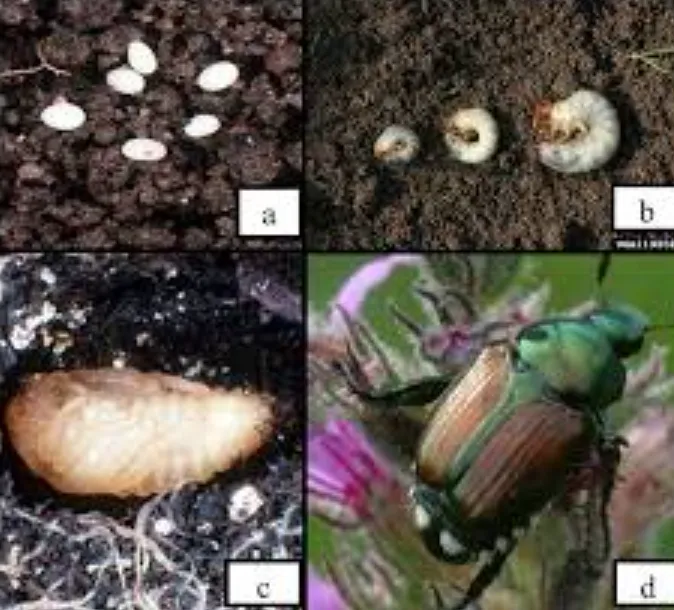
Egg Stage
Beetles lay eggs in protected environments, such as soil or decaying wood. This ensures safety and immediate access to food for larvae.
Larval Stage
Larvae are highly active feeders. They grow rapidly, shedding their skin multiple times. This stage is critical for energy storage.
Pupal Stage
Inside the pupa, beetles undergo a complete transformation. Their bodies restructure into adult form.
Adult Stage
Adults focus on reproduction and dispersal. Some species also feed actively.
Beetles survive due to:
- Strong protective shells
- Ability to adapt to different climates
- Diverse diets
- Defensive mechanisms like toxins or camouflage
Their Reproductive Process and Raising Their Children
Beetles exhibit fascinating reproductive behaviours:
- Mating Rituals:
- Many species perform courtship displays or fights (e.g., rhino beetles).
- Egg Laying:
- Females choose safe locations with abundant food.
- Parental Care:
- Some beetles, such as dung beetles, provide food for their larvae.
- High Reproduction Rate:
- Females can lay dozens to hundreds of eggs.
- Larval Independence:
- Most larvae survive without parental help.
- Protective Strategies:
- Eggs are often hidden or camouflaged.
This efficient reproduction ensures the survival of the species even in harsh environments.
Importance of Them in this Ecosystem
🌱 Decomposition
Beetles break down dead plants and animals, recycling nutrients into the soil.
🌼 Pollination
Some beetles help pollinate flowers, supporting plant reproduction.
🐛 Pest Control
Predatory beetles reduce harmful insect populations.
🌍 Soil Health
Burrowing beetles improve soil aeration and fertility.
🦅 Food Source
They serve as prey for birds, mammals, and reptiles.
Beetles are essential for maintaining ecological balance.
Important Things That You Need To Know
Beetles are not just ordinary insects—they appear in science, culture, and even technology. Let’s explore some interesting types and references:
🪲 Hercules Beetle
One of the largest beetles in the world, known for its impressive horn and strength.
🪲 Rhino Beetle
Famous for its horn-like structures used in battles during mating season.
🪲 Bombardier Beetle
Known for its explosive chemical defence mechanism, which sprays hot liquid.
🪲 Blue Beetle
A term used both for colourful beetle species and a popular superhero character.
🚗 Volkswagen Beetle
A famous car named after the beetle due to its rounded shape.
🎬 Beetlejuice
A cultural reference from a popular movie, inspired by the quirky nature of beetles.
These examples show how beetles influence both nature and human culture.
What to Do to Protect Them in Nature and Save the System for the Future
Protecting beetles is crucial for ecosystem stability:
- Preserve Natural Habitats
- Avoid deforestation and protect forests and wetlands.
- Reduce Pesticide Use
- Chemicals harm beetle populations and biodiversity.
- Support Organic Farming
- Encourages natural insect balance.
- Plant Native Vegetation
- Provides food and shelter for beetles.
- Maintain Dead Wood and Leaves
- Essential for many beetle species.
- Promote Environmental Awareness
- Educate others about beetle importance.
- Protect Soil Health
- Avoid pollution and excessive land use.
- Encourage Biodiversity Conservation
- Balanced ecosystems support beetle survival.
Frequently Asked Questions (FAQs)
1. What is the beetle life cycle called?
It is called complete metamorphosis.
2. How many stages are in a beetle’s life cycle?
There are four stages: egg, larva, pupa, and adult.
3. Do all beetles have the same life cycle?
Yes, but duration and behaviour vary by species.
4. What do beetle larvae eat?
They feed on wood, plants, fungi, or organic matter.
5. How long does the larval stage last?
It can last from weeks to several months.
6. Where do beetles live?
They live in forests, soil, water, and even deserts.
7. Are beetles harmful or beneficial?
Most are beneficial for ecosystems.
8. Why are beetles so diverse?
Their adaptability and evolution over millions of years.
Conclusion
The beetle life cycle is a remarkable example of nature’s efficiency and adaptability. From tiny eggs hidden in soil to fully developed adults with protective shells, beetles demonstrate one of the most successful survival strategies on Earth.
Their ability to evolve, adapt, and thrive in nearly every environment makes them essential to global ecosystems. Whether breaking down organic matter, controlling pests, or supporting plant life, beetles play a vital role in maintaining ecological balance.
Understanding their life cycle not only deepens our appreciation of biodiversity but also highlights the importance of conservation. Protecting beetles means protecting the foundation of many ecosystems.
By preserving habitats and promoting sustainable practices, we ensure that these incredible insects continue to thrive for future generations.
Also Read: sea turtle life cycle