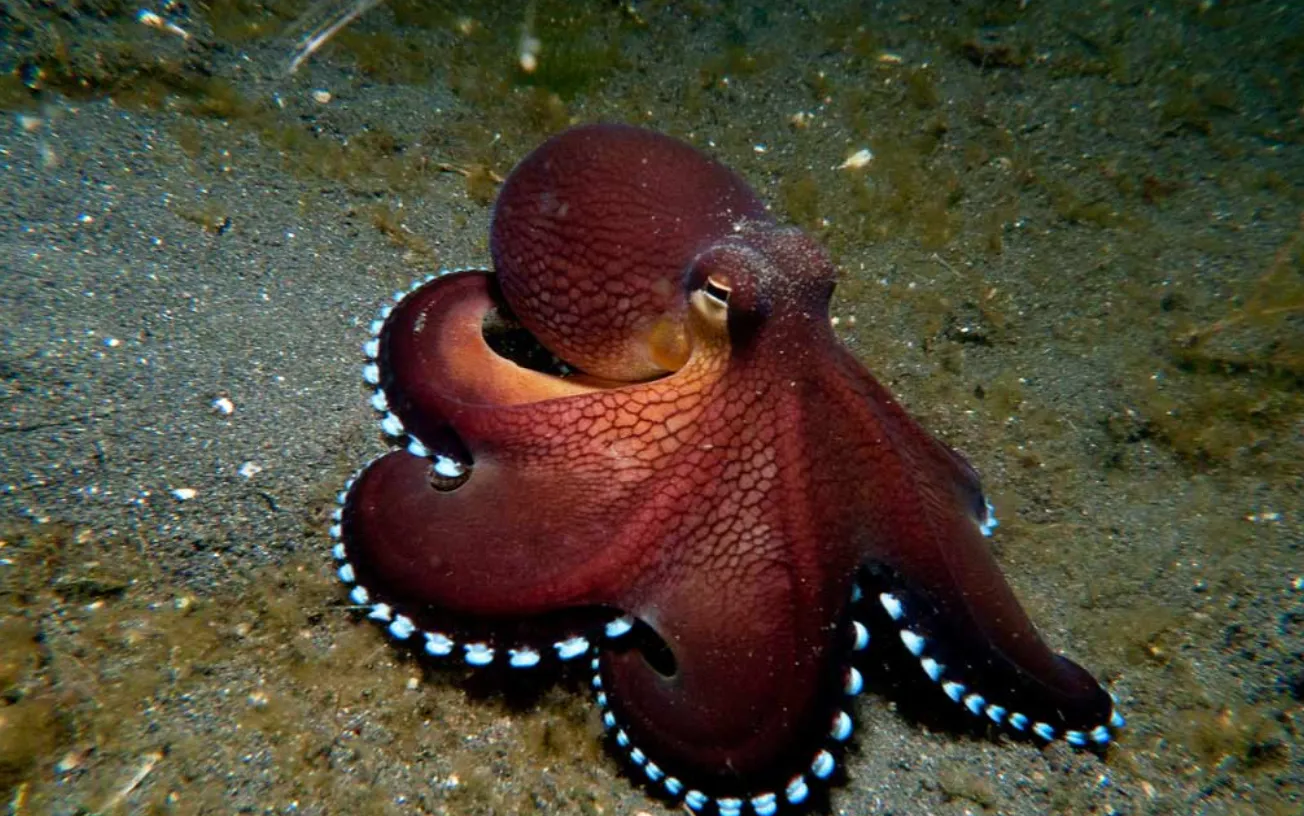
The octopus life cycle is one of the most fascinating journeys in the ocean. An octopus begins life as a tiny egg, often smaller than a grain of rice, and grows into a smart, flexible, and highly skilled marine predator. Even though most octopuses live only a short time, their lives are full of fast growth, hunting, hiding, mating, egg care, and survival challenges.
Most octopuses are solitary animals. They do not grow up with parents like mammals do. After hatching, baby octopuses must survive almost completely on their own. Many species spend their early life floating in the water as tiny young before settling on the sea floor.
Different species have different life spans. A common octopus may live around one to two years, while the giant Pacific octopus can live around three to five years. Smaller species, such as the blue-ringed octopus, also have short but intense life cycles.
Understanding the octopus life cycle helps us understand the balance of marine life. Octopuses eat crabs, shrimp, clams, fish, and other sea animals. At the same time, they become food for sharks, dolphins, seals, eels, large fish, and humans. This makes them both hunters and prey in the ocean food web.
Q: How long is the octopus life cycle?
A: Most octopuses complete their life cycle in about one to two years, but larger species like the giant Pacific octopus can live around three to five years.
Q: What are the main stages of the octopus life cycle?
A: The main stages are egg, embryo, hatchling, paralarva or juvenile, adult, mating, egg brooding, and senescence.
Q: Why do many octopuses die after reproduction?
A: Most octopuses reproduce only once. After mating, males often die soon, and females usually stop eating while guarding their eggs. After the eggs hatch, the mother usually dies.
The History of Their Scientific Naming
The word octopus comes from ancient Greek roots meaning eight feet. This name fits the animal very well because octopuses have eight flexible arms, each lined with strong and sensitive suckers. These arms help them move, hunt, taste, touch, and explore the world around them.
In scientific classification, octopuses belong to the phylum Mollusca, class Cephalopoda, and order Octopoda. The common octopus is scientifically known as Octopus vulgaris. The species name vulgaris means common, which is why Octopus vulgaris is often called the common octopus.
The order name Octopoda became important when scientists needed to separate octopuses from other cephalopods such as squids, cuttlefish, and nautiluses. Octopuses have eight arms and no external shell, while squids and cuttlefish have different body structures.
Scientists also divide octopuses into different groups. Many shallow water species are called incirrate octopuses. Deep-sea species such as the dumbo octopus belong to the group of cirrate octopuses. Scientific naming helps researchers avoid confusion because common names can change from one country or language to another.
Their Evolution And Their Origin
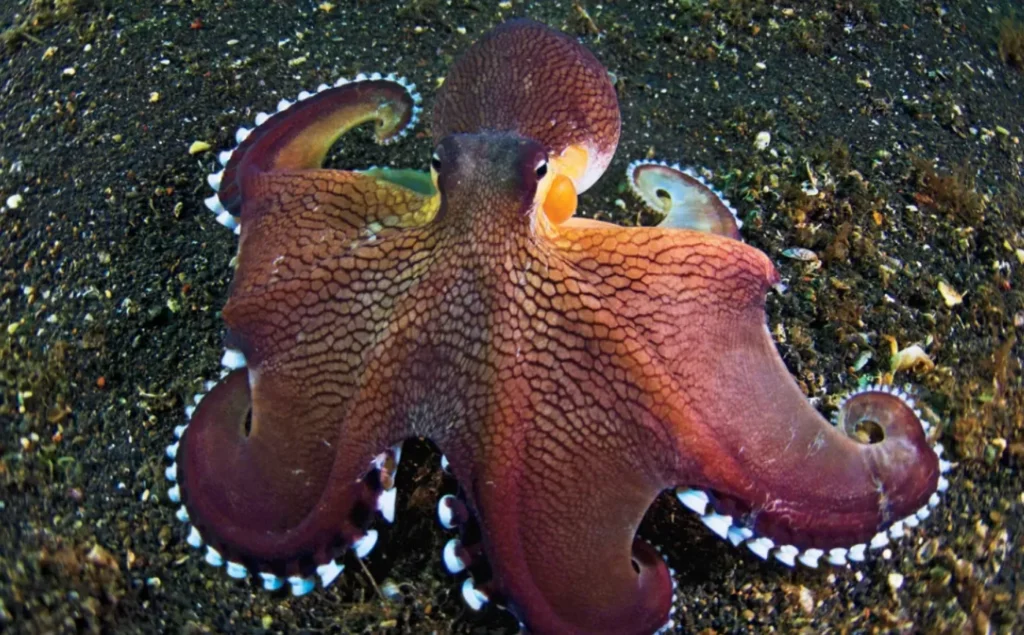
The origin of octopuses is connected to the long history of cephalopods, a group of marine animals that includes octopuses, squids, cuttlefish, and nautiluses. Ancient cephalopods had hard shells, but modern octopuses evolved in a different direction. Their bodies became soft, flexible, and highly adaptable.
This soft body became one of their greatest survival tools. Unlike animals with hard shells or bones, an octopus can squeeze through tiny cracks, hide inside rocky dens, escape predators, and move across the sea floor with great control. Their body design allows them to live in places where many other animals cannot enter.
The fossil history of octopuses is difficult to study because soft bodies do not fossilize easily. Bones, teeth, and shells are much more likely to survive in fossils. Since octopuses have mostly soft tissues, much of their ancient history remains harder to trace. Still, scientists know that octopuses developed from earlier cephalopod ancestors over millions of years.
Evolution also shaped their intelligence. Octopuses have a complex nervous system, excellent vision, strong memory, and impressive problem-solving ability. A large part of their nerve cells is found in their arms, which means each arm can sense and react in a very advanced way.
Their skin is another evolutionary wonder. Octopuses can change color, pattern, and texture to match rocks, sand, coral, or seaweed. This camouflage protects them from predators and helps them sneak up on prey.
Today, octopuses are considered among the most intelligent invertebrates on Earth. Their evolution shows how life can become highly advanced without bones, fur, feathers, or a backbone.
Important Things That You Need To Know
The octopus life cycle varies depending on the species. A regular octopus may live a short but active life, growing fast and reproducing once before death. This makes its life cycle very different from that of many fish, turtles, or mammals.
The dumbo octopus is a deep-sea octopus known for its ear-like fins. These fins look like the ears of the cartoon elephant Dumbo, which is how the animal got its common name. Unlike many shallow-water octopuses, the dumbo octopus uses its fins to move gently through deep ocean water.
The blue-ringed octopus is small but extremely famous for its bright blue rings and powerful venom. It usually shows its blue rings as a warning when it feels threatened. This species reminds us that even small octopuses can have strong survival defenses.
The giant Pacific octopus is one of the largest known octopus species. It can grow very large, eat crabs and clams, and live longer than many smaller octopus species. Even this huge animal starts life as a tiny egg.
Searches like octopus drawing are common among students, artists, and children who want to learn about octopus body parts. The film My Octopus Teacher also helped many people feel emotionally connected to octopuses by showing their intelligence, curiosity, and wild behavior. The term “giant octopus” usually refers to a really large species, especially the giant Pacific octopus, although it is also common in sea monster stories.
Their main food and its collection process
Octopuses are carnivorous animals. This means they eat other animals to survive. Their main food depends on their species, size, age, and habitat. Most octopuses feed on crabs, shrimp, lobsters, clams, snails, small fish, and sometimes other cephalopods.
A young octopus usually starts by eating tiny animals in the water. As it grows, it becomes strong enough to hunt larger prey. Adult octopuses are skilled hunters and use their arms, suckers, vision, camouflage, and intelligence to collect food.
• Hunting from a den
Many octopuses live in dens under rocks, inside coral gaps, or in sea floor holes. They often leave the den to hunt and then return to safety.
• Using arms and suckers
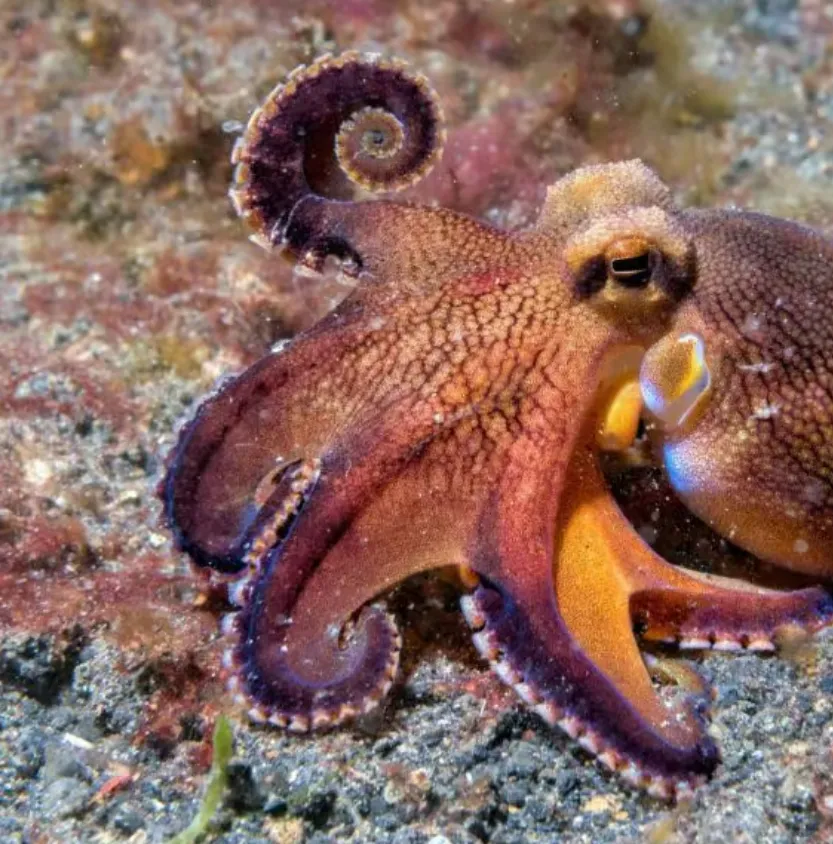
An octopus has eight arms covered with suckers. These suckers help the octopus grip prey, taste surfaces, and explore hidden spaces.
• Opening hard shells
Octopuses can pull shells apart using their strong arms. Some can also drill small holes into shells and use saliva to weaken the prey inside.
• Using venom
Many octopuses have venomous saliva that helps them control prey. The blue-ringed octopus is especially famous for its powerful venom.
• Camouflage hunting
Octopuses can hide by changing their color and skin texture. This helps them approach prey without being noticed.
• Night hunting
Many octopuses are more active at night. Darkness helps them stay hidden from predators while searching for food.
Food is very important during the octopus’s life cycle because octopuses grow quickly. Since most species live only a short time, they need a steady supply of food to reach maturity and reproduce successfully.
Their life cycle and ability to survive in nature
Egg Stage
The octopus life cycle begins when the female lays eggs in a safe and hidden place. This may be inside a den, cave, rock crack, coral space, or protected sea floor area. The number of eggs depends on the species. Some octopuses lay fewer eggs, while others lay thousands or even hundreds of thousands.
The mother attaches the eggs in strings or clusters. She stays close to them and protects them from predators, dirt, and parasites.
Embryo Stage
Inside each egg, a tiny octopus slowly develops. Water temperature can affect how long this stage lasts. Warmer water may speed development, while colder water can slow it down.
During this time, the mother gently moves water over the eggs. This keeps oxygen flowing and helps the embryos survive.
Hatchling Stage
When the eggs are ready, tiny octopuses hatch. They are very small but already have the basic body shape of an octopus. They have arms, suckers, eyes, and the instinct to hunt and hide.
Many baby octopuses enter the open water and live among plankton for a period of time. This stage is dangerous because many small sea animals eat plankton.
Juvenile Stage
After early development, the young octopus settles closer to the sea floor. It begins to live more like an adult, hiding in small spaces and hunting tiny prey.
At this stage, survival depends on shelter, camouflage, quick movement, and the availability of food.
Adult Stage
The adult octopus becomes a strong hunter. It uses camouflage, ink, flexible arms, sharp vision, and quick learning to survive. It may hide in dens, squeeze through narrow openings, and escape predators with jet movement.
Final Stage
After mating and reproduction, many octopuses enter senescence. This is the final stage of life. The body weakens, feeding decreases, and the animal eventually dies.
Their Reproductive Process and raising their children
Octopus reproduction is one of the most emotional and unusual parts of the octopus life cycle. Most octopuses reproduce only once in their lifetime. This means their entire adult life leads toward one final reproductive event.
• Finding a mate
Adult males search for females when they are ready to reproduce. Since octopuses are usually solitary, mating is one of the few times adults come close together.
• The special mating arm
The male uses a modified arm called a hectocotylus. This arm transfers sperm packets to the female. It is one of the most important parts of octopus reproduction.
• Egg laying
After mating, the female lays eggs in a safe and hidden place. She may attach them to the roof or wall of her den in long strings or clusters.
• Mother care
The mother guards the eggs carefully. She cleans them, protects them, and pushes fresh water over them so they receive oxygen.
• Little or no feeding
During egg brooding, many female octopuses stop eating or eat very little. They spend most of their energy protecting their eggs.
• Hatching
When the eggs hatch, the baby octopuses leave the egg strings and begin life on their own.
• No long childhood care
Unlike mammals or birds, octopus mothers do not feed or teach their young after hatching. The babies must hunt, hide, and survive on their own.
• Death after reproduction
After mating, males often die shortly thereafter. Females usually die after the eggs hatch. This makes the octopus’s life cycle short, intense, and deeply connected to reproduction.
The importance of them in this Ecosystem
Octopuses control prey populations.
Octopuses help control the number of crabs, shrimp, clams, snails, small fish, and other sea animals. Without predators such as octopuses, some prey species could grow too quickly, disrupting the balance of marine habitats.
They are food for larger animals.
Octopuses are also prey. Sharks, seals, dolphins, moray eels, large fish, seabirds, and humans may eat them. This makes the octopus an important link between smaller sea animals and larger predators.
They support the balance between the reef and the sea floor.
Many octopuses live around reefs, rocky bottoms, seagrass beds, and sandy sea floors. Their hunting behavior affects how prey animals move, hide, and reproduce. This helps shape the local marine community.
They show ocean health.
Octopuses depend on clean water, healthy prey populations, oxygen, and safe habitats. If their numbers suddenly change, it may indicate that conditions in the marine environment are changing.
They support science and education.
Octopuses are important for studying intelligence, nervous systems, camouflage, animal behavior, and evolution. Their unique body and brain structure have inspired research in marine biology, robotics, and neuroscience.
They help people care about the ocean.
Stories, documentaries, and research about octopuses help people feel closer to marine life. My Octopus Teacher showed many viewers that octopuses are curious, intelligent, and sensitive wild animals.
What to do to protect them in nature and save the system for the future
• Protect marine habitats
Octopuses need healthy reefs, rocky shores, seagrass beds, tide pools, and deep-sea areas for shelter, hunting, and reproduction.
• Reduce plastic pollution
Plastic waste can harm octopuses directly. It can also damage the prey and habitats they depend on.
• Support responsible fishing
Overfishing can reduce octopus populations and disturb the food web. Better fishing rules help keep marine life balanced.
• Avoid touching wild octopuses
Touching an octopus can stress or injure it. Some species, especially the blue-ringed octopus, can also be dangerous to humans.
• Protect egg brooding females
Females guarding eggs are very vulnerable. Removing a brooding female can destroy an entire group of developing young.
• Reduce carbon pollution
Ocean warming, acidification, and low oxygen areas can affect octopus development, prey availability, and habitat quality.
• Choose sustainable seafood
People searching for seafood, including sushi nigiri octopus near me, should consider whether the seafood comes from responsible sources.
• Support marine protected areas
Protected marine zones give octopuses and their prey safe places to breed, feed, and recover.
• Teach children through art and science
An octopus drawing activity can help children learn about arms, suckers, camouflage, eggs, and ocean protection.
• Respect deep-sea life
Deep-sea species like the dumbo octopus live in fragile environments. Pollution, careless exploration, and deep-sea mining may cause long-lasting damage.
Frequently Asked Questions FAQs
Q: What is the octopus life cycle?
A: The octopus life cycle is the journey from egg to hatchling, juvenile, adult, mating, egg brooding, and death. Most octopuses live short lives but grow very quickly.
Q: How many eggs does an octopus lay?
A: It depends on the species. Some octopuses lay fewer than 100 eggs, while others can lay thousands or even hundreds of thousands.
Q: Why does the mother octopus die after eggs hatch?
A: Many female octopuses stop eating while guarding their eggs. After the eggs hatch, their bodies enter a final decline called senescence, which usually leads to death.
Q: Do baby octopuses stay with their mother?
A: No. After hatching, baby octopuses usually survive alone. The mother does not feed or teach them after they leave the eggs.
Q: What do baby octopuses eat?
A: Very young octopuses eat tiny planktonic animals. As they grow, they begin hunting small crustaceans, mollusks, and fish.
Q: How long does a common octopus live?
A: The common octopus, also known as Octopus vulgaris, usually lives for one to two years. Its life span depends on food, water temperature, predators, and habitat.
Q: Is the blue ringed octopus’s life cycle different?
A: Yes. The blue-ringed octopus is small, matures quickly, and usually lives about 2 years. It is also famous for its powerful venom and bright blue warning rings.
Q: What is the longest living octopus?
A: The giant Pacific octopus is one of the longest living octopus species. It can live for 3 to 5 years and is one of the largest known octopuses.
Conclusion
The octopus life cycle is short, powerful, and full of wonder. From a tiny egg to a clever adult hunter, an octopus shows how nature can create intelligence, flexibility, and survival skills in a soft-bodied animal with no bones.
Octopuses grow quickly, hunt carefully, hide with amazing camouflage, and reproduce through one final life event. Their mothers show strong care by protecting eggs until hatching, even though this often costs them their lives.
These animals are not only interesting. They are also important to the marine Ecosystem. They control prey populations, feed larger predators, and help scientists understand intelligence, evolution, and ocean health.
Protecting octopuses means protecting clean oceans, healthy habitats, responsible fishing, and marine balance. The more we understand their life cycle, the better we can respect and protect the hidden world beneath the sea.
Also Read: life cycle salamander
About the Author