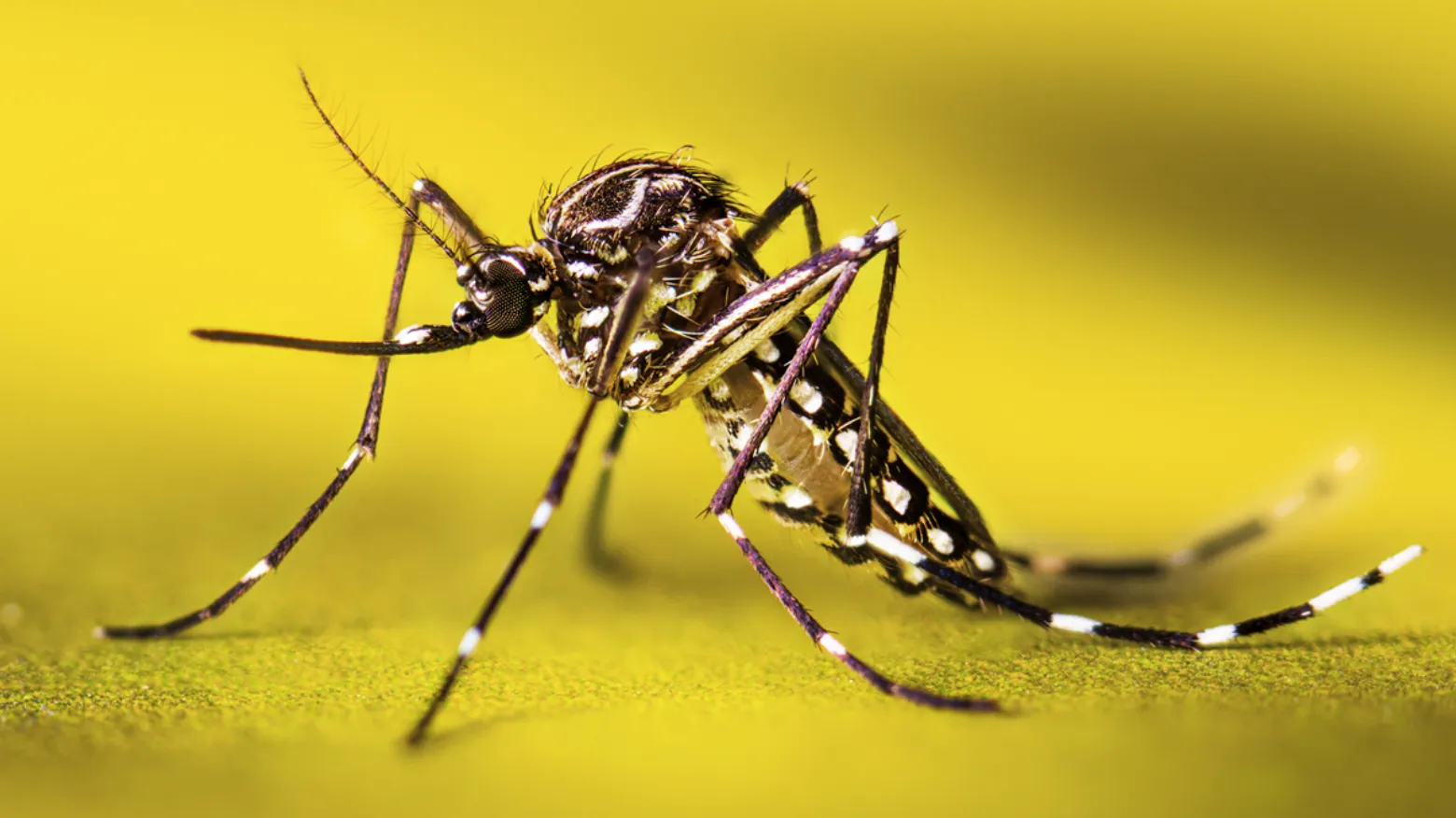
The mosquito life cycle is a fascinating biological process that plays a crucial role in both nature and human health. Mosquitoes are among the most widespread insects on Earth, thriving in diverse environments—from tropical forests to urban areas. Understanding their life cycle helps in effective mosquito control and ecological awareness.
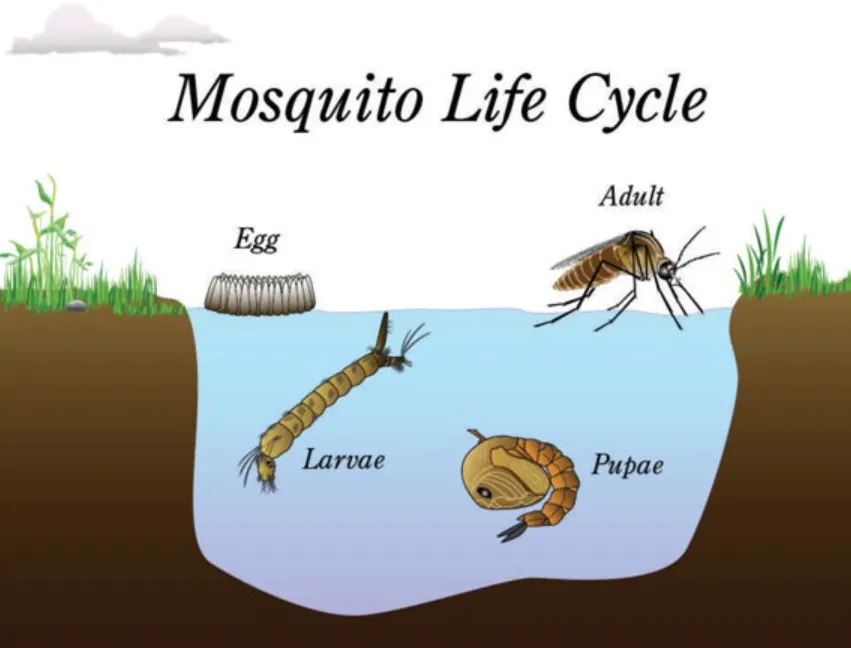
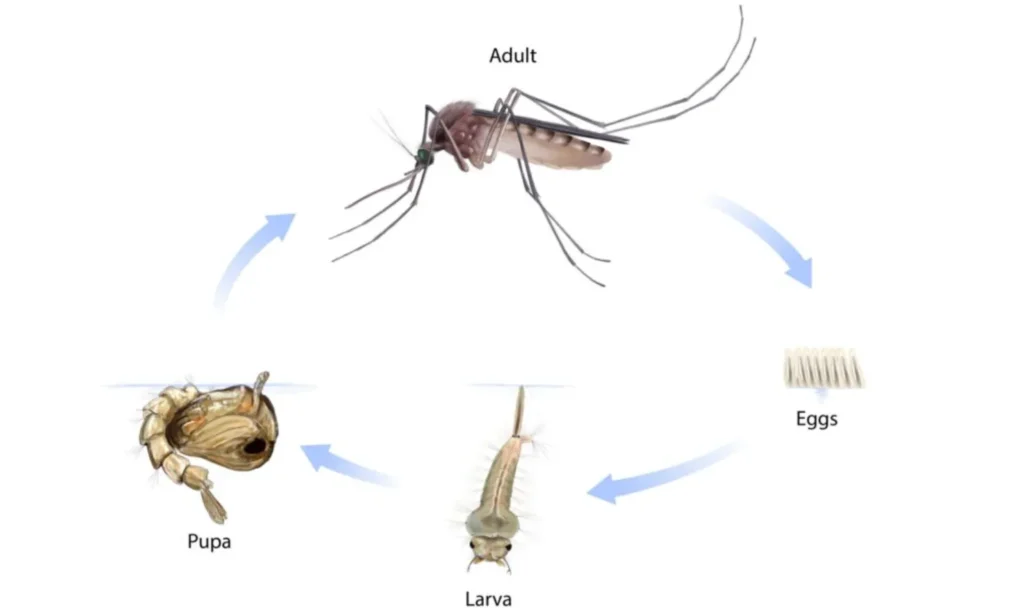
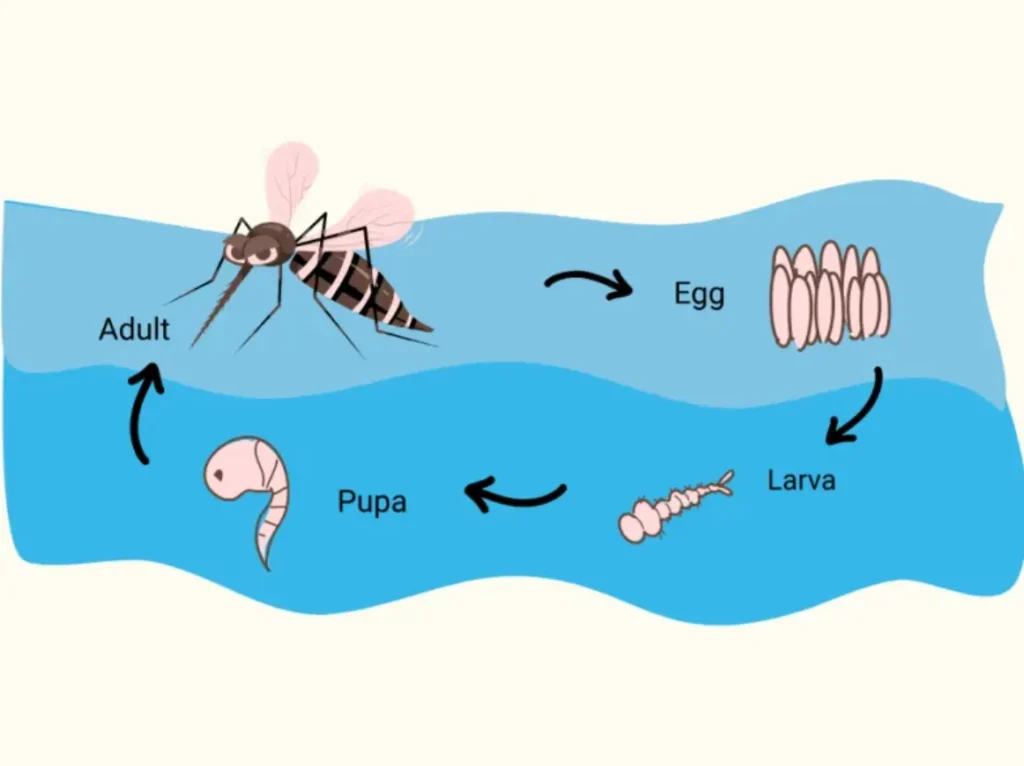
A mosquito undergoes complete metamorphosis, passing through four distinct stages: egg, larva, pupa, and adult. Each stage has unique characteristics and survival strategies, allowing mosquitoes to adapt quickly to changing conditions.
Despite their reputation as disease carriers, mosquitoes are also an essential part of the ecosystem. They serve as food for many animals and help pollinate.
🔎 Quick Answers (Most Common Questions)
1. How long is the mosquito life cycle?
The mosquito life cycle typically lasts 7 to 14 days, depending on temperature and environmental conditions.
2. Where do mosquitoes lay eggs?
Mosquitoes lay eggs in standing water, such as ponds, puddles, containers, or even plant leaves holding water.
3. What stage of the mosquito is most harmful?
The adult female mosquito is the most harmful, as it bites humans and can transmit diseases.
Quick Life Cycle Table
| Stage | Duration | Description |
| Egg | 1–3 days | Laid in water or damp areas |
| Larva | 5–7 days | Aquatic stage, feeds actively |
| Pupa | 2–3 days | The resting stage transforms into an adult |
| Adult | 1–2 weeks | A flying insect reproduces |
The History Of Their Scientific Naming
The scientific classification of mosquitoes has evolved significantly over time. Here’s a concise overview:
- Mosquitoes belong to the family Culicidae within the order Diptera (true flies).
- The name Culicidae comes from the Latin word “culicidae,” meaning “small fly.”
- Early taxonomists classified mosquitoes based on wing structure and feeding habits.
- Modern classification uses genetic and molecular analysis, improving accuracy.
- Major genera include:
- Anopheles (malaria carriers)
- Aedes (dengue, Zika carriers)
- Culex (West Nile virus carriers)
- Scientists continue to refine mosquito taxonomy as new species are discovered.
This scientific naming helps researchers track disease vectors and develop control strategies.
Their Evolution And Their Origin
Mosquitoes are ancient insects with a history dating back over 100 million years. Fossil evidence shows that early mosquitoes existed during the age of dinosaurs.
Their evolution is closely tied to the evolution of flowering plants and vertebrates. As ecosystems became more complex, mosquitoes adapted their feeding habits and breeding strategies.
Initially, mosquitoes likely fed only on plant nectar. Over time, female mosquitoes evolved the ability to feed on blood, which provides proteins necessary for egg development.
Key evolutionary adaptations include:
- Development of piercing mouthparts for blood feeding
- Ability to detect carbon dioxide and body heat
- Rapid reproductive cycles for survival
- Resistance to environmental changes
Mosquitoes originated in tropical regions but gradually spread worldwide. Today, they inhabit almost every continent except Antarctica.
Their evolutionary success lies in their adaptability and resilience, making them one of the most persistent insect species on Earth.
Their Main Food and Its Collection Process
Mosquitoes have different feeding habits depending on their stage and gender.
🟢 Feeding Habits
- Larvae feed on microorganisms, algae, and organic matter in water
- Male mosquitoes feed exclusively on plant nectar
- Female mosquitoes feed on nectar and blood
🟢 Blood Feeding Process
Female mosquitoes require blood to produce eggs. Their feeding process is highly specialised:
- They locate hosts using carbon dioxide, heat, and body odour
- Use a needle-like structure (proboscis) to pierce the skin
- Inject saliva containing anticoagulants
- Extract blood efficiently
🟢 Nectar Feeding
Both male and female mosquitoes consume nectar for energy:
- Provides sugars for flight and survival
- Helps in the Pollination of plants
🟢 Adaptation in Feeding
- Can feed on multiple hosts (humans, animals, birds)
- Adjust feeding time (day or night species)
- Survive in low-resource environments
This dual feeding behaviour makes mosquitoes both pollinators and disease carriers.
Important Things That You Need To Know
Understanding related concepts helps you better manage and control mosquitoes.
🦟 Mosquito and Mosquito Larvae
The mosquito larvae stage is crucial for population growth. Larvae live in water and breathe through tubes at the surface.
🦟 Mosquito Hawk Myth
The term mosquito hawk is often misunderstood. It refers to crane flies, which do NOT eat mosquitoes.
🦟 Mosquito Dunks
Mosquito dunks are eco-friendly control tools that contain bacteria that kill mosquito larvae without harming other wildlife.
🦟 Mosquito Repellent Plants
Plants like citronella, lavender, and basil act as natural mosquito repellents, helping reduce mosquito populations.
🦟 Mosquito Control Near Me
Professional mosquito control services near me use advanced techniques such as fogging and larvicides to manage outbreaks.
These concepts are essential for effective mosquito management and awareness.
Their Life Cycle and Ability to Survive in Nature
🟢 Egg Stage
Mosquitoes lay eggs in or near water. Some species lay eggs individually, while others lay them in clusters called rafts.
🟢 Larva Stage
Larvae live in water and moult several times. They feed actively and grow rapidly.
🟢 Pupa Stage
Pupae do not feed but remain active. This stage is crucial for becoming an adult.
🟢 Adult Stage
Adult mosquitoes emerge from water and begin flying within hours.
🟢 Survival Strategies
- Rapid life cycle for quick reproduction
- Ability to survive in polluted water
- Seasonal dormancy (diapause)
- Resistance to insecticides
These survival traits make mosquitoes extremely difficult to eliminate.
Their Reproductive Process and Raising Their Children
Mosquito reproduction is highly efficient and adapted for survival.
🟢 Mating Process
- Occurs shortly after adult emergence
- Males form swarms to attract females
- Females mate once but store sperm for future egg production
🟢 Egg Production
- Requires blood meal (for females)
- Can lay 100–300 eggs per cycle
- Multiple cycles in a lifetime
🟢 Egg Protection
- Eggs are placed in safe water environments
- Some species lay drought-resistant eggs
🟢 Development of Offspring
- Larvae grow independently without parental care
- High survival rate due to large numbers
Mosquitoes rely on quantity rather than parental nurturing to ensure survival.
Importance of Them in this Ecosystem
🟢 Food Source
Mosquitoes serve as food for:
- Fish
- Birds
- Frogs
- Bats
🟢 Pollination
Mosquitoes contribute to Pollination by feeding on nectar.
🟢 Nutrient Cycling
Larvae help break down organic matter in water.
🟢 Biodiversity Balance
They play a role in maintaining ecological balance.
Despite their negative impact on humans, mosquitoes are essential in many ecosystems.
What to do to protect them in nature and save the system for the future
- Maintain ecological balance instead of total elimination
- Use eco-friendly solutions like mosquito dunks
- Avoid excessive pesticide use
- Protect the natural habitats of mosquito predators
- Promote awareness about their ecological role
- Encourage sustainable mosquito control methods
- Plant mosquito repellent plants to manage populations naturally
- Support research on environmentally safe control strategies
Balancing control and conservation is key to sustainability.
Frequently Asked Questions (FAQs)
1. What are the 4 stages of the mosquito life cycle?
Egg, larva, pupa, and adult.
2. How fast do mosquitoes reproduce?
They can complete their life cycle in as little as 7 days.
3. Do all mosquitoes bite humans?
No, only female mosquitoes bite humans.
4. Can mosquitoes survive without water?
No, water is essential for their early life stages.
5. What kills mosquito larvae?
Bacteria-based products, such as mosquito dunks, are effective.
6. Why are mosquitoes attracted to humans?
They are attracted to carbon dioxide, heat, and body odour.
7. Are mosquitoes useful in nature?
Yes, they help in Pollination and serve as food for many species.
8. How can I reduce mosquitoes at home?
Remove standing water and use natural repellents.
Conclusion
The mosquito life cycle is a remarkable example of nature’s adaptability and efficiency. From tiny eggs in stagnant water to flying adults, mosquitoes evolve rapidly to survive in diverse environments.
While they are often associated with diseases and discomfort, mosquitoes also play a vital role in ecosystems. They contribute to Pollination, serve as food for various species, and aid in nutrient recycling.
Understanding their life cycle not only helps in controlling their population but also promotes ecological awareness. Instead of complete eradication, a balanced approach focusing on sustainable control methods is essential.
By combining knowledge, prevention strategies, and eco-friendly solutions, we can manage mosquito populations while preserving the delicate balance of nature.
Also Read: angiosperm life cycle
About the Author