The sea turtle life cycle is one of nature’s most fascinating journeys, stretching across oceans and decades. From tiny hatchlings scrambling toward the sea to massive adults navigating thousands of miles, sea turtles demonstrate resilience, instinct, and survival like few other marine creatures. Species such as the hawksbill sea turtle, leatherback sea turtle, and green sea turtle each follow a similar life cycle but adapt differently to their environment.
Sea turtles have existed for over 100 million years, surviving natural changes that wiped out many other species. Today, however, they face threats from human activities, underscoring the need to understand their life cycles and ecological importance.
Quick Answers (Most Common Questions)
1. What are the stages of the sea turtle life cycle?
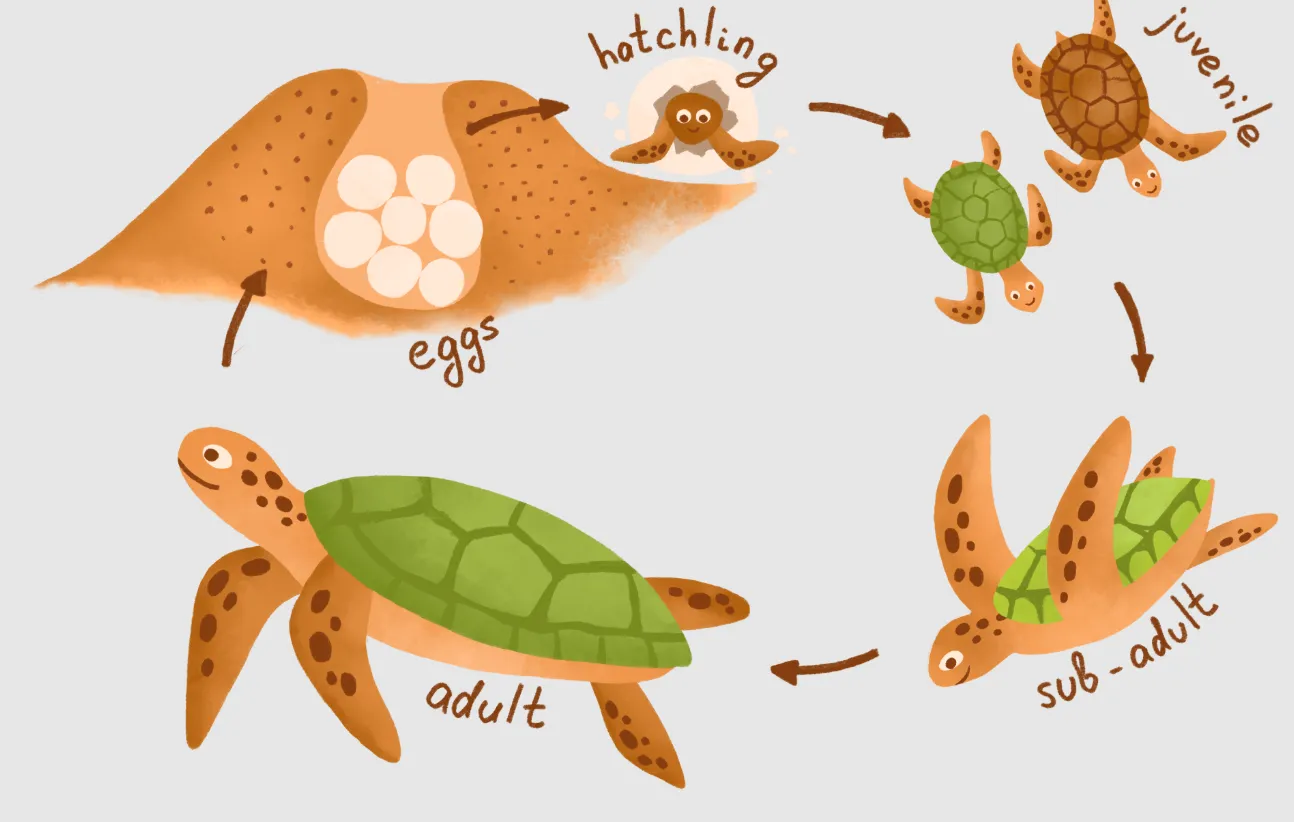
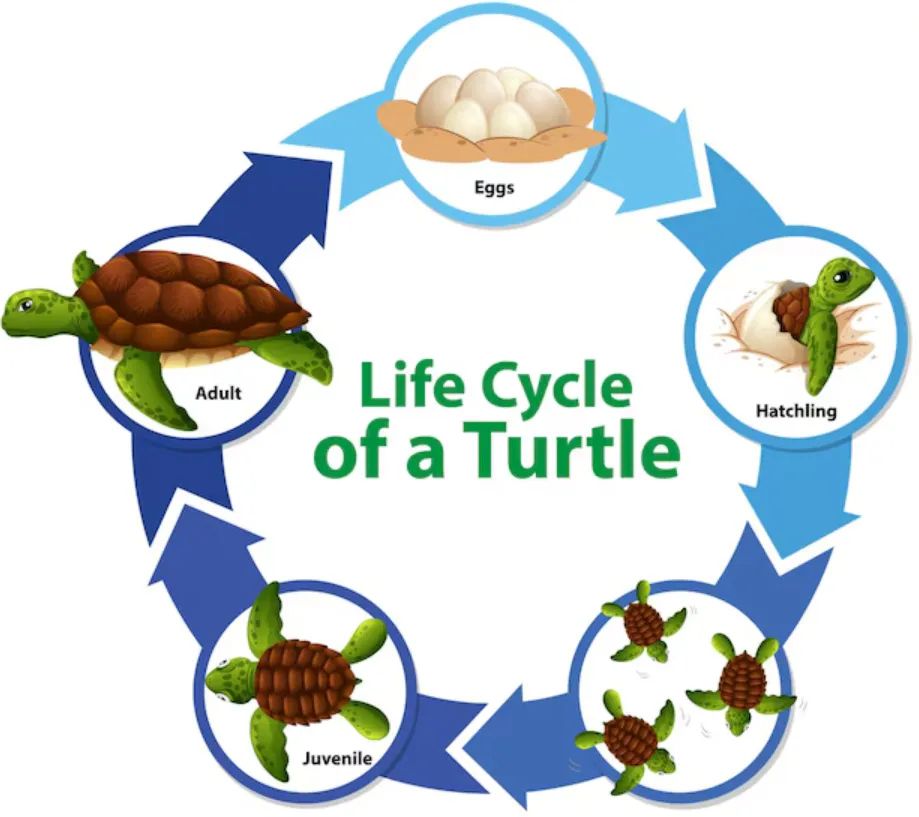
The sea turtle life cycle includes four main stages: egg, hatchling, juvenile, and adult.
2. How long do sea turtles live?
Most sea turtles live between 50 and 100 years, depending on the species and environmental conditions.
3. Where do sea turtles lay eggs?
Female sea turtles return to the same beaches where they were born to lay eggs, often traveling thousands of kilometers.
Quick Life Cycle Table
| Stage | Description | Duration |
| Egg | Eggs are laid in sandy nests on beaches | 45–70 days |
| Hatchling | Baby turtles emerge and rush toward the ocean | A few hours to days |
| Juvenile | Young turtles grow in the open ocean | Several years |
| Adult | Mature turtles migrate, reproduce, and repeat the cycle | 20–50+ years |
The History Of Their Scientific Naming
The scientific naming of sea turtles reflects centuries of biological discovery and classification.
- Sea turtles belong to the order Testudines, which includes all turtles and tortoises.
- The family Cheloniidae includes most hard-shelled sea turtles, such as the green sea turtle (Chelonia mydas) and the hawksbill sea turtle (Eretmochelys imbricata).
- The leatherback sea turtle (Dermochelys coriacea) belongs to a separate family, Dermochelyidae, due to its unique soft shell.
- Early 18th-century naturalists used Latin names to classify species based on physical traits and habitats.
- The naming system follows binomial nomenclature introduced by Carl Linnaeus.
- Scientific names often describe features—for example, imbricata refers to the overlapping scutes of the hawksbill turtle.
- Over time, genetic research has refined classifications, confirming evolutionary relationships among species.
These scientific names are essential for conservation efforts, ensuring clear identification and global research collaboration.
Their Evolution And Their Origin
Sea turtles have an ancient lineage dating back over 100 million years, making them among the oldest surviving reptilian groups on Earth. Their ancestors lived alongside dinosaurs, and fossil records suggest that early turtles were land-dwelling creatures that gradually adapted to aquatic environments.
The transition from land to sea required significant evolutionary changes. Sea turtles developed flipper-like limbs for efficient swimming and streamlined shells to reduce water resistance. Unlike land turtles, they cannot retract their heads into their shells, an adaptation that allows better mobility in water.
The leatherback sea turtle represents a unique evolutionary branch. Instead of a hard shell, it has a flexible, leathery carapace, which helps it dive deeper than any other turtle species—reaching depths of over 1,000 meters. This adaptation allows it to feed on jellyfish in deep ocean waters.
Meanwhile, species like the green sea turtle evolved into primarily herbivorous feeders, feeding on seagrass and algae. This dietary shift plays a vital role in maintaining healthy marine ecosystems.
Over millions of years, sea turtles spread across the globe, inhabiting tropical and subtropical oceans. Despite their long evolutionary success, modern threats such as climate change and pollution now challenge their survival.
Important Things That You Need To Know
Sea turtles are diverse, and understanding different species and related aspects enhances our knowledge of their life cycle.
The sea turtle family includes seven species, each with unique behaviors and habitats. The hawksbill sea turtle is known for its beautiful shell and coral reef habitat, while the green sea turtle thrives in seagrass meadows.
The leatherback sea turtle stands out for its size and its ability to regulate body temperature, which allows it to survive in colder waters. Interestingly, despite their generally calm nature, rare incidents like a leatherback sea turtle bite can occur when threatened.
A baby sea turtle faces immense challenges right from birth. Only about 1 in 1,000 hatchlings survive to adulthood due to predators and environmental threats.
Creating a sea turtle drawing is often used in educational programs to teach children about conservation and marine life. These visual tools help spread awareness and inspire protection efforts.
Understanding these key aspects highlights the importance of preserving all species within the sea turtle family.
Their Main Food and Its Collection Process
Sea turtles have diverse diets depending on their species, and their feeding habits play a crucial role in marine ecosystems.
- Green sea turtles primarily eat seagrass and algae. They graze on underwater vegetation, helping maintain healthy seagrass beds.
- Hawksbill sea turtles feed mainly on sponges found in coral reefs, preventing sponge overgrowth and protecting coral ecosystems.
- Leatherback sea turtles consume jellyfish, using their specialized mouths and throat structures to trap slippery prey.
- Some species also eat crustaceans, mollusks, and small fish.
Food Collection Process
- Sea turtles use their strong jaws to bite and tear food.
- They rely on excellent underwater vision to locate prey.
- Migration patterns often align with feeding grounds rich in food resources.
- Leatherbacks dive deep into the ocean to hunt jellyfish.
- Green turtles graze continuously in shallow waters.
Their feeding behavior not only sustains them but also helps balance marine ecosystems, making them essential to ocean health.
Their Life Cycle and Ability to Survive in Nature
Egg Stage
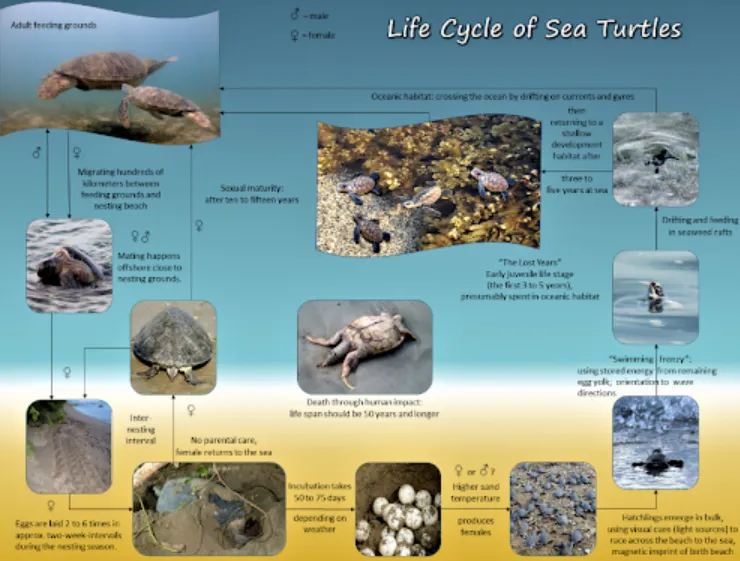
Female sea turtles lay eggs in sandy nests on beaches. The sand’s temperature determines the sex of the hatchlings.
Hatchling Stage
After incubation, hatchlings emerge and instinctively move toward the ocean. This journey is extremely dangerous due to the presence of predators.
Juvenile Stage
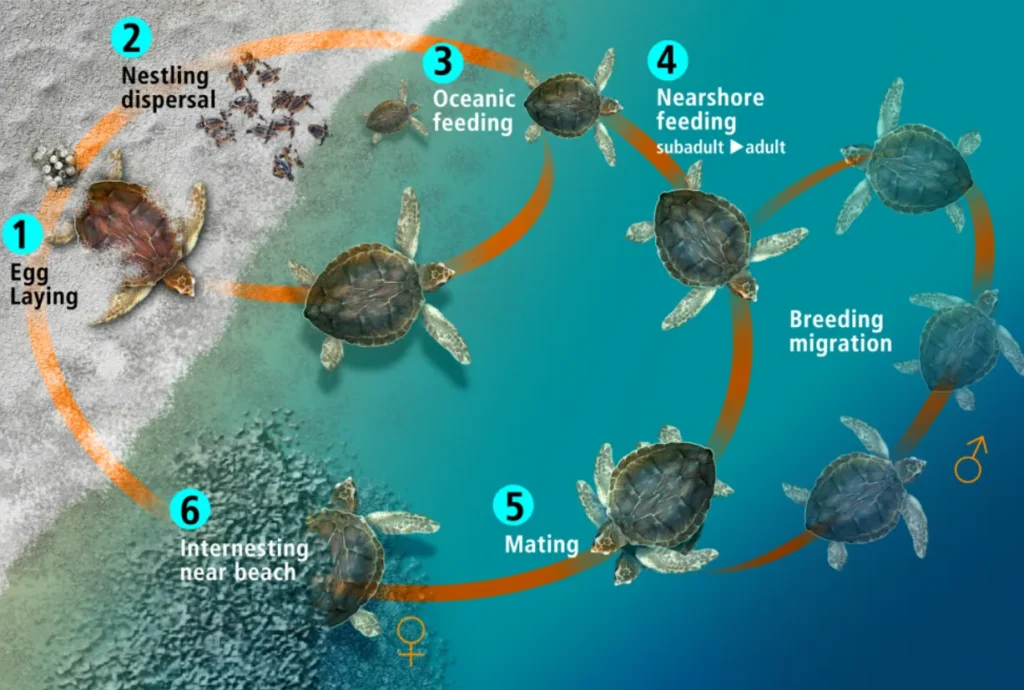
Young turtles drift in ocean currents, feeding and growing. This stage is often called the “lost years” due to limited observation.
Adult Stage
Adult sea turtles migrate long distances between feeding and nesting areas. They develop strong navigation skills using Earth’s magnetic field.
Sea turtles survive through instincts, strong shells (in most species), and adaptability; however, only a small percentage reach adulthood, highlighting the harsh realities of nature.
Their Reproductive Process and Raising Their Children
Sea turtles have a unique reproductive cycle that ensures the species’ survival despite high mortality rates.
- Female turtles return to their birth beaches to lay eggs (natal homing).
- They dig nests using their hind flippers and lay 50–150 eggs per nest.
- After laying eggs, females cover the nest and return to the sea.
- No parental care is provided after laying eggs.
- Incubation lasts around 45–70 days, depending on temperature.
- Hatchlings emerge at night to avoid predators.
- They rely on moonlight to navigate toward the ocean.
Despite laying many eggs, only a few survive to adulthood due to predators like birds, crabs, and fish. This reproductive strategy balances high mortality with high egg production.
Importance of Them in this Ecosystem
Maintaining Seagrass Beds
Green sea turtles keep seagrass short and healthy, promoting growth and biodiversity.
Coral Reef Protection
Hawksbill turtles control sponge populations, allowing coral reefs to thrive.
Jellyfish Population Control
Leatherback turtles prevent jellyfish overpopulation, which could disrupt marine food chains.
Nutrient Cycling
Eggs and hatchlings provide nutrients to beach ecosystems, supporting plant growth.
Sea turtles are keystone species, meaning their presence significantly impacts the health of marine environments.
What to Do to Protect Them in Nature and Save the System for the Future
- Reduce plastic use to prevent ocean pollution.
- Support conservation programs that protect nesting beaches.
- Avoid disturbing nesting sites during breeding seasons.
- Use eco-friendly fishing practices to reduce accidental capture.
- Participate in beach cleanups to remove harmful debris.
- Educate others about sea turtle conservation.
- Support laws and regulations protecting marine life.
- Reduce carbon footprint to combat climate change.
- Avoid buying products made from turtle shells.
- Promote sustainable tourism that respects wildlife.
Protecting sea turtles ensures the survival of marine ecosystems for future generations.
Frequently Asked Questions (FAQs)
1. How many stages are in the sea turtle life cycle?
There are four main stages: egg, hatchling, juvenile, and adult.
2. Why do sea turtles return to the same beach?
They use Earth’s magnetic field to navigate back to their birthplace.
3. What do baby sea turtles eat?
They feed on plankton, small organisms, and algae.
4. How long do sea turtle eggs take to hatch?
Typically between 45 and 70 days.
5. Which sea turtle is the largest?
The leatherback sea turtle is the largest species.
6. Are sea turtles endangered?
Yes, most species are endangered due to human activities.
7. How far can sea turtles migrate?
They can travel thousands of kilometers across oceans.
8. What threatens sea turtles the most?
Pollution, climate change, fishing nets, and habitat loss.
Conclusion
The sea turtle life cycle is a remarkable example of endurance, adaptation, and natural balance. From fragile eggs buried in sand to powerful adults navigating vast oceans, sea turtles embody resilience. Species like the green sea turtle, hawksbill sea turtle, and leatherback sea turtle each contribute uniquely to marine ecosystems.
Despite surviving millions of years of natural challenges, sea turtles now face unprecedented threats from human activity. Their declining populations signal deeper environmental issues that affect the entire planet.
By understanding their life cycle and ecological importance, we can take meaningful steps to protect them. Simple actions—reducing plastic use, supporting conservation efforts, and raising awareness—can make a significant difference.
Also Read About: salamander life cycle